


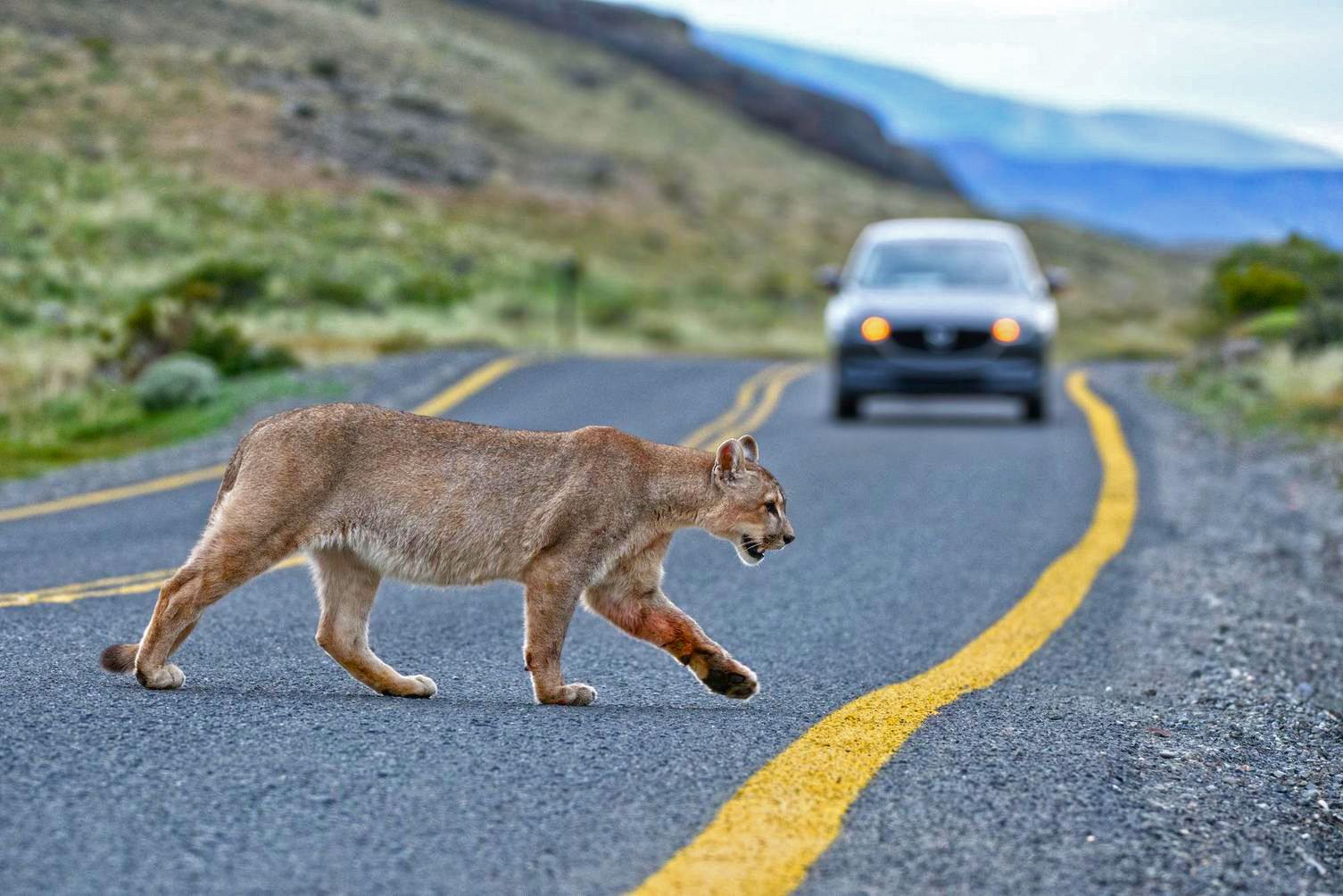
- When cougars are present in a landscape, roads are safer, according to a new study.
- In area where the cats were highly active, the expected number of deer-vehicle collisions fell by 76% over five years, with the probability of a collision falling by 67%.
- Researchers found that fear changes deer behavior: Rather than simply reducing deer numbers by eating them, pumas appear to create a “landscape of fear” that pushes deer away from developed areas and shifts their active hours from nighttime into daylight.
- Large carnivores, including cougars, keep fast-reproducing prey species in check, while also reducing dangerous and costly wildlife collisions — another reason why coexistence with them is important, experts say.
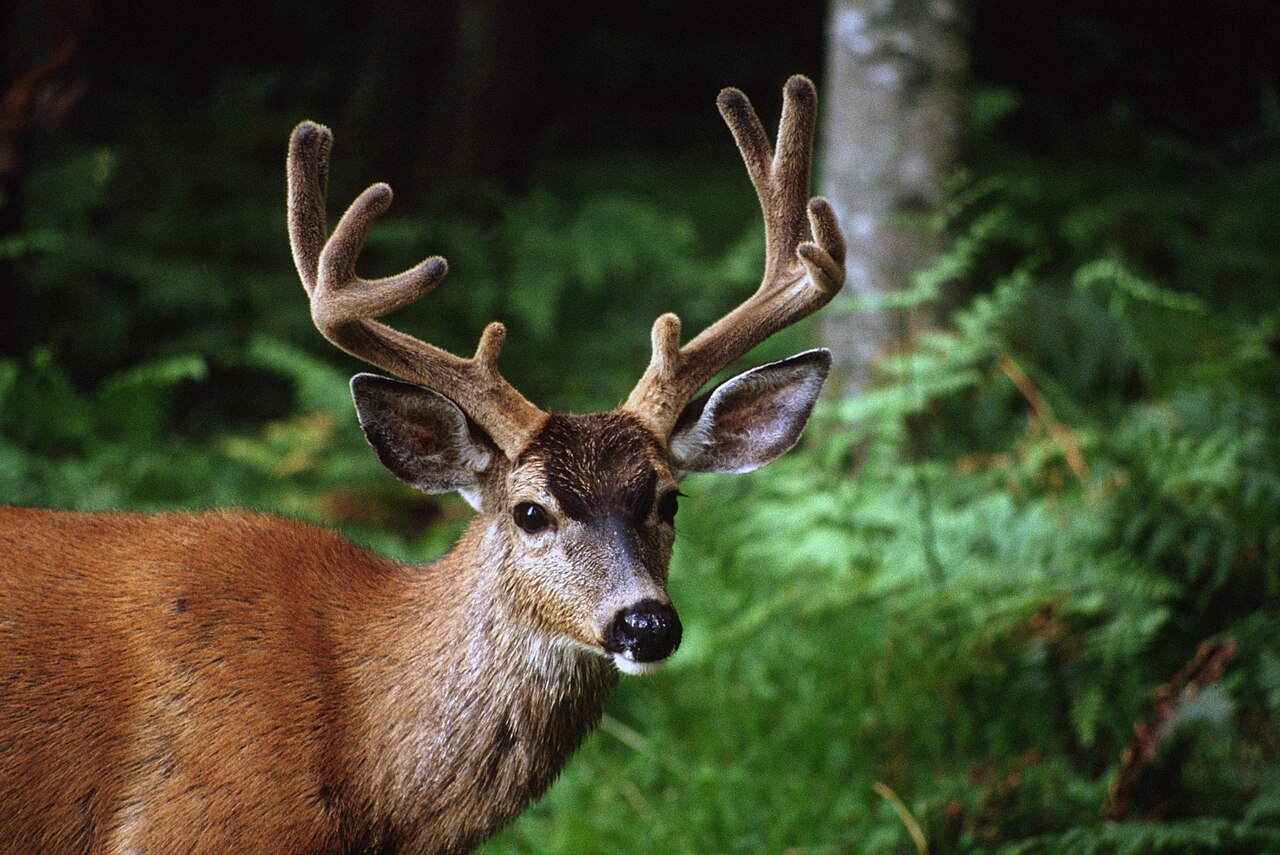
If you’re a black-tailed deer on the Olympic Peninsula in the U.S. state of Washington, you’re always surrounded by friends and family. You are free-range, with abundant food to forage in familiar woods and meadows.
But you’re also vigilant because you’re a prey species and your ideal habitat is also home to your top predators: Cascade mountain wolves (Canis lupus fuscus), cougars (Puma concolor) and black bears (Ursus americanus).
Avoiding the animals that will hunt you and your fawns is an integral part of how you move across the landscape. Cougars, padding on giant, soundless paws, are to be especially feared, as you are their favorite meal. As such, cougars directly impact where you go to find food, water and rest, and when you do it, according to a new study in the journal Current Biology.
The study reinforces the idea that the presence of cougars, also known as pumas, mountain lions and some 40 other names in English, alters how their prey uses the landscape. In doing so, they keep humans safer by pushing the region’s black-tailed deer (Odocoileus hemionus columbianus) away from roads and potential collisions with vehicles.
Nationwide, there are 1.6-2.1 million accidents involving deer every year in the U.S., killing 200-440 people and costing about $10 billion a year, according to data cited in a 2025 study.
The cats aren’t patrolling the highways and chasing deer away from traffic, of course.
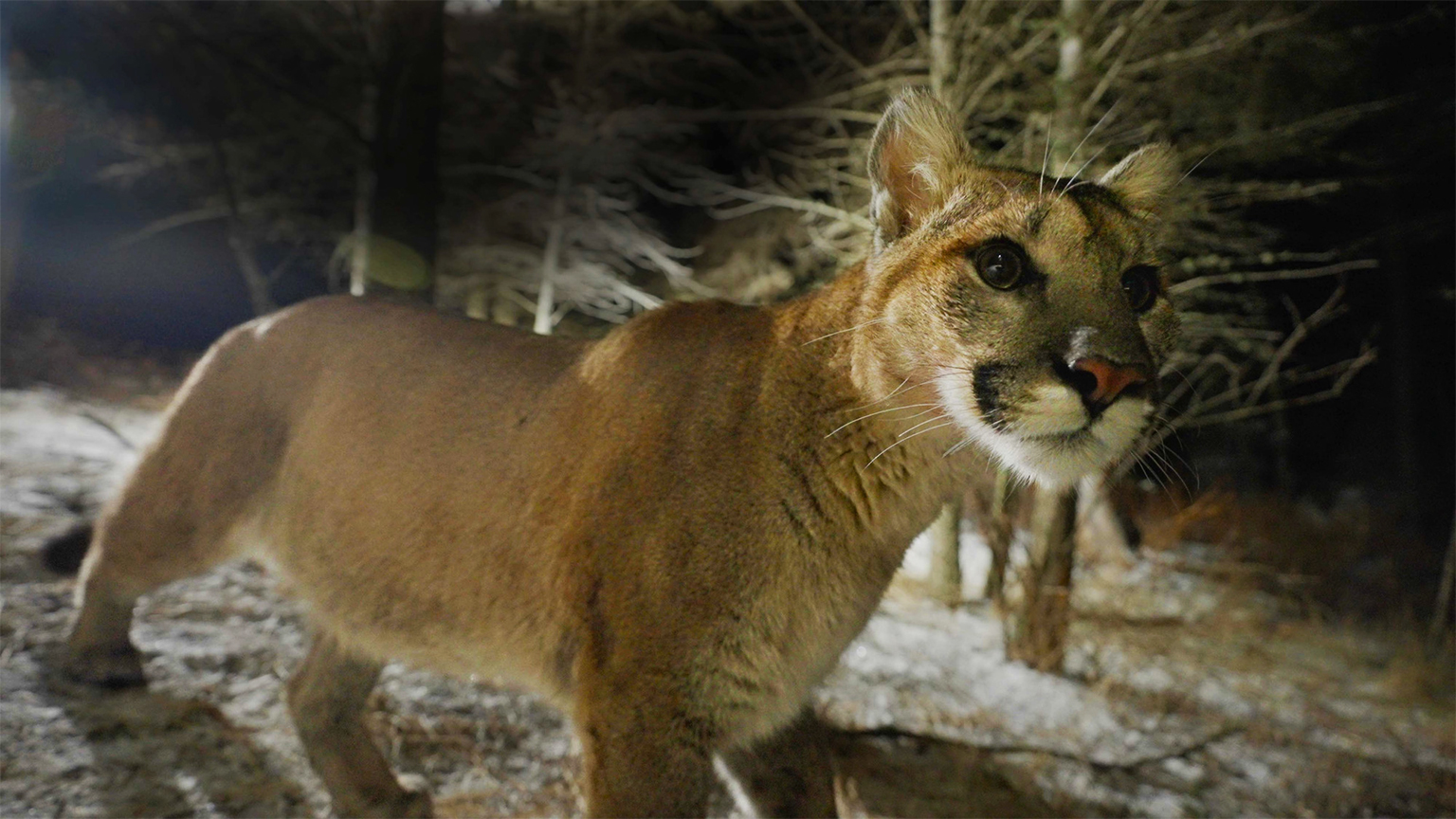
“The deer know where they’re most likely to be at risk of an encounter with a large carnivore, and they avoid these areas more — and they shift their activity to minimize those risks,” says Mark Elbroch, director of the puma program at the New York City-based nonprofit Panthera and a co-author of the new study, which was a collaboration between Panthera and Conservation Science Partners, a U.S.-based research nonprofit. The tasty, new vegetation growing near developed areas and roads is less appealing if there are pumas there, he says. “They scare the deer away.”
When a landscape of fear is a good thing
Ecologists, including Elbroch, sometimes call this a “landscape of fear.” Prey learn where predators are most likely to hunt and avoid risky areas or habitat altogether or use those areas at a potentially safer time of day. In both cases, the changes deer make to stay away from cougars also keep them away from an even bigger killer of deer — vehicles.
“The impact was dramatic,” Elbroch says. “We had a 76% reduction in the expected number of deer-vehicle collisions [on Washington’s Olympic Peninsula] with the presence of cats versus low activity of cats.”
Elbroch and his research team analyzed data from 503 camera locations alongside GPS data from 59 collared pumas from Panthera’s Olympic Cougar Project, a long-term effort to track the cat’s movement in the region.
They combined the camera trap images with data on how deer and Roosevelt elk (Cervus canadensis roosevelti) used the landscape — and how that overlapped with nearly 1,000 reported wildlife-vehicle collisions between July 2020 and June 2025. Deer accounted for 92% of those collisions, with deer and elk together responsible for 97%.
Where pumas were present, deer were 15% less likely to occupy areas with a high density of roadways. They were also much more likely, 86% more likely, to reside in remote areas, far from development.
Their daily schedules also changed: Deer shifted to daylight hours, becoming less active at night. Pumas are crepuscular and nocturnal, most active at dawn and dusk and under cover of darkness, which is often when they’re out hunting.
The danger of deer
At first glance, that might seem like bad news. More deer moving around during daylight means more deer moving around when humans are driving.
But Glen Kalisz, a habitat connectivity biologist with Washington’s transportation agency, points out that nighttime collisions are harder to avoid. Visibility is worse and people often drive faster with less traffic on the road, so reaction times may be slower, and deer caught in headlights may freeze rather than flee.
Kalisz works on reducing wildlife collisions across the state, primarily by creating wildlife crossings and erecting fencing to guide animals to underpasses or overpasses, keeping them off roadways. He says the new research fits within a broader lesson: Wildlife behavior can have enormous consequences for where and when collisions occur.
Overall, in areas with the most pumas, the probability of a deer-vehicle collision fell by 67%, the study finds.
And though many people fear predators, “deer are the more dangerous species,” Kalisz says. Cougars rarely kill people in the U.S. Only 29 deaths have been attributed to cougars since 1868 — 158 years — while up to 440 people die in vehicle collisions with deer annually.
On the Olympic Peninsula, wildlife-vehicle collisions caused two human deaths and more than 80 injuries during the study period, from 2020-2025. The researchers estimated that the associated vehicle repair and health costs at $14.7 million.
The team’s research is fascinating because it’s counterintuitive. The reduction in car-deer accidents appears to be driven primarily by deer behavior, not simply by pumas eating more deer and reducing their population. A cougar can only eat about 48 deer a year, which wouldn’t reduce their population enough to affect road safety. Keeping a whole herd of deer away from roads is what leads to greater driver safety.
“We know the deer want to be there, and we know the cats are looking for deer,” Elbroch says. “You throw a highway through it,” and the ancient predator-prey relationship suddenly intersects with a very modern hazard.
What’s next for the cougars, deer — and drivers?
Kalisz sees some limitations in this study. Most notably, the researchers had to use the percentage of developed land as a proxy for traffic volume, as detailed traffic data wasn’t available across the entire study area.
That proxy isn’t always an accurate way to understand the landscape in the Olympic Peninsula, an area that includes large areas of clear-cuts and active logging operations (and associated heavy-duty vehicle and employee traffic), as well as an influx of seasonal visitors to homes in forested areas — meaning that traffic volumes in local areas might be higher or lower than expected, given the population density.
Kalisz says traffic volume and collision rates have a complicated, nonlinear relationship. More collisions can occur on moderately busy roads, where animals may be more inclined to chance a crossing, versus a heavily trafficked thoroughfare.
“Once you get to like 10,000 vehicles or above, that’s usually considered a complete barrier to animal movements, and at that point, the noise and the light create so much disturbance that animals don’t even attempt to cross the road, so they’re not getting hit,” he says.
He also notes that WSDOT, the state transportation agency, has another potentially useful dataset: carcass removals. Collision reports generally require significant vehicle damage or human injury, meaning many less-serious strikes that kill a deer may never make it into official reports. “Because of those two limiting factors, WSDOT records about five times more carcass removals than collision reports,” Kalisz says.

Those caveats don’t erase the study’s central finding, he says, but likely support it. The study points towards the next questions researchers could ask following these surprising findings on deer behavior.
A big one is how other animals may or may not be affected by similar variables: Even though deer are the majority of animals killed by car strikes, cougars eat a wide variety of prey species that are involved in car crashes. “We occasionally see moose, elk, bighorn sheep and beavers, which can get up to 60 pounds [27 kilograms] and cause collision risks,” Kalisz says.
Another question prompted by the study is whether cougars might indirectly be protecting humans in other ways, particularly from disease. As of 2024, chronic wasting disease (CWD), a fatal neurological illness for deer and other cervids, was present in Washington State.
Unlike human hunters, research has found that mountain lions selectively remove weaker animals sick with diseases including CWD. The disease is similar to bovine spongiform encephalopathy, or mad cow disease, and has not infected humans, though experts advise caution when handling venison. “So cougars could be helping reduce the spread of that,” Kalisz says.
The newly published research points to the idea that predators provide more than the ecological benefits we immediately see. They influence ecosystems by keeping quickly-reproducing species in check, feeding scavengers and redistributing nutrients.
But it seems that they also reshape the behavior of living animals in ways that benefit human safety. With eastern U.S. states considering the reintroduction of cougars, this data might serve as a science-based counterpoint to human fears. The animals’ original home range included almost the entirety of North America; and its been determined that this won’t recolonize the east without help from humans.
The nonprofit Mighty Earth has launched efforts in Vermont to bring the cat back to its former territory there, calling the campaign “catamount conversations.” Panthera has identified more than a dozen landscapes east of the Mississippi that cougars could call home and, in doing so, potentially keep drivers safer.
Banner image: A young male puma crosses a public road. The presence of pumas — aka cougars, mountain lions, catamounts, etc. — push deer away from roads into less populated areas, reducing road collisions. Image by Nick Garbutt.
Three baby pumas born in Minnesota, US, is a first in more than 100 years
The long and winding road to safe highways: Inside the global movement to reconnect habitat
How to stitch a massive wildlife corridor through the Rocky Mountains
Citations:
Suraci, J. P., Lacey, L. M., Parsons, A. W., Cendejas-Zarelli, S., Stratton, A., Sager-Fradkin, K., … Elbroch, L. M. (2026). Large carnivores shape road safety through effects on prey space use. Current Biology. doi:10.1016/j.cub.2026.06.072
Sharma, S., Guynn, S. T., Khanal, C., & Khanal, P. (2025). Understanding the drivers of deer-vehicle collisions in South Carolina, U.S.A. Global Ecology and Conservation, 62, e03857. doi:10.1016/j.gecco.2025.e03857
FEEDBACK: Use this form to send a message to the author or editor of this post. If you’d like to post a public comment, you can do so at the bottom of the page.
Cite this article
Starre Vartan (2026). Cougars cut deadly vehicle-deer collisions in the U.S. by up to 76%, study shows. Mongabay Conservation news. DOI: https://doi.org/10.66709/news-326556

