


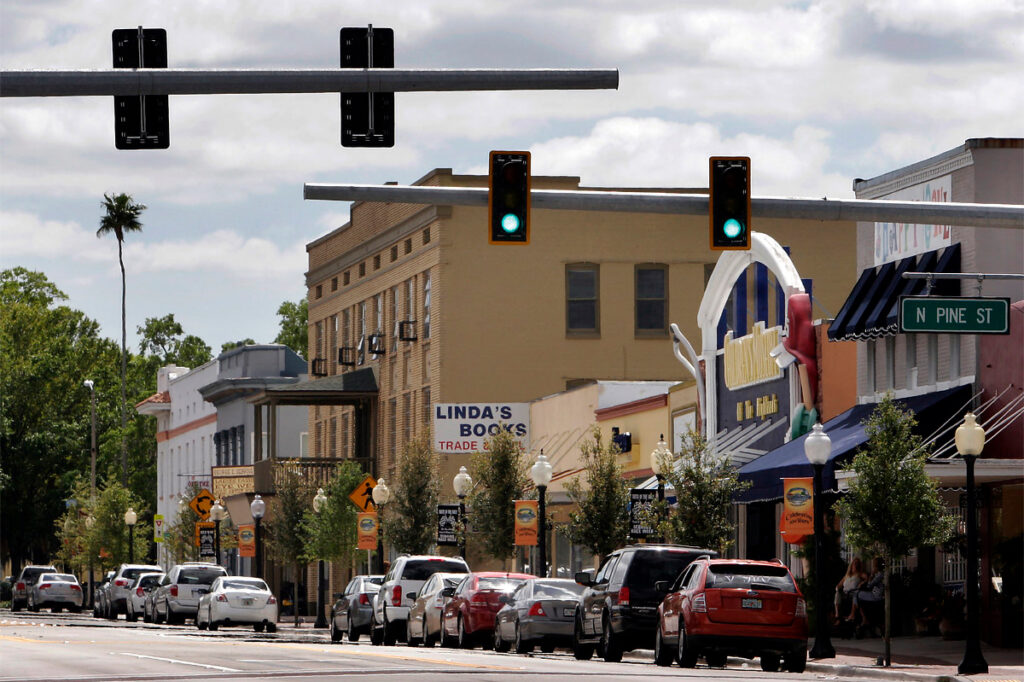
SEBRING, Fla.—The city of Sebring has an “Old Florida” charm.
Citrus trees greet motorists driving into town. Red, white and blue bunting hangs from a white gazebo in the middle of the town circle. Many of the century-old stucco and brick buildings surrounding the downtown circle have generous awnings to protect against the Florida sun.
There is a tranquility to the city, located smack dab in the center of the peninsula’s southern half, that is unheard of on Florida’s coasts. It won’t last long.
Some of Florida’s biggest growth spots are now on former citrus groves and cattle pastures in the interior parts of the state far from the state’s famous beachside cities. That’s increasingly due to climate migrants escaping coastline risks like hurricanes and flooding, as well as the high cost of homeownership from skyrocketing insurance rates following a series of recent storms.
“Sebring is on the cusp of exploding,” said Drew Bishop, a local real estate agent. “Everyone is moving from the coasts because of hurricanes and insurance rates and the pull of cheaper housing.”
Inland Gains, Coastal Slowdown
Highlands County, home to Sebring, grew by less than 2,500 people from 2010 to 2020. But halfway through the 2020s, the county has grown by four times that number—10,000 people—because of migration. It’s the same story for other agriculture-dominated, inland areas stretching from Hendry County, squeezed between the Fort Myers and West Palm Beach metro areas, all the way north through Lake, Marion and Sumter counties, located northwest of Orlando.
Polk County, Florida’s longtime citrus capital located between the Tampa and Orlando metro areas, has become one of the biggest boom towns in the U.S. this decade. It attracted more people in 2023 than any other county in the United States. Citrus groves bulldozed in the previous decades have made way for subdivisions and big box stores.
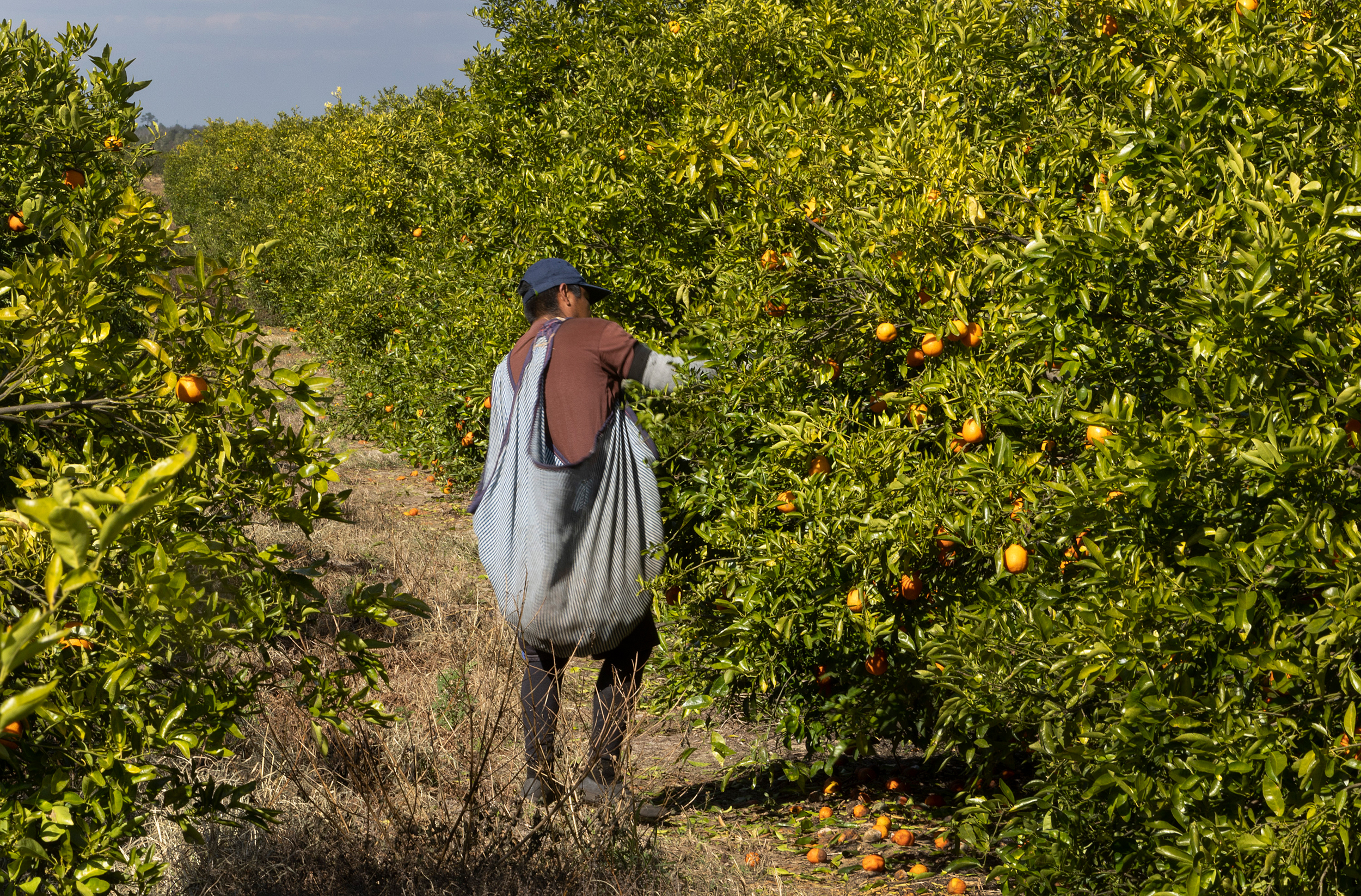
Hendry County, an agricultural hub with 47,000 residents, grew by less than 500 people last decade but has jumped by 7,500 people, or almost 20 percent, since 2020. (Many farmworkers in these areas move between jobs throughout the year and often live in housing set aside for them by growers, so are less likely to be affected by these changes.) Marion and Sumter counties, once horse farms and cattle country, also have experienced some of Florida’s fastest growth this decade.
So far in the 2020s,15 of the 20 fastest-growing cities in Florida were located in noncoastal counties, according to figures from the University of Florida’s Bureau of Economic and Business Research (BEBR).
In the process, these inland counties have gotten wealthier and more racially and ethnically diverse, according to U.S. Census Bureau figures.
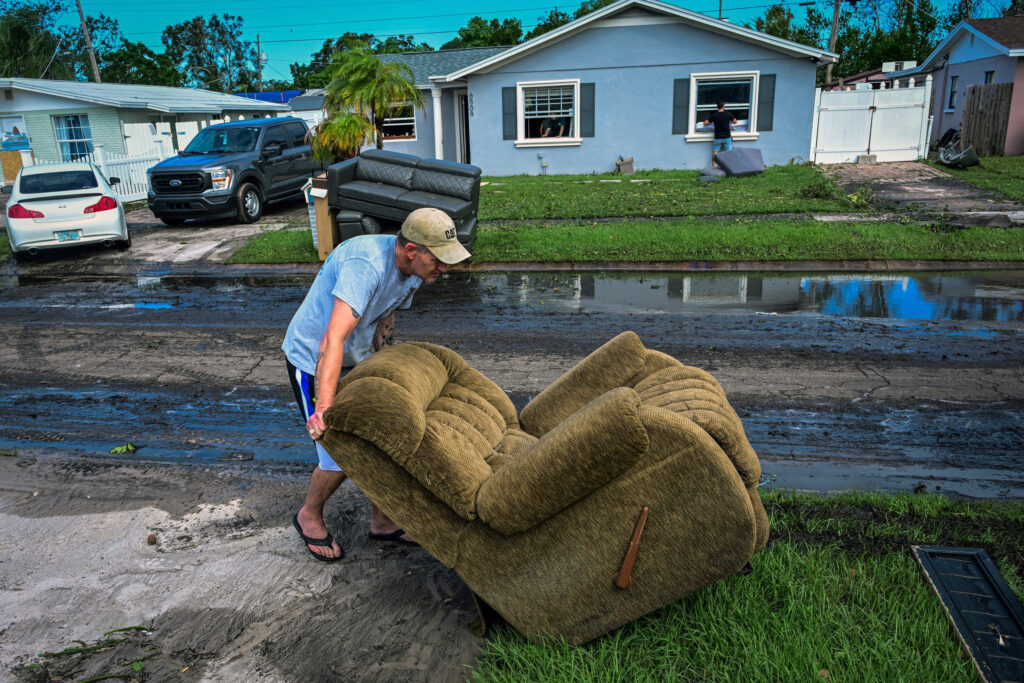
On the flip side, the counties hit hardest by 2024 hurricanes in metro Tampa, and those most prone to sea level rise in South Florida, had the most locals moving out last year. More than 15,000 residents left Hillsborough County, home to Tampa, from July 2024 to July 2025, a period that included the one-two punch of hurricanes Helene and Milton along the Gulf Coast. Another 9,200 locals left Pinellas County, the home of St. Petersburg, according to Census Bureau figures.
More than 278,000 residents have departed Miami-Dade County, population 2.8 million, so far this decade. And more than 96,000 locals have moved out of Broward County, which is home to Fort Lauderdale. The populations of both coastal counties would have dropped if not for the influx of immigrants from places like Venezuela and Haiti and natural increase from births outpacing deaths.
In Sebring, fewer restaurants and shops are closing for the summer because of the influx of people. “For sale” signs dot acres filled with sabal palms and untended citrus trees, and big-name home builders are buying up lots. A golf club for the ultra-wealthy, with courses surrounded by citrus groves, just opened, as did an exclusive housing development near Sebring International Raceway where moneyed racecar owners and enthusiasts can park their vehicles in enormous garages.
The city has gotten wealthier in the 2020s, with the share of families earning $200,000 or greater annually more than doubling to 10.4 percent. It also has gotten younger and more racially and ethnically diverse, and the share of households with children has jumped dramatically from 18 percent to 22 percent, according to Census Bureau figures.
“Things are changing so much here,” said Karl Beckerich, who moved from Miami to Sebring a decade ago.
Wildwood, located further north in Sumter County, was Florida’s second-fastest growing city, jumping from 15,000 to 36,000 inhabitants between 2020 and 2025. The city hopes to have a newly constructed $150 million wastewater treatment facility operating next year to handle the growth.
“We often see many folks coming from South Florida and other parts of Florida, particularly the coastal counties,” said Jason McHugh, Wildwood’s city manager. “They had hurricanes and wanted to get closer inland. Plus, the cost of housing was cheaper.”
The average price for a home in Wildwood is $300,000 compared to more than $580,000 in Miami.
“I Got Terrorized by Hurricanes”
Melissa Keller, a decades-long South Florida resident, most recently in a Miami Beach high-rise, moved to inland Lake County three years ago because of the half dozen hurricanes that made landfall in Florida in the 2020s.
“I got terrorized by the hurricanes,” said Keller, who relocated in 2023 with her wife, Joanne Stiger, to the massive retirement community The Villages, where home prices are only slightly more than the state average of around $380,000.
Hurricane Ian, the deadliest hurricane to hit Florida in decades when it made landfall in 2022, was particularly scary, even though the damage was concentrated on the western part of the state and not Miami Beach.
“We were ready to kiss our property goodbye,” Keller said.
When it came time to look for a place to retire, St. Petersburg had been at the top of the couple’s list. But the Gulf Coast city’s spot fell with each blow to Florida from hurricanes Ian, Nicole, Idalia and Debby in the early 2020s, as the intensity and frequency of hurricanes increased from climate change.
This story is funded by readers like you.
Our nonprofit newsroom provides award-winning climate coverage free of charge and advertising. We rely on donations from readers like you to keep going. Please donate now to support our work.
The Villages, located more than 50 miles inland from the Gulf Coast and 70 miles from the Atlantic, felt like the safest bet.
“I never imagined relocating inland since I’ve always been a coastal girl,” Keller said. “But there was nowhere I felt safe in St. Pete. It just didn’t seem economically or emotionally smart to live near the coast. When we moved to The Villages, we breathed a sigh of relief.”
Climate Change Reshuffles Floridians
Up until the 20th century, Florida’s population was concentrated in the northern reaches of the state, between Pensacola and St. Augustine.
Between 1880 and 1980, Florida’s population center shifted south down the peninsula. Railroads, built along both coasts, provided access to the subtropical regions of the state, and the draining of swamps in South Florida made those areas suitable for farming. The real estate boom of the 1920s, and Florida’s role as a major military training center in World War II, attracted even more people to the Sunshine State. The popularization of air conditioning at midcentury brought new waves of residents.
By 2020, three-quarters of Floridians lived in coastal counties, according to the National Oceanic and Atmospheric Administration.
Now, skyrocketing home insurance costs from repeated hurricanes in the 2020s are causing coastal residents to reconsider. Floridians had the highest average premiums in the U.S., increasing by almost 50 percent this decade because of intensifying hurricane risk, according to climate research firm First Street. Some insurers have stopped issuing policies in the state, which has greatly limited options for all Florida homeowners.
“I’m sure there is a segment of the population that is concerned enough about climate change to flee more vulnerable areas for less vulnerable ones,” said Rich Doty, a demographer at BEBR. “It is my opinion, however, that the main reason for increased migration to these inland counties is due to lower housing and living costs.”
The reshuffling of where people are choosing to live in the Sunshine State is only going to accelerate in the upcoming decades because of the intensifying effects of climate change, according to experts.
Three of Florida’s largest coastal cities, Tampa, Jacksonville and Miami, face insurance premium jumps ranging from 213 percent to 322 percent in the next three decades—the highest in the U.S.—because of increased sea level rise and storms, according to First Street.
By 2100, South Florida could lose 2.5 million residents because of sea level rise, the most of any U.S. metro area, while metro Orlando, located in the heart of Florida, could gain an additional 460,000 residents from climate migration, according to modeling by Florida State University demographer Mathew Hauer.
According to BEBR projections, the counties expected to grow at the fastest clip through 2050 are in the St. Augustine area and the dead center of Florida, including Lake County, where Keller now lives.
During hurricane season, Keller sleeps better now living in The Villages than when she was in Miami Beach. Newcomers to Florida from Illinois or Ohio might not understand what she is talking about, but other Floridians who have lived on the coasts do.
“They have the same feelings that I do, that they are in a safer place inland,” she said.
About This Story
Perhaps you noticed: This story, like all the news we publish, is free to read. That’s because Inside Climate News is a 501c3 nonprofit organization. We do not charge a subscription fee, lock our news behind a paywall, or clutter our website with ads. We make our news on climate and the environment freely available to you and anyone who wants it.
That’s not all. We also share our news for free with scores of other media organizations around the country. Many of them can’t afford to do environmental journalism of their own. We’ve built bureaus from coast to coast to report local stories, collaborate with local newsrooms and co-publish articles so that this vital work is shared as widely as possible.
Two of us launched ICN in 2007. Six years later we earned a Pulitzer Prize for National Reporting, and now we run the oldest and largest dedicated climate newsroom in the nation. We tell the story in all its complexity. We hold polluters accountable. We expose environmental injustice. We debunk misinformation. We scrutinize solutions and inspire action.
Donations from readers like you fund every aspect of what we do. If you don’t already, will you support our ongoing work, our reporting on the biggest crisis facing our planet, and help us reach even more readers in more places?
Please take a moment to make a tax-deductible donation. Every one of them makes a difference.
Thank you,
