


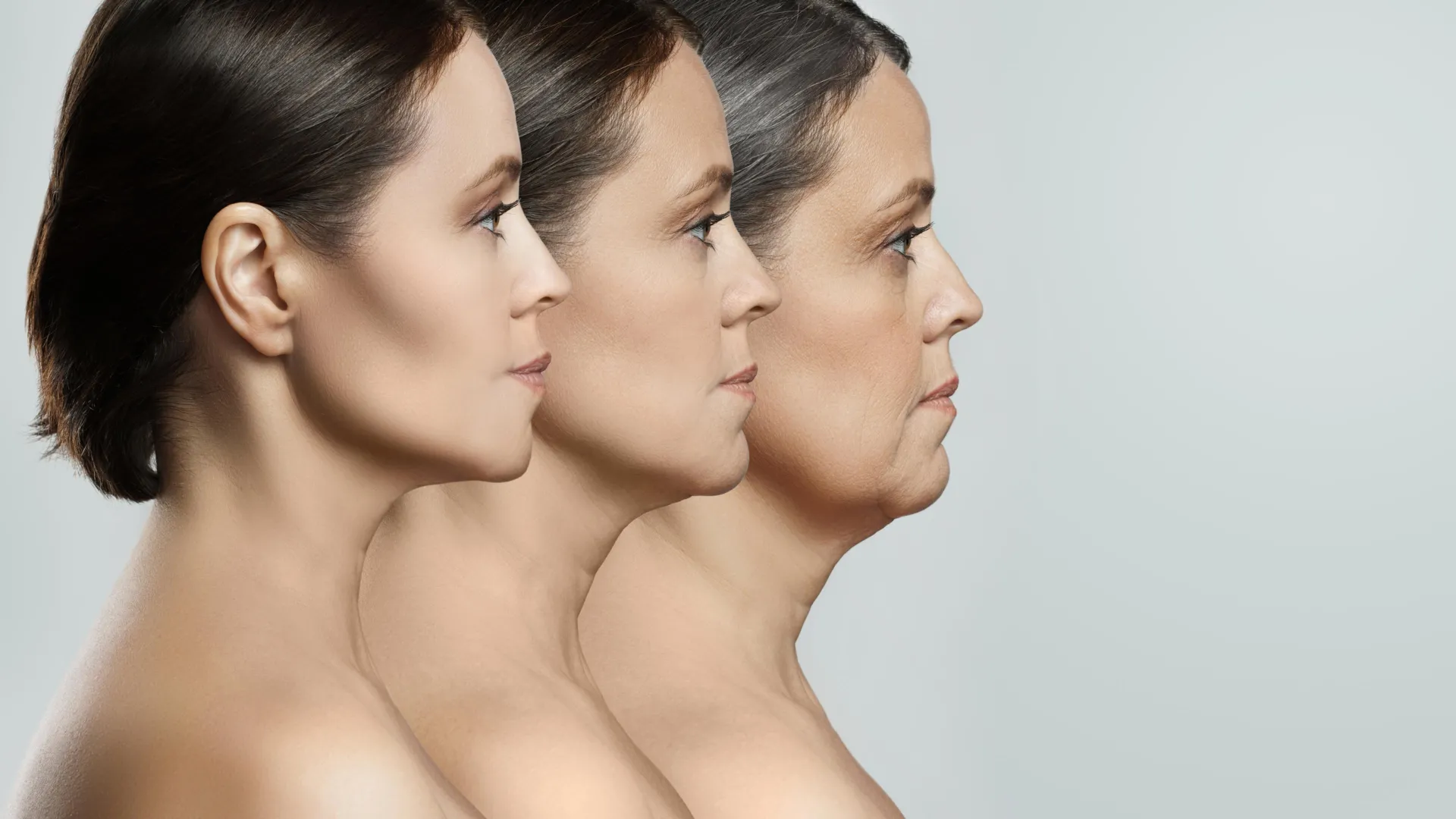
Cancer is strongly associated with age. The longer people live, the more opportunities their cells have to accumulate damage that can contribute to tumor growth. But cancer is increasingly being diagnosed in younger adults, and each newer generation appears to face a greater risk than the one before it.
That trend has prompted researchers to investigate a provocative possibility: Are younger generations accumulating biological damage more quickly, causing their bodies to age faster than expected?
A study led by researchers at Washington University School of Medicine in St. Louis offers evidence that this may be happening. The team found signs that younger generations are aging more rapidly on a biological level than older generations did at comparable ages.
Scientists are still working to understand what is driving these changes. The question is being investigated through international efforts involving research members of Siteman Cancer Center, based at Barnes-Jewish Hospital and WashU Medicine, and Cancer Grand Challenges, a global initiative co-founded by the National Cancer Institute and Cancer Research U.K.
Importantly, the researchers also found that accelerated biological aging was associated with a greater risk of early-onset cancers among younger generations. In general, early-onset cancers are those diagnosed at age 55 or younger.
A Gap Between Biological Age and Actual Age
Chronological age simply measures how many years a person has been alive. Biological age, by contrast, reflects how old the body appears based on measurable changes in cells, organs, metabolism, and other physiological systems.
According to the researchers, cancer risk increased as the difference between biological age and chronological age grew. People from more recent generations tended to have larger gaps than those born earlier, suggesting their bodies appeared biologically older at the same chronological age.
That generational shift could help explain at least part of the rise in cancer among younger adults.
The team also found that aging did not appear to affect every organ system in the same way. Faster aging in specific parts of the body was associated with particular cancers. An immune system that appeared biologically older, for example, was linked to early-onset lung cancer. Older-appearing fat tissue was associated with early-onset colorectal cancer.
The findings were published in the journal Nature Medicine.
Researchers say measurements of accelerated aging could eventually help doctors identify younger people who face unusually high cancer risks, potentially allowing prevention or screening to begin earlier.
“Our ultimate goal is to decode how modern environments become biologically embedded to drive cancer risk, transforming prevention from broad recommendations to personalized interventions,” said Yin Cao, ScD, a molecular epidemiologist and an associate professor of surgery and of medicine at WashU Medicine. “This brings us closer to identifying risk earlier and developing prevention strategies that are tailored to an individual’s biology.”
Looking Beyond Individual Cancer Risk Factors
Cao’s team has previously studied numerous factors that can shape cancer risk over a person’s lifetime, including obesity, metabolic dysregulation, alcohol consumption, sedentary behavior, poor diet quality and cesarean delivery.
Each of these factors can provide clues about why cancer develops at younger ages. However, no single factor appears to explain very much of the overall trend on its own.
That led Cao, who is also a research member of Siteman, and her colleagues to look for a broader way of measuring how many different influences may work together over time to increase cancer susceptibility.
Support from Cancer Grand Challenges has allowed Cao, as co-lead of Team PROSPECT, to investigate this question on a much larger scale.
For the new study, the researchers examined data from more than 154,000 young adults enrolled in the UK Biobank, which contains extensive biological, health, and lifestyle information.
They also analyzed more than 10,000 participants in the United States who are part of the National Institutes of Health’s (NIH) All of Us Research Program, an initiative designed to create a comprehensive health database involving more than 1 million people living in the U.S.
Measuring How Fast the Body Is Aging
To determine biological aging, the researchers, including first author Ruiyi Tian, a doctoral student in the Cao lab, looked at two different scales.
One was systemic aging, which measures aging across the body as a whole. The other was organ-specific aging, which estimates how rapidly individual organs or biological systems are aging.
For systemic aging, the researchers relied on established approaches that use clinical biomarkers, including PhenoAge and the Klemera-Doubal Method. They also used a metabolomic age score designed to capture age-related patterns in a person’s metabolism.
PhenoAge, for example, uses nine blood biochemistry markers to estimate biological aging. These include albumin, made by the liver, and creatinine, a waste product removed by the kidneys.
For organ-specific aging, the researchers analyzed blood proteomic data, which measure levels of numerous proteins associated with specific organ systems. Those protein patterns were then used to estimate the biological age of individual organs.
The team calculated the average difference between biological and chronological age within each birth cohort. They then used standard deviation to measure how far each group differed from the overall study average. Standard deviation is a measure of how spread out data points are around the average.
Younger Generations Show Older Biological Profiles
The generational differences were apparent in both the UK and U.S. populations.
Among UK participants, people born between 1965 and 1974 had systemic aging that was 23% of one standard deviation higher than people born between 1950 and 1954, even after chronological age was taken into account.
Put more simply, members of the younger generation tended to have slightly older biological profiles than members of the older generation when researchers compared them at the same chronological age.
An even larger difference appeared in the U.S. data.
Participants born between 1990 and 1999 had systemic aging that was 92% of one standard deviation higher than those born between 1965 and 1969.
The researchers then examined whether these biological aging differences were connected to cancer.
Faster Aging Linked to Early-Onset Cancer
Greater systemic aging in the younger group was associated with an 8% increased risk of early-onset solid cancers. The strongest associations involved lung, gastrointestinal, and uterine cancers.
When the participants were separated into three groups according to their level of systemic aging, another pattern emerged.
People with the most advanced systemic aging had a 15% increased risk of early-onset solid cancer compared with participants showing the least advanced aging.
The association remained even after researchers accounted for inherited genetic cancer risks and genetic susceptibility to accelerated aging.
Looking at individual biological systems revealed more specific connections.
Advanced immune system aging was associated with a higher risk of early-onset lung cancer. Advanced adipose (fat) tissue aging was linked to a higher risk of early-onset colorectal cancer.
“If we can identify younger people with the highest cancer risk when they are still healthy, we can focus on prevention and early-detection strategies for the individuals who will benefit most from early interventions,” Cao said.
Searching for the Causes of Cancer in Younger Adults
The research is part of Team PROSPECT, a Cancer Grand Challenges team co-led by Cao.
Cancer Grand Challenges is an international research funding initiative co-founded by Cancer Research UK and the National Cancer Institute (NCI). It brings together scientists from different specialties and countries to investigate some of the most difficult problems in cancer research.
One of those problems is explaining why early-onset cancers are becoming more common.
“Right now, we don’t have a definitive answer to what’s driving the rise of early-onset cancers around the world, but studies like this are helping us piece together the bigger picture, showing that cancer may be influenced not just by changes inside individual cells, but by wider changes happening across the body as a whole,” said David Scott, PhD, director of Cancer Grand Challenges. “Research on this scale is possible through Cancer Grand Challenges, which brings together scientists from different fields around the world to tackle these complex questions together.”
Cao and her colleagues are now working to better understand why cancer is increasingly affecting younger generations.
A major focus is determining how changes in the environment, lifestyle and society may leave long-lasting biological marks on the body. Those effects could include accelerated aging as well as other signs that make some people more vulnerable to disease.
By tracing how these risks accumulate throughout life, researchers hope to uncover more of the biological origins of early-onset cancers.
The ultimate goal is not simply to understand why cancer develops earlier, but to identify people at elevated risk while they are still healthy. That could make it possible to move prevention and screening earlier and tailor interventions to an individual’s biology, shifting cancer care toward stopping disease before it begins.
This work was part of the PROSPECT team supported by the Cancer Grand Challenges initiative funded by Cancer Research UK, grant numbers CGCATF-2023/100043 and CGCATF-2023/100037; the National Cancer Institute of the NIH, grant numbers OT2CA297577 and OT2CA297576; the French National Cancer Institute; and the Bowelbabe Fund for Cancer Research UK. The project was also supported by grants from NIH/National Cancer Institute, grant number R37CA246175; the NIH/National Institute of Diabetes and Digestive and Kidney Diseases, grant number P30DK052574; the Alvin J. Siteman Cancer Center through the Foundation for Barnes-Jewish Hospital. Further support was provided by a pre-doctoral fellowship in the Cancer Biology pathway supported by NIH Molecular Oncology Training Grant T32CA113275 to Washington University School of Medicine in St. Louis; the Pediatric Gastroenterology Research Training Program grant T32DK077653 to Washington University School of Medicine in St. Louis; the Washington University School of Medicine in St. Louis Institute of Clinical and Translational Sciences, grant number UL1TR002345; and the Foundation for Barnes-Jewish Hospital. The content is solely the responsibility of the authors and does not necessarily represent the official views of the NIH.
