


Europeans remain concerned about climate change but are increasingly sceptical that existing climate policies are improving their lives, according to a new international poll that exposes growing public frustration with the cost of the green transition.
ADVERTISEMENT

ADVERTISEMENT
The survey, commissioned by UK-based research and strategy consultancy Mandate Research, suggests that voters increasingly want governments to prioritise affordable energy over ambitious emissions targets.
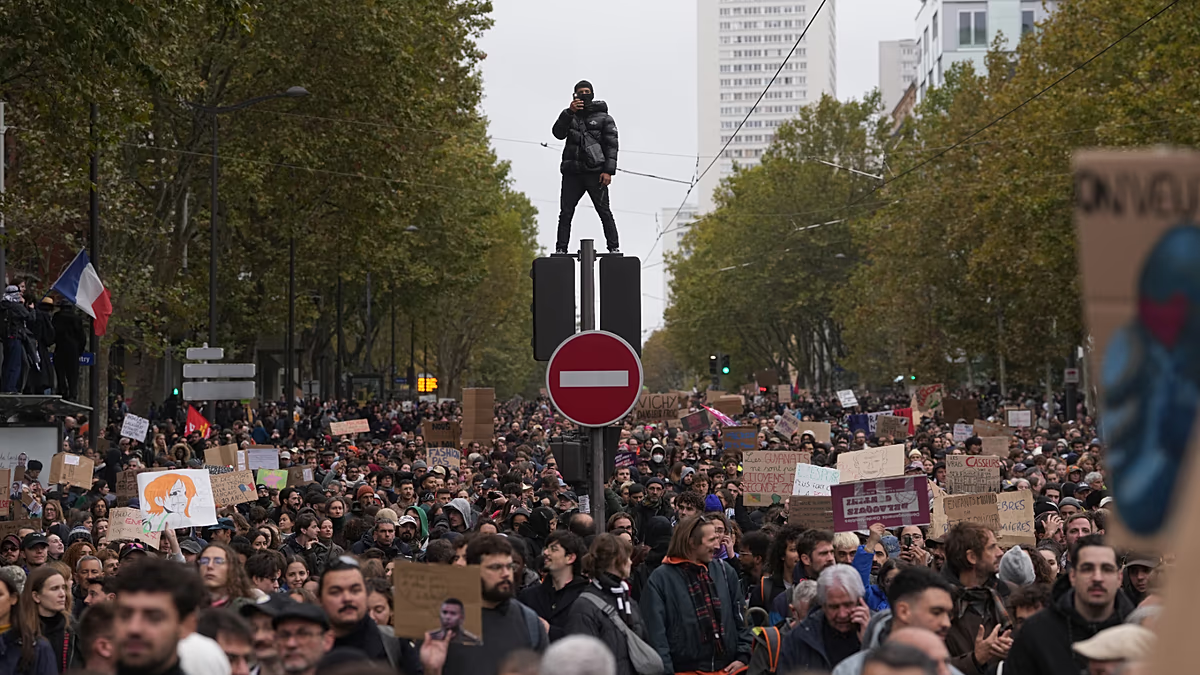
Mass protests over the cost of living have erupted in European capitals, including Paris, Brussels, Rome and Lisbon, as households struggle with soaring expenses exacerbated by Europe’s energy crisis.
While majorities in all ten countries surveyed – the UK, Germany, France, Spain, Italy, Poland, the US, Sweden, the Netherlands and Hungary – expressed concern about climate change, achieving net-zero emissions by 2050 ranked among their lowest climate priorities.
The findings come as EU energy ministers meet on Thursday to discuss energy efficiency and electrification targets beyond 2030, amid mounting pressure on Brussels to tackle soaring energy prices and reconsider aspects of its climate policies.
The challenge for the EU is increasingly stark: convincing voters not only that climate change matters, but that tackling it will ultimately make their lives more affordable.
In the Netherlands, 54% of respondents said environmental policies had made ordinary people worse off, compared with just 12% who said they had benefited.
The same perception was shared by 46% in Spain, 45% in Germany and France, and 44% in Hungary.
Meanwhile, between 49% and 76% of respondents, depending on the country, considered meaningful progress towards net zero by 2050 unlikely.
Clean power remains popular
Yet the poll does not suggest that voters want governments to abandon climate action altogether.
Instead, it points to a growing disconnect between public concern about global warming and support for the way politicians have presented the green transition.
Renewable energy remains popular when framed as a means of cutting bills and reducing dependence on imported fossil fuels, rather than as a climate obligation.
Expanding clean power capacity was ranked as the most effective way to reduce energy costs in eight of the ten countries surveyed, ahead of measures such as increasing fossil fuel production or importing more oil and gas from Russia.
In Hungary, 64% believed the shift to renewables would reduce energy bills, compared with 22% who disagreed. In Italy, the figures were 55% and 22%, respectively.
The findings show that voters continue to associate the green transition with financial hardship: climate-skeptic politicians could exploit that frustration to push for weaker targets and delayed implementation.
Fuel hikes threaten climate targets
That tension is already visible in Brussels as immediate economic pressures are beginning to compete with the EU’s longer-term climate commitments.
At their 15-16 October summit, EU leaders called for further short-term measures to address soaring energy prices while asking the European Commission to reassess the impacts of the bloc’s second emissions trading system, ETS2, which is due to extend carbon pricing to fuels used in buildings and road transport from 2028.
Several governments, led by Italy and backed by the Visegrad Group and Greece, have pushed to postpone the scheme until at least 2030, arguing that it could add to the financial pressure on households and small businesses.
Other countries, including the Nordics, have warned that weakening the system would undermine the predictable investment conditions needed to deliver the transition.
EU leaders ultimately requested an updated assessment rather than agreeing to another delay.
Post-2030 faces test of political credibility
The debate is likely to shape negotiations over the EU’s post-2030 energy and climate framework, as governments consider how to align energy policy with the bloc’s binding climate goals, including its 2040 emissions-reduction target and 2050 climate-neutrality goal.
At Thursday’s Energy Council, the battle over the EU’s post-2030 energy framework is exposing competing visions of the green transition. Ministers discussed potential targets for energy efficiency, electricity interconnection and electrification.
The discussion comes as EU countries seek to reconcile decarbonisation with competitiveness, security of supply and differences in national energy systems.
Calls for more flexible targets and a technology-neutral approach were part of the debate, typically from those countries historically more reliant on fossil fuels. Advocates of stronger climate policies warn against diluting commitments or weakening accountability.
Swedish energy minister Ebba Busch said that an ambitious transition with industrial competitiveness and reasonable energy prices “calls for a paradigm shift”.
“If we continue to micro-manage exactly what power source the energy system of Europe should consist of, instead of moving towards steering clearly to overarching targets, we’re going to miss what we all agree upon in this room,” Busch said.
Cypriot Energy Minister Michael Damianos said the post-2030 framework “will only succeed if targets are realistic, mutually consistent, adequately funded, and simpler to implement”.
France and 14 other members of the Nuclear Alliance want a technology-neutral approach that gives nuclear power equal recognition alongside renewables.
Spain, Portugal and Luxembourg are pushing for a dedicated renewable-energy target, while climate campaigners want binding targets and stronger enforcement to prevent greater flexibility from weakening the EU’s ambitions.
Despite their differences, most EU governments agree that investment in renewable generation, electricity grids, storage and electrification can reduce exposure to fossil fuel price shocks.
But those investments require time, financing and infrastructure, meaning households may not see the benefits for years.
With several European countries heading to the polls next year, governments face an awkward political calculation: voters want cheaper energy now, while many of the measures designed to deliver it will take much longer to pay off.
Imogen Learmonth, head of the quarterly research programme at Mandate Research, said voters see climate through the prism of “national security, household survival, and national sovereignty”.
