


- Cambodia’s environment ministry has called on content creators and social media users to stop posting content that promotes the online sale of wildlife products, to tackle the illegal wildlife trade in the country.
- The ministry’s statement comes after a recent undercover investigation by the NGO Earth League International revealed rampant illegal wildlife trade of endangered species products such as rhino horns, ivory, pangolin scales, and tiger bones, claws, skin and meat.
- The investigation found that most consumers of these products in Cambodia were wealthy Chinese government officials and businessmen, while the trafficking was run by “kingpins” who also operate scam centers to defraud people of their money.
- Conservationists say Cambodia’s statement is encouraging, but doesn’t address the bigger issue: organized criminal syndicates that traffic wildlife as part of their business model.
Cambodia’s environment ministry has urged the public and social media content creators to stop making or sharing content that encourages the commerce, consumption or capture of wildlife. It has warned that such actions are illegal and pose risks to human health and the country’s wild animals and plants.
At a press conference on Aug. 7, 2026, ministry spokesperson Khvay Atitya called on social media users to refrain from posting wildlife content to garner clicks and promote trade, including sharing photos and videos of eating or preparing dishes made from wildlife and rare plants.
“Promoting love for wildlife does not mean keeping wild animals in cages,” Atitya reportedly said in response to questions from the press. “Eating wildlife meat provides no benefit and can pose serious health risks to consumers.”
Atitya urged relevant ministries and authorities to take legal action against those involved in online wildlife commerce, stressing that online sales are as illegal as physical trading, according to a report from The Phnom Penh Post.
Russell Gray, head of ECO-SOLVE at the Swiss-based Global Initiative against Transnational Organized Crime (GI-TOC), who studies the online illegal wildlife trade, said this was a welcome move.
“One challenge we consistently see in the online illegal wildlife trade is that it can be treated as separate from the physical wildlife trade, when in reality the two are increasingly inseparable,” Gray said. “Social media, messaging applications and online marketplaces are now the primary infrastructure through which wildlife is advertised, buyers and sellers connect, and trafficking networks operate.”
Although Cambodia does not yet have a law governing the online wildlife trade, the advertising, sale, purchase or transportation of wildlife or its parts through social media platforms are considered punishable offenses, Atitya said. Violators can be fined, imprisoned or both, with sentences ranging from 5-10 years.
Speaking at the press conference, Atitya added that equipment used to commit such crimes and the income earned through illegal wildlife trading could be confiscated.
Statement comes after report reveals Cambodia’s role in wildlife trafficking
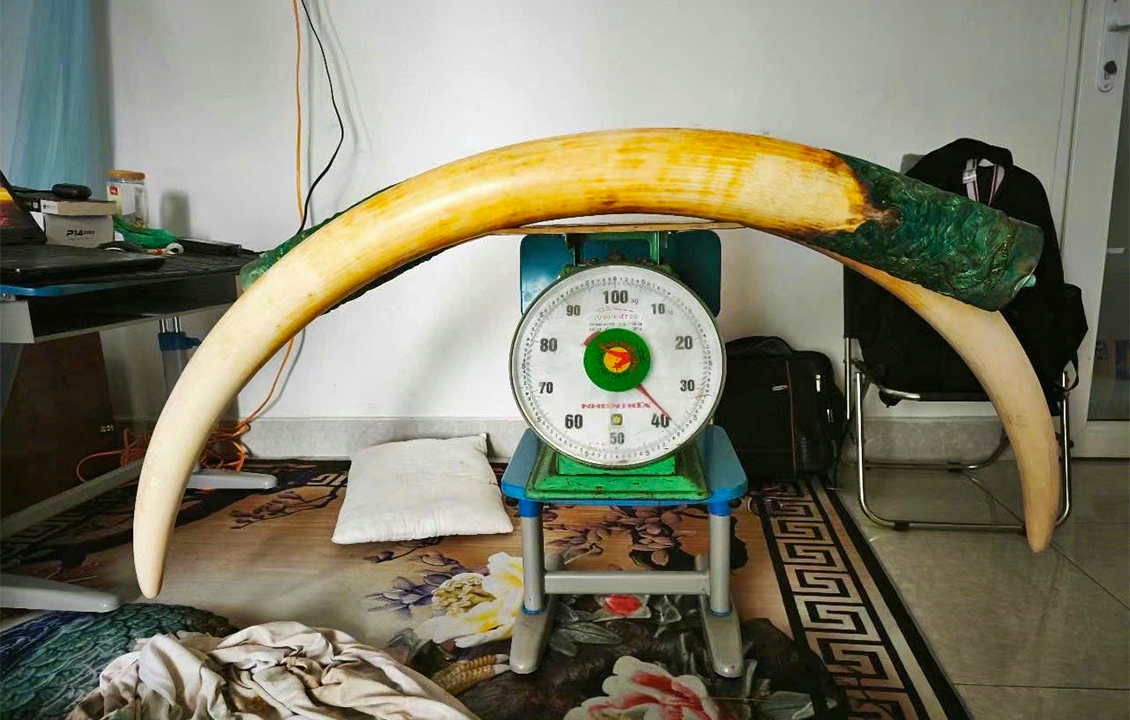
The ministry’s statements follow a recent undercover investigation by the U.S.-based NGO Earth League International (ELI), published in June 2026. Its report found rampant illegal wildlife trading in Cambodia of endangered species products, including rhino horns, ivory, tiger skin and bones, pangolin scales and more.
ELI’s investigators uncovered a trafficking enterprise run by Chinese expats who also operate scam centers from Cambodia that defraud people of their money. They identified five kingpins and others in the network, including traffickers, businessmen and wealthy customers in Cambodia and China, who often bought wildlife products. The report alleges that Chinese nationals and government officials came as tourists specifically to shop for these items.
Tigers and their parts were in high demand, including tiger bone wine, an expensive alcoholic beverage made from brewing bones in rice wine and sold in ornate bottles; tiger skins and claws; and tiger meat served to customers at exclusive restaurants in the capital, Phnom Penh, frequented by high-ranking Cambodian government officials and wealthy Chinese businessmen. Tiger cubs were also offered as a culinary delicacy or sold alive as pets, ELI’s investigation found.
ELI said it shared its investigations’ findings with U.S. officials for further enforcement and actions.
Andrea Crosta, ELI’s executive director, called the Cambodian ministry’s statements “a good first step” but said the government is falling short of addressing the bigger issue of wildlife trafficking in the country. “Focusing on the trafficking on social media, which is much smaller than … big traffickers, gives the idea that the government is paying attention, without too much effort,” he said.

Gray from the Global Initiative against Transnational Organized Crime said the government’s acknowledgment of the illegal wildlife trade within its borders is the first step.
“Cambodia’s Ministry of Environment publicly recognising online wildlife trade as an enforcement concern is a positive step in the right direction,” Gray said in an email to Mongabay. “The real test will be whether this announcement translates into sustained monitoring efforts, investigations and enforcement rather than simply the removal of visible content.”
ELI’s investigations found that wildlife traffickers were using online platforms such as WeChat and Telegram to sell animal products to customers. Social media platforms, specifically Facebook, have been repeatedly called out for facilitating illicit commerce in animals, but it hasn’t yet taken decisive steps to address the problem.
Merely taking down posts that sell illegal wildlife online, which social media companies tout as progress in addressing the problem, falls short, Gray said. “Removing an advertisement does not necessarily disrupt the trader behind it. In many of the markets we monitor, sellers simply migrate to another account.”
“The vast majority of international traffickers we are aware of have multiple backup accounts. When one is removed, they use another, and when all are removed, they simply make a new one and add all their connections back in the first couple days while messaging each to let them know who they are,” Gray said.
Facebook groups, which are often private and bring together wildlife traffickers, sellers and buyers, also operate the same way, experts say. When one is taken down, several others pop up in its place, or the community simply migrates their activities to other platforms or similar groups, of which there may be thousands.

Crosta said Cambodia needs to do more than just call out illegal sales of wildlife online. “By talking about online trading of animals [the ministry] put the responsibility on the social media platforms, influencers and journalists to stop it, not the Cambodian government,” Crosta said.
He suggested Cambodia needs on-the-ground enforcement and the political will to take on the wealthy and the powerful fueling the trafficking enterprise. “What we exposed in our report and video would require proactive action against the Chinese traffickers, with investigations on people with powerful friends in the government,” Crosta said.
Online monitoring of illicit sales could act as another source of intelligence, Gray said, adding that authorities could use information from these posts to track down poachers and sellers — and prosecute them.
“There is a danger in framing the problem primarily as one of users posting inappropriate content. The online environment can provide a window into markets and networks that historically operated much more invisibly and may be difficult to detect on the ground,” Gray said.
“The stronger approach would be to coordinate government agencies, law enforcement and specialist organizations so that high-risk content can be identified, preserved as evidence where appropriate, and used to investigate the networks behind the trade.”
Banner Image: An elephant tusk offered for sale to undercover ELI investigators in Cambodia. Image courtesy of Earth League International.
Spoorthy Raman is a staff writer at Mongabay, covering all things wild with a special focus on lesser-known wildlife, the wildlife trade, and environmental crime.
Report reveals Cambodia’s appetite for tigers, rhinos and other endangered wildlife
Bengal tigers in Cambodia? Reintroduction plan raises questions
Facebook is a hub for illegal wildlife trade, and that’s by design, report says

