


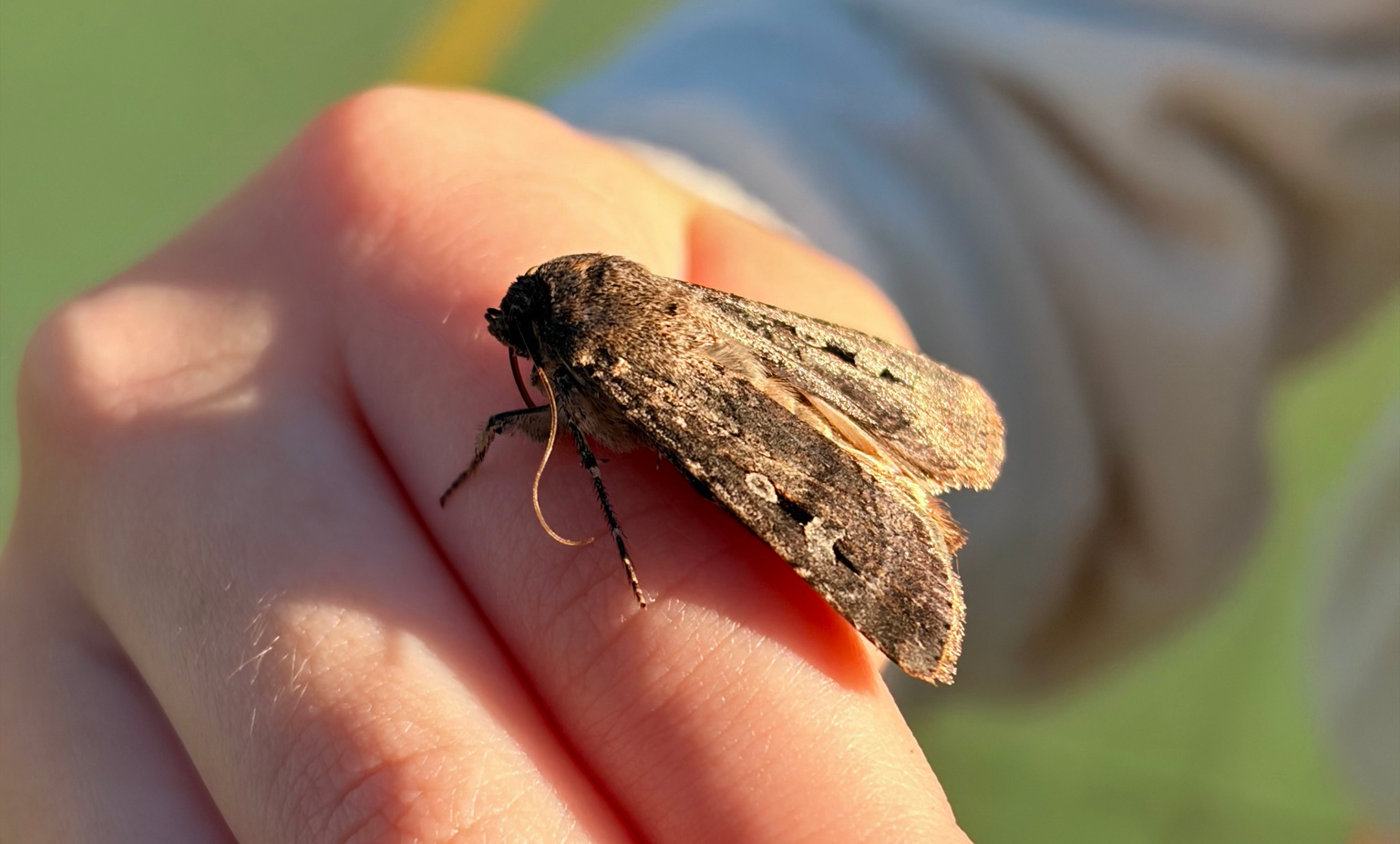
- Bogong moths are a critical resource for the many rare and wonderful species that live in the Australian Alps, but their future is far from certain.
- The IUCN classifies the bogong moth as an endangered species, but Australia, the only country where the moth is habitually found, has refused to recognize it as such, categorizing it instead as “data deficient”.
- Currently, a network of entomologists, ecologists, data scientists, First Nations peoples, and volunteers is working to address the data gaps, hoping to reapply for a national endangered species listing and identify the best strategies to protect the bogong moth.
- However, tracking a tiny creature that migrates hundreds of kilometers in the dark of night is no easy task.
At first glance, Australia’s bogong moth is a decidedly unspectacular-looking creature. The moths are typically a dark, mottled brown and each weighs less than a Tic Tac mint or half a gram. But looks can be deceiving.
Every spring in the Southern Hemisphere, from September to November, billions of bogong moths (Agrotis infusa) undertake an epic journey. Using the stars and the Earth’s magnetic field, these tiny insects navigate hundreds of kilometers across Australia. Their destination is the Australian Alps, located in the far southeast corner of the country, where they will shelter in cool caves for the duration of the summer.
The moths are a critical resource for the many rare and wonderful species that live in these mountains. “The whole [alpine] zone relies on the bogong moths,” said Marissa Parrott, a senior conservation biologist at Zoos Victoria. “They’re the second largest influx of nutrients into the Alps every year, beaten only by the sun.”
But the moth’s future is far from certain. Their numbers have been slowly declining since the 1980s, and in 2017, populations crashed, likely due to extreme drought across much of southeastern Australia.
At several locations, cave walls that had once been densely blanketed with moths — several thousand occupying each square meter (equivalent to 11 square feet) — were all but empty. “They went from four billion to nearly undetectable,” Parrott said.
The population collapse threatens the alpine ecosystem, including iconic marsupials like the mountain pygmy possum (Burramys parvus), a critically endangered species that relies on the nutrient-rich bogong moths. In some alpine regions, more than 50% of possum mothers lost their litters in 2017 and 2018.
While bogong moth populations have somewhat recovered since the terrible droughts of 2017-2019, many of the factors that researchers believe contributed to the decades of decline, including habitat loss due to agriculture, invasive predators and especially climate change, continue to pose major threats. Accordingly, in 2021, the IUCN classified the bogong moth as an endangered species.
But applications to have the species listed as endangered at the national level in Australia — the only country where the moth is habitually found — have been unsuccessful. Instead, the species has been classified nationally as data deficient. Parrott called the decision “really disappointing”, saying that “all of the data we had was accepted by the IUCN and should have been accepted in Australia at the same level.”

Now, a network of entomologists, ecologists, data scientists, First Nations peoples, and volunteers is working to address the data gaps cited by the Australian government, hoping to reapply for a national endangered species listing and identify the best strategies to protect the bogong moth.
“It’s basically like a giant jigsaw puzzle that we’re all trying to put back together,” said Joshua Waters, a member of the Indigenous Knowledge Systems Lab at Deakin University in Australia. “And while Indigenous knowledge holders bring significant pieces of those puzzles, conservationists and scientists working in these spaces today also carry part of that puzzle.”
At present, one major puzzle is related to the moths’ migration. While many of the caves they shelter in during the summer are known, the exact locations of their winter breeding grounds across southeast Australia and the paths they take to reach these areas are not well understood.

Conservationists need to figure out where the moths are in order to determine which areas in the agriculturally important southeastern region need the most protection, perhaps by initiating more sustainable farming practices or purchasing tracts of land to set aside as sanctuaries.
But tracking a tiny creature that migrates hundreds of kilometers in the dark of night is no easy task. Some scientists are searching for the breeding grounds and flyways by measuring DNA in the environment; others are measuring isotope ratios in the moths’ tissues to help determine where they lived as caterpillars.
Citizen scientists also play a crucial role. In 2019, Parrott and her Zoos Victoria colleagues launched Moth Tracker, a website where anyone can upload pictures of potential bogong moth sightings. Every image is checked by trained scientists to confirm the species. So far, Moth Tracker participants have spotted the moths in every Australian state except the Northern Territory.
This project not only helps map where the moths are but could also serve as an early warning system for other species, Parrott said. If very low numbers of moths are detected, researchers will have time to prepare and deploy supplemental food to help mountain pygmy possums raise their young.

Another tracking effort takes a more labor-intensive approach. Bogong Watch is a project led by insect conservationist Kate Umbers at Western Sydney University, along with entomologist Eleanor Drinkwater and collaborators from across Australia, Europe, and North America, including Parrott. Earlier this year, the Bogong Watch team and volunteers tagged 10,000 moths as the insects emerged from their summertime caves. They used nontoxic eyelash glue to attach a tiny, beeswax-coated paper tag with a unique identifying number on the moths.
Researchers later sent 50 custom-built moth-attracting lamps, which would temporarily trap the moths without harming them, to volunteers living in the moths’ potential flight paths. Then they crossed their fingers and waited.
“If you imagine the number of moths out there, it’s literally millions of these things flying in all different directions,” Drinkwater said. “And we don’t know exactly where they’re going. So, putting 50 lamps out there is a bit of a needle in a haystack.”
This year, volunteers weren’t able to spot any of the tagged moths. However, the pilot effort was still valuable, Drinkwater said, as it allowed researchers to develop protocols and provided a wealth of data on migrating bogong moths, albeit untagged ones.
Armed with this information, the team plans to try again in the early months of 2027, this time with 150 lamps. The project is currently seeking volunteers.
Drinkwater has been impressed by the number of people seeking to participate. “As someone working in invertebrate conservation, I’ve been blown away by how much everybody cares about these incredible creatures,” she said.
Bogong moths are also of great cultural importance for many of Australia’s First Nations peoples. For millennia, the enormous aggregations of these moths in the mountains each summer have been a source of sustenance for multiple Indigenous communities, who would travel as far as 100 kilometers (62 miles) to partake.
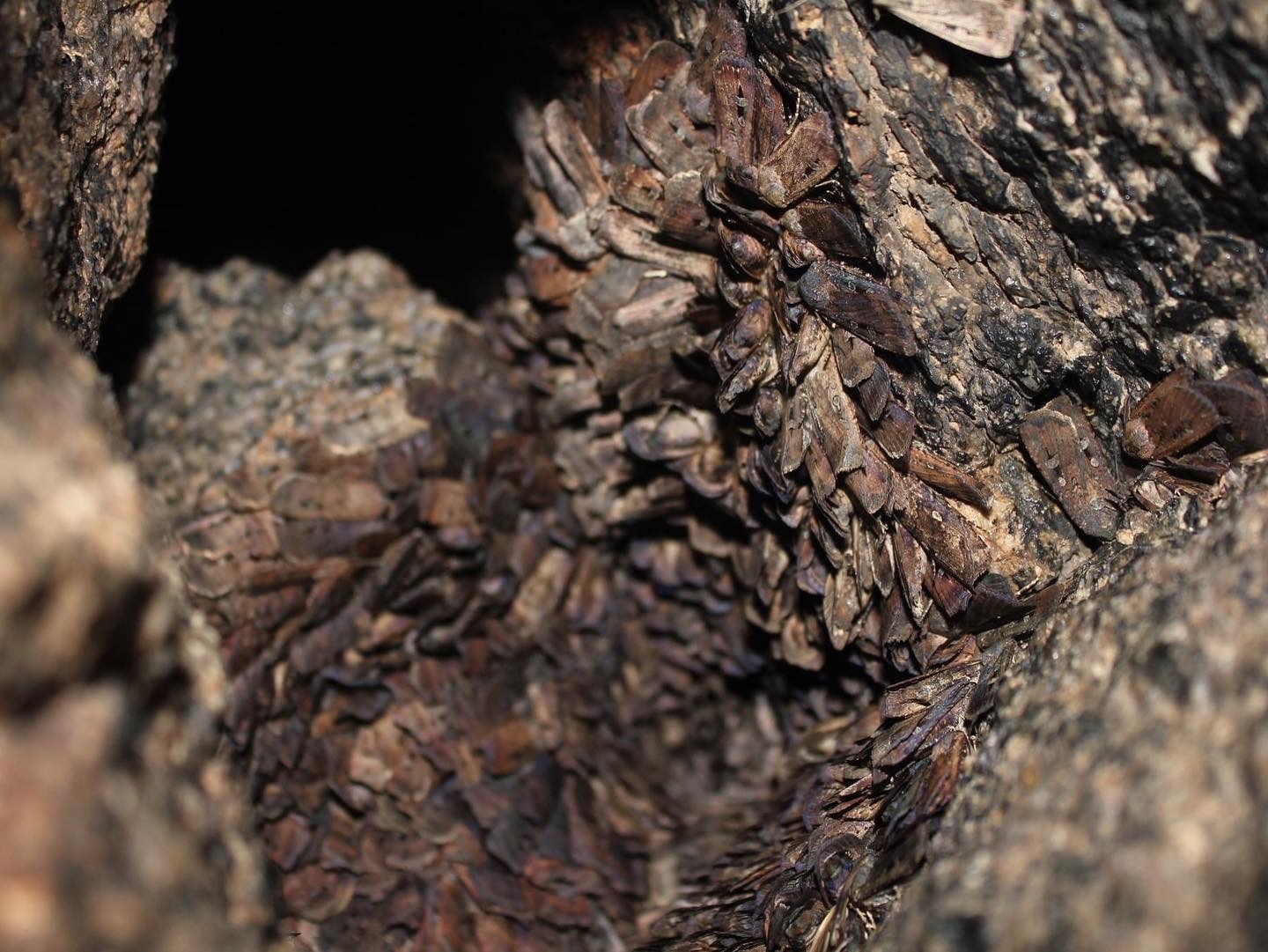
These gatherings were about much more than just food, Indigenous Knowledge Systems Lab’s Joshua Waters said: “They were also opportunities for ceremony and for governance and for law and exchange and trade. That’s why I say it’s the centerpiece of Australian Indigenous histories and cultures in terms of invertebrates: because it was the mechanism or the organizing species that allowed for that kind of governance and trade to take place.”
As such, knowledge and stories of the moths – their population sizes, the timing of their migrations, the impact of different environmental conditions and traditional land management practices like cultural burning — have been passed down from generation to generation, Waters added.
“This carries a longitudinal — or intergenerational — data set that can be drawn upon, which has extraordinary depth, and which formal ecological monitoring programs would have a lot of trouble replicating,” he said.
The deep historical knowledge of the moth within its ecological context, coupled with collaborative efforts to pinpoint its present-day breeding grounds and migration pathways, is a key piece of the conservation puzzle.
Ultimately, the story of the bogong moth is the story of connectivity, Parrott said. The survival of the mountain pygmy possum is inextricably linked with that of the bogong moth; a drought in one region impacts life in a mountain range hundreds of kilometers away. Nectar from many species of native flowering plants helps fuel the moths’ flight, and in return, the moths likely function as important pollinators, helping ensure these species’ survival.

For some, the moths may also offer a sense of connection across time. In 2025, conservationists from all different backgrounds, including Parrott, Drinkwater and Waters, attended the Bogong Moth Summit in Canberra to share knowledge about the cultural and ecological importance of this creature and brainstorm strategies to promote public interest in their conservation.
On the final day, participants hiked to the top of Mount Kosciuszko, mainland Australia’s highest mountain, around 150km (95 mi) away, at sunset “to see the bogong moths in what they call their maelstrom, which was an extraordinary experience,” Waters said.
“To see and witness something that people had been seeing and witnessing for thousands of years before we arrived there was really special, and it gave real tangibility to just how important this work is.”
Banner image:A bogong moth (Agrotis infusa) in Albert Park, Victoria. Image by emmacutting via iNaturalist (CC BY 4.0).
Amid efforts to save Australia’s southern cassowaries, their numbers remain unknown
Citations:
Warrant, E., Frost, B., Green, K., Mouritsen, H., Dreyer, D., Adden, A., … Heinze, S. (2017). Corrigendum: The Australian bogong moth Agrotis infusa: A long-distance nocturnal navigator. Frontiers in Behavioral Neuroscience, 11. doi:10.3389/fnbeh.2017.00162
Dreyer, D., Adden, A., Chen, H., Frost, B., Mouritsen, H., Xu, J., … Warrant, E. (2025). Bogong moths use a stellar compass for long-distance navigation at night. Nature, 643(8073), 994-1000. doi:10.1038/s41586-025-09135-3
Stephenson, B., David, B., Fresløv, J., Arnold, L. J., Delannoy, J., & Hellstrom, J. (2020). 2000 year-old bogong moth (Agrotis infusa) Aboriginal food remains, Australia. Scientific Reports, 10(1). doi:10.1038/s41598-020-79307-w
Coates, J. M., Keaney, B., Scheele, B. C., & Cunningham, S. A. (2023). Endangered bogong moths (Agrotis infusa) forage from local flowers after annual mass migration to Alpine sites. Global Ecology and Conservation, 44, e02482. doi:10.1016/j.gecco.2023.e02482

