


Just as well then that the British government is not currently exploring the idea, according to one person familiar with U.K. government thinking on EU policy.
Instead, Burnham’s government is focused on wrapping up a “reset” of relations by his predecessor Keir Starmer. This relatively modest program includes a deal to smooth trade in agri-food, establish a youth mobility scheme, and sign an agreement to coordinate emissions trading.
The deals are meant to be signed off at an EU-U.K. summit to be held by the end of the year. The meeting is yet to be scheduled, however, and talks have been complicated by disputes over EU protectionism on steel and procurement, as well as wrangling over the rate of tuition fees paid by European students studying in Britain.
You say associate, I say ally
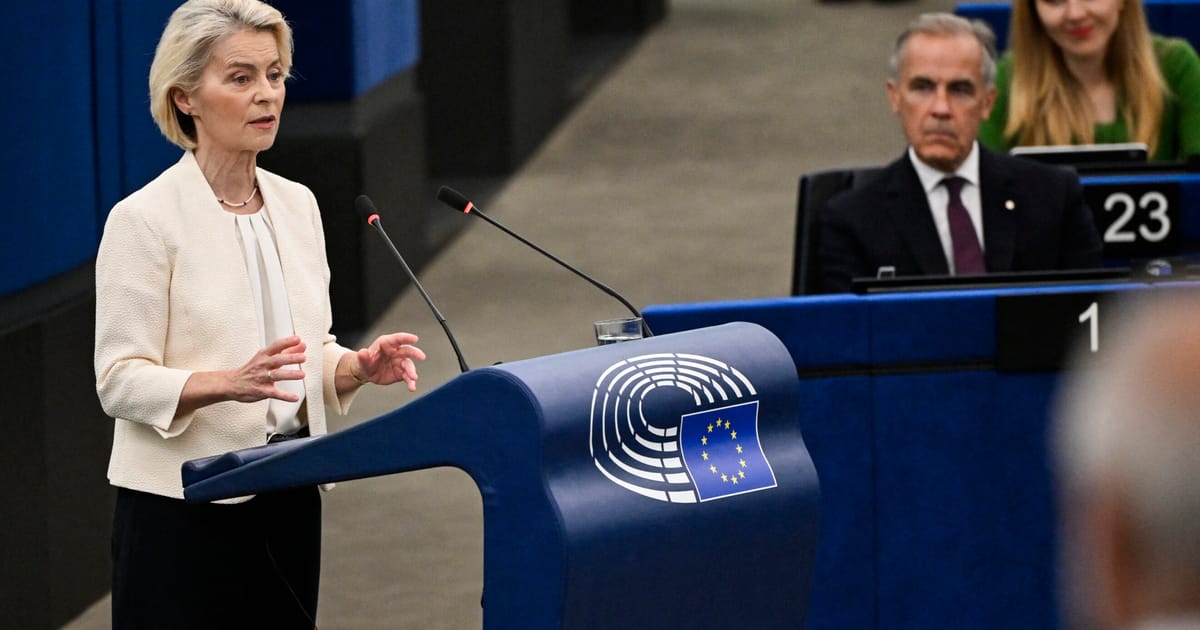
It’s unclear whether von der Leyen’s proposal will go anywhere. Carney hasn’t actually asked to become a member of anything — rather, he told delegates Tuesday at an investment summit in Toronto that he wanted to build a “unique security and economic alliance” with Europe.
Reports ahead of Carney’s speech that he would be proposing associate EU membership appear not to have come true — though von der Leyen seemed to respond on Wednesday as if they had.
Yet practically, Canada and the EU are not even using their existing cooperation to full effect. Ten EU member countries including France, Poland and Italy are yet to ratify the EU-Canada free trade agreement, CETA, nearly a decade after it was signed.
