


“People pleaser!” That’s the insult Andy Burnham’s enemies sneer at him. And yes, he will need all his mightiest people-pleasing talents to win over voters to contribute to a new national care service. Choosing this forever failed policy (22 major reviews over three decades) as his first great challenge is a remarkable act of bravery. No mere people pleaser would dare step on this political live rail.
It will use up vast amounts of political capital to get a national care service off the ground. He hardly needed Tuesday’s Mail front page (“Burnham’s £18bn ‘death tax’ nightmare”) to remind him. But he has already fought on the battleground that is social care reform. “I do have some of the scars,” he said. How good to also hear him take a firm swipe at media attackers, who will now redouble their efforts. “You can’t create scare stories when people are already scared by what they’re seeing anyway through their own eyes in their own homes or in care homes,” he said. This is no grasp at low-hanging fruit, no search for a quick win. It’s a cause of deep conviction.
In his speech from a north London care home, the prime minister told of his father with dementia, and of the struggle for families to get any help, the poor quality of much of it, the astronomical costs for some and the profiteering of private equity firms buying up care homes. That will have resonated with many, but his challenge now is to win the attention, hearts and minds of those who know nothing of social care. Making people care about care is the first vital step.
A survey last year found 33% of people in England believed care was generally free at the point of need, like the NHS, and another 18% didn’t know whether it was. Many get a nasty shock when they need it for their family and find they must pay if they have savings above £23,250. Only 4% listed social care as a top priority for the country; its political salience is low because at any one time, few people are using it – and they put it out their minds afterwards. In England, this unseen service uses up a phenomenal 78% of local council funds: no wonder people think they get bad value for their council tax, as visible services keep shrinking to pay for it. Everything about it is broken.
People need to wake up to what confronts us. They need to know that the roulette wheel of fate decides which families are stricken by dementia: one in three people alive today will get this most dreaded of diseases. Some may live for years in a nursing home: one in seven will pay over £100,000 and some will have to sell the family home.
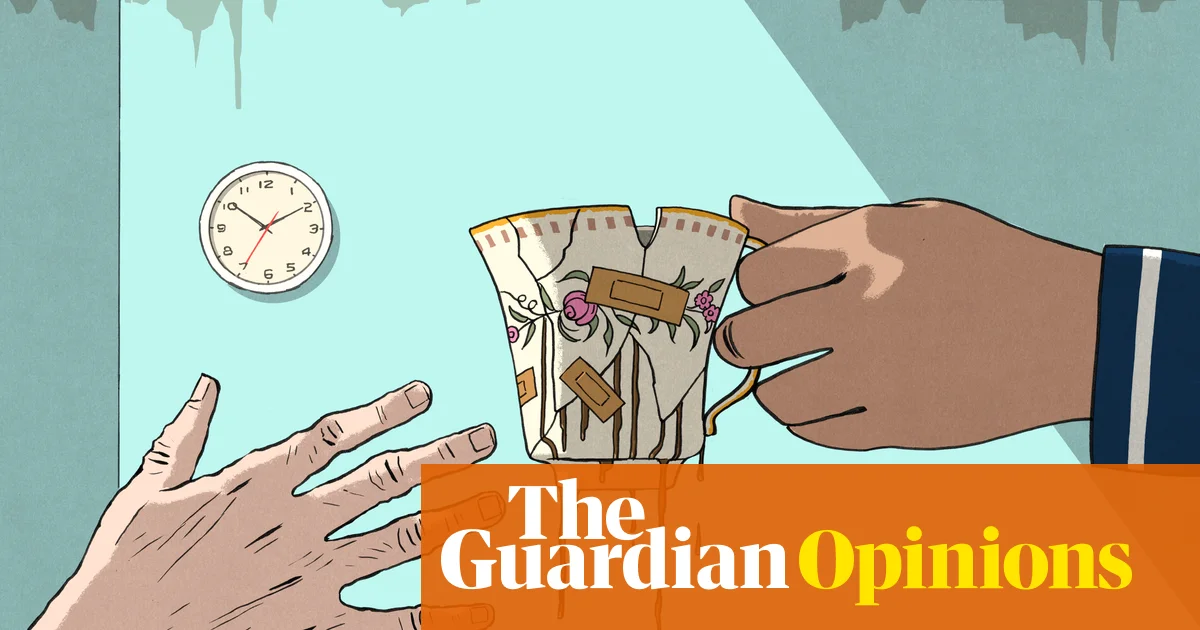
But still, this nation of gamblers shrugs. People bet that it will never happen to them; that when their time comes, they will just drop dead. Burnham rightly described the UK’s social care system as equally unfair as the US health system: it bankrupts some. Would people rather pay a defined amount or risk losing everything? It’s an insurance offer to protect against the risk of catastrophic loss.
Research by the Health Foundation has found public support for funding reform, but – here’s the catch – “once people understand the current system”. As Louise Casey embarks on her Big Conversation on care, educating people about the system will be her primary task: only then can we discuss which other payment options are least unacceptable.
This is about better care, too. For-profit care is lower quality than voluntary, non-profit or local authority-run care services, the Blavatnik School of Government has found. This chaotic system includes 16,500 care homes: 85% for profit, many small family-run businesses and some private equity big chains that will not be part of the new care service.
Why do we endure this barely regulated, barely inspected patchwork of confusion? This was another disastrous Margaret Thatcher privatisation, of the kind Burnham intents to repair. After a 1988 report by the supermarket executive Roy Griffiths, Thatcher effectively ordered councils to close their own homes and services, outsourcing them to the private sector, and closed NHS geriatric care wards. Crafting a new national care service out of all this would be the hardest of all in-sourcing tasks.
This week, the prime minister warned the NHS could collapse unless social care is repaired. Last month, about 13,600 beds were occupied by people who were there only for lack of social care elsewhere, and delayed discharges cost the NHS £2.7bn last year. Burnham talks of integrating NHS and social care, with a workforce eventually on the same pay and with the same career progression. Currently, a starter NHS healthcare assistant is paid more than a care assistant.
Will people agree to pay up? There are signs they will: when Boris Johnson proposed a care levy, it was surprisingly popular. But it was abolished by Kwasi Kwarteng before it could be implemented. Which was just as well, because the plan added 1.25 percentage points to employee and employer national insurance. That meant workers, not pensioners, would pay. No extra tax would fall on dividends or other unearned income that doesn’t attract NI contributions. What’s more, the highest paid pay the lowest marginal NI rates.
Whatever system emerges from these consultations, one principle must be that not a penny more is paid by the young for the old. Pensioners in the UK are the least likely group to be in poverty (though, of course, some are). They generally have the most wealth and property, alongside final salary and triple-locked pensions. They are the overwhelming beneficiaries of the NHS. It’s no cliche to say the young are the future, so they must come first, in better early-years education, holiday childcare and schools with a wider technical, arts, drama, sports and design curriculum, while further education gets the funding and status it needs. The old must pay for the old, in one way or another.
after newsletter promotion
This is a minefield. The politics of social care are fraught beyond all the other great problems Burnham could have chosen at the start. But the tone of his speech suggests the new prime minister really may lift this as a national priority. The wreckers in the Tory and Reform parties may find themselves wrong-footed; the Mail, yet again, out of tune with the public mood.
When Burnham says we need “a different kind of politics: problem-solving, not point-scoring”, some old hands sigh and say: “Good luck with that!” But Burnham may strike a chord. A public grown hostile to politics may see through Kemi Badenoch’s deliberately impossible conditions for consensus agreement, as she cynically and childishly demands no borrowing, no taxes and no taking from “those who have made provisions and saved up over the course of their lives”. They know someone must pay, and that includes those lucky enough to have “made provisions”.
It has never been the right time to brave social care reform. But it may be now, with a leader driven by personal belief, in his early stages, when he still has substantial amounts of political capital. He has grasped the nettle: will society, politics and the media? If not now, when?
-
Polly Toynbee is a Guardian columnist
-
Do you have an opinion on the issues raised in this article? If you would like to submit a response of up to 300 words by email to be considered for publication in our letters section, please click here.
