


Alzheimer’s disease may begin leaving detectable clues in the brain as much as a decade before memory problems appear. Researchers at Johns Hopkins University have identified two brain regions that show signs of deterioration earlier than the hippocampus, the area commonly examined for evidence of the disease.
The discovery could eventually help doctors recognize Alzheimer’s years before symptoms develop, potentially allowing treatment to begin when it has the greatest chance of protecting the brain.
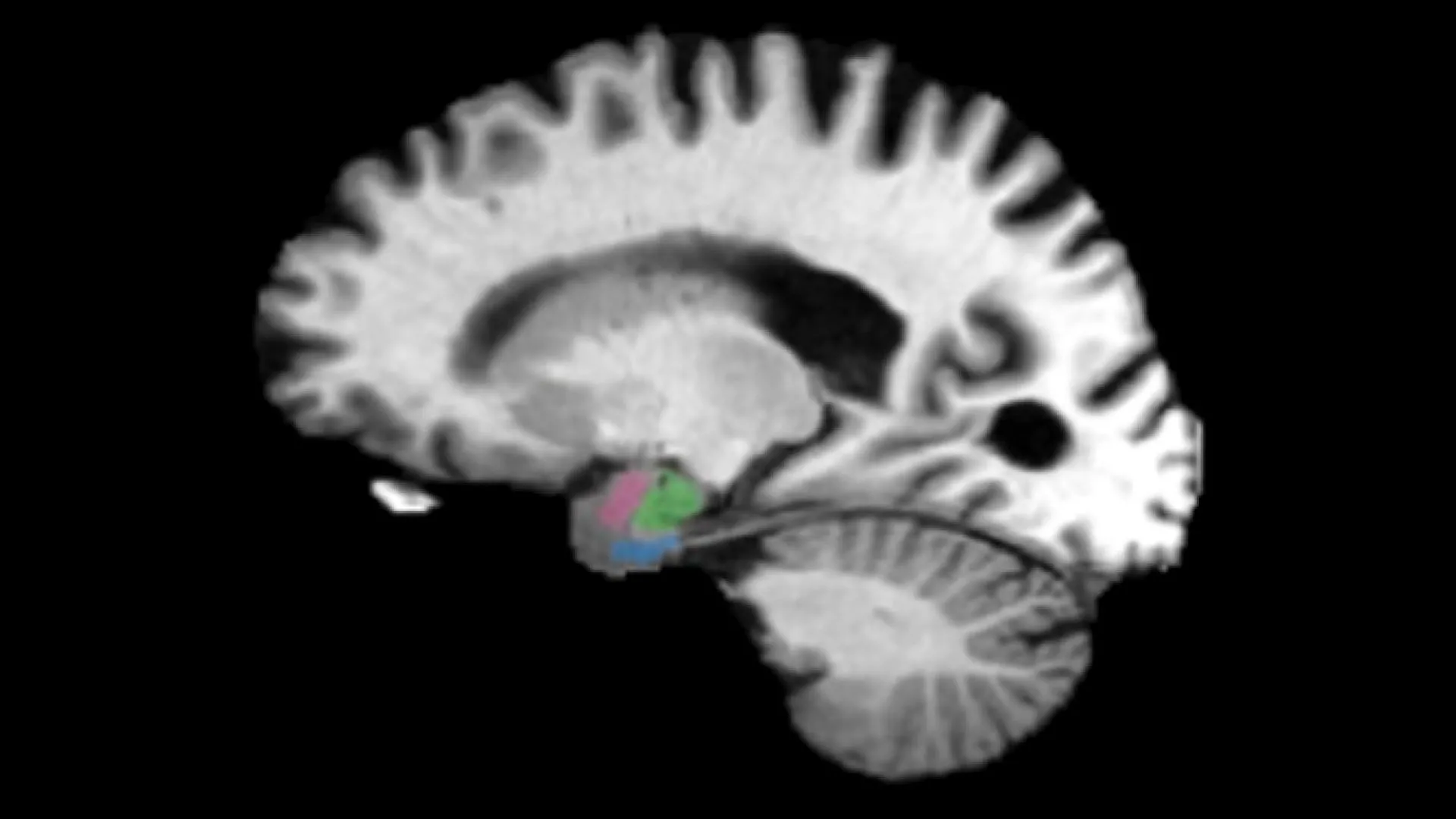
By examining hundreds of brain scans, the scientists found that the entorhinal cortex and amygdala, two regions involved in memory and emotion, begin losing tissue earlier than the hippocampus. These changes may offer important new clues about how Alzheimer’s develops and how it could be detected before significant cognitive decline occurs.
“We have found that there are early changes in the brain manifesting the clinical biomarkers of atrophy as much as a decade before there are clinical symptoms,” said biomedical engineer and senior author Michael Miller. “It’s at least a 5-to-10-year play where your brain is changing. Imagine if we could start to treat the neurodegenerative changes at the 2, 3 or 4-year point rather than after 15 years when the changes are manifesting in memory symptoms. That’s the great promise here for your loved ones who are at risk.”
The findings were recently published in NeuroImage Reports and are being presented at Neuroscience 2026, the annual meeting of the Society for Neuroscience.
Detecting Alzheimer’s Before Memory Loss Begins
Alzheimer’s is the most common cause of dementia worldwide, but the disease does not begin when someone first experiences forgetfulness or confusion. Changes associated with Alzheimer’s can accumulate in the brain for decades before noticeable symptoms emerge.
Scientists believe this long period of silent progression may provide a crucial opportunity for treatment. Interventions that begin before extensive damage occurs could potentially do more to preserve memory and other cognitive abilities. However, taking advantage of that opportunity requires reliable ways to identify the disease in its earliest stages.
One promising approach involves biomarkers, measurable biological changes that can indicate the presence or progression of a disease. In Alzheimer’s research, these markers could help reveal who is developing the condition before symptoms become apparent.
“Our goal is to be able to treat individuals before the symptoms of Alzheimer’s disease develop so that they may delayed or even stopped,” said Marilyn Albert, co-author and director of the Johns Hopkins Alzheimer’s Disease Research Center.
Two Brain Regions Reveal Earlier Warning Signs
To investigate where the earliest detectable changes occur, the researchers examined hundreds of magnetic resonance imaging (MRI) and positron emission tomography (PET) scans collected through two independent research projects: the Alzheimer’s Disease Neuroimaging Initiative and the Biomarkers of Cognitive Decline Among Normal Individuals study.
The scans followed people at different stages of Alzheimer’s disease over time, including individuals without symptoms, those experiencing cognitive impairment, and patients who ultimately died from the disease.
In both groups, the researchers observed a consistent pattern. The entorhinal cortex and amygdala, which are located near the hippocampus, showed greater relative tissue loss during the early stages of Alzheimer’s than the hippocampus itself.
This distinction matters because the hippocampus plays a central role in memory and has traditionally been a major focus when doctors look for Alzheimer’s-related brain damage.
The two newly highlighted regions perform important functions of their own. The entorhinal cortex helps retrieve previously stored memories, while the amygdala contributes to emotional memory, including how emotional experiences are processed and remembered.
Their earlier shrinkage suggests that examining these structures together could reveal signs of Alzheimer’s that might be less apparent when attention is focused primarily on the hippocampus.
Brain Shrinkage Linked to Alzheimer’s Tau Protein
The researchers also found an important connection between the loss of brain tissue and tau, a protein closely associated with Alzheimer’s disease.
Under normal conditions, tau helps maintain the internal structure of nerve cells. In Alzheimer’s, however, tau can accumulate abnormally and form tangles that interfere with healthy brain function.
Using PET imaging and digital pathology, the scientists found that areas of gray matter shrinkage overlapped with regions showing tau-related changes. Gray matter contains large numbers of nerve cell bodies and is essential for processing information throughout the brain.
This relationship strengthens the possibility that changes in the entorhinal cortex and amygdala could serve as useful indicators of early Alzheimer’s disease.
The team believes that measuring tissue loss in both regions, rather than relying primarily on changes in the hippocampus, could eventually improve predictions of who is likely to develop cognitive decline.
As brain imaging becomes more accessible and less expensive, this approach could also become increasingly practical. For people with a family history of Alzheimer’s or other risk factors, researchers envision a future in which doctors might examine these regions as early as a person’s 30s or 40s.
“As biomarkers and treatments become increasingly available, knowing who is going to have cognitive decline is going to be really important,” said co-author Meaghan Morris, a neuropathologist who studies Alzheimer’s and other dementias. “This could really play into better risk stratification for identifying who is going to have cognitive decline in the near future — and treating people earlier and earlier to hopefully slow the course of the disease.”
A Potential New Path Toward Earlier Alzheimer’s Treatment
Although the findings are promising, more research is necessary before doctors can use these brain changes as a reliable diagnostic tool. The study identifies potential early biomarkers, but it does not yet establish a clinical test capable of predicting Alzheimer’s years in advance.
The next step is to investigate what happens within these regions at a much smaller scale. The researchers want to understand the molecular changes surrounding abnormal tau accumulation and how those changes contribute to the progressive loss of brain tissue.
Identifying the biological processes involved could eventually reveal new targets for therapies designed to interrupt Alzheimer’s before extensive damage occurs.
“Our future work is to better show the molecular neighborhoods associated with these Tau protein changes as localized by these clinical biomarkers of atrophy,” Miller said. “Once we know more about the molecular neighborhoods, we can develop therapies.”
