


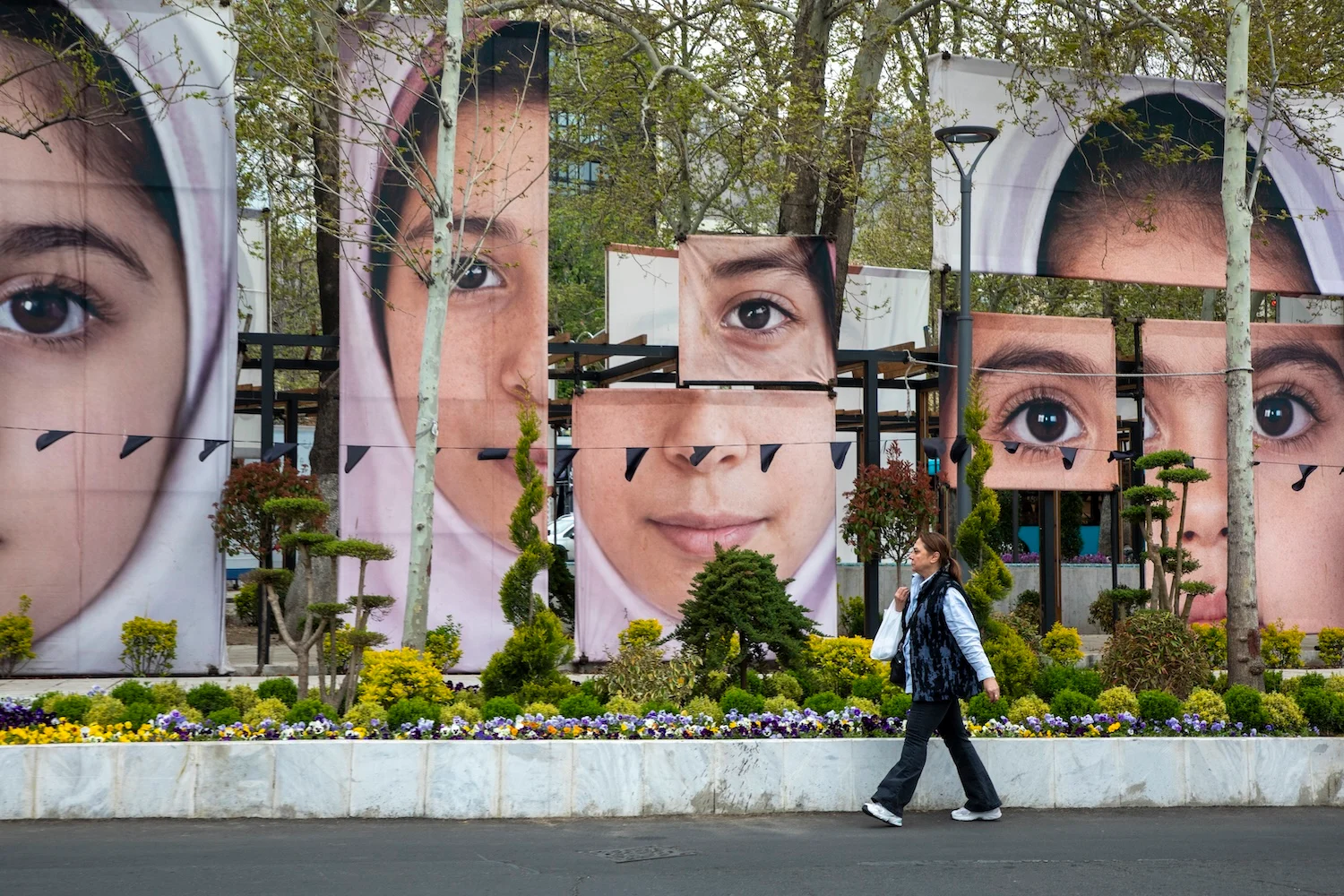
On the first day of the Trump administration’s war on Iran, a missile struck a girls’ elementary school in Minab, killing at least 156 people—including more than 120 children. Preliminary investigations concluded that the United States was responsible. But there has been no pursuit of accountability, and President Donald Trump has sloughed off accusations of U.S. culpability and calls for further investigation.
Over the 39 days of war following the Minab bombing before a cease-fire was reached on April 8, the United States and Israel damaged educational facilities, hospitals, public gathering spaces, critical civilian infrastructure, and a UNESCO World Heritage site. Iran’s health ministry reported that by June, nearly 3,500 people had been killed and more than 26,000 wounded. With the cease-fire now broken, the United States has once again hit numerous Iranian civilian infrastructure sites, including bridges, health facilities, water desalination plants, sewage systems, and even residential areas.
On the first day of the Trump administration’s war on Iran, a missile struck a girls’ elementary school in Minab, killing at least 156 people—including more than 120 children. Preliminary investigations concluded that the United States was responsible. But there has been no pursuit of accountability, and President Donald Trump has sloughed off accusations of U.S. culpability and calls for further investigation.
Over the 39 days of war following the Minab bombing before a cease-fire was reached on April 8, the United States and Israel damaged educational facilities, hospitals, public gathering spaces, critical civilian infrastructure, and a UNESCO World Heritage site. Iran’s health ministry reported that by June, nearly 3,500 people had been killed and more than 26,000 wounded. With the cease-fire now broken, the United States has once again hit numerous Iranian civilian infrastructure sites, including bridges, health facilities, water desalination plants, sewage systems, and even residential areas.
It is more urgent now than ever that U.S. lawmakers and citizens demand accountability for potential war crimes such as the Minab bombing to ensure that similar tragedies do not occur again. This is also the only way for Washington to begin to repair its credibility and prioritize human rights in its foreign policy.
As two former senior human rights officials at the State Department, we spent our careers pressing governments around the world to uphold their citizens’ rights and hold those who violated them accountable. The Iran war, along with a host of other acts by the Trump administration—from strikes on alleged drug trafficking boats to withdrawing from the United Nations Human Rights Council to unwarranted attacks on the International Criminal Court—has badly undermined the United States’ reputation, alienated U.S. allies, and weakened the global human rights system. That is both a moral stain on the nation and a strategic failure.
The administration has cited the Islamic Republic’s repression of its own people as one of its many attempted justifications for the illegal war in Iran. There is no doubt that the Iranian government’s human rights record should be condemned, but that will not be remedied by killing its leaders or bombing the country’s children. Unprovoked military interventions rarely end as promised, and their highest costs disproportionately fall on the most vulnerable.
What happened in Minab, and the civilian harm that followed, was tragically predictable given U.S. leaders’ clear disregard for the norms of warfare and the rule of law. Before the war, U.S. Defense Secretary Pete Hegseth gutted the military’s civilian harm mitigation programs, slashing combatant command staff by more than 90 percent. U.S. Secretary of State Marco Rubio followed suit, carrying out mass firings in the State Department and draining key interagency expertise. Lawyers have left both agencies in droves, including judge advocate generals who would normally advise combatant commands and soldiers on the laws of war. In the opening days of the Iran campaign, Hegseth dismissed “stupid rules of engagement”; the president has repeatedly scoffed at international law; and asked under oath whether Central Command had investigated other incidents of civilians killed by U.S. strikes in Iran beyond the Minab bombing, its commander said it had not.
Beyond moral imperatives, there are geostrategic motivations to make human rights central to foreign policy. When the United States bombs a school and responds with silence, the damage reverberates far beyond Iran—and the image of a flattened classroom juxtaposed with apathetic leaders corrodes trust in the United States more than any adversary’s propaganda could. Allies that have historically joined U.S.-led coalitions, such as France and Spain, have denounced the war as a breach of international law and refused to participate in the military effort. At a time when perceptions of the United States are declining sharply around the world—especially in the global south, where populations, markets, and political influence are growing—the erosion of U.S. moral authority could push more states away from Washington and toward Moscow and Beijing.
That damaged reputation, and a broader feeling of fear and resentment from the rest of the world, makes Americans less safe and less prosperous. Slaughtering civilians fosters the conditions in which terrorist groups emerge, recruit new members and supporters, and thrive, generating new threats to U.S. security—perhaps most conspicuously evidenced this century by the 9/11 terrorist attacks and the Islamic State’s rise in Iraq following the U.S. invasion in 2003.
What would accountability look like, beyond ending this unjust war? Specific, concrete steps are necessary to mitigate future potential war crimes and ensure that civilian safety is prioritized. In March, for example, a group of 121 congressional Democrats invoked the Political Declaration on the Use of Explosive Weapons in Populated Areas—a commitment endorsed by the United States in 2022—in a letter to Hegseth to demand answers about the steps the United States was taking to prevent and respond to civilian harm. But a month after the letter was sent, the lawmakers said Hegseth refused to answer their questions.
In a separate effort to pressure Hegseth, the Senate Armed Services Committee passed a version of the National Defense Authorization Act including a provision limiting Hegseth’s travel funds until he releases military investigations into Minab and two civilian harm cases in Yemen, in addition to full videos of the boat strikes in the Caribbean and Eastern Pacific. The measure narrowly passed the House on July 22 but faces an uncertain future in the Senate.
That is a good start, but much more is needed, including an independent investigation into Minab and every other credible report of civilian harm—with the findings made public—in addition to payments to any victims’ families and monetary support to rebuild what the United States destroyed. Additionally, the civilian harm mitigation programs dismantled by the administration in both the State and Defense departments should be immediately restaffed.
Given the Trump administration’s outright rejection of international law along with other jurisdictional issues, sustained congressional and public pressure is the most effective path to ensuring the Minab bombing and other incidents of civilian harm are properly and transparently investigated. Americans can augment congressional pressure by encouraging their representatives to keep the spotlight on Minab and by supporting human rights organizations that gather evidence and produce their own investigations. Individual citizens have power: When Vietnam War veteran Ronald Ridenhour heard from fellow soldiers about the massacre of Vietnamese civilians in My Lai, for example, he gathered their testimony and wrote to President Richard Nixon and more than 20 members of Congress, prompting a formal investigation of an incident that would have otherwise stayed buried.
The United States should be strong enough to admit its mistakes and decent enough to repair them. That moral fortitude is still available—but it must be demanded by policymakers and the public alike. Centering human rights in foreign policy is not naive moralism but a strategic necessity that helps keep the United States out of unlawful, unauthorized, and unnecessary wars. Washington has prioritized a military-centered foreign policy for far too long, and this has led to what could become another forever war in Iran—even though a majority of Americans believe the war is “not worth fighting.”
Americans want peace. It’s time we tried a new approach. For the sake of Americans’ safety and prosperity—and for a freer, more stable world—a foreign policy centered on human rights is worth pursuing.
This post is part of FP’s ongoing coverage. Read more here.
