


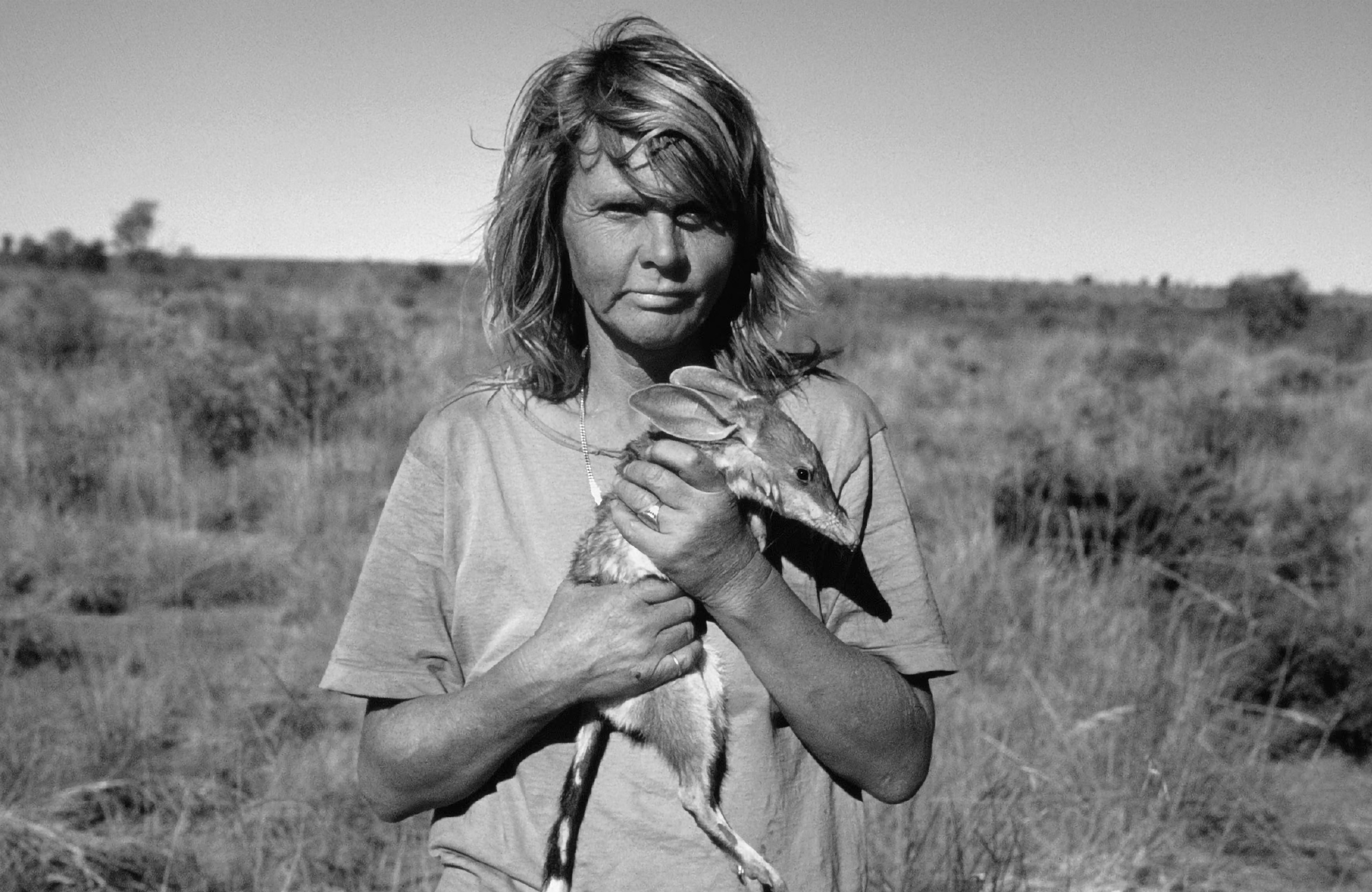
- Pat Lowe, who died on July 2nd, 2026, aged 84, was a psychologist, writer, naturalist, editor, and longtime defender of the Kimberley in Western Australia.
- Her understanding of the region was shaped by years living with Walmajarri artist Jimmy Pike at Kurlku in the Great Sandy Desert and by listening to Indigenous knowledge-holders.
- She helped found Environs Kimberley, later chaired it, served on its board for decades, and edited its newsletter for 29 years.
- Lowe also supported Broome’s literary community, wrote extensively about the Kimberley, and argued that communities should be able to reject projects that would permanently damage Country, the Indigenous Australian term for ancestral lands, waters, relationships, knowledge, and responsibilities.
The termites had built their towers long before roads crossed the Kimberley or companies proposed industrial projects along its rivers and coasts. Their colonies worked beneath the red earth, altering the soil and supporting other forms of life. Pat Lowe studied them closely. She asked Aboriginal knowledge-holders what they knew, spoke with scientists, read widely, and eventually wrote a book about them.
She was drawn to subjects that were common and easily overlooked. The same attention led her to boabs, mammals, desert plants, and the pindan woodlands around Broome, where red soil lies beneath pale grasses and scattered trees. Her interest in conservation grew from long observation of how these landscapes worked.
Pat Lowe, who died on July 2nd, 2026, aged 84, spent much of her life studying the Kimberley and helping others understand it. She was a psychologist, writer, editor, naturalist, and environmental campaigner. Her path to northern Western Australia began far away. Born in England in 1942, she trained as a teacher, worked in East Africa, and later moved to Australia, where she became a psychologist in the prison system.
At Fremantle Prison, she met Jimmy Pike, a Walmajarri man who had grown up in the Great Sandy Desert and became one of Australia’s best-known Indigenous artists.
After Pike’s release, they lived for three years at Kurlku, a remote desert camp. Water, weather, distance, and food governed daily life. Pike taught her about his Country: its routes, seasons, foods, history, and obligations. She learned Walmajarri words, listened to stories from him and his relatives, and met people whose early lives had preceded sustained contact with Europeans.
The experience changed how she understood the landscape. Knowledge was held in names, routes, seasons, and memories. A patch of ground could contain food, history, and useful instructions. Lowe later drew on these years in books about Pike, Walmajarri life, and the desert. She wrote for adults and children, often working with Indigenous accounts that had seldom appeared in print.
This placed her in the complicated position of an outsider recording knowledge that was not hers by origin. She understood that wording mattered. A careless phrase could distort a person’s experience or detach a story from the country that gave it meaning. Her writing tried to preserve detail without claiming authority she did not possess.
Her standards could make her formidable. Colleagues described her as direct, clear-sighted, witty, and intellectually exacting. She had little interest in ceremony or personal recognition. Her humor was dry, and her judgments could be sharp. She was also skeptical of assurances offered by governments and companies when large developments were presented as necessary or unavoidable.
By the 1990s, proposals affecting the Fitzroy River had brought conservationists together to form Environs Kimberley. Lowe was among its founders. The organization began modestly and became one of the region’s most persistent environmental groups, working with Aboriginal communities, scientists, residents, and campaigners to protect rivers, savannas, coasts, and wildlife.
Lowe’s environmentalism was closely tied to the Kimberley itself. She understood it as inhabited country, shaped by Indigenous law and knowledge, as well as by histories of displacement and resistance. Rivers connected floodplains, fish, plants, animals, and communities. Coastal waters included breeding grounds that could be damaged beyond recovery. The value of such places could not be reduced to projected revenue or compensation.
When large industrial developments were proposed along the Kimberley coast, Lowe argued that parts of the region should remain free of industry. She objected when governments and companies treated approval as a settled matter and invited communities to negotiate only the conditions. People, she believed, retained the right to reject projects that would permanently alter their Country. At times, resistance required campaigners to go out on a limb.
She also understood that opposition depended on work that attracted little attention. Organizations required boards, meetings, accounts, field surveys, newsletters, and years of repeated explanation. Public concern could rise during a controversy and recede once the immediate threat passed. The institution had to remain.
Lowe served on the Environs Kimberley board for decades and later chaired it. For 29 years, she edited its newsletter, turning scientific findings, government decisions, and local concerns into language supporters could understand and use. Her concern with grammar and punctuation became well known in Broome. Friends recalled long discussions about commas and sentence structure. Precision was part of the job.
She contributed with the same persistence to Broome’s literary life. She worked with publishers, helped establish Backroom Press, taught grammar, and encouraged local people to record their own experiences. Her kitchen table became a place for conversation, tea, fruit cake, and manuscript pages. Adopted dogs moved through the house. Visitors were often walked back to their cars. She could be severe with a sentence and generous with the person who had written it.
After Pike died in 2002, she remained in the Broome house they had shared. She continued writing about Country and the people who had shaped her understanding of it. Her later work showed the same habits that informed her campaigning: sustained observation, careful language, and respect for knowledge rooted in place.
Her final book appeared in the week of her death. She might have found the timing amusing and resisted attempts to make too much of it. The book itself was enough. It added another record of a region she had spent decades studying and defending.
The Kimberley still faces proposals that would permanently change its rivers, coasts, and the Country of its Aboriginal peoples. Lowe’s response to such plans began with attention. She learned how a place worked, listened to those who knew it longest, tested the claims made about it, and helped create organizations capable of staying involved after public interest moved elsewhere.
Banner image: Pat Lowe. Image via Magabala Books.
