


The Senate on Tuesday overwhelmingly advanced a bipartisan measure to impose sweeping sanctions against Russia and extend penalties against Iran, paving the way for passage of long-stalled legislation championed by the late Senator Lindsey Graham.
The vote was 86 to 12, with nearly all Republicans and a majority of Democrats joining together to push it well beyond the 60 votes needed to tee up a final vote.
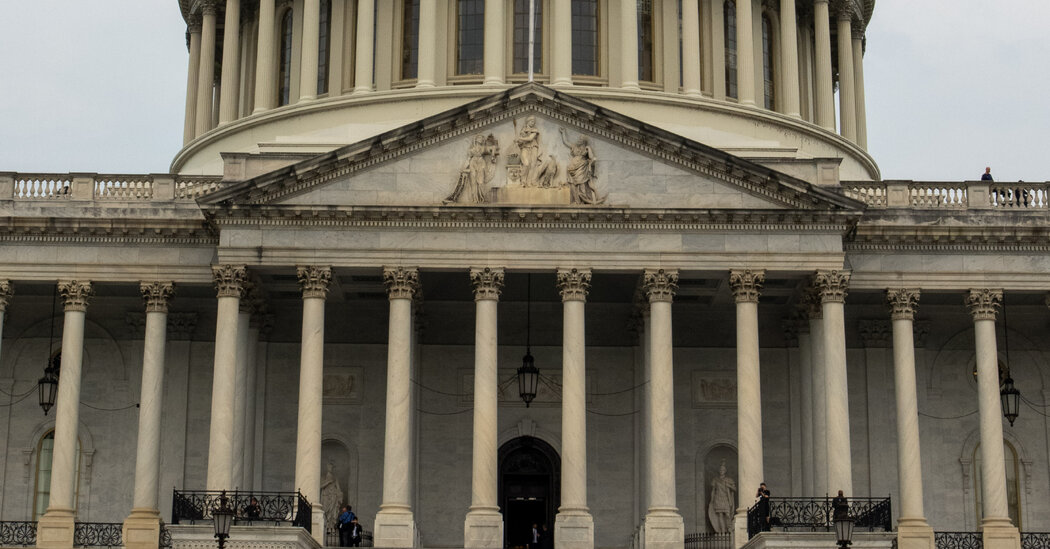
It came hours after Mr. Graham, who died suddenly this month, was memorialized in ceremonies at the Capitol and Washington National Cathedral, and not long after senators had met on Capitol Hill with President Volodymyr Zelensky of Ukraine, who had come to honor the senator who dedicated himself to supporting the country in its fight against Russian aggression.
Mr. Zelensky looked on from the Senate gallery as senators filed in to cast their votes, waving and smiling.
Senators named the measure in honor of Mr. Graham, who spent the final hours of his life working in Ukraine to cement it.
“The Lindsey Graham sanctions bill will advance the cause of freedom, and it will combat Vladimir Putin’s war machine,” Senator Roger Wicker, Republican of Mississippi and the chairman of the Armed Services Committee, said before the vote. “It will go after Vladimir Putin, his inner circle and the shadow fleet they use to evade sanctions. It will hold accountable those who purchase the most Russian oil and gas. It will also take aim at China’s investments in Russian weapons production. And it will maintain sanctions pressure on Iran. These policies will save human lives.”
During his meeting with senators before the vote, Mr. Zelensky thanked them for their support and continued backing of Ukraine as the war nears the four-and-a-half-year mark. Later, he sat with Mr. Wicker and Senator John Barrasso of Wyoming, the No. 2 Republican, watching the Senate move forward on the bill.
“President Zelensky has reiterated that Ukraine is changing the tide in this war and gaining momentum every day. We’re seeing it happen with our own eyes,” Senator Chuck Schumer, Democrat of New York and the minority leader, said in a speech in support of the bill. “Lindsey Graham spent his final days trying to help Ukraine achieve victory. We ought to do the same in the days, weeks and months ahead.”
The measure would impose harsh new penalties on countries that purchase oil and other energy products from Russia, as well as extend existing sanctions against Iran seeking to limit its ability to fuel its wartime economy.
The legislation still must pass the Senate and be approved by the House before it can head to the president’s desk. Speaker Mike Johnson and President Trump have signaled support.
But the Senate vote cleared away a key obstacle. It sealed a bipartisan compromise that had eluded Mr. Graham for more than a year as he labored to navigate initial resistance from Mr. Trump, who was reluctant to embrace dictates from Congress, and from members of both parties, including Republicans who did not want to tie the president’s hands and Democrats who were concerned about giving him too much power.
In recent talks on the bill, some Democrats balked at the measure because it would hand Mr. Trump new authority to impose tariffs at a time when he has already trampled over Congress’s trade powers to slap economic penalties on nations around the globe. The revised measure would require that the president impose the sanctions rather than simply permit him to do so — though Mr. Trump could still waive them if he certified that it was necessary for national security reasons. Negotiators also added requirements that the administration regularly report to Congress on how the penalties were being carried out.
That was not enough for many Democrats, who said despite their strong backing for Ukraine, they could not vote to give the president more tariff power. Eleven Democrats opposed the measure, joining only one Republican in voting no.
Senator Peter Welch, Democrat of Vermont, was among those who voted against moving ahead with the bill. He cited language in the legislation that allowed the White House to go after “facilitators” of the sale of Russian oil with tariffs, which he said was not narrowly defined enough and could be taken advantage of by Mr. Trump.
“I’m in favor of using tariffs and sanctions to squeeze Russian revenues, but it’s got to be specific,” Mr. Welch said in an interview after the vote.
He said that changes to get Mr. Trump on board around who gets to designate a country or an entity as a so-called facilitator of the sale of Russian energy could be a backdoor way for the president to assign the tag liberally and target “any country for any reason as long as he labels them a facilitator.”
Proponents said they had adjusted language governing the bill’s secondary tariffs to exempt American allies that still purchase small amounts of oil, gas and other energy from Russia if they were demonstrably reducing their reliance on Russian-produced energy.
