


- The 45th meeting of the Commission for the Conservation of Antarctic Marine Living Resources (CCAMLR) took place Oct. 19-30 in Hobart, Australia.
- The multilateral body charged with regulating fishing and protecting ecosystems in the Southern Ocean concluded with no agreements on the longstanding issues of establishing new marine protected areas and adopting new krill-fishing management measures.
- Of particular interest was the potential establishment of a marine protected area in a large swathe of sea between the Antarctic Peninsula and the South Orkney Islands. Krill fishing is concentrated in the area, which also serves as an important feeding ground for krill-reliant wildlife.
- China, a top krill fishing nation that, with Russia, has blocked the establishment of new protected areas for nearly a decade, proposed redefining existing and future MPAs within the CCAMLR convention area such that fishing could take place there.
The multilateral body charged with regulating fishing and protecting ecosystems in the Southern Ocean reached no agreements on establishing new marine protected areas or adopting new krill-fishing management measures at its recent annual meeting.
The 45th meeting of the Commission for the Conservation of Antarctic Marine Living Resources (CCAMLR) took place Oct. 19-30 in Hobart, Australia, bringing together the body’s 27 members: 26 countries and the EU.
Months of press conferences, boycott campaigns, lobbying activities and bilateral meetings preceded the event. Attention focused particularly on the potential adoption of a new fisheries management system for Antarctic krill (Euphausia superba) and the establishment of a marine protected area in a large swathe of sea, known as Domain 1, between the Antarctic Peninsula and the South Orkney Islands. Domain 1 is where krill fishing is concentrated and also contains important feeding grounds for wildlife populations that rely primarily on the small shrimp-like crustaceans for food.
“CCAMLR Members did not reach consensus on either,” Javier Arata, spokesperson for the industry Association of Responsible Krill harvesting companies (ARK), told Mongabay by email, minutes after the meeting closed. “CCAMLR adopted no new measures for the krill fishery this year,” Arata said, adding that members “were closer this year than many expected.” He said his group will keep working with all CCAMLR members, scientists and other interested parties to get both measures adopted in 2027.
In response to the lack of progress, several conservation organizations, including the U.S.-based Antarctic Wildlife Alliance, the Our Antarctica campaign and the Australia-based Bob Brown Foundation, renewed their calls for consumers and supermarkets to boycott commercially available krill-related products.
“CCAMLR has an obligation to conserve Antarctic wildlife, but its continued failure to act is leaving penguins, seals and whales competing with industrial fishing vessels for their food,” Andrea Kavanagh, chief campaign and policy officer of the Antarctic Wildlife Alliance, said in a joint press release. “We cannot keep waiting for governments to do their jobs.”
The race for omega-3s
In 2009, CCAMLR members committed to establishing a “representative system” of marine protected areas (MPAs). However, since the designation of an MPA in the Ross Sea region in 2016, they have failed to reach the consensus required to approve any new proposals over the past decade. This has been largely due to repeated vetoes by the Chinese and Russian delegations, leaving proposals for MPAs in the Antarctic Peninsula, East Antarctica and two areas of the Weddell Sea in limbo.
CCAMLR data show that over the same period, commercial interest in krill has grown, with catches quintupling from 125,826 metric tons in 2009 to 620,000 metric tons in 2025 and 2026, which is the precautionary limit set by CCAMLR. Reaching this threshold triggered the early closure of the fishing season in August of both years, several months ahead of schedule.
The industry’s growth has been driven by the Norwegian and Chinese fishing fleets, which target krill to meet growing demand for omega-3 fatty acids, particularly in the form of fish oil and fishmeal used in aquaculture feed, dietary supplements for human consumption and pet food.
“The global omega-3 industry is experiencing unprecedented challenges,” states a white paper published in October by the Norwegian company Aker BioMarine, whose subsidiary Aker Qrill accounted for 52% of krill catches in 2025. Aker BioMarine attributes these challenges to rising demand coupled with supply shortages linked to declining anchovy and other wild fish stocks and climate fluctuations, particularly El Niño.

“[D]emand might exceed supply as early as 2027, opening a potential deficit of 160.000MT [160,000 metric tons] by 2031,” the document states, suggesting that Antarctic krill could fill the hole because it “offers a reliable omega-3 source unaffected by El Niño events.”
“[R]ight now fishmeal prices are at an all-time high,” Matts Johansen, Aker BioMarine’s CEO, wrote on Linkedin in October. “The short-term increase in price is down to the weather phenomenon El Niño, but many overlook the long-term structural issues.”
In a company position paper Mongabay reviewed, Aker proposed hitching development of the Antarctic Peninsula MPA to a new krill fishery management approach. It says this would allow the industry to sustainably increase catches above the current annual limit of 620,000 metric tons by distributing fishing activity in different areas and at various times during the season.
During the CCAMLR meeting, the Norwegian delegation proposed increasing catch limits, but failed to secure the necessary consensus. In September, Norway’s minister of fisheries and ocean policy, Marianne Sivertsen Næss, responding to a parliamentary question, defended the scientific basis for a “moderate increase” in the current krill catch level.

Different views on MPAs
With no agreement on increasing krill catches, the Chinese and Russian delegations once again vetoed Argentina and Chile’s proposal to establish a Domain 1 MPA. The proposed MPA would have safeguarded 456,000 square kilometers (176,000 square miles) of ocean, including areas that serve as important feeding grounds for penguins, whales, seals and seabirds — animals that rely on krill as a primary food source and are already suffering the impacts of global warming.
“Countries like Russia basically couldn’t go with this consensus, but opened the door to have more discussions in the future,” Maximiliano Bello, ocean policy expert for the UK-based Blue Marine Foundation and spokesperson for Our Antarctica, told Mongabay after the meeting closed.
In a press statement, the Antarctic and Southern Ocean Coalition, a conservation NGO network, also acknowledged CCAMLR members’ efforts to make progress, while criticizing the lack of concrete results. “While progress was made, it is still regrettable that there are no meaningful outcomes that would increase protections for ecosystems and species increasingly under pressure from fishing and climate change,” Claire Christian, the coalition’s executive director, said.
The Russian and the Chinese delegation to CCAMLR, the Russian federal agency for fisheries and the Chinese ministry of agriculture and rural affairs did not respond to Mongabay’s requests for comment.
During the meeting, China, whose fleet brought in 37% of krill catches in 2025, submitted a proposal for a new MPA in what it called the “Cosmonauts Sea.” The name dates back to the Soviet era and refers to part of an area in the eastern Southern Ocean that CCAMLR calls Area 58, where krill catches have been negligible over the past 30 years.
The Chinese delegation also presented a second document, which Mongabay reviewed. It proposed revising the very definition of MPAs within CCAMLR to limit their scope and duration and ensure they coexist with the “rational use” of marine resources — meaning fishing could take place within them. “Clarifying the nature and definition of CCAMLR MPAs is beneficial in providing a fundamental guideline for the establishment of MPAs,” the document states.
CCAMLR members discussed both proposals, but did not vote on them.

Consumers and supermarkets
As the decade-long deadlock continues, several organizations have renewed their calls to boycott krill-related products, including krill oil supplements and pet food. According to the press release from the Antarctic Wildlife Alliance, Our Antarctica and the Bob Brown Foundation, retailers “have already demonstrated that removing krill products from store shelves is possible.” It cited, among others, Holland & Barrett in the UK, Whole Foods Market in the U.S. and the Coles Group and Woolworths Group in Australia as retailers that have joined or committed to join the campaign.
“I think we should boycott,” Liv Arnesen, a Norwegian polar explorer and Our Antarctica campaigner, told Mongabay. “Money talks to the companies that are doing the salmon farms and the krill fishing. I think it is efficient if people stop buying krill oil, because that’s the highest income they have.”
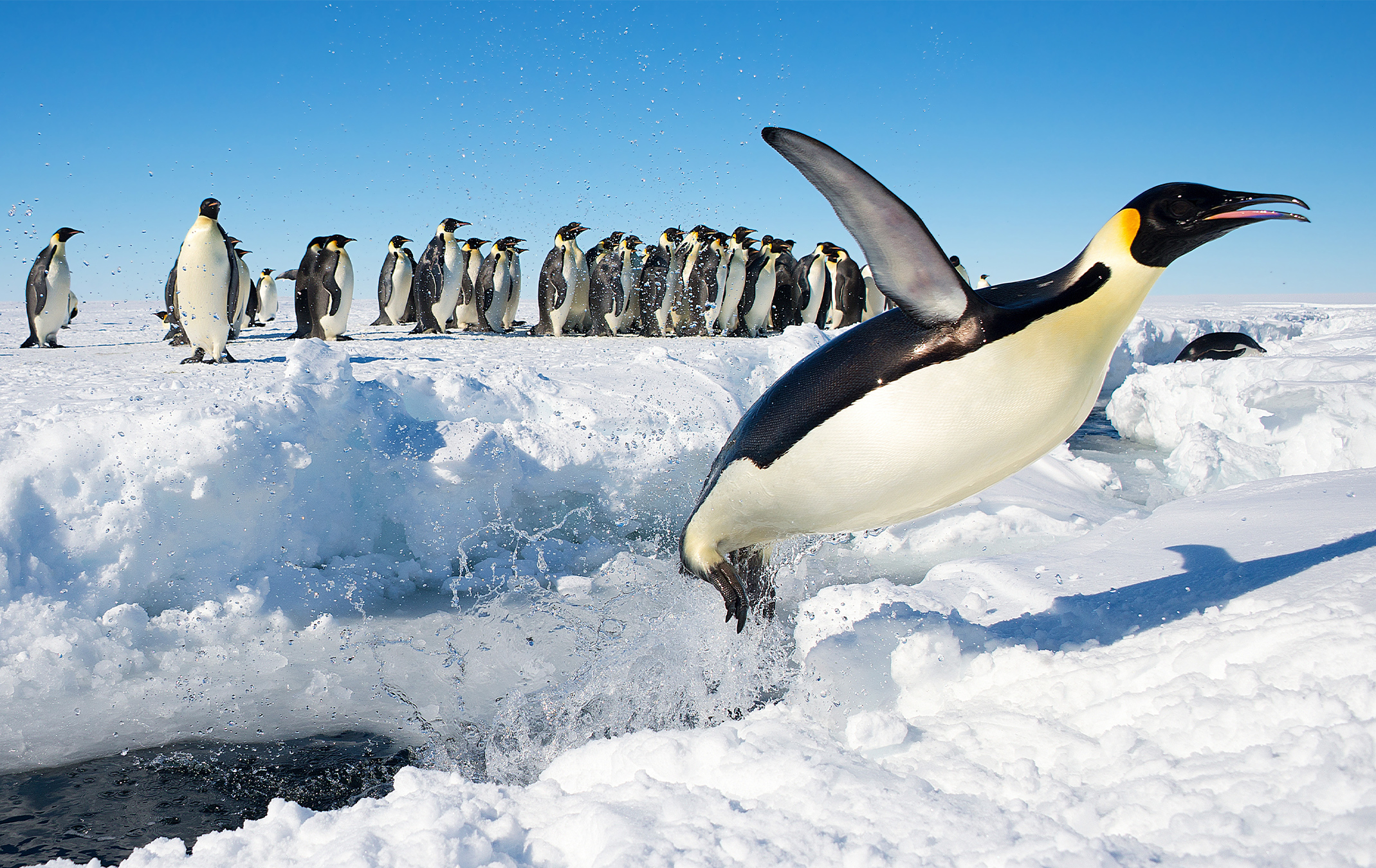
Banner image: An emperor penguin (Aptenodytes forsteri) in Antarctica jumping out of the water. Image by Christopher Michel via Wikimedia Commons (CC BY 2.0).
Norway’s proposal to double krill harvests raises tension at Antarctic conservation summit
FEEDBACK: Use this form to send a message to the editor of this post. If you want to post a public comment, you can do that at the bottom of the page.
Cite this article
Francesco De Augustinis (2026). High expectations but no agreement on Antarctic marine protection, krill fishing. Mongabay Conservation news. DOI: https://doi.org/10.66709/news-334852

