


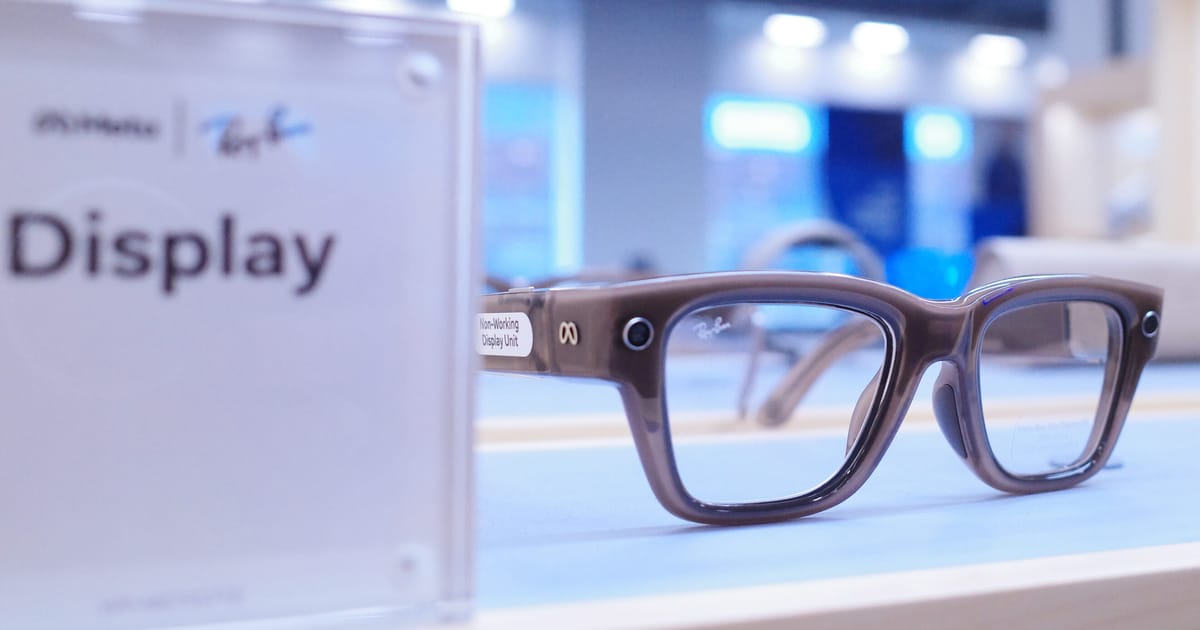
Privacy regulators are putting forward a united front on smart glasses, as privacy concerns about the wearable technology have multiplied since videos made with them have begun spreading online without the knowledge or consent of those being filmed.
The statement is not legally binding but will guide how privacy regulators in Europe assess whether smart glasses users and manufacturers are complying with EU privacy rules like the General Data Protection Regulation (GDPR).
The regulators said smart glasses manufacturers should implement a combination of transparency measures to make other people aware that they are being recorded.
The measures may include lights or sounds when users are recording, requiring smart glasses users to activate them with an audible voice command, sending notifications to the smartphones of people nearby and other design “clues” to help people spot smart glasses.
The group of privacy regulators said that not only should users of smart glasses respect other people’s privacy but that the devices’ manufacturers and people providing connected apps or services may also be responsible for making sure they comply with privacy rules.
The GDPR applies to companies and organizations, and doesn’t apply when people process personal data in a household context. The regulators said this household exemption should be “narrowly interpreted” when it comes to smart glasses, and would not apply when someone shares photos or videos of others “to an indefinite number of persons on a public social media account.”
