

Close Menu
NCIJ Network NCIJ Network
    What's Hot

    Managers are using AI to write performance reviews – and it shows

    October 8, 2026

    Unpatched Critical LMCache Flaw Lets Unauthenticated Attackers Run Code Remotely

    October 8, 2026

    U.S. Investors Want To Up Their Crypto Holdings: Charles Schwab

    October 8, 2026
    Facebook X (Twitter) Instagram
    Trending
    • Managers are using AI to write performance reviews – and it shows
    • Unpatched Critical LMCache Flaw Lets Unauthenticated Attackers Run Code Remotely
    • U.S. Investors Want To Up Their Crypto Holdings: Charles Schwab
    • Can WarWilding defend Poland’s borders and save Europe’s last ancient forest?
    • Outside spending nears $2 billion – and the biggest groups pull further ahead • OpenSecrets
    • The US has backed Libya’s Haftar clan. The UK should not make the same mistake | Libya
    • Amazon is sending Prime class action settlement payments. Are you eligible?
    • Democrats sue US President Trump over taxpayer-funded ad campaign | Donald Trump News
    • About
      • Our Team
      • Editorial Policy
      • Editorial Independence
      • International Support
    • Trust & Standards
      • AI Usage Policy
      • Conflict of Interest Policy
      • Corrections Policy
      • Ethics Policy
      • Fact-Checking Policy
      • Source Protection
    • Get Involved
      • Guide for Sources
      • Support Independent Journalism
    • Legal
      • Cookie Policy
      • Privacy Policy
      • Terms of Use
    Facebook X (Twitter) Instagram
    NCIJ Network NCIJ Network
    Thursday, October 8
    • Home
    • World
    • Ai
    • Business
    • Politics
    • Health
    • Crypto
    • Science
    • Technology
    • Cybersecurity
    • Defense & Security
    • Economy
    • Energy
    • Europe
    • More
      • Fact Check
      • Investigations
      • Opinion & Analysis
      • Environment
    NCIJ Network NCIJ Network
    Home»Environment

    Africa’s monitored wildlife populations declined 80% since 1970, new report says

    NCIJ NETWNCIJ NETWORKBy NCIJ NETWNCIJ NETWORKOctober 8, 2026 Environment No Comments3 Mins Read
    Share
    Facebook Twitter LinkedIn Pinterest Email

    Africa’s monitored wildlife populations have declined an average of 80% since 1970, according to a new global assessment. The report also points to pockets of recovery where conservation efforts have been maintained over decades.

    The report on the decline in the average size of monitored populations was released Oct. 8 in the Living Planet Report 2026. It tracked monitored populations of mammals, birds, fish, reptiles and amphibians between 1970 and 2022. Africa’s 80% decline compares with a global average of 73%; Latin America and the Caribbean recorded the largest regional decline, at 95%.

    The findings come as governments prepare to assess progress on the Kunming-Montreal Global Biodiversity Framework, whose 23 targets include commitments to halt human-induced extinctions and support the recovery of threatened species by 2030. The framework also calls for conserving at least 30% of the world’s land, inland waters and seas by 2030.

    The Living Planet Index, managed by the Zoological Society of London in partnership with the World Wide Fund for Nature (WWF), draws on 35,803 population trends from 5,790 vertebrate species worldwide. The index measure changes in the average size of monitored populations, it does not mean that Africa lost 80% of its wild animals or wildlife species, a press release obtained by Mongabay cautions.

    Habitat destruction and degradation are the most frequently reported pressures on the wildlife populations tracked globally, the report finds. Overexploitation, climate change, pollution, disease and invasive species are among the other threats identified.

    In the Congo Basin, for example, those pressures include expanding agriculture, logging and mining, as well as roads and other infrastructure that fragment forests and make previously remote areas more accessible, according to the report. Hunting and poaching add to the pressure. WWF says African forest elephant (Loxodonta cyclotis) populations have fallen by more than 60% over recent decades, largely because of habitat loss and illegal killing for ivory.

    “Reversing this trend requires coordinated action across governments, civil society and other sectors, with Indigenous Peoples and local communities at the centre,” said Nadège Nzoyem, WWF’s regional director for the Congo Basin, in the release.

    The global numbers show that conservation can make a difference. Half the populations included in the index are either stable or increasing but steep declines among the remaining populations are large enough to pull the overall index sharply downward.

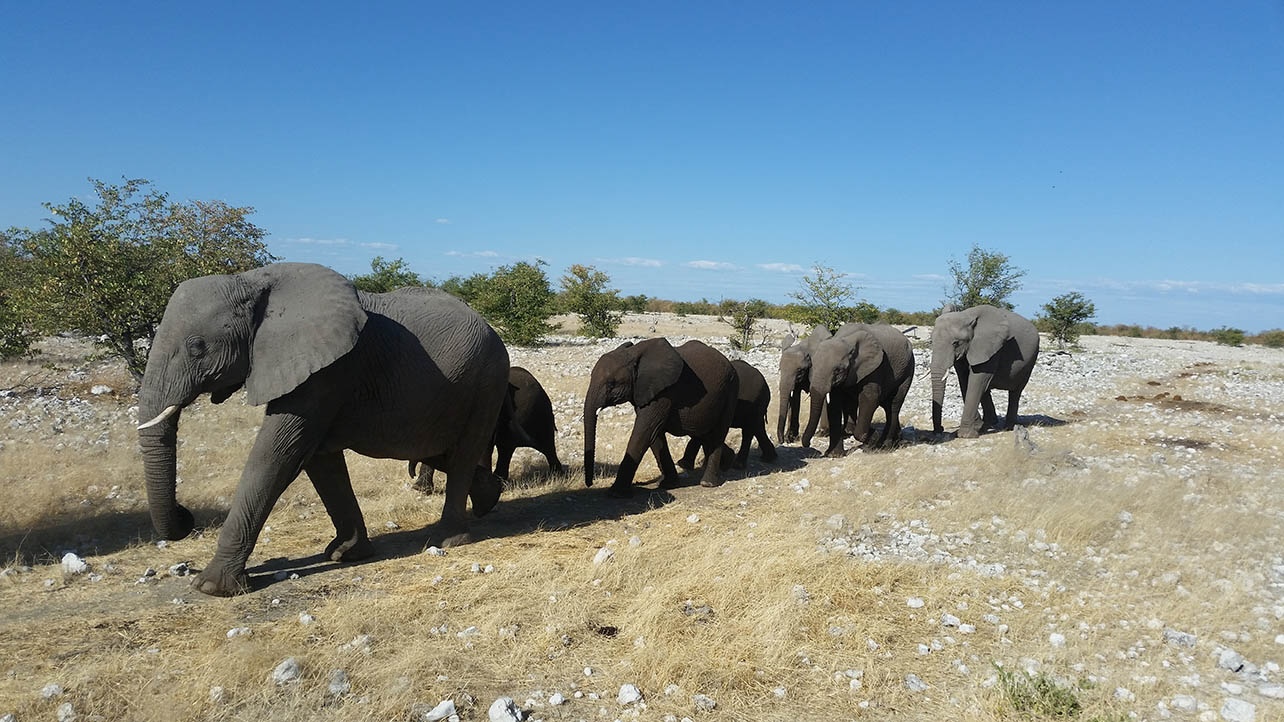
    As an example, in Southern Africa savanna elephants (Loxodonta africana) remain endangered and are declining across much of their range, the report reveals. But some populations are increasing in places where communities help directly manage wildlife and benefit from doing so. Those efforts have been accompanied by anti-trafficking measures, judicial reforms and efforts to reduce corruption.

    The report argues protecting individual species and habitats will not be enough. Food and energy production as well as financial systems are underlying forces that must also change to reverse biodiversity decline, the report notes.

    Banner image: Namibian elephants in Etosha. Image courtesy of Stephan Scholvin.


    Africas declined monitored populations Report wildlife
    NCIJ NETWNCIJ NETWORK
    • Website

    Keep Reading

    Can WarWilding defend Poland’s borders and save Europe’s last ancient forest?

    The American Livestock Industry’s Main Lobbying Group Treated Climate Change as a PR Problem

    Compounding Climate Impacts Drive Tropical Forest Decline

    Arabian Sea humpbacks may be a unique subspecies at risk of extinction

    International pledge to fund forest rights exceeds target, but direct funding remains low

    Maine’s Next Governor Will Walk a Tightrope Between Energy Affordability and Climate Action

    Add A Comment
    Leave A Reply Cancel Reply

    Editors Picks

    Managers are using AI to write performance reviews – and it shows

    October 8, 2026

    Unpatched Critical LMCache Flaw Lets Unauthenticated Attackers Run Code Remotely

    October 8, 2026

    U.S. Investors Want To Up Their Crypto Holdings: Charles Schwab

    October 8, 2026

    Can WarWilding defend Poland’s borders and save Europe’s last ancient forest?

    October 8, 2026
    Latest Posts

    British national shot dead in Kashmir by Pakistani security forces | Kashmir

    August 10, 2026

    Climate change doubled likelihood of Canada’s extreme fire weather, study finds

    August 10, 2026

    Scientists say just 7 days of meditation can rewire your brain

    August 10, 2026

    Subscribe to News

    Get the latest sports news from NewsSite about world, sports and politics.

    NCIJ Network is an independent digital news platform delivering trusted investigative journalism, European and global news, in-depth analysis, and fact-based reporting with accuracy, transparency, and integrity.

    Facebook X (Twitter) Instagram Pinterest YouTube

    Managers are using AI to write performance reviews – and it shows

    October 8, 2026

    Unpatched Critical LMCache Flaw Lets Unauthenticated Attackers Run Code Remotely

    October 8, 2026

    U.S. Investors Want To Up Their Crypto Holdings: Charles Schwab

    October 8, 2026

    Subscribe to Updates

    Get the latest creative news from FooBar about art, design and business.

    Type above and press Enter to search. Press Esc to cancel.