


- A survey of 25 organizations working on rainforest restoration in Australia’s Wet Tropics found that nearly all monitor their sites, but about half keep no records and simply check sites visually.
- The groups ranked habitat connectivity, biodiversity, and threatened species habitat as their top goals, yet measured success mainly by canopy closure, tree survival, and the end of weeding.
- About 42% stop monitoring once the canopy closes, usually within three to five years, long before the slower recovery of rainforest plants and animals can be tracked.
- Most groups said monitoring would be a high priority if they had more funding, and the survey authors warn that short-term checks won’t provide the proof of recovery that carbon and biodiversity markets require.
Relics of ancient wet forests stretch across the coast of Queensland state in Australia. In a landscape made patchwork by agriculture, volunteers, community groups and Indigenous rangers in Australia’s Wet Tropics now grow more than 300,000 native plants to turn cleared pasture back into rainforest. But once the young trees shade out the weeds, some groups aren’t keeping track of the trees, a new study finds.
That gap means the goals these groups care about most, such as bringing back wildlife and reconnecting fragmented forest, are poorly captured by what most groups measure.
Researchers from Australia’s James Cook University and the University of Queensland surveyed 25 organizations doing rainforest restoration in northeastern Australia. The respondents included community groups, conservation land trusts, Indigenous ranger groups, nature market investors, and commercial land managers. The results were published in the journal Restoration Ecology.
Australia’s Wet Tropics, a UNESCO World Heritage Site, stretches about 450 kilometers (280 miles) along Queensland’s northeast coast, and contain relics of the ancient forests that once covered the supercontinent of Gondwana, according to UNESCO.
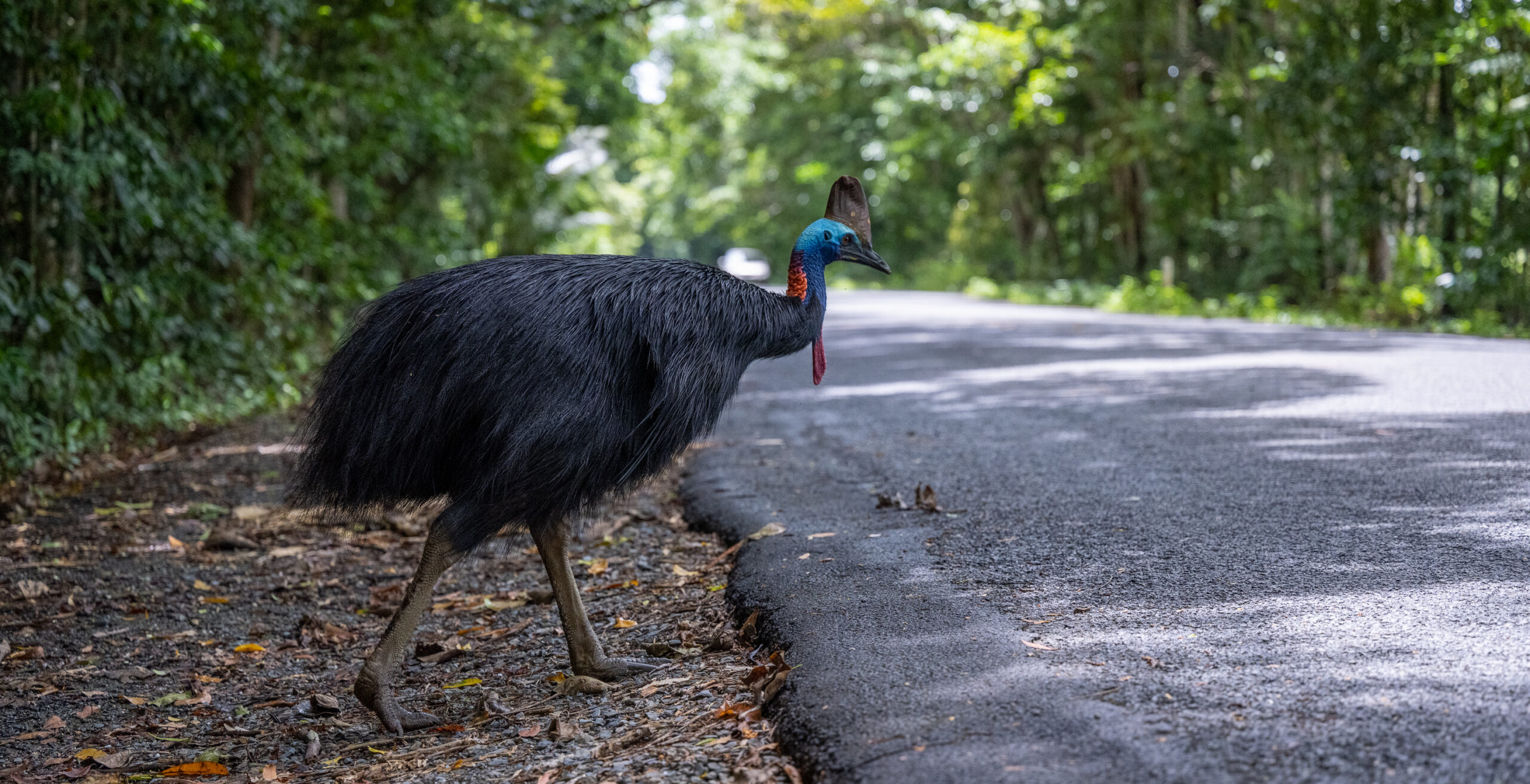
Around 40% of Australia’s bird species live in the Wet Tropics. Of the roughly 2,800 plant species found here, about 700 grow nowhere else in the world, according to the Wet Tropics Management Authority. Rare animals living there include the southern cassowary (Casuarius casuarius), the northern bettong (Bettongia tropica), and the spotted-tailed quoll (Dasyurus maculatus).
During the 20th century, much of its accessible lowland and upland forest was cleared for farming, leaving the habitat that remains broken into fragments, the study authors note. Restoration efforts there date back to the 1980s.
Nearly all (96%) of the restoration organizations surveyed in the recent study did some kind of monitoring. About half kept records, such as photos or survey data. Most of the rest simply visited their sites and looked around, without writing anything down.
When asked to rank their goals, the groups put habitat connectivity first, followed by biodiversity, habitat for threatened species, and forest resilience. But when asked how they measured success, they pointed to canopy closure (92%), tree survival (80%), and no longer needing to pull weeds (76%). All of these show up within the first few years after planting.
About 42% of the organizations said they stop monitoring once the canopy closes or weeding is no longer needed, usually within three to five years. One stopped when its funder’s reporting requirement ended. Just over half said they intend to keep monitoring indefinitely.
The problem, the authors write, is that forest structure recovers much faster than the mix of plants and animals. A new canopy can form in a few years. In these forests, the shift from fast-growing pioneer trees to the species found in mature rainforest takes many decades.
“Claims that restoration interventions led to increased habitat connectivity or provided habitats for threatened species are rarely supported by data,” Robin Chazdon, a professor at the Forest Research Institute at Australia’s University of the Sunshine Coast, who reviewed the study but wasn’t involved in the research, told Mongabay in an email. “This is an issue globally, not only in the Wet Tropics of Queensland.”
Chazdon said monitoring programs are mainly built to document project milestones and report to funders, rather than to track how a forest is recovering.
“They reflect early stages and most restoration outcomes do not happen within the first 3-5 years, so they provide inaccurate assessments,” she said. “And then that is usually taken as the outcome and monitoring is over (as the short-term funding for the project ends).”
That doesn’t mean restoration isn’t working, Chazdon said. Instead, she said, whatever outcomes emerge “are not being systematically (or properly) measured over time to provide evidence.”
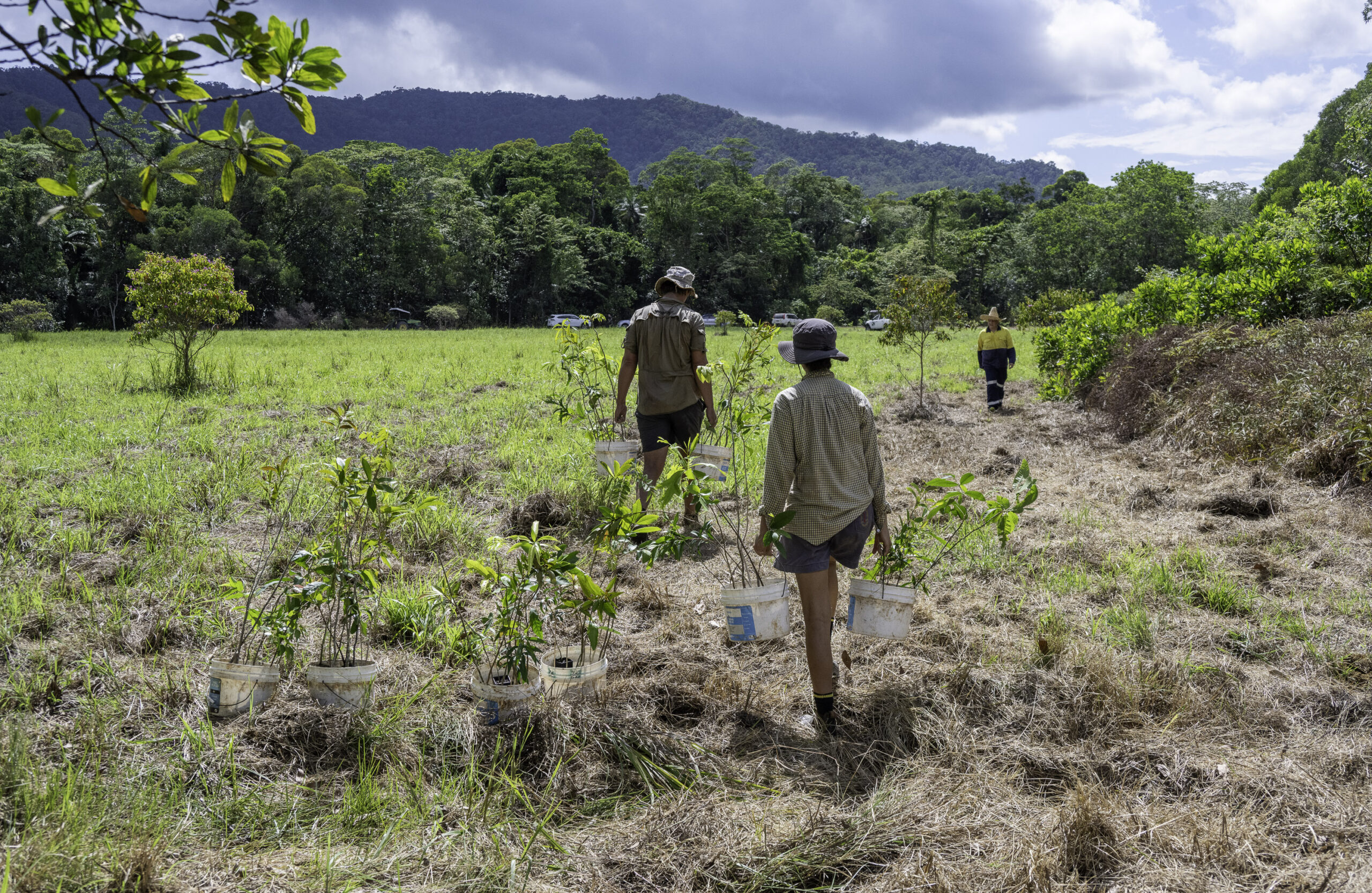
The study found that more intensive monitoring, including vegetation and wildlife surveys, came mostly from nature market investors and land conservation trusts. Community groups, the most common type of organization in the survey, mostly relied on photos or visual checks.
Eighty percent of respondents said monitoring would be a moderate to very high priority if they had more money. Community groups often run nurseries, collect seeds, plant trees, and control weeds on small budgets and with few staff.
“The risk is that the goals are not met,” Susan Laurance, an ecologist at James Cook University and the study’s senior author, told Mongabay in an email. “The trajectory of increasing forest recovery does not continue and the forest is stalled and in turn the biodiversity does not recover.”
Asked what these groups need to measure more meaningful outcomes, Laurance was brief: “Funding and capacity development.”
“These findings signal an urgent need for projects to include costs of monitoring … in their operating budgets, which is often not done,” Chazdon said. That includes fieldwork, data management, and basics like computers and storage. Projects also need the skills to adjust course based on what the data show, she added.
Markets for carbon credits and newer biodiversity credits both depend on proof that a restored site is actually improving. The authors argue that monitoring focused on canopy closure and early tree survival is unlikely to provide that proof.
Chazdon noted that projects rarely monitor control sites, which have a similar history of damage but receive no restoration, or reference sites that show what the forest should become. “So the outcomes of restoration are often impossible to attribute to specific interventions taken,” she said.
Social outcomes were tracked less often. About 31% of the organizations that kept monitoring records tracked social or economic effects. That’s still higher than in comparable studies elsewhere, the authors note, and they argue it matters because so much restoration in the region depends on volunteers and community groups.
“There is a disconnect between the academic community and the restoration community and between the government expectations on Nature Positive and Net Zero and the reality of reaching those aspirations,” Laurance said.
Banner image: Australian Southern Cassowary or double-wattled cassowary (Casuarius casuarius johnsonii) is endemic to the rainforests of north-eastern Queensland. Image courtesy of the Gondwana Rainforest Trust.
Superb fairywrens disappearing in Australia’s capital: Conserving insects could help save them
Liz Kimbrough is a staff writer for Mongabay and holds a Ph.D. in ecology and evolutionary biology from Tulane University, where she studied the microbiomes of trees. View more of her reporting here.
FEEDBACK: Use this form to send a message directly to the author of this post. If you want to post a public comment, you can do that at the bottom of the page.
Citations:
Engert, J. E., Vogado, N. O., Freebody, K., Byrne, B., Murphy, J., Sheather, G., … Laurance, S. G. W. (2020). Functional trait representation differs between restoration plantings and mature tropical rainforest. Forest Ecology and Management, 473, 118304. doi:10.1016/j.foreco.2020.118304
Letters, S., Dean, A., & Laurance, S. G. W. (2026). Monitoring of rainforest restoration is predominantly short-term and focused on forest structure in Australia’s Wet Tropics. Restoration Ecology, 34(7), e70434. doi:10.1111/rec.70434

