


Researchers surveying garden and wild flowers across northern Thailand have uncovered 16 previously unknown species of black, yeast-like fungi living inside the flowers, according to a recent study.
The newly described fungi belong to the Aureobasidium genus, a commonly occurring group of yeast that can be found almost everywhere, from air and human skin, to water, rocks, soils and wood.
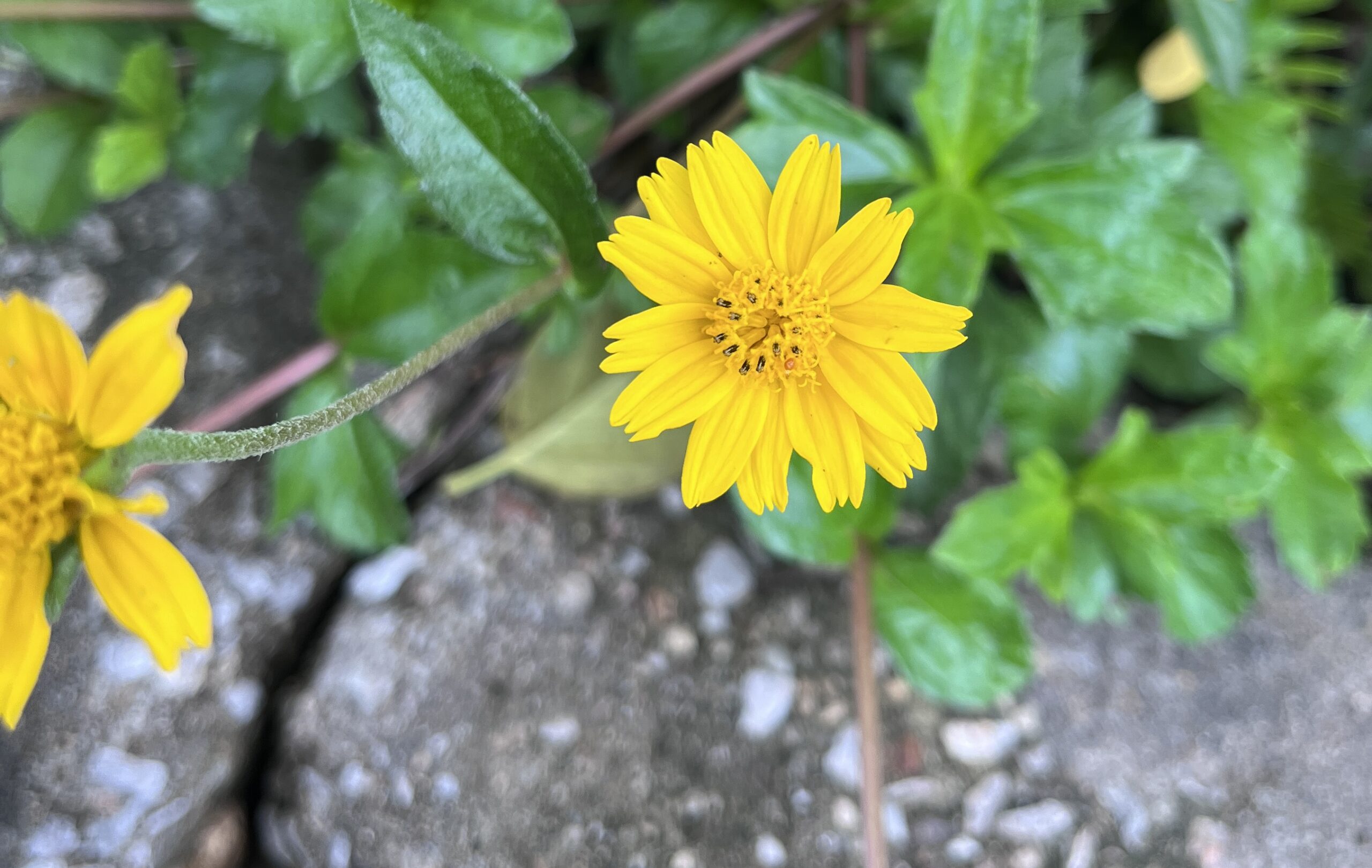
A research team from Chiang Mai University and Kasetsart University, both in Thailand, found the 16 new-to-science species growing in 31 different flowering plants, including bougainvillea, vinca, and butter daisy, according to the study.
Many of the newly described fungi take their names from their host flowers, such as A. bougainvilleae, or A. catharanthi, referring to its host, the Catharanthus genus of periwinkles. Others were named after their collection sites, such as A. chiangmaiense, referring to the province, and A. kwanphayaoense, referring to Kwan Phayao (Phayao Lake).
Two species were named in honor of prominent Thai mycologists, or fungi experts: A. saisamorniae recognizes Saisamorn Lumyong, a professor at Chiang Mai University, while A. savitreeae honors Savitree Limtong, a professor at Kasetsart.
“We wanted the names to tell a story, either about where these fungi came from or about the people who have helped advance mycological research in Thailand,” Nakarin Suwannarach, study co-author and professor at Chiang Mai University, said in a news release.
Alongside the 16 species, the researchers also recorded four species of fungi that had previously never been documented in Thailand before.
“Our team was motivated to study Aureobasidium because it was one of the most frequently isolated fungal genera from our flower samples,” Suwannarach said.
Fungi within the Aureobasidium genus are prized in industry for producing useful enzymes, controlling plant diseases, and breaking down plastics, the researchers say.
Some Aureobasidium species can also act as opportunistic human pathogens, so establishing an accurate baseline of native fungal populations will help scientists track future ecological shifts, the study authors write.
They add the study shows that flowers in northern Thailand are home to an “unexpectedly high” diversity of Aureobasidium species.
Banner image of a butter daisy flower (Melampodium divaricatum), from which researchers recently isolated Aureobasidium saisamorniae, a new-to-science species of fungus. Image by Nakarin Suwannarach (CC BY 4.0).
