


Right-wing candidates made big gains in both houses of Congress in Brazil’s Oct. 4 general election. Brazil’s main Indigenous organization, the Articulation of Indigenous Peoples of Brazil APIB, told Mongabay that the result will drive new attempts to strip constitutional protections from Indigenous peoples.
“Unfortunately, what we saw today is, let’s say, a bleak moment,” Dinamam Tuxá, an executive coordinator with APIB, told Mongabay in an audio message. “We did not expect this result.”
The far-right Liberal Party, affiliated with presidential candidate Flávio Bolsonaro, won 19 of the 54 Senate seats up for election, bringing its total seats to 28 of the chamber’s 81, or 35%, starting from 2027. This is nearly double its current number and the largest bloc in the house.
Other right-wing parties, namely the Progressistas (PP), Republicanos and Novo, secured 8 seats, bringing their total representation to 15 seats. This gives the four parties a majority in the Senate. Center-right parties now occupy 9 seats, and centrist parties, 13. Left and center-left hold 15 seats.
The Liberal Party consistently cast votes against Indigenous rights between 2019 and 2026, according to an analysis of Congress’s voting records by the Indigenous Missionary Council (CIMI), a Catholic Church-affiliated advocacy organization.
According to CIMI’s analysis, 95.9% of the party’s votes were against Indigenous rights. The other right-wing parties voted similarly: Republicanos at 90.5% and Progressistas (PP) at 85.6%. Novo cast anti-Indigenous votes 100% of the time.
On Oct. 25, Flávio Bolsonaro will face off against incumbent Luiz Inácio Lula da Silva, in a second round of voting for the Brazilian presidency. In the first round of votes, Bolsonaro won by nearly 2%, but neither he nor Lula reached the 50% needed for an outright victory.
“Regardless of President Lula’s result, the Federal Senate will certainly be one of the powers that will act against the rights of Indigenous peoples,” Tuxá said.
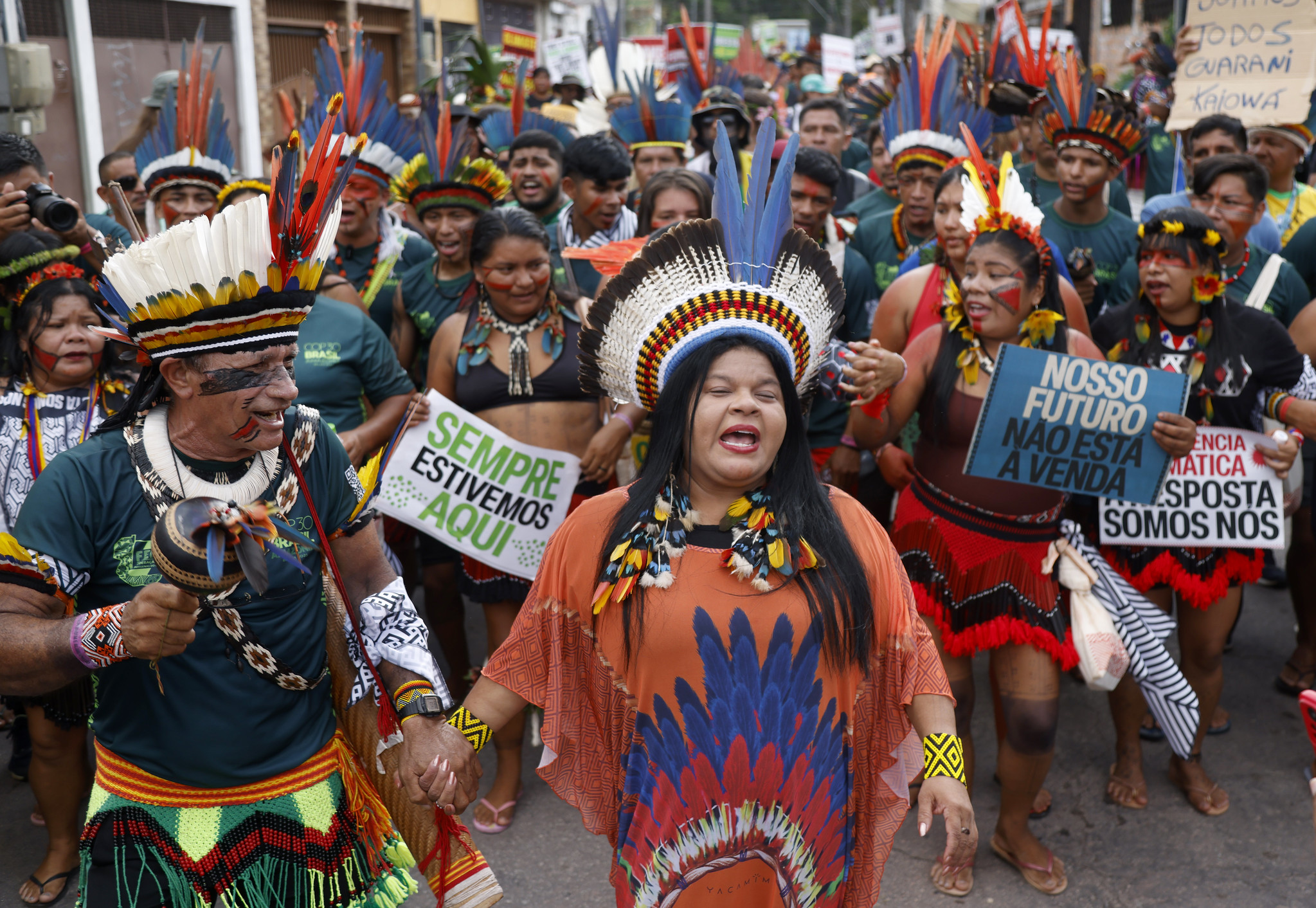
A record 79 Indigenous people ran for Congress, across both houses, in 2026. However, just three, Juliana Cardoso, Paulo Guedes and the former Minister of Indigenous Peoples, Sônia Guajajara, were elected.
“Without a doubt, their presence will be more important than ever in the face of a Congress that has become even more anti-Indigenous,” Tuxá said.
Banner image: Sônia Guajajara, former Minister of Indigenous Peoples, was one of three Indigenous candidates elected in Brazil’s 2026 general election. Image courtesy of Hermes Caruzo/COP30.
