


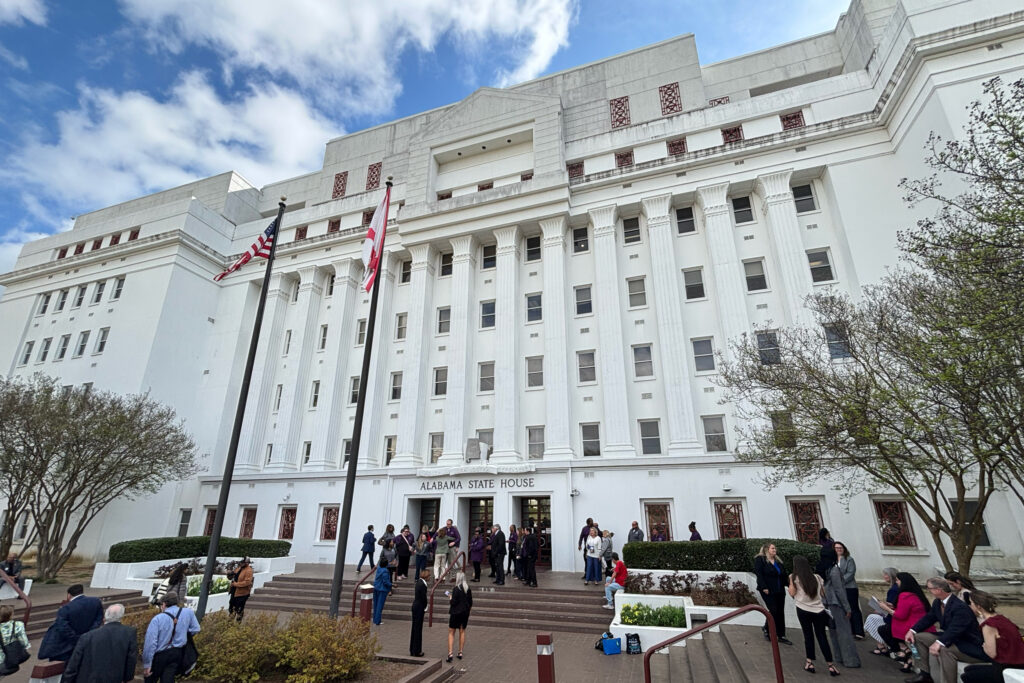
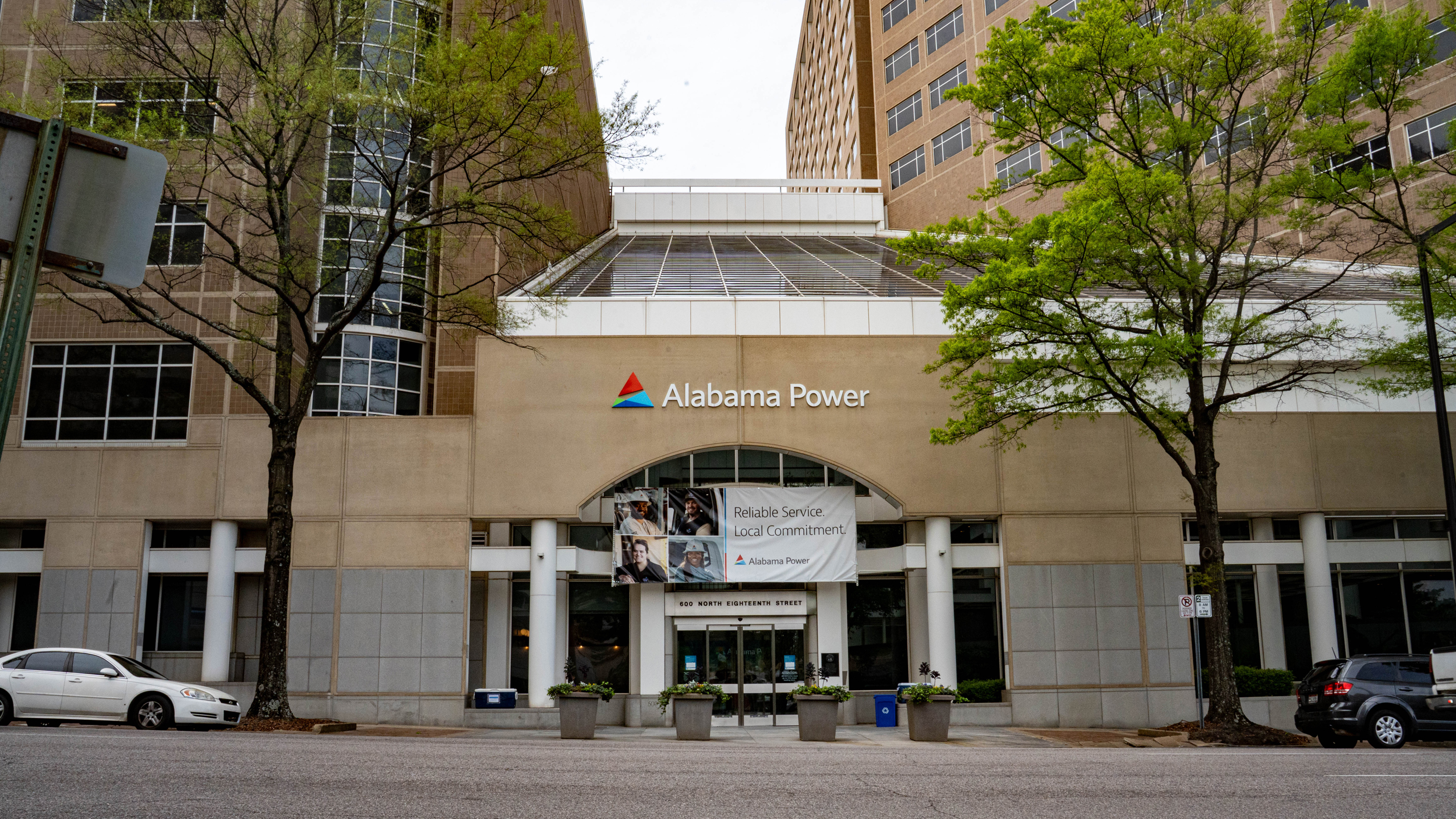
Wired for Profit: Seventh in a series about Alabama Power’s influence over electric rates, renewable energy, pollution and politics in the Yellowhammer State.
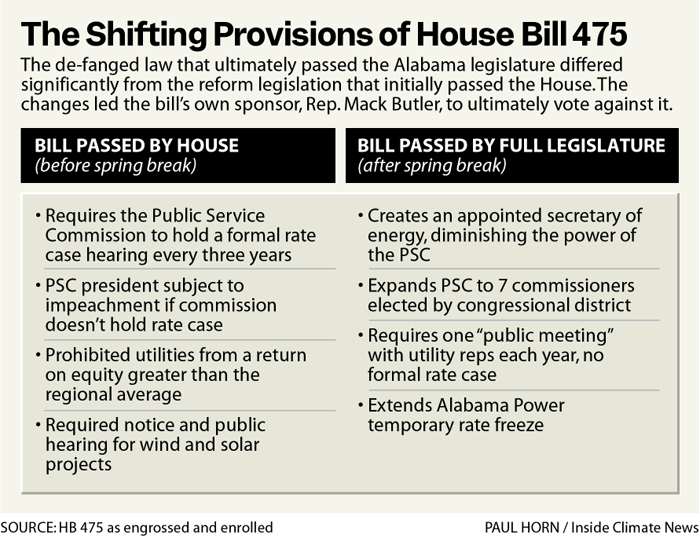
When Alabama lawmakers left for spring break during the 2026 legislative session, many of them knew something had to be done. Landmark legislation curbing the profits of the state’s influential electric utility, Alabama Power, had unanimously passed the House.
Even in the lower chamber, many of the Republicans who had supported the bill were searching for a way out of their vote.
So on March 30, the night before the Legislature returned from spring break, Sen. Sam Givhan, R-Huntsville, filed a substitute version of HB 475, the major reform bill that would have transformed the way Alabama sets electric rates.
It had consumed lawmakers and Alabama Power for months.
Prior to adjourning for 12 days on March 19, the House had voted 104-0 for HB 475, sponsored by state Rep. Mack Butler, R-Rainbow City, that would have required the Alabama Public Service Commission to hold public rate hearings on requested rate increases by Alabama Power for the first time in 44 years.
Most other states do this as a matter of routine, but not Alabama, where observers inside and outside of state government agree that Alabama Power, one of the country’s most profitable utilities, wields enormous political clout. Its residential customers shoulder the highest bills of any major utility in the country, and the data-center boom for artificial intelligence could push costs up even further.
Before he left with his family for a vacation in Miami, Butler believed he had worked out a deal with Senate leaders that would have added the key provision of his bill on public rate making to a Senate-passed bill that expanded the PSC to seven members elected by congressional district and made them answerable to a new secretary of energy appointed by the governor. The Senate bill would not cap the company’s profits or force more rigorous rate case hearings.
Accounts of what transpired between the time lawmakers departed for spring break March 19 and when they returned March 31 are sparse and varied. Observers in Montgomery agree the negotiations involved Sen. Clyde Chambliss, Sen. Bobby Singleton, House Speaker Nathaniel Ledbetter, Sen. Garlan Gudger, Rep. Steve Clouse and Rep. Chip Brown, who had sponsored an earlier, unsuccessful bill to end PSC elections.
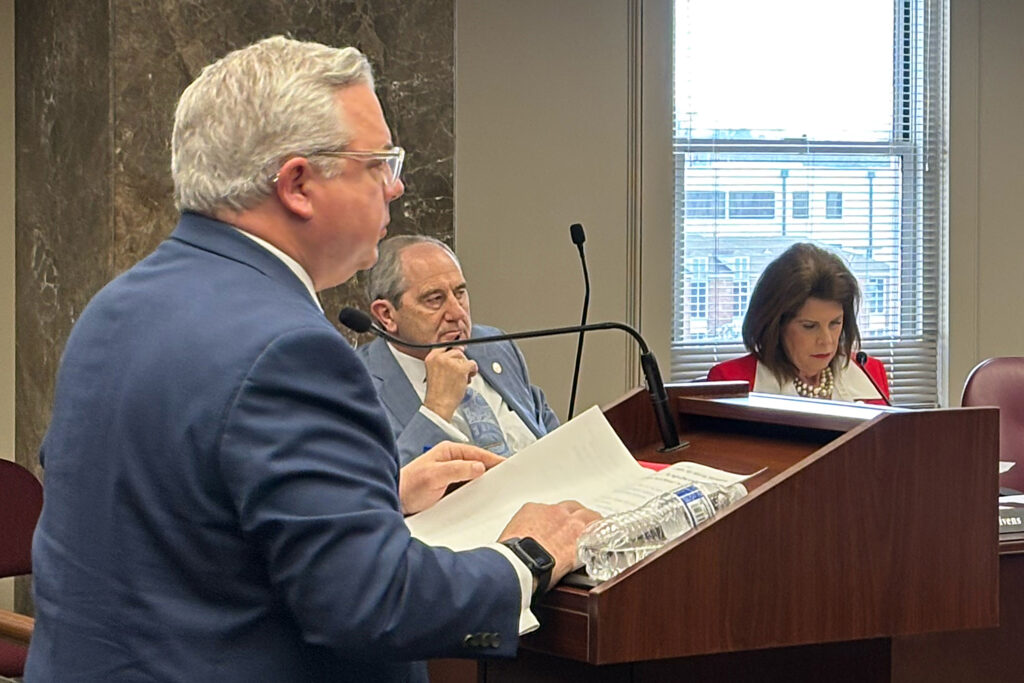
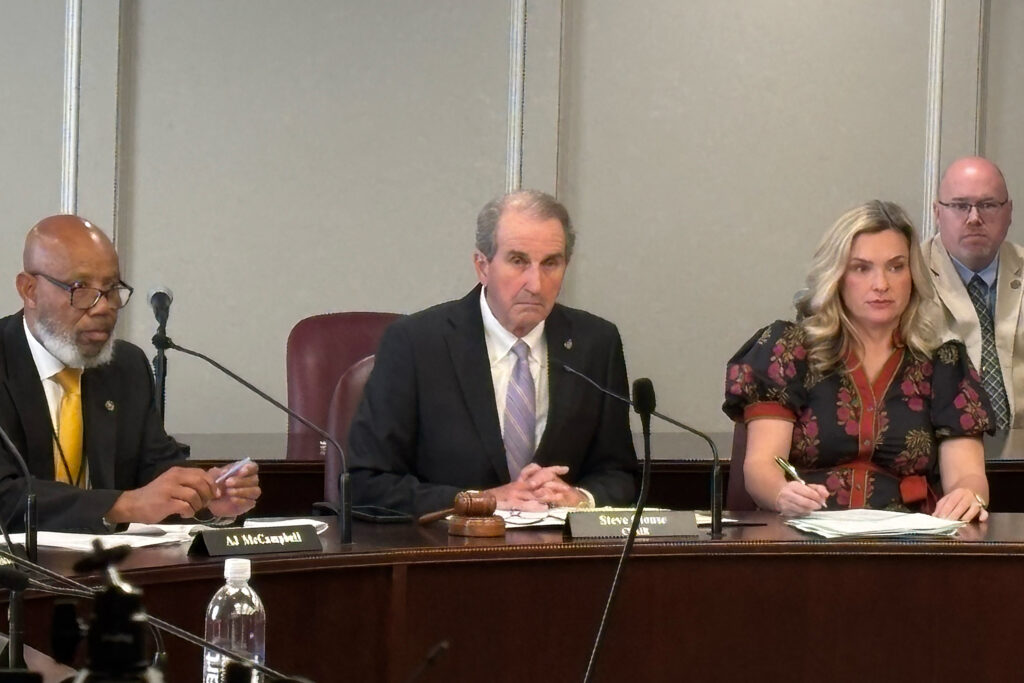
Clouse, a long-time Republican legislator from Ozark, told Inside Climate News he was on the conference committee tasked with reconciling the two very different bills.
He said legislators felt they had to act quickly, with time running out in the session.
“It was getting to the point of ‘this thing’s fixing to fall apart,’ and we’re going to have to have something,” Clouse said. “And I think people really wanted to be able to have something after all the work we put into it.”
Clouse also cited a provision in the Senate bill extending Alabama Power’s two-year rate freeze for another year as a reason to support that version of the bill.
Inside Climate News repeatedly sought interviews or comments from Chambliss, Ledbetter, Gudger and Brown regarding the talks. None responded. Alabama Power also did not respond to numerous requests for comment for this story.
Read More
How Alabama Power Escaped a Push for Tighter Regulation With Record Profits Intact
By Dennis Pillion, Lee Hedgepeth
When Butler saw the substitute bill Givhan filed the night before the session resumed, he realized the provisions he thought had been agreed upon in conference committee had been stripped out. The bill kept the HB 475 name but was essentially a slightly modified version of SB 360, Senate legislation that had nothing in common with his measure.
His provisions requiring a resumption of public rate making, a cap on Alabama Power’s profits and an end to its ability to charge ratepayers for lobbying were all gone.
“The night before we go into session, we get the bill,” Butler recalled. “Of course, I’m highly upset because it doesn’t include the reforms that I had wanted.”
The gutting of HB 475, Rep. Juandalynn Givan said, was the work of Alabama Power and its lobbying partners. “I can tell you what happened,” she said. “Alabama Power happened.”
John Dodd, Energy Alabama’s policy director, quickly told legislators that the nonprofit energy watchdog could no longer support the weakened version of the bill. “At that point we were like, ‘Hey, thank you, but no thank you,’” Dodd said. “We would rather have nothing at this moment than have something like that, because we would just pretty much be handing the power company additional regulatory capture for the future.”
Once lawmakers were back in session, the bill moved through the Legislature at warp speed. Dodd said Energy Alabama lobbied intensely to slow the bill’s rapid progress, to no avail.
“We were putting in a lot of hours of full-force lobbying, direct lobbying, to members of the Legislature to stop 475, to slow it down, to have a genuine, real motion to non-concur, send it to conference and either put it to what it once was or to shut it down for this session,” he said.
“We would rather have nothing at this moment than have something like that, because we would just pretty much be handing the power company additional regulatory capture for the future.”
— John Dodd, Energy Alabama
Butler said he was ready to kill the bill and wait for next year when he saw that the senators were unwilling to compromise on his reforms.
“I personally felt like if we’re not going to fix it, let’s just do away with it,” Butler said. “Let’s just tap the brakes a little bit, but the Senate is a different body. They were determined to take it to committee that day.”
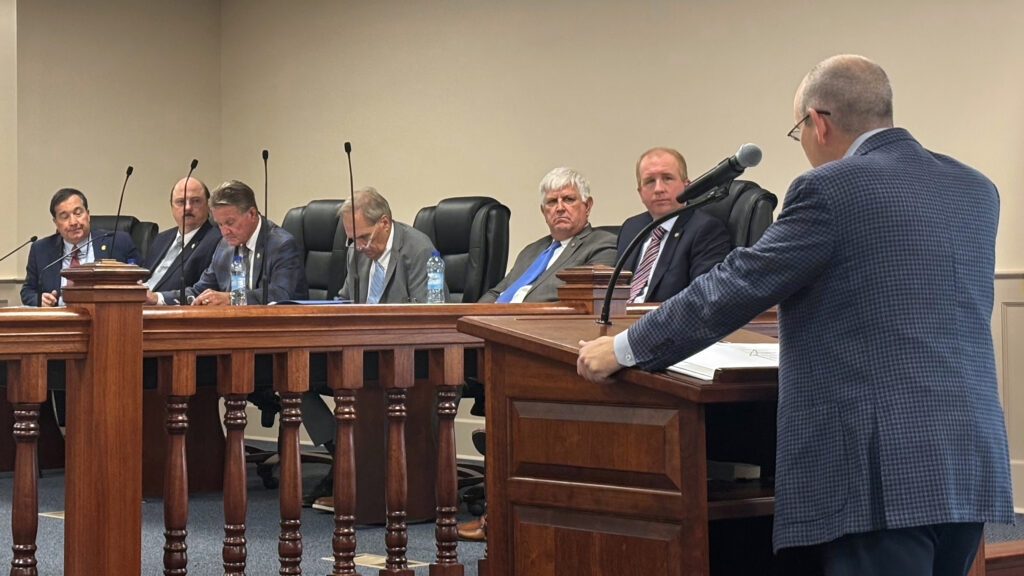
First up for the new HB 475 was a public hearing on March 31 in the Senate Fiscal Responsibility and Economic Development Committee, chaired by Lance Bell, R-Pell City. HB 475 was the only item on the agenda.
During the public comment portion of that meeting, Dodd and four other speakers protested the new version of HB 475 and urged the Senate not to pass it. Dodd called the bill a “Trojan horse,” carrying the name of a popular bill to hide the substance of another.
“The language that would have lowered customers’ costs, that’s gone,” Dodd said during the hearing. “The language that would have reined in Alabama Power’s profits, that’s also gone. What survived? The Senate’s provisions, the ones that look a lot like HB 392’s did, the bill Alabama Power themselves wrote.”
Dodd was referring to a phone call he received months earlier in which Alabama Power lobbyist R.B. Walker asked Energy Alabama to support a bill to make the PSC seats governor-appointed rather than elected. HB 392 was introduced several days later closely mirroring the provisions Walker had pitched during the call. Dodd released recorded audio of the call during the debate on HB 392, and the bill died.
After the public comments, Sen. Merika Coleman, D-Birmingham, asked Chambliss why the new version of the bill excluded mandatory rate cases.
Chambliss told the committee the bill had been changed because he believed holding mandatory rate hearings every three years would mean guaranteed rate increases.
“This is my opinion, but a mandatory rate case every three years is the same thing as, it equals mandatory rate hikes, that’s what that does,” Chambliss said.
Coleman asked Chambliss if he had any data to back up that assertion. He did not answer directly. Coleman ultimately voted no on the bill in the Senate hearing, saying it had dramatically changed since she last saw it and protesting the process of making wholesale changes to a bill at the last minute.
“The way this bill is being handled right now is the reason people have a poor perception of the Legislature,” Coleman said.
She then cited HB 475’s unanimous passage in the House as evidence of bipartisan consensus around the previous version of 475. Chambliss replied that he had worked in cooperation with the sponsors on the compromise bill.
Coleman asked who was in the group that made that decision. Chambliss listed Butler, Brown, and Clouse on the House side. He did not name any senators. Coleman pointed out that all those Chambliss mentioned were white, male Republicans.
“This is the very reason the public does not trust this body,” Coleman said. “There was a bipartisan piece of legislation that from your words, what you just said up there, three people out of the 140-member body decided that this was going to be best, that you were going to merge the two pieces of legislation. Three out of 140 made that decision for all of, what’s the population of the state of Alabama? 5.1 million people.”
Sen. David Sessions, R-Grand Bay, said he agreed with Chambliss and called Butler’s bill “dangerous.”
“I think there’s a balance here we need to try and find,” Sessions said. “I don’t know that this is it, but I know the original House bill that we had [was] very, very dangerous.”
Dodd said later the idea that rate cases always meant rate increases was “blatant misinformation” and “not true.”
“I would say that Sen. Chambliss when he said that either knowingly lied, or he was given a piece of misinformation by somebody lobbying for the passage of SB 360,” Dodd said. “Rate case hearings happen all over the United States all the time. The generalization, or the conclusion that in the end, they will always end in a rate increase, is just blatantly wrong.”
Butler also disagrees with Chambliss’ assertion. Butler said the state’s high electric rates were putting Alabama at a disadvantage in recruiting industry and the process should be more open.
“At minimum, all we’re asking is to open the books and let us look over your shoulder,” he said. “But the power company has refused, and the Public Service Commission has refused. We want all this stuff done in the light of day. And I don’t think, when you’re dealing with a monopoly, I don’t think that’s an unrealistic request.”
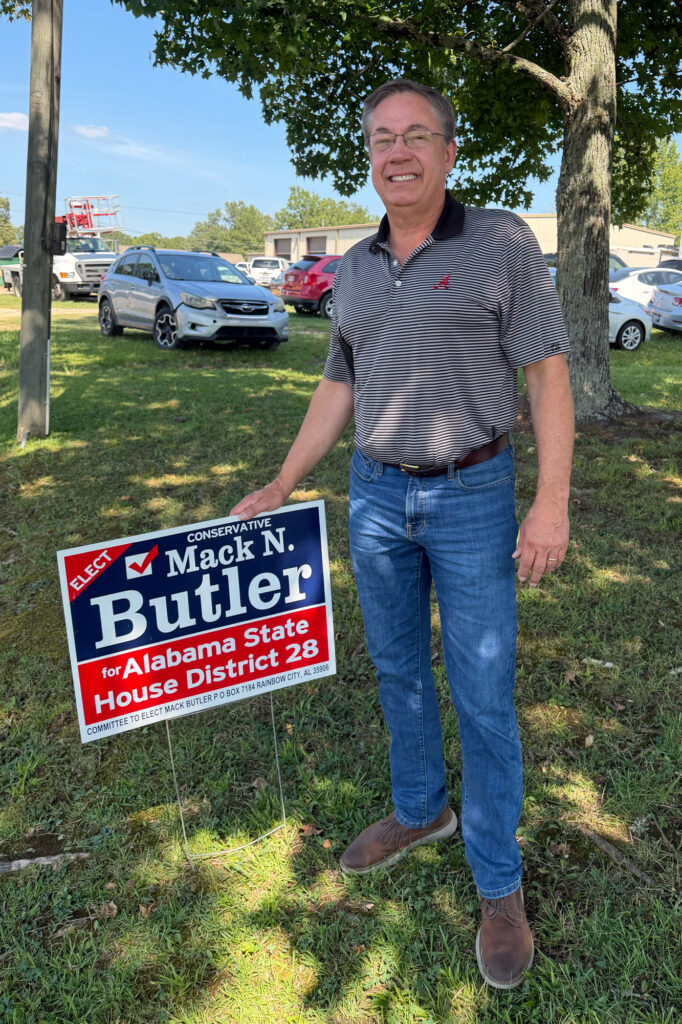
Butler was not present for the Senate committee meeting regarding his bill, which Dodd said was highly unusual.
“Mack was in his office during that [committee hearing], unable to speak for himself, unable to defend himself,” Dodd said. “I don’t have an accurate answer for you if that was Mack’s decision on his own to stay in his office during that meeting, or if somebody told him to. But it was odd and it was strange.”
Butler said later he chose not to attend the committee hearing because he was upset about the changes to the bill, and he didn’t know if he would be allowed to speak because the committee chair would have to recognize him.
“I just felt like things were moving too fast, and there at the time I was thinking, ‘We’re going to go [back] to conference and we’ll fix it,’” he said.
Instead, Butler said, he met with Lt. Gov. Will Ainsworth while the hearing was taking place. He said Ainsworth is a close friend and they discussed the bill and his reasons for wanting to send it back to a conference committee, to continue negotiating the differences between the House and Senate versions.
The full Senate then approved the substitute version of HB 475 without debate, and without senators having to go on record with their vote.
Coleman said she would have objected, but she and others were out of the room when the bill was called to the floor. Coleman said she was taking photos with a school group from her district that had come to the Legislature that day. It’s not clear from videos of the session how many senators were out of the room when the bill was called.
That afternoon, Butler made one last-ditch effort to rescue some of the elements of his bill, when HB 475 went back before the full House for a final vote.
During that session, Butler requested to send the Senate-passed version of HB 475 back to conference to continue negotiations.
The request was denied, largely by members of his own party. Rep. Ivan Smith, R-Clanton, moved to suspend Butler’s motion and proceed to the vote. Smith’s motion passed 68-31, with one abstention.
Clouse, as chairman of the House Transportation, Utilities and Infrastructure Committee, had been involved in amending HB 475, and praised Butler’s version of the bill in the original House vote. But he ended up supporting the Senate version of the bill instead. He voted with Smith to suspend Butler’s motion and then to pass the final amended version of the bill that left out Butler’s reforms.
He later told Inside Climate News he felt further negotiations would not be productive.
“We finally made the decision, it’s time to, you know, if we’re gonna pass this, let’s do it,” Clouse said. “We’d exhausted all measures in the conference committee already.”
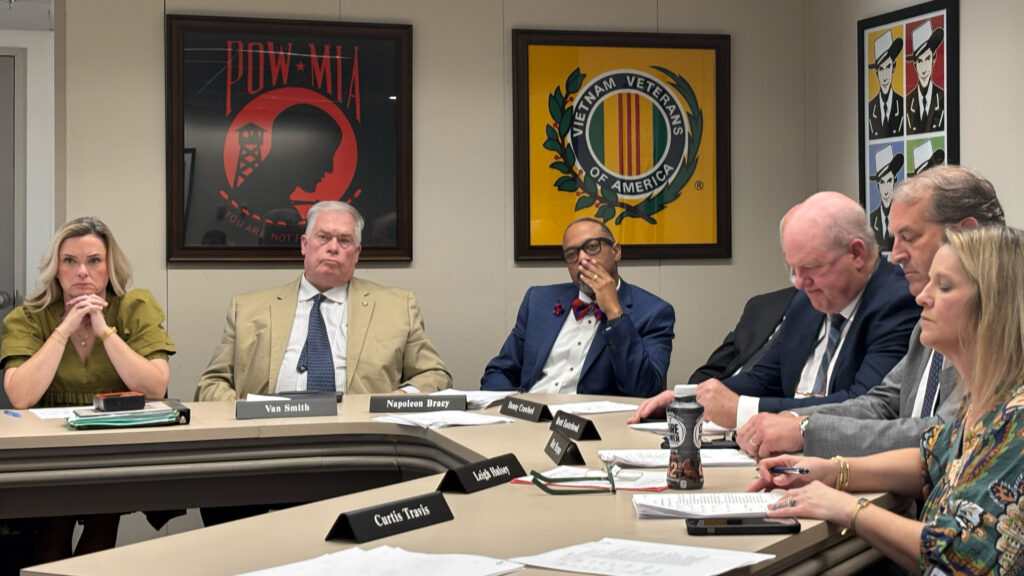
Butler, who’s been in the Legislature since 2016, said it was “extremely unusual” for a bill to pass both houses on the same day, and that he’s never seen a motion from a bill’s sponsor to go to conference be summarily dismissed.
“I’ve never, ever witnessed where they slap it down right there and say, ‘Nope, we’re not going to make it better,’” Butler said. “I thought we deserved a few minutes to make the legislation better, but we were not allowed that process. Why would you not want to make a bill better?”
Moments later the amended HB 475 passed the House, this time by a vote of 72-26, with two abstentions.
Butler voted no on his bill, as did 23 other Republicans, including state party chair Scott Stadthagen and Rhett Marques, the GOP nominee to represent Alabama’s newly redrawn 2nd Congressional District.
Democrats nearly all voted in favor of the bill, with only Reps. Neil Rafferty and Chris England voting no, with an abstention from Givan.
Rep. Phillip Ensler, the only Jewish member of the Legislature, was absent the day of the bill’s final passage, which fell on Passover.
Still, Ensler is listed in state records as having voted in favor of tabling Butler’s motion not to concur with the Senate’s changes to the bill. He said he believes another legislator must have voted on his machine.
“I was not there for that,” Ensler said “When I realized, I called and said, ‘Hey, can you lock my machine?’”
This story is funded by readers like you.
Our nonprofit newsroom provides award-winning climate coverage free of charge and advertising. We rely on donations from readers like you to keep going. Please donate now to support our work.
Ensler said that had he been in the chamber, he would’ve voted against the final legislation. His later votes from the day are recorded as “present.”
Gov. Kay Ivey signed the bill the next day.
Dodd said Energy Alabama made a last-minute push urging Ivey to veto the bill but was unsuccessful. She was in a hospital for a surgical procedure and signed the bill just hours after being discharged.
What the New Law Will Do
While the toughest provisions were stripped out, the new law will dramatically reshape the PSC, effective next year.
The commissioners, rather than being elected statewide, will be chosen by voters in each of Alabama’s seven congressional districts. Alabama has one reliably Democratic district, with another that is competitive, all but ensuring a bipartisan PSC for the first time since 2012. That provision was enough to entice most House Democrats to support the bill, even though a Republican supermajority on the PSC is all but assured.
“There was a sense that the bill would at least guarantee, or almost guarantee, that Democrats would have some influence over who ends up on the commission versus electing statewide, where it’s more difficult to get a Democrat elected,” Ensler said.
In June, Ivey announced her appointments of the first two Black commissioners in state history, who will take office in January and serve until district-wide elections are implemented in 2028 and 2030.
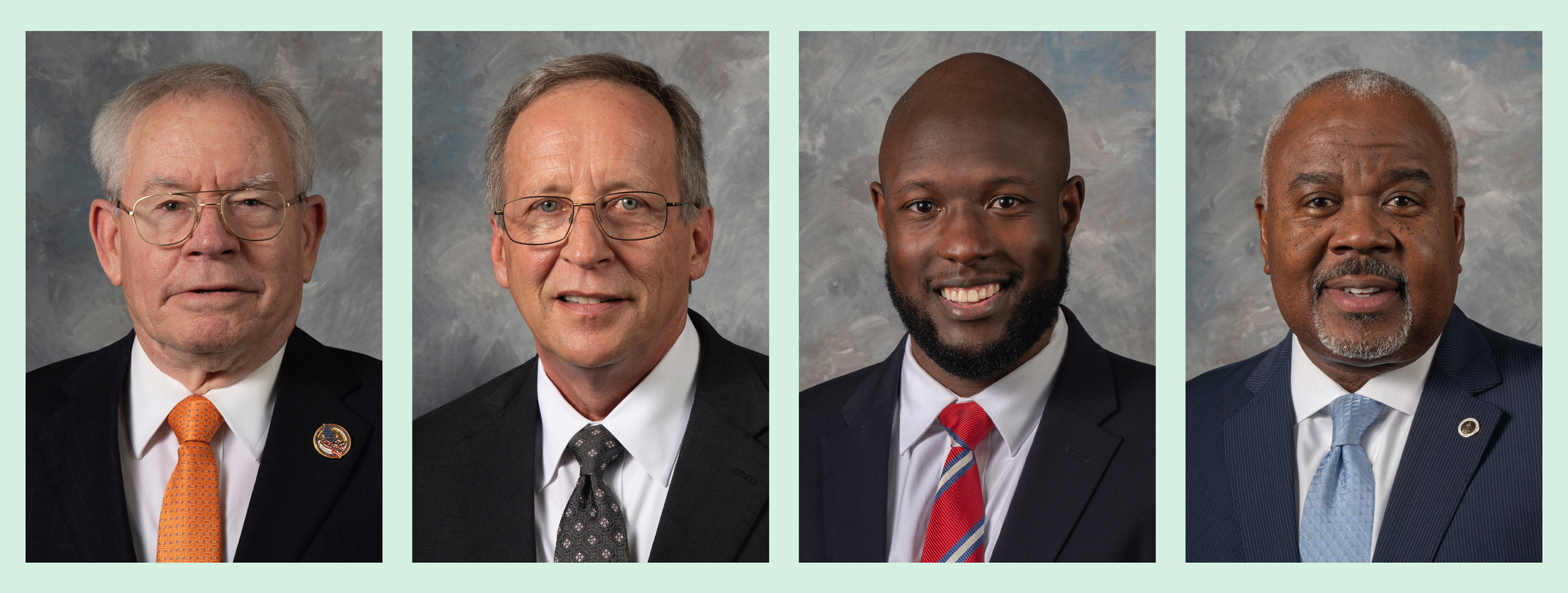
The PSC, founded as the Alabama Railroad Commission in 1881, has still had more former Confederate officers than Black members. The notorious Bull Connor presided there long after his police department’s brutal suppression of civil rights protesters with fire hoses and police dogs in 1963.
But in 2027, the commissioners will have less power than ever to keep utility bills in check. In addition to having more members, the commission agenda will be set by the secretary of energy under the new law, and it will take a vote of five commissioners to overrule the secretary. The secretary will also decide if and when to schedule rate cases for utilities like Alabama Power.
It’s the first direct influence the governor’s office will have over the PSC, aside from appointing replacements to commission vacancies. Numerous commissioners have been appointed that way but were then answerable to voters, not the governor. Givan said she questions whether Democratic support for the bill was the right move when her Republican colleagues, just weeks after the passage of the so-called reform legislation, forced through a redistricting map that diminished Black and Democratic representation. That move turned a majority-minority district that advantaged Democrats by five points into one that favors Republicans by 7.
The provision of HB 475 that had led to Democratic support may be of little value, she said.
“Even with that, the bottom line is: They won. Alabama Power won,” Givan said. “Alabama Power is the world order in the state of Alabama. It’s undeniable. … There was a lot of pressure from the public, but at the end of the day, the biggest pressure was to remain in the good graces of Alabama Power.”
“When they want to get something done,” former Republican lawmaker Steve Flowers said of Alabama Power, “they get it done.”
It’s no surprise that Alabama Power would be deeply interested in influencing the outcome of the utility reform debate, according to David Hughes, associate professor of political science at the University of Louisiana at Lafayette. Hughes, who’s long followed Alabama politics, said it’s also not a secret that the utility has meaningful influence in the state, including with lawmakers.
“We always talk about the ‘big mules’ that influence Alabama politics,” Hughes said. “And Alabama Power is definitely among them.”
In states like Alabama that have part-time legislatures, the influence of lobbyists can also be more pronounced, according to political science research, Hughes explained.
“When you’re a part-time legislator, to a certain degree, you have to just rely on industry leaders to understand the legislation that pertains to those things.”
And those in industry, Hughes said, often have a vested interest in legislative outcomes. Given the lobbying pressure around utility reform, Hughes said this dynamic may have been at play in Montgomery.
“It seems like a grand bargain was struck behind closed doors,” Hughes said. “But we can’t always see the sausage being made.”
Hughes said such back-door deals can have an impact on voters’ views about their elected officials.
“Regardless of how powerful any given lobbyist is, at the end of the day, members have to go and ask their constituents to reelect them,” Hughes said.
And without real utility regulation reform, Alabamians will continue to suffer, Givan said:
“So now the question remains: What about the rates? What about the high costs? And what about these AI data centers?”

What’s Next?
For now, it appears the push for mandatory rate cases or profit caps for Alabama Power is dead.
Butler said that with such a dramatic overhaul to the Public Service Commission, it’s unlikely the Legislature would make any more changes next year, when lawmakers reconvene.
He said, for now, it will be up to the reshuffled PSC and the new secretary of energy to address Alabama’s high electricity costs.
“I do think it’s fair that we give them an opportunity to do their job and serve the people, and not serve the utility company,” Butler said.
Clouse said he would be open to revisiting the PSC reforms down the line.
“There’s a lot of pieces of legislation we pass that have to be tweaked down the road,” Clouse said. “And this is probably one of them that’s going to have to be tweaked once we see if there’s any unintended consequences.”
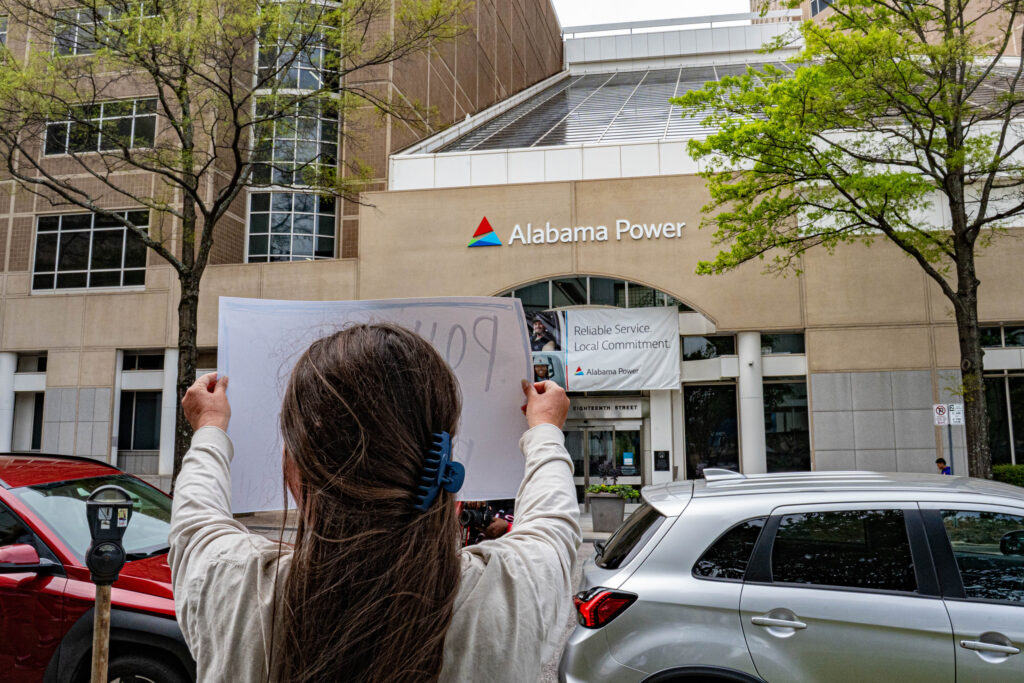
Butler said the bill came up unexpectedly this year, but he was happy to bring light to utility reform, even if he didn’t get the bill he wanted.
“That was not on my radar screen [before the session],” he said. “It popped on there, and I took the ball and ran with it and did the absolute best job I could with it. I’m excited that we had a conversation that had not been had.”
He hopes the commissioners or the energy secretary will convene a public hearing to examine rates, even if they are not required to do so by law. He said that since Alabama Power earns a profit based on the amount of money it spends, there is no incentive to spend less.
“I’ve been in business all my adult life, since I was 22 years of age, I quit my job and started a business, so I’m continually looking for efficiencies to survive,” Butler said. “But the incentive that they have had on that return on equity is not to find efficiencies, but to spend money. Because the more money you spend, the more return you get.”
Smaller tweaks to the process may be coming. Currently, serving as a PSC commissioner is a full-time job. With the increased number of commissioners next year and the arrival of the secretary of energy, Butler said he expects a bill in the upcoming session to make the commissioner roles part-time.
He’s also planning to introduce a bill next year to allow for balcony solar installations, mirroring other states’ regulations.
Beyond that, Butler said he and others are focused on different issues.
“I think everybody’s just moved on with it,” he said. “That’s not a hill to die on, you know.”
He said he does not hold any ill will toward colleagues who opposed his bill.
“I wasn’t mad at anybody,” Butler said. “Didn’t want to whip anybody afterwards. I was a little floored, but that is the process. It’s part of the sausage being made. Sometimes it’s not pretty.”
About This Story
Perhaps you noticed: This story, like all the news we publish, is free to read. That’s because Inside Climate News is a 501c3 nonprofit organization. We do not charge a subscription fee, lock our news behind a paywall, or clutter our website with ads. We make our news on climate and the environment freely available to you and anyone who wants it.
That’s not all. We also share our news for free with scores of other media organizations around the country. Many of them can’t afford to do environmental journalism of their own. We’ve built bureaus from coast to coast to report local stories, collaborate with local newsrooms and co-publish articles so that this vital work is shared as widely as possible.
Two of us launched ICN in 2007. Six years later we earned a Pulitzer Prize for National Reporting, and now we run the oldest and largest dedicated climate newsroom in the nation. We tell the story in all its complexity. We hold polluters accountable. We expose environmental injustice. We debunk misinformation. We scrutinize solutions and inspire action.
Donations from readers like you fund every aspect of what we do. If you don’t already, will you support our ongoing work, our reporting on the biggest crisis facing our planet, and help us reach even more readers in more places?
Please take a moment to make a tax-deductible donation. Every one of them makes a difference.
Thank you,

Reporter, Alabama
Dennis Pillion is a reporter for Inside Climate News based in Alabama. He joined ICN in 2024 after 17 years working for Alabama Media Group, including nine as the statewide natural resources reporter. His work for AL.com and The Birmingham News, won numerous Green Eyeshade and Alabama Press Association awards for his coverage of environmental issues in Alabama. He was born and lives in Birmingham, Ala.

Reporter, Alabama
Lee Hedgepeth is Inside Climate News’ Alabama reporter. Raised in Grand Bay, Alabama, a small town on the Gulf Coast, Lee holds master’s degrees in community journalism and political development from the University of Alabama and Tulane University. Lee is the founder of Tread, a newsletter of Southern journalism, and has also worked for news outlets across Alabama, including CBS 42, Alabama Political Reporter and the Anniston Star. His reporting has focused on issues impacting members of marginalized groups, including homelessness, poverty, and the death penalty. His award-winning journalism has appeared in publications across the country and has been cited by the New York Times, the Wall Street Journal and the Washington Post, among others.
