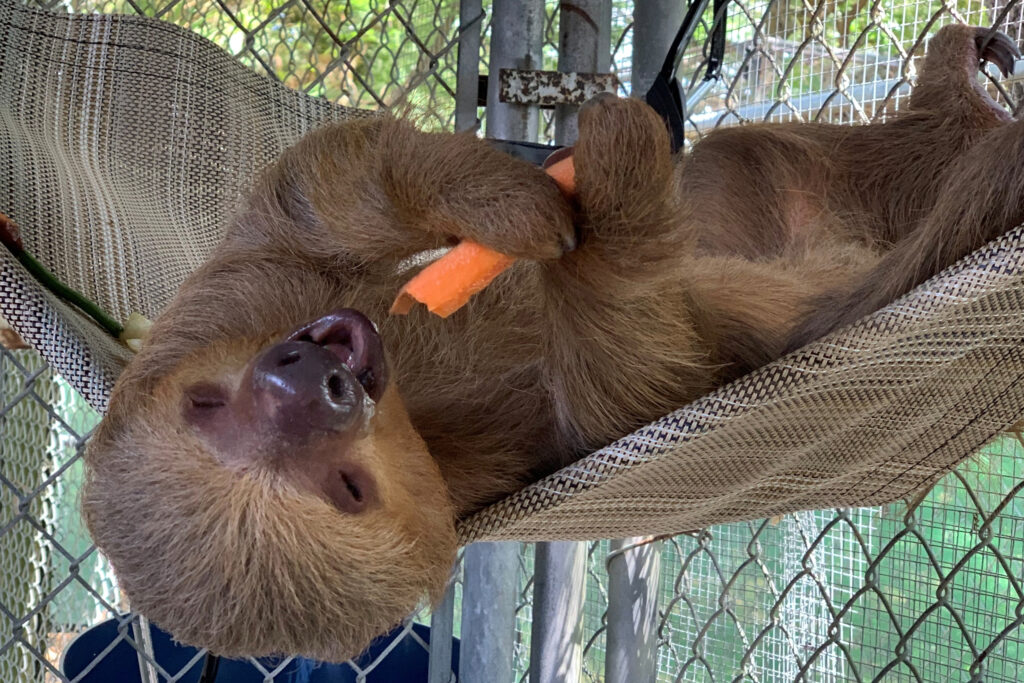
Florida’s wildlife agency has proposed new rules to strengthen protections for sloths imported into the state, four months after an Inside Climate News investigation revealed dozens of wild sloths from South America died at a planned Orlando tourism attraction.
The Florida Fish and Wildlife Conservation Commission already requires individuals and businesses in Florida to obtain a specialized wildlife permit to own, sell or show exotic animals. The proposed rules would go a step further, requiring permit holders to have sloth-specific “experience.” However, this will not apply to those already approved to own sloths in the state.
Florida’s captive-wildlife rules drew international attention after more than 50 sloths died at the tourism attraction Sloth World.
In late 2024, the company imported 21 sloths from the forests of Guyana to a facility without running water or electricity, according to a state incident report obtained by Inside Climate News through an open records request. All the animals died. So did 10 sloths shipped from Peru that arrived at the facility shortly afterward.
State records show Sloth World continued to import dozens of sloths, most of which died before the business shuttered this spring. Necropsy reports indicate that the sloths suffered from diseases and severe physiological distress induced by their capture from the wild, international shipment, environmental changes and problems with their care.
The state’s proposed rule changes include requiring a facility inspection before a permit is issued.
“Everyone agrees that this was a tragedy, and we’re just trying to put some more stringent structure in place—some checks and balances—to make sure that we can prevent anything like this happening in the future,” Dana Russell, a captain at the agency, said at a Wednesday meeting on the rule proposal.
Read More
At ‘Sloth World’ in Florida, Wild Sloths Have Died by the Dozens
By Katie Surma, Kiley Price
The Fish and Wildlife Conservation Commission did not answer emailed questions about its new proposal, instead sending a link to its public meeting. Internal agency emails obtained by Inside Climate News showed that the commission knew about the mounting deaths and animal welfare concerns at Sloth World long before the attraction shuttered, and the agency did not intervene.
The proposal is a step toward preventing future sloth deaths in Florida, said Sam Trull, executive director of The Sloth Institute in Costa Rica. However, she and other advocates stressed that significant gaps in the proposal could leave sloths vulnerable to exploitation and animal welfare issues.
“It’s more of a good start versus an ending that is truly going to make a difference for sloths in Florida,” she said. “Ultimately, what we want is to ban the importation of sloths into the U.S. because we think that’s the only way to protect both their welfare and their conservation.”
People could still import wild-caught sloths into Florida with a permit, and they would not have to report animal deaths to the state government. The proposed changes also do not prohibit hands-on encounters, leaving the door open for businesses that allow people to pet or hold the animals.
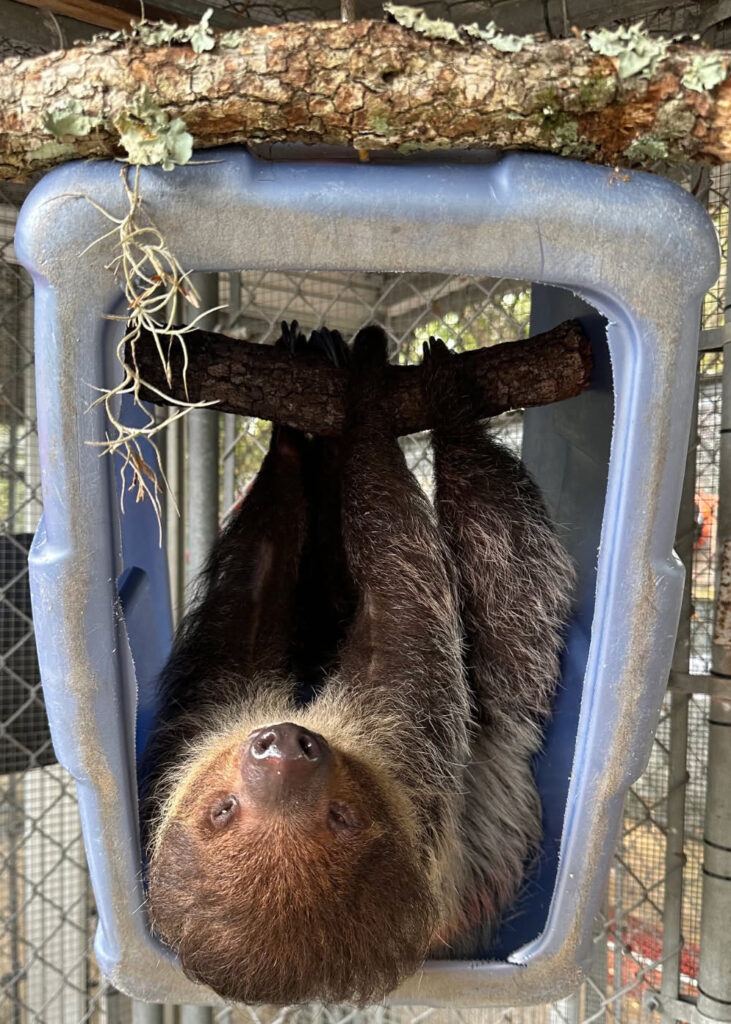
Experts say this is particularly problematic for sloths; the animals are highly sensitive and often internalize stress—sometimes curling into a ball and closing their eyes, which tourists may mistake as receptivity to interaction.
Veterinarians and a wildlife pathologist told Inside Climate News that stress contributed to the deaths at Sloth World, possibly helping activate diseases that normally remain dormant in the wild. Florida state Rep. Anna Eskamani, an outspoken critic of Florida’s captive wildlife management, called the proposal “watered down.”
“It just blows my mind how we’ve allowed our desire for just profit to outweigh the importance of caretaking of wild animals,” Eskamani said. “Ultimately, the public’s voices need to be heard, and … these current rules don’t reflect what the public’s been asking for.”
The new experience requirement in the proposed rules means applicants must document that they’ve had 1,000 hours caring for sloths and submit letters of reference, though exceptions apply. The proposal also requires corporations with sloths to have at least one “qualified personnel responsible for the care of such wildlife.”
It is likely Sloth World would have met such a requirement for most of its operations. One of its employees wrote a book on sloth care and spent more than a decade importing, selling and caring for the animals.
The new proposed rules would not require permit holders to submit veterinary-care or diet plans to the state, or explain the qualifications of other employees who may be handling sloths at their facility.
This story is funded by readers like you.
Our nonprofit newsroom provides award-winning climate coverage free of charge and advertising. We rely on donations from readers like you to keep going. Please donate now to support our work.
Trull, whose organization rehabilitates sloths in Costa Rica, said the state’s proposed definition of acceptable sloth care standards doesn’t go far enough.
“Not having proper veterinary care is really one of the things that hurt a lot of the sloths at Sloth World,” Trull said. “Not having a good definition of what kind of sloth-experienced vet these facilities even need to have, I think, is a pretty big gap.”
The proposed rules on experience do not apply to “applicants who have held a valid captive wildlife permit and have documented possession of sloths” prior to the effective date of the rule.
In April, Sloth World transferred its 13 surviving sloths to a zoo. Five have since died of illnesses. An Orange County Sheriff’s Office probe into the business recently concluded that no crime occurred.
Fallout from the Sloth World controversy has rippled beyond the business. In May, the state halted sloth imports for two months. The trade has grown significantly in the country over the past decade, and advocates have been calling for a permanent, broader ban.
“The first, most important thing is to put a tourniquet on the source of the bleeding,” Trull said, “and stop bringing sloths from the wild into the U.S.”
About This Story
Perhaps you noticed: This story, like all the news we publish, is free to read. That’s because Inside Climate News is a 501c3 nonprofit organization. We do not charge a subscription fee, lock our news behind a paywall, or clutter our website with ads. We make our news on climate and the environment freely available to you and anyone who wants it.
That’s not all. We also share our news for free with scores of other media organizations around the country. Many of them can’t afford to do environmental journalism of their own. We’ve built bureaus from coast to coast to report local stories, collaborate with local newsrooms and co-publish articles so that this vital work is shared as widely as possible.
Two of us launched ICN in 2007. Six years later we earned a Pulitzer Prize for National Reporting, and now we run the oldest and largest dedicated climate newsroom in the nation. We tell the story in all its complexity. We hold polluters accountable. We expose environmental injustice. We debunk misinformation. We scrutinize solutions and inspire action.
Donations from readers like you fund every aspect of what we do. If you don’t already, will you support our ongoing work, our reporting on the biggest crisis facing our planet, and help us reach even more readers in more places?
Please take a moment to make a tax-deductible donation. Every one of them makes a difference.
Thank you,

Reporter
Kiley Price is a reporter at Inside Climate News, with a particular interest in wildlife, ocean health, food systems and climate change. She writes ICN’s “Today’s Climate” newsletter, which covers the most pressing environmental news each week.
She earned her master’s degree in science journalism at New York University, and her bachelor’s degree in biology at Wake Forest University. Her work has appeared in National Geographic, Time, Scientific American and more. She is a former Pulitzer Reporting Fellow, during which she spent a month in Thailand covering the intersection between Buddhism and the country’s environmental movement.