


- Three 2026 studies reveal that the Amazon can regrow quickly, but deforestation and warming could trigger a system-wide tipping point in the next 15 years.
- Research also shows that repeated wildfires are replacing fire-resistant specialist trees with generalist species, halving biodiversity at forest edges despite a closing canopy.
- According to research, extreme conditions have increased tree mortality due to hydraulic failure, which is key to understanding the forest’s shrinking carbon sinks.
- Ending deforestation is necessary and achievable, but must be combined with global actions to curb climate change, say experts.
For decades, scientists have been trying to answer a key question: What would the Amazon rainforest look like if deforestation, climate change and fires continue? And, a follow-up question: When would that transformation happen?
While several researchers have made progress on the answers over the years, a series of studies in 2026 sheds new light on the prognoses. The three reports published earlier this year examine the health of the rainforest from different angles.
In April, a study published in Nature shows the Amazon heals faster than expected, but takes longer to fully recover its biodiversity after extreme events.
A PNAS study, based on research conducted over two decades and also published in April, finds that the forest is more resilient to fires than anticipated and shows no sign of transitioning to savanna — a different outcome than has long been suspected. However, the researchers warn that the new ecosystems emerging from the forest recovery process are more vulnerable to future climate disturbances.
In May, another paper published in Nature examines the impacts of deforestation, notably the increase in the frequency and intensity of droughts, finding that this increase could push the biome to a tipping point by 2040.
But according to Luciana Gatti, senior researcher at Brazil’s space agency (INPE), climate in the Amazon has already changed sufficiently that typical rainforest trees no longer find the necessary conditions for survival: abundant water and mild temperatures.
“That has a lot more to do with how much has already been deforested, than with extreme weather events,” Gatti tells Mongabay. “Roughly half the rain in the Amazon comes from trees. As they transpire, they release water vapor into the atmosphere and consume the heat from their surroundings, keeping temperatures low. Less trees equals less rain and more heat.”
The Amazon Environmental Research Institute (IPAM) has recorded a 74% decline in rainfall over the past 35 years to 2025. In some places, according to research collective MapBiomas, annual precipitation is below 1,000 millimeters (39 inches) — the level experts consider the threshold for a rainforest to remain as such.
Meanwhile, some of the best-preserved patches of the biome have registered peak temperatures at 5°C above normal. Since the 1980s, temperatures in the Amazon have risen at double the global average rate, increasing by 0.5° Celsius (0.9° Fahrenheit) per decade.
Bernardo Flores, forest and climate researcher at the Federal University of Santa Catarina and one of the authors of the paper published in Nature in May, says that this is key to understanding the Amazon’s tipping point, which only exists because of the interaction among climate, tree coverage and humidity — something most models don’t take into account, he says.
By combining these elements, Flores says the paper he co-authored increases certainty about the existence of a system-wide tipping point. He adds that it might be even closer than the 22%-28% deforestation threshold estimated by the study, as it doesn’t account for the effects of degradation.
“If you factor in the main drivers of degradation — droughts, selective logging, forest fragmentation and fires — we might actually already be on the edge of the point of no return,” Flores tells Mongabay.
Forests regrow fast, but are more vulnerable and flammable
The two studies published in April present a hopeful scenario for the Amazon’s recovery capabilities. New evidence shows that, if given a chance, the forest regrows faster and more diversely than expected after extreme events and fires.
According to Flores, PNAS’ two-decade, large-scale study on the impacts of fire is one of the most important experiments ever conducted on the subject and the resilience found is surprising.
That resilience, however, doesn’t reflect the biome’s general health. “Even the driest and most stressed areas of the Amazon recovered, but it only happened because the forest stopped burning,” Flores says, explaining that this is something that can’t be controlled outside of such an experiment.
Additionally, a regrowth in numbers and even species doesn’t mean the ecosystem regains what is necessary to maintain its biodiversity, especially as generalist fast-growing species typically replace fire-resistant specialist trees.
“The satellite may see all green from above, but this other forest and the species that grow in it are different,” Brazil’s space agency’s Gatti says.
These “regrown” forests are increasingly flammable, reshaping how the Amazon burns. Historically, fires occurred in pastures and recently deforested areas. That pattern changed in 2024, when fires in native forests were most common.

“Under normal conditions, burning is not part of the dynamics of the Amazon,” Larissa Amorim, forest engineer and researcher at Brazilian conservation non-profit Imazon, tells Mongabay. “Fires in the region are usually man-made — but they still wouldn’t have reached such magnitudes if it wasn’t for the consecutive years of extreme drought.”
Flores says fire has become the main vector of degradation, “There’s a feedback system where what burns once tends to burn again and spill over to neighboring areas.”
Trees that are left standing after fires and degradation end up incapable of providing equal levels of water and carbon circulation, according to a 2025 study published in Global Change Biology.
That leads to more frequent and intense droughts and to drought-related tree mortality, notably from hydraulic failure, as explained by Júlia Tavares, who holds a Ph.D. in ecology and global change from the University of Leeds.
“In dry seasons, water inside the trees is pulled upwards by the atmosphere and downwards by the soil,” Tavares tells Mongabay. “When the pressure from both directions is too strong, air bubbles are formed, clogging vases that should transport water. If that happens to one too many vases, the tree dies.”
Trees that do survive such stress have their CO2 absorption compromised, leading them to emit more through respiration than the amount stored in leaves and trunks from turning solar energy into food. According to Tavares, what happens at the individual level reflects the shrinking of the forest-wide carbon sink.
Continued deforestation drives tipping point closer
The Amazon’s tipping point has been theorized as far back as the 1980s at least. According to Flores, a tipping point is “the threshold beyond which a biome either gets trapped in a degraded state or starts to collapse.” Four decades ago, it was estimated to occur once 40% of native coverage had been deforested, which would cause the forest as a whole to become a net carbon emitter.
But when the interaction between deforestation and climate change is accounted for, Flores says the point of no return could happen much sooner. On a planet that’s 1.5ºC hotter, the tipping point could be once deforestation reaches 22%, which might happen as early as 2040.
Rain patterns are widely accepted as the main mechanism behind the occurrence of a generalized tipping point, as they link different parts of the forest. Thus, the Amazon could reach the tipping point sooner — or later — depending on which region gets logged. “This total of 22% is a general estimate, but some parts of the forest contribute more than others to produce rain,” Flores says.
The entire system, he explains, coexists with different tipping points spread across the Amazon. In some areas, notably in the so-called deforestation arc, evidence suggests this threshold has already been crossed.
While deforestation in the Brazilian Amazon, which holds around 60% of the rainforest, has decreased over the past three years and is currently on pace to fall to the lowest rate on record, localized tipping points could still trigger a domino effect and cause the entire ecosystem to collapse, Flores says.
Brazil’s past experiences suggest zero deforestation is an achievable goal: Between 2004 and 2012, the Amazon Deforestation Prevention and Control Plan (PPCDam) was responsible for an 80% reduction in the deforestation rate.
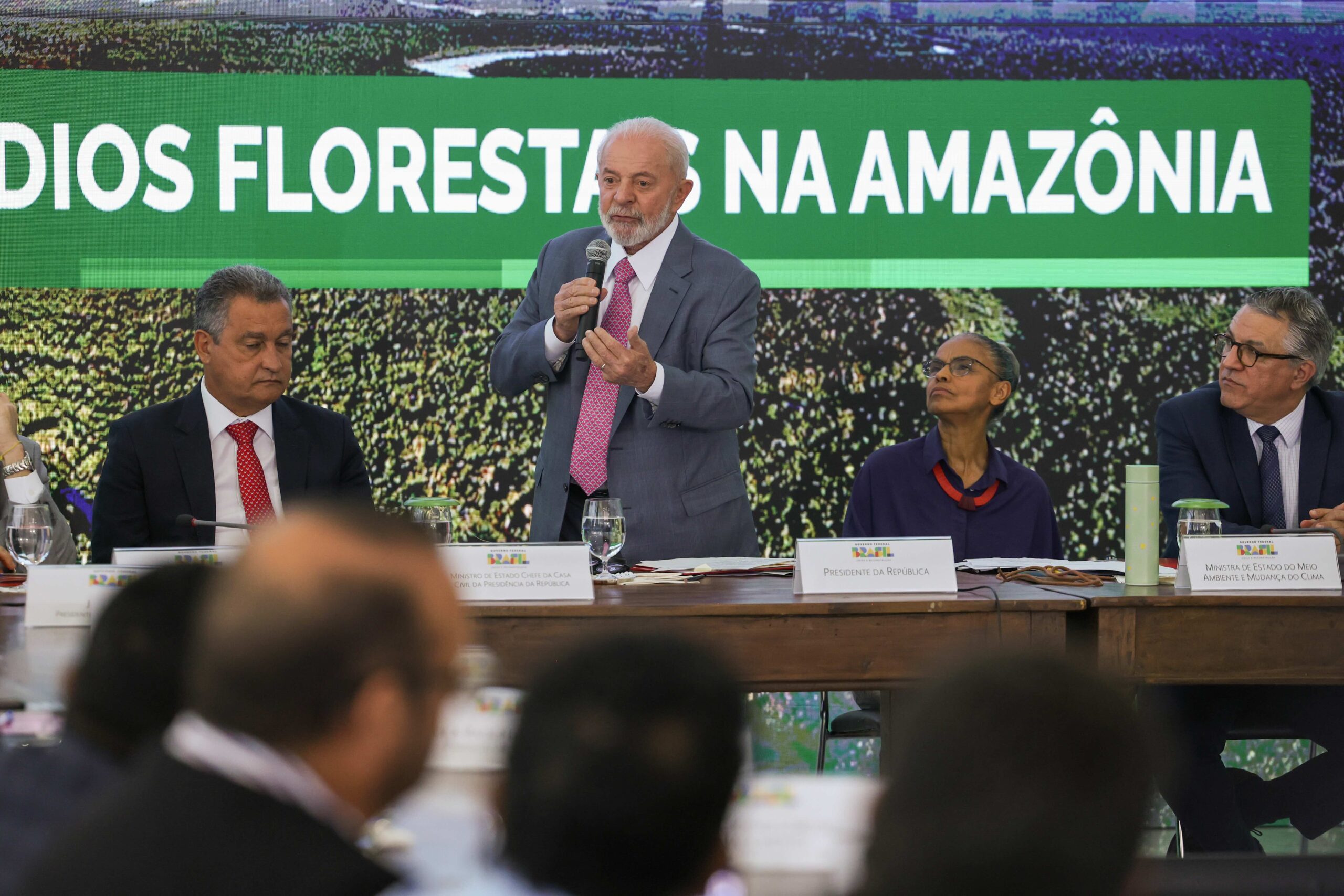
After increasing again under the 2019-2022 administration of former President Jair Bolsonaro, who led anti-environmental policies and closed the program, deforestation has been receding since PPCDam was relaunched in 2023, when President Luiz Inácio Lula da Silva took office for a third term.
President Lula has set a goal to end deforestation by 2030, but experts agree that ending deforestation isn’t enough to reverse the damage to the Amazon. “It is worse than just pressing pause at the current state of degradation: It means deforestation will be allowed to continue, even if at a slower pace, for another half a decade,” says Gatti.
Yet, it remains a critical first step to prevent climate change from worsening. According to the World Resources Institute (WRI), forests globally are still a net carbon sink, absorbing more carbon than they emit, with primary vegetation responsible for most carbon removal from the atmosphere.
While forests worldwide are losing the ability to store carbon, WRI says it is still possible to take steps to not only secure existing carbon sinks, but also to expand them. Actions include fire-resilient land management, investing in bioeconomy and sustainable supply chains, and accelerating forest restoration.
WRI also recommends supporting Indigenous and local communities, as the “people who protect forests best”. In Brazil, almost 60% of carbon absorption takes place in Indigenous and other protected territories. Across the Amazon, these lands remained carbon sinks over the past two decades, while surrounding areas were net carbon emitters.
Taking climate action requires political support and the Brazilian Congress has recently moved forward with several bills proposing legislation viewed as damaging to nature, according to experts. A report from Brazilian advocacy coalition Observatorio do Clima identified close to 50 bills currently under consideration in Congress that would lead to environmental setbacks.
“Without decisive action, climate change will keep driving the forest ever closer to its point of no return,” Flores says.
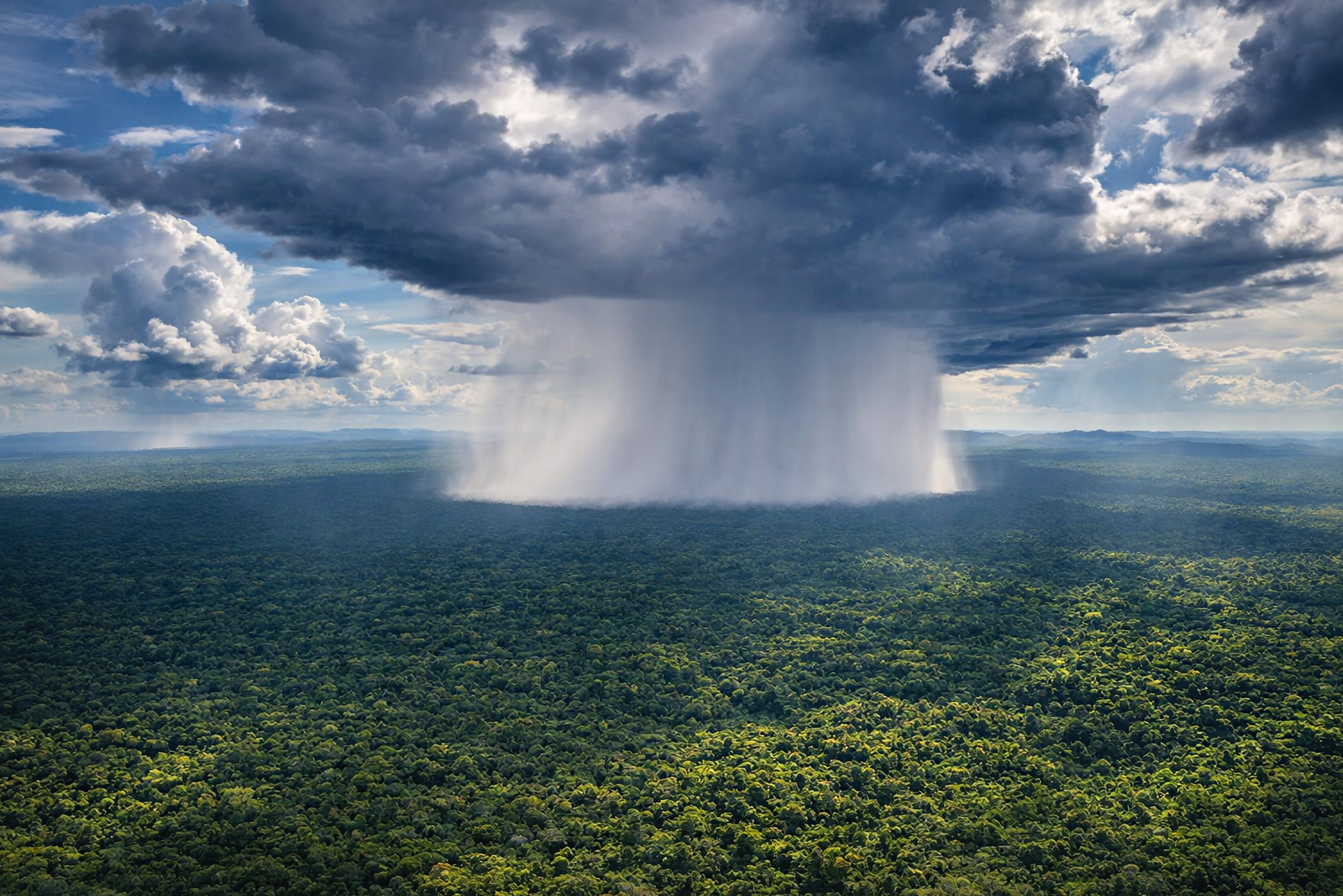
Banner image: Rainburst over the Amazon. Image by Rhett Ayers Butler.
Seminarian-turned-fire-agent preaches new tactics to fight Amazon’s burn crisis
Citations:
Franco, M.A., Rizzo, L.V., Teixeira, M.J., … Machado, L.A.T. (2025). How climate change and deforestation interact in the transformation of the Amazon rainforest. Nature Communications, 16, 7944. doi:10.1038/s41467-025-63156-0
Mataveli, G., Maure, L.A., Sanchez, A., Dutra, D.J., de Oliveira, G., Jones, M.W., Amaral, C., Artaxo, P. and Aragão, L.E.O.C. (2025). Forest degradation is undermining progress on deforestation in the Amazon. Global Change Biology, 31. doi:10.1111/gcb.70209
Metz, T., Farwig, N., Dormann, C.F., Schaefer H.M., Guevara-Andino J.E., … Blüthgen, N. (2026). Biodiversity resilience in a tropical rainforest. Nature, 652, 1232–1239. doi:10.1038/s41586-026-10365-2
FEEDBACK: Use this form to send a message to the author of this post. If you want to post a public comment, you can do that at the bottom of the page.
Cite this article
Amanda Magnani (2026). New studies portray Amazon as surprisingly resilient, but tipping point looms. Mongabay Conservation news. DOI: https://doi.org/10.66709/news-326259

