


- Dozens of shark and ray species are known to spend some or all of their life cycle in freshwater environments, but they remain among the least studied and least protected.
- According to the IUCN, 76% of non-marine sharks and rays in the Indo-Pacific region are threatened with extinction — about twice the rate of their marine relatives.
- Rivers and estuaries are heavily impacted by human activities, and many non-marine sharks and rays have already disappeared from parts of their historic range, with some at risk of vanishing before their conservation needs are understood.
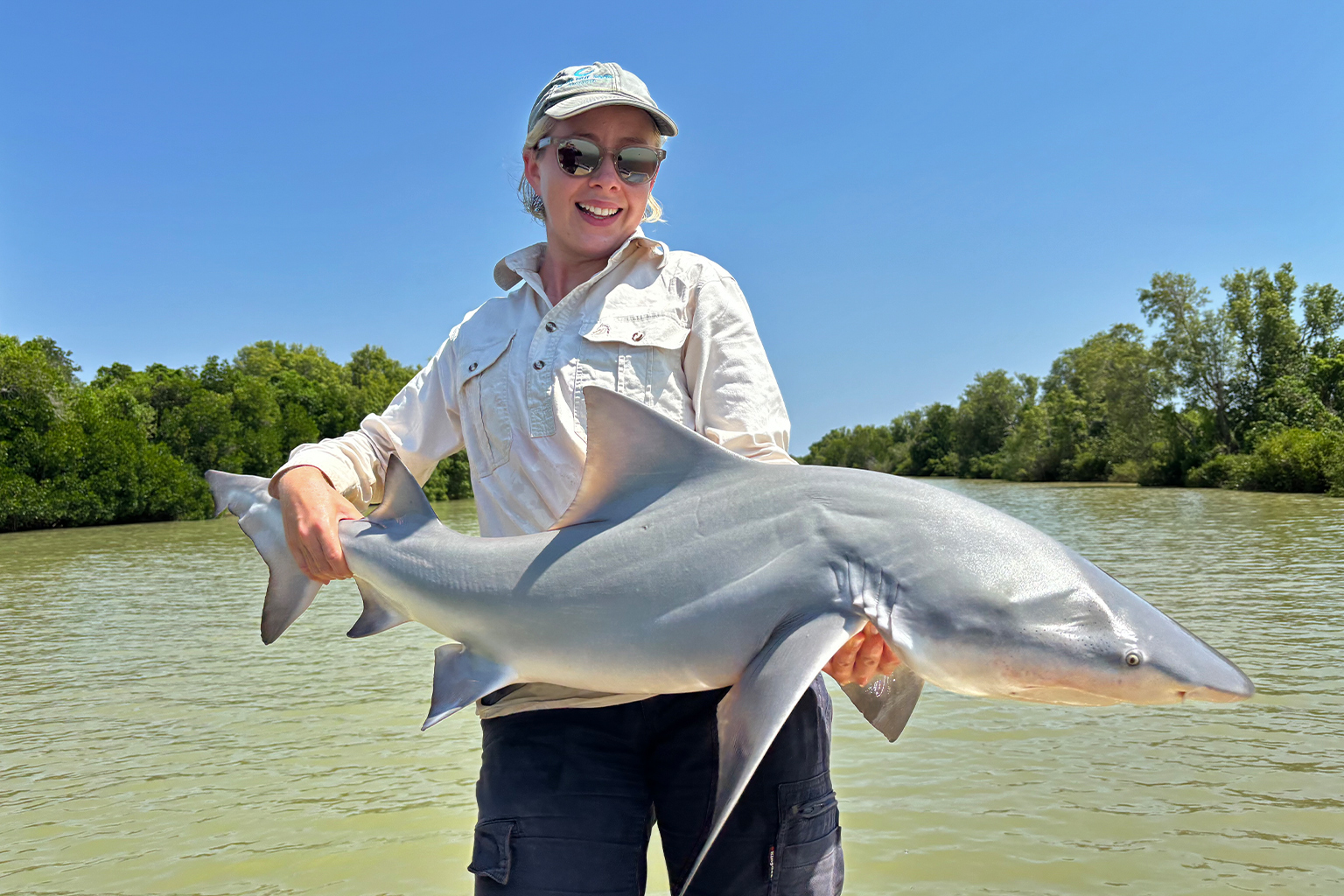
The Vashishti River, originating in the biodiversity-rich Western Ghats and flowing into the Arabian Sea along India’s western coast, has long supported traditional fishing communities. But in 2023, local fishers encountered something entirely unexpected. As they hauled a gill net into a boat, a gray body, still making faint movements, emerged tangled in the mesh, and then another surfaced beside it. By the time the net was lifted aboard, three bull sharks (Carcharhinus leucas) were tangled inside.
The video of the incident quickly spread across social media, drawing renewed scientific attention to the presence of sharks in inland and estuarine waters. “This is the first documented report of sharks from the Vashishti River, although historically sharks and rays have been recorded from several major Indian river systems,” Priyankar Chakraborty, an independent marine and wildlife researcher in India, told Mongabay.
Across India, dozens of species of sharks and rays (collectively known as elasmobranchs) have been reported as inhabiting estuaries and rivers, but while species such as the bull shark are relatively well documented, many others are known from only a handful of records, leaving major gaps in understanding, Chakraborty said.
Globally, around 60 species of sharks and rays spend at least part of their lives in inland waters. Yet compared with their marine counterparts, these species have received remarkably little scientific attention, even though many are among the most threatened vertebrates on Earth, Michael Grant, a marine biologist at James Cook University in Australia and member of the IUCN Species Survival Commission (SSC) Shark Specialist Group, told Mongabay.
According to the IUCN Red List, 76% of non-marine elasmobranchs in the Indo-Pacific region are threatened with extinction, roughly double the global average of 37.5% for all elasmobranch species. These and other non-marine elasmobranchs face growing threats from dams, pollution, overfishing, mining, habitat loss and climate-driven changes to river flows, with some populations disappearing before scientists have even documented fundamental details of their distribution and ecology, Grant said.

What are the non-marine elasmobranchs?
Scientists call shark and ray species that regularly shift between freshwater, brackish and marine environments “euryhaline elasmobranchs.” They can tolerate wide shifts in salinity, allowing many to move between marine habitats and freshwater or brackish habitats such as rivers, floodplains and estuaries at different life stages.
“Some species can complete much of their life cycle in brackish or freshwater, but larger adults often depend on estuaries and coastal seas for space and resources,” Julia Constance, a research scientist at Australia’s Charles Darwin University, told Mongabay.
In contrast, other species are “obligate freshwater elasmobranchs,” spending their entire lives in rivers and lakes without ever entering the sea. There are no sharks in this group, only rays. It’s dominated by members of South America’s freshwater stingray family Potamotrygonidae. The remainder are freshwater stingrays of the family Dasyatidae, found in parts of the Indo-Pacific and West Africa, according to Grant.
Yet scientific knowledge of these non-marine elasmobranchs remains limited. “Research has lagged far behind marine species,” Constance said. “We still lack even the fundamental ecological information needed for conservation.”
A global review led by Constance found that, for many euryhaline and estuarine species, basic data on reproduction, movement, habitat use and population structure is missing. “Many of these species inhabit remote rivers and floodplains that are difficult and costly to study,” she said. “As a result, some of the world’s most threatened sharks and rays remain among the least understood.”

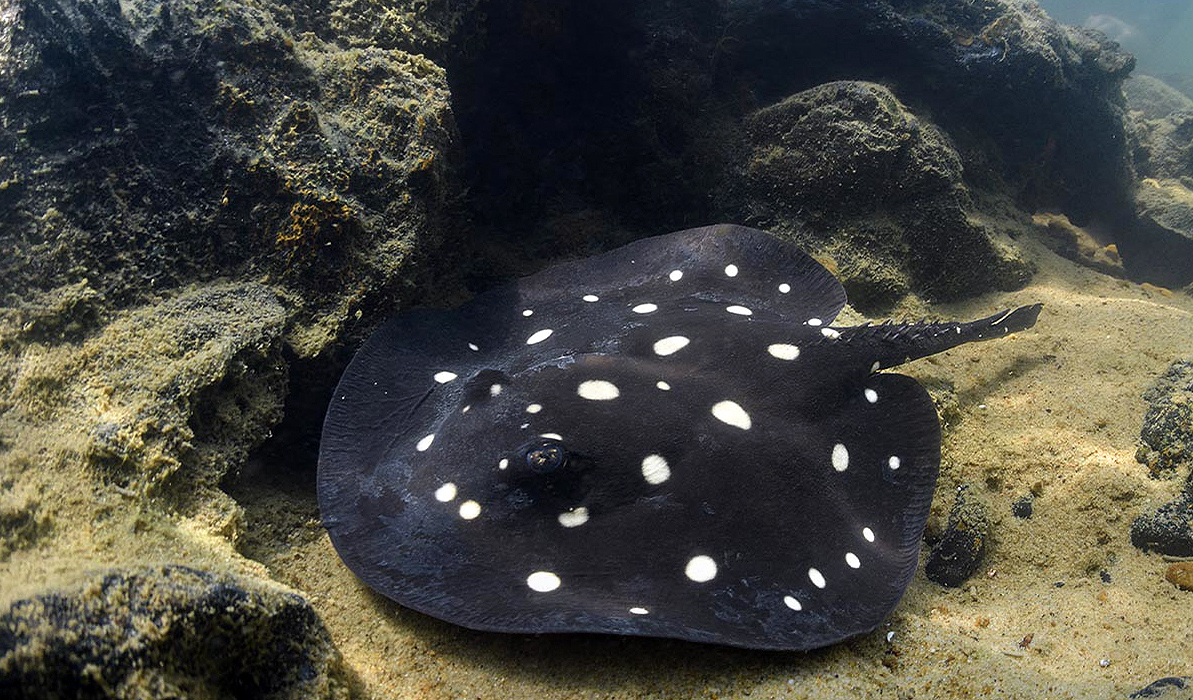
‘River jewels’ of South America
Nowhere is freshwater elasmobranch diversity more striking than in South America. River basins including the Amazon, Orinoco and Paraná host dozens of endemic stingray species, often called “river jewels” for their vivid patterns.They evolved from marine ancestors that entered freshwater millions of years ago.
Because these rays are often confined to narrow habitats, a single dam, mining site or heavily fished stretch of river can affect an entire population, Brazilian biologist Patricia Charvet, a researcher at the Federal University of Ceará, said during a presentation at the Sharks International 2026 (SI2026) conference held in Sri Lanka in May. Charvet is the IUCN SSC Shark Specialist Group’s vice chair for South America. Hydropower dams fragment habitats, alter flow regimes and isolate populations. Even forest fires can indirectly impact river species by increasing erosion, sedimentation and movement of mercury into waterways, according to Charvet.
“These freshwater ecosystems may look vast, but they are extremely fragile. And many species are restricted to single basins and have slow growth, late maturity, and low reproductive rates, making them highly vulnerable,” she said.
The aquarium trade adds further pressure, with species such as the white-blotched river stingray (Potamotrygon leopoldi), which inhabits Brazil’s Xingu River, highly valued in international markets. Although captive breeding exists, demand for wild-caught individuals continues. “In many cases, both adults and juveniles are exploited,” Charvet said.
Climate change introduces still more uncertainty. Rising temperatures, droughts and altered flood cycles may disrupt reproduction and migration. Many species time breeding with seasonal floods, making them especially sensitive to hydrological shifts. Scientists caution that responses to these rapid changes remain poorly understood. “We urgently need more research and stronger conservation action,” Charvet said.


New insights into movement
Recent studies are shedding more light on the hidden lives of river elasmobranchs. In Argentina, researchers tracking giant freshwater stingrays (Potamotrygon brachyura) in the Paraná-Paraguay river system recorded an individual moving more than 170 kilometers (106 miles), far beyond researchers’ previous understanding of their range.
“This suggests freshwater stingrays may be far more mobile than assumed,” Luis Lucifora, a researcher at the Instituto Nacional de Limnología, told Mongabay. The finding came from a tagging program in which recreational fishers helped monitor stingrays. According to the records, this juvenile female traveled, on average, more than half a kilometer (0.31 miles) per day over 10 months.
Such movement patterns hold major implications for conservation, Lucifora said. If species rely on connectivity across long stretches of river, dams and habitat fragmentation could affect populations at much larger scales than previously thought.
Despite their ecological importance, river elasmobranchs remain largely invisible. Chakraborty calls them “forgotten fauna,” noting that conservation has focused overwhelmingly on marine species.
Scientists warn this neglect could be costly. “These are unique and remarkable creatures,” Constance said. “We need to ensure we do not lose them, because no other species can do what they do.”
Banner image: Xingu River stingray (Potamotrygon leopoldi). Image by Andy Murch/SharksandRays.com
Global marine protected areas fail to safeguard most sharks and rays: Study
Asia’s shark and ray hotspots remain poorly protected, study finds
Citations:
Grant, M.I., Kyne, P.M., Simpfendorfer, C.A., White, W.T. … Chin, A. (2019). Categorising use patterns of non-marine environments by elasmobranchs and a review of their extinction risk. Reviews in Fish Biology and Fisheries, 29(3), 689–710. doi:10.1007/s11160-019-09576-w
Grant, M. I., Mizrahi, M. i. … Mather, R. (2022). A step towards contextualising the conservation of non-marine elasmobranchs within the global freshwater biodiversity crisis. Shark News, 4, 38-46.
Constance, J.M., Garcia, E.A., Pillans, R.D., Udyawer, V., … Kyne, P.M. (2023). A review of the life history and ecology of euryhaline and estuarine sharks and rays. Reviews in Fish Biology and Fisheries, 34(1), 65–89. doi:10.1007/s11160-023-09807-1
Vazquez, D. M., … Lucifora, L. O. (2026). Long-distance movement by a giant freshwater stingray, Potamotrygon brachyura, challenges our view on movement ecology and management of obligate freshwater elasmobranchs. Aquatic Conservation: Marine and Freshwater Ecosystems, 36(6). e70400. doi:10.1002/aqc.70400
Charvet, P., Fontenelle, J.P., Rincon, G., Rosa, R.S., Araújo, M.L.G., Prang, G., … Torres, Y. (2024). River Jewels. Chapter 8 in Jabado, R.W. et al. (eds.), The Global Status of Sharks, Rays and Chimaeras. IUCN Species Survival Commission Shark Specialist Group, Gland, Switzerland.
Dulvy, N. K., Pacoureau, N., Rigby, C. L., Pollom, R. A., Jabado, R. W., Ebert, D. A., … Simpfendorfer, C. A. (2021). Overfishing drives over one-third of all sharks and rays toward a global extinction crisis. Current Biology, 31(21), 4773-4787. doi:10.1016/j.cub.2021.08.062
Feedback: Use this form to send a message to the editor of this post. If you want to post a public comment, you can do that at the bottom of the page.
Cite this article
Malaka Rodrigo (2026). ‘Forgotten fauna’: Little known river sharks and rays face increased extinction risk. Mongabay Conservation news. DOI: https://doi.org/10.66709/news-329379

