


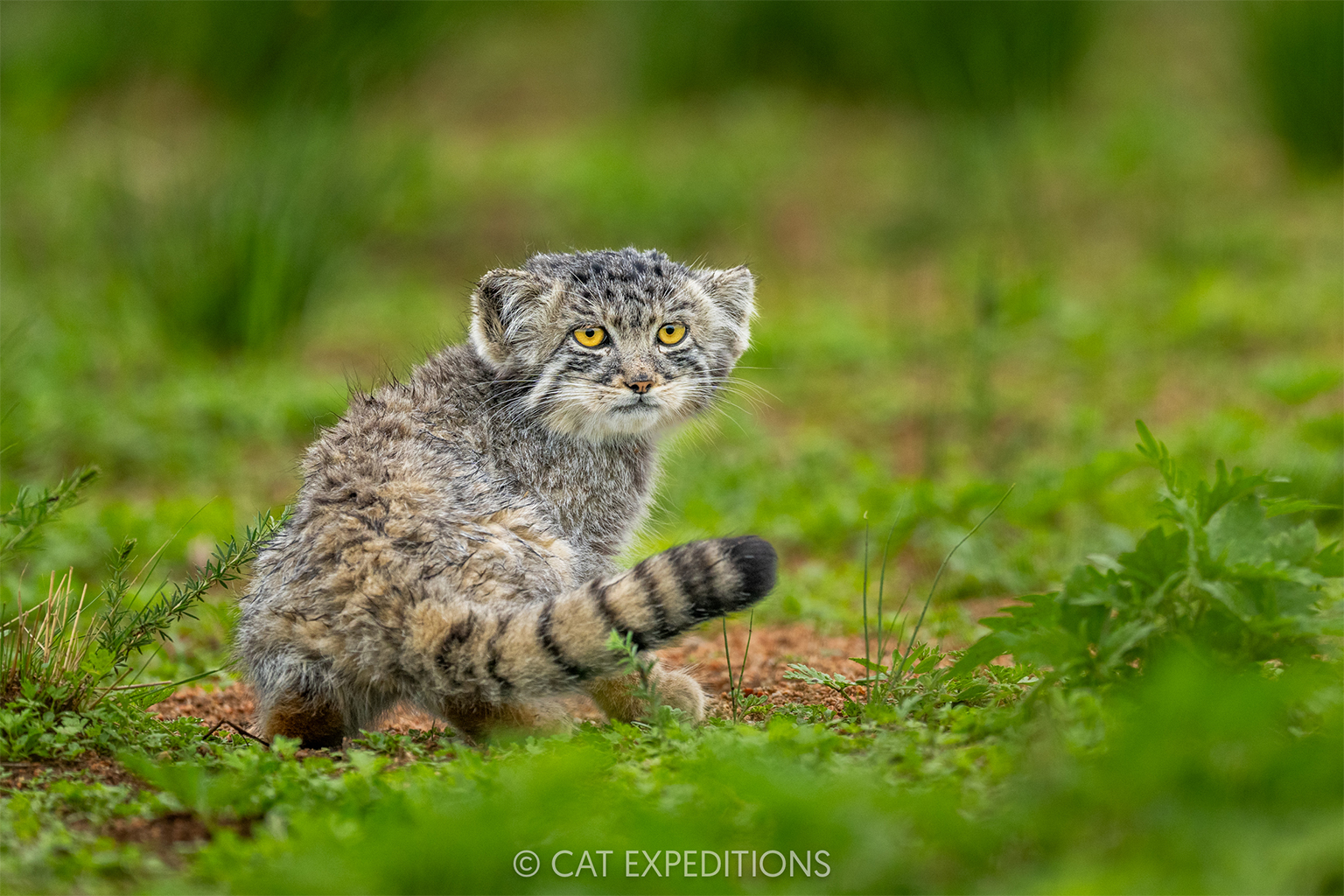
- High-altitude wildernesses like Limi Valley in Nepal are suffering from human encroachment, which is advancing at an unprecedented pace, pushing wildlife into ever-smaller pockets of shrinking habitat.
- Creatures ranging from wild yaks to Himalayan wolves, snow leopards, Eurasian lynx, Tibetan brown bears and Pallas’s cats are under pressure from a new wave of herders bringing sheep, goats and dogs into the remotest areas, spreading disease and degrading grazing lands.
- “What this high-altitude landscape, its people, and biodiversity need is straightforward: formal legal ecosystem protection from the Nepalese government, led by the stewardship of the Limi community who are best placed to protect it, and supported by conservation organizations,” a new op-ed argues.
- This article is a commentary. The views expressed are those of the authors, not necessarily of Mongabay.
Changes like increasing geological and glacial instability driven by the warming climate are a growing concern across the Himalayas. Our hearts go out to the thousands of families across Nepal, China, and around the world grieving their loved ones and searching for those missing after the recent catastrophic flash flood at the Nepal-China border.
Though nearly 400 kilometers (almost 250 miles) to the northwest of the recent flash flood zone, our study area in Nepal’s Limi Valley in Upper Humla — a landscape with several villages and a rich wildlife heritage, that we have spent years trying to understand and protect — is also affected by such changes.
Limi Valley has been wild for as long as we’ve studied it, but not anymore.
After many days of travel to reach the study area recently, our team was excited to check on the Himalayan wolves, to see if its family would be denning in the same spot as last year. We found no wolves. Instead, we found thousands of sheep and goats, trailed by herders from lower-lying villages, free-ranging herd dogs, and patches of burning vegetation.
Every season we return, there is less wild left to find.
Upper Humla’s once-pristine high-altitude habitats are suffering from human encroachment advancing at an unprecedented pace, pushing wildlife into ever-smaller pockets of shrinking habitat. While formal protection of this unique ecosystem has been on the political agenda for many years, it can’t wait much longer.
Transformed landscape
Upper Humla presents an important high-altitude refuge for wildlife. At its northern edge, Limi Valley forms a transboundary ecosystem corridor connecting Nepal to the Tibetan Plateau. Over the past decade, researchers have documented a wealth of charismatic and globally threatened wildlife in the area such as wild yak (Bos mutus) — a rediscovery for Nepal — the Himalayan wolf (Canis lupus chanco), snow leopard (Panthera uncia), Eurasian lynx (Lynx lynx), Tibetan brown bear (Ursus arctos pruinosus), Pallas’s cat (Otocolobus manul), steppe polecat (Mustela eversmanii), the country’s largest population of kiang (Equus kiang) — the world’s largest wild ass — Himalayan marmot (Marmota himalayana), mountain weasel (Mustela altaica), various species of pikas (Ochotona spp.), as well as an outstanding diversity of birds and plants.
This biological richness is now disappearing fast.
In just a few years, Limi Valley has seen a drastic increase in domestic sheep and goats brought in from outside the valley to graze its high-altitude rangelands. This year, we found at least eight to 10 sheep- and goat-herding camps in the upper valleys beyond Pulgaon Pass (i.e., Sakya, Gyau, Chyakpolung, and Mergyu Khola), with roughly 400-500 animals and three to six herding dogs per camp. Dozens more camps were scattered across the lower Limi landscape around Takche and Talun Khola, adding up to many thousands of sheep and goats and hundreds of free-ranging dogs suddenly in the wildlife’s habitat.

Just a few years ago, traditional herding of yak and jhoppa (a yak-cow hybrid) by the local people of Limi was the norm here, but not anymore. The shift from this to large-scale sheep and goat herding brings new problems that this fragile high-altitude ecosystem has not faced before, like the following.
Overgrazing and disease risk
Thousands of sheep and goats graze intensively on all types of herbs, shrubs, and grass shoots, damaging the fragile high-altitude flora far more severely than traditional yak herding, which is typically lower-density and locally regulated. They also act as potential sources of diseases, such as sheep and goat plague, a highly contagious viral disease that can infect domestic and wild ruminants sharing the same pastures. In a remote landscape with almost no veterinary services or wildlife health monitoring, an outbreak could spread widely before it’s even detected.
Dogs on the loose
Well-trained and closely supervised dogs can help herders protect livestock from predators, but most of the dogs we observed were unsupervised, underfed, and roaming as far as 10 kilometers (6 miles) from camps to hunt marmots, woolly hares and pikas, and hound wild ungulates in the last untouched corners where wildlife generally retreats.
We witnessed the consequences directly, like when a pack of roaming dogs encroached on an active wolf den in one of those remote upper valleys, forcing the pack to fight off the dogs just 500 meters (just over a quarter of a mile) from their two young pups. Disturbance at a den during pup-rearing is one of the most consequential disruptions a wolf pack can experience, and such physical encounters also pose the risk of disease transmission.

By contrast, traditional yak herding by Limi people involves no dogs, and the large-bodied yaks and jhoppas are rarely susceptible to predation, except for their calves, which receive special protection from the local herders.
Fewer wild prey and growing conflict
Compared to high-altitude-adapted yaks and jhoppas, sheep and goats are much more vulnerable to predation due to their small size. As livestock numbers rise in wild habitats, so does the conflict, and in return, retaliatory killing of wolves and other carnivores preying on sheep or goats that compete with large herbivores such as wild yak, kiang, Tibetan gazelle, argali, and blue sheep for grazing grounds, while also disturbing smaller species such as Himalayan marmots and pikas.
These wild herbivores form the natural prey base that carnivores depend on, so expanding livestock numbers mean wild prey populations are left with fewer resources. As wild prey populations decline, carnivores inevitably turn to livestock, escalating the human-wildlife conflict.
Eroding stewardship in a changing climate
The sheep and goat herders arriving in Limi come from lower-lying villages with no connection to this landscape, and they often lack the sense of stewardship that the local community holds for its land and wildlife. Unlike yak herders, who traditionally use dried yak dung as cooking fuel, these visiting herders cut the valley’s scarce high-altitude shrubs for firewood, adding pressure to an already fragile rangeland. In addition, some of these herders are also involved in illegal wildlife killing and trade of wildlife body parts.

For generations, Limi Valley has been sustained by its people and their timeless traditions guiding sustainable stewardship of the land. Its three villages — Til, Halji, and Dzang — have been inhabited for centuries, with Til believed to have been settled for at least 1,000 years. Similarly, Limi’s people have managed their natural resources through traditional management systems that intertwine ecology, culture, religion, and livelihood, keeping nature and people in balance.
That balance is now being eroded.
Limi is at a turning point, both for its natural wealth and traditional culture, as it gradually loses the very people who have safeguarded these landscapes generation after generation. Opportunities in cities, along with increasingly difficult living conditions in the valley, are pushing families away, leaving outsiders with no lasting stake in its future.
Glacial lake outburst floods have already destroyed local bridges more than once this year in Limi, forcing families to relocate with little support or warning. These events may be smaller in scale than what we just witnessed, but they offer a sobering glimpse of the cascading high-mountain hazards that, on Aug. 26, swept through the Bhote Koshi-Trishuli corridor of central Nepal, leaving behind a scale of loss and devastation difficult to measure and comprehend.

Running out of time
Wildlife in Limi has shown resilience, but time is clearly running out now.
The kiang population has declined sharply over the past decade, and this year, our focal wolf pack had just two pups, the lowest reproductive success we have recorded in a decade of monitoring. Reproduction varies naturally, and while one year does not define a trend, in a landscape under such rapid disturbance, these warning signals can’t be ignored.
Carnivores like wolves and snow leopards face mounting threats, too, like retaliatory killing after livestock losses, poaching linked to illegal wildlife trade across the Nepal-Tibet border, and the ever-lurking threat of poison, which kills even the most resilient carnivores, along with nontarget scavengers that feed on the same carcass. Poison is used illegally to kill carnivores worldwide, including across the Indian subcontinent and the Himalayas.
Transboundary corridors like Limi and its wildernesses are quietly disappearing under a similar combination of pressures: retreating traditional livelihoods, expanding commercial herding, weak governance in remote borderlands, lack of law enforcement, and a changing climate that is destabilizing glaciers and water sources.

Formal ecosystem protection needed
What this high-altitude landscape, its people, and biodiversity need is straightforward: formal legal ecosystem protection from the Nepalese government, led by the stewardship of the Limi community who are best placed to protect it, and supported by conservation organizations. Protection, however, should not come at the expense of local livelihoods. Dedicated, sustainably managed pasturelands could provide secure grazing areas for herders while keeping large, critical wildlife habitats relatively undisturbed.
Upper Limi is an extraordinary refuge of Himalayan biodiversity in Nepal and beyond. It is not worth losing this unique high-altitude ecosystem and its charismatic species of plants and animals to uncontrolled livestock herding. It needs safeguarding before its natural wealth is irreversibly diminished.
The last patches of intact nature on this planet are disappearing fast. Upper Limi is one of the last.
Let’s protect it.
Geraldine Werhahn is co-chair of the IUCN SSC Canid Specialist Group and director of the Himalayan Wolves Project. Sabita Gurung is a project officer at the Himalayan Wolves Project.
See related coverage:
In Kyrgyzstan, a climate-ready corridor gives snow leopards and herders room to roam
During Nepal floods, decentralized, community-based warning saved lives
Nepal’s wild yaks ‘need more conservation than research’: Q&A with Naresh Kusi
In Kyrgyzstan, a climate-ready corridor gives snow leopards and herders room to roam

