


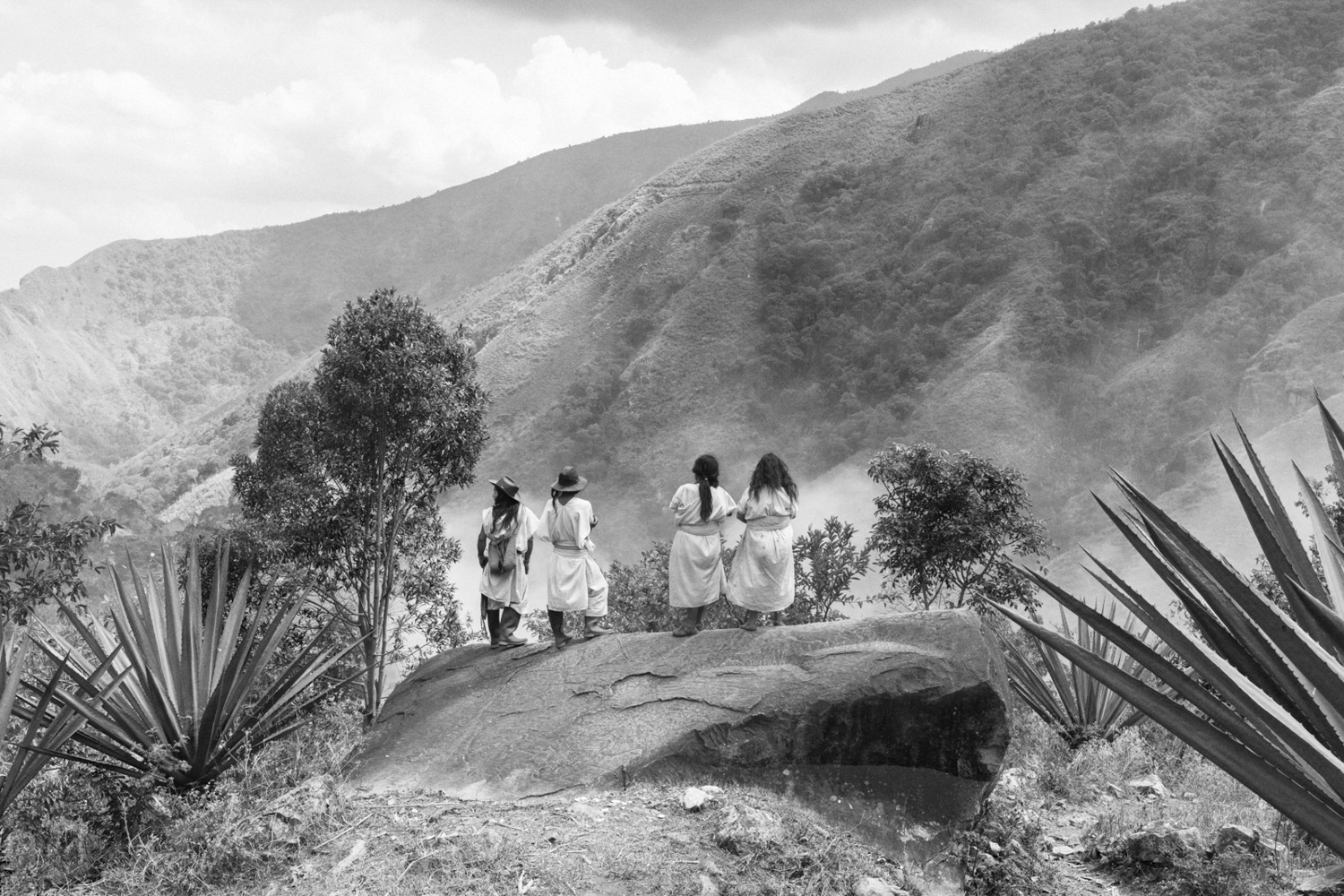
- Indigenous Wiwa families in Colombia’s Sierra Nevada de Santa Marta are moving farther downslope in an effort to preserve community cohesion amid climate and security pressures.
- The mountain range’s Indigenous nations continue to hold to a “law of origin” that guides their path amid intensifying pressures from armed violence, resource extraction, and climate change.
- Wiwa leaders describe sacred sites, rivers and forests as “living curricula,” inseparable from cultural and ecological responsibilities.
- Recent protections have expanded the protected parts of the Sierra Nevada and prohibited new bids for mining and fossil fuel extraction.
RIOHACHA, Colombia — Amid the low slopes of a tropical dry forest, families from the Wiwa community of Gomke are building a new home.
Their ancestral settlement lies higher on a lush mountain in the town of Dibulla, overlooking the Caribbean coast in Colombia’s Sierra Nevada de Santa Marta.
Across this region, many Indigenous communities have been forcibly displaced by climate-related disasters or uprooted by armed actors. Gomke’s move to lower terrain, however, is described by community representatives as voluntary: a collectively led adaptation strategy to protect social, educational and spiritual cohesion amid intensifying climate pressures and the presence of paramilitary groups.
They call their new settlement Shegunamke.
The Wiwa have also acquired other parcels of land elsewhere in the Sierra, including at higher elevations. “We have left [those] untouched so that rivers, springs and bodies of water do not die,” said Roberto Carlos Coronado Calvo, rector of Shenzhawimaku, the Wiwa educational institution that combines conventional learning with the community’s language, culture, knowledge systems and relationship to the territory.
“If we begin clearing and cutting into the páramo [ecosystem], how can we guarantee life for those living below?”
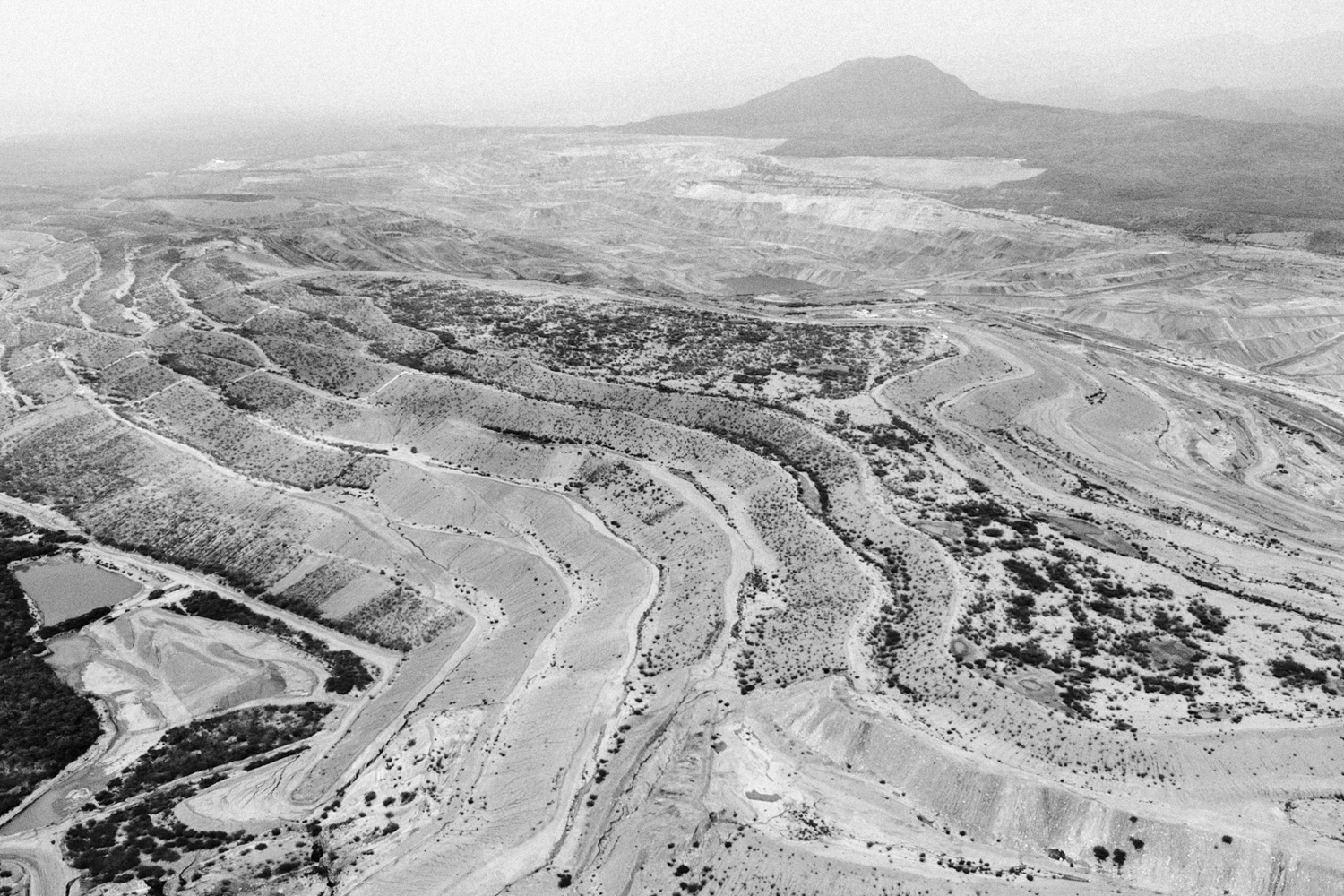
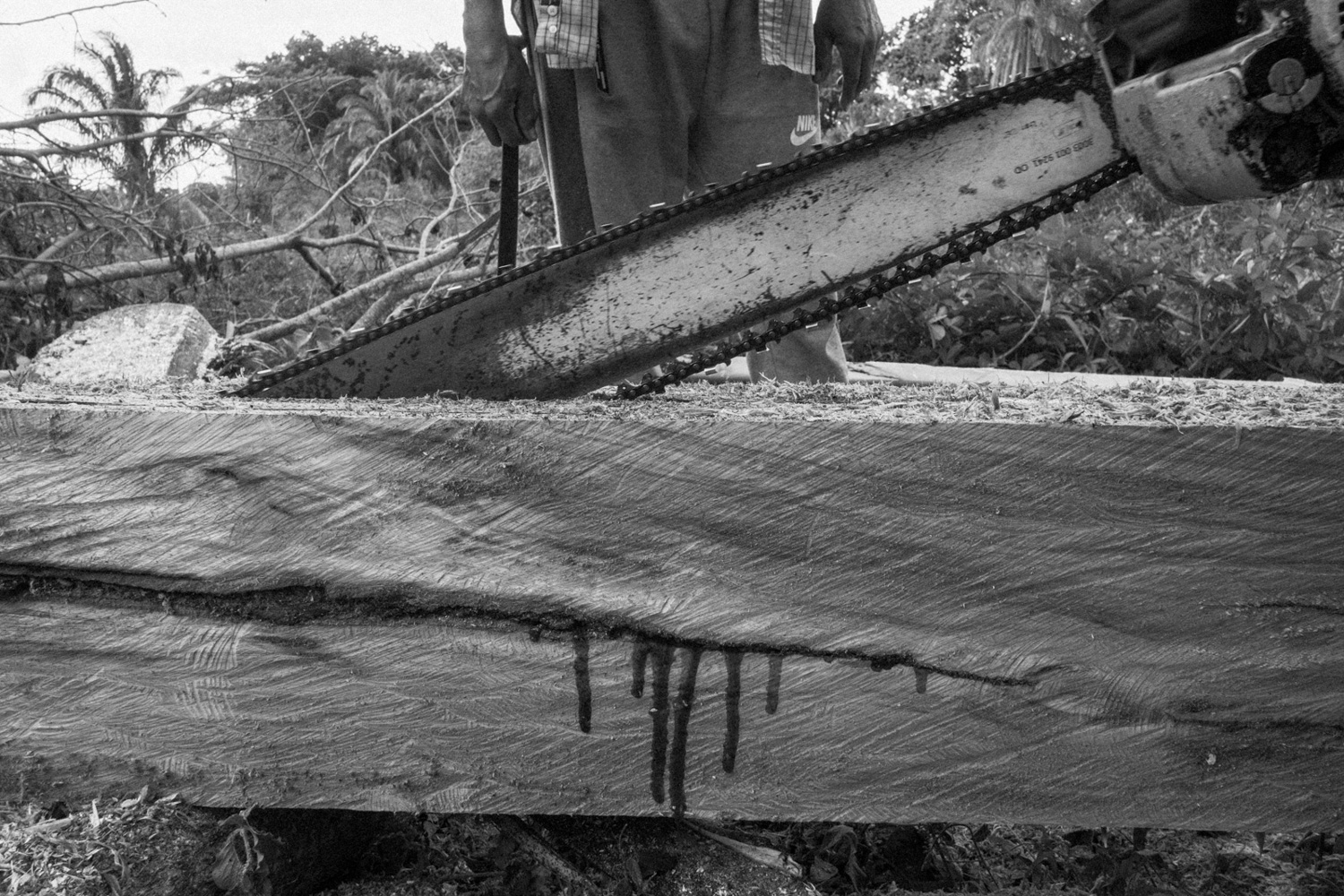
Across the Sierra Nevada de Santa Marta, known to its peoples as Gonawindúa, or the “Heart of the World,” the four Indigenous nations of Arhuaco, Kankuamo, Kogui and Wiwa are navigating deep changes driven by agro-industrial expansion, legal and illegal mining (driven by rising global gold prices), the return of paramilitary violence tied to the drug trade, and accelerating climate impacts within and around the Línea Negra, their ancestral network of sacred sites.
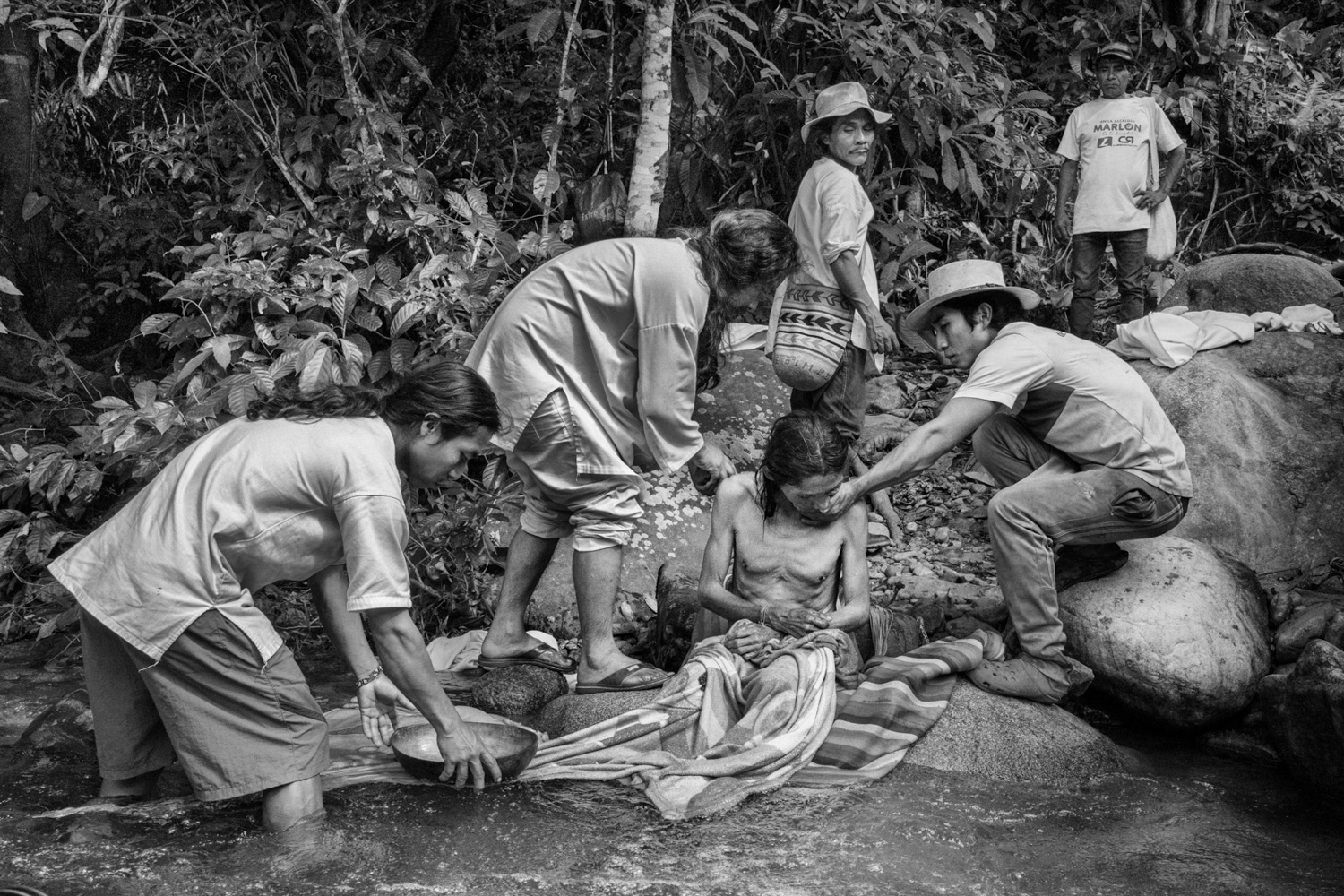
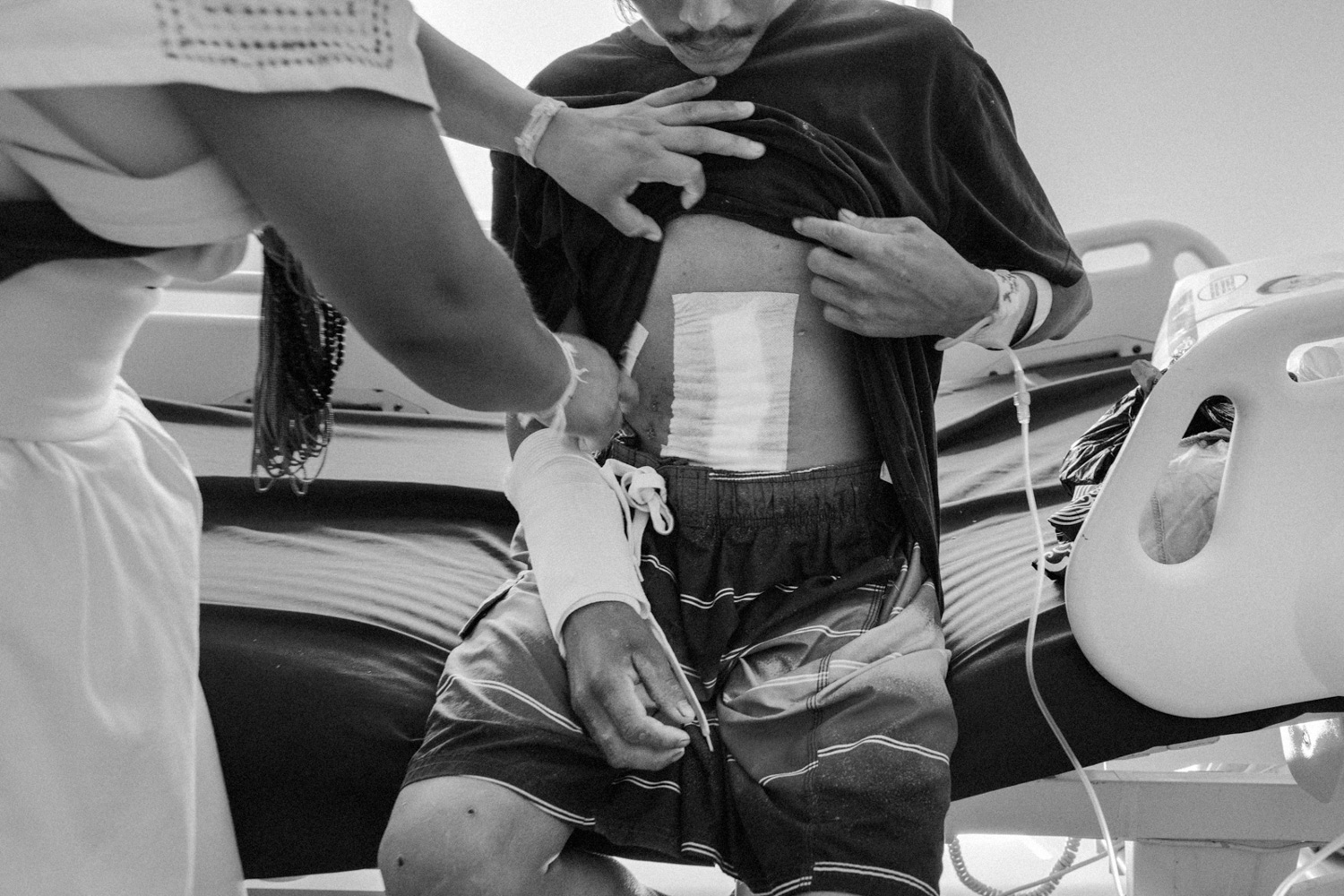
These changes are intensifying pressures on ancestral lands and pushing communities to abandon homes, territories, and cultural practices.
Amid all this, the communities can still fall back on the spiritual and political framework known as “the law of origin,” which defines the interdependence of Mother Earth and all forms of life. It offers a way to deal with these changes, resist the pressures, and hold on to fundamental truths about humanity’s relationship with nature, life, and existence.
Knowledge as inseparable from territory
Within this cosmovision, the Sierra is not property or a collection of exploitable resources; for the communities, it’s a single living organism encompassing forests, rivers, wildlife, sacred sites, and human communities.
The law of origin governs this fragile equilibrium. This ancestral code guides the four Indigenous nations of the Sierra in maintaining environmental and cosmic order. As the mountain’s traditional guardians, the four nations view commercial resource extraction as direct violence against Mother Earth.
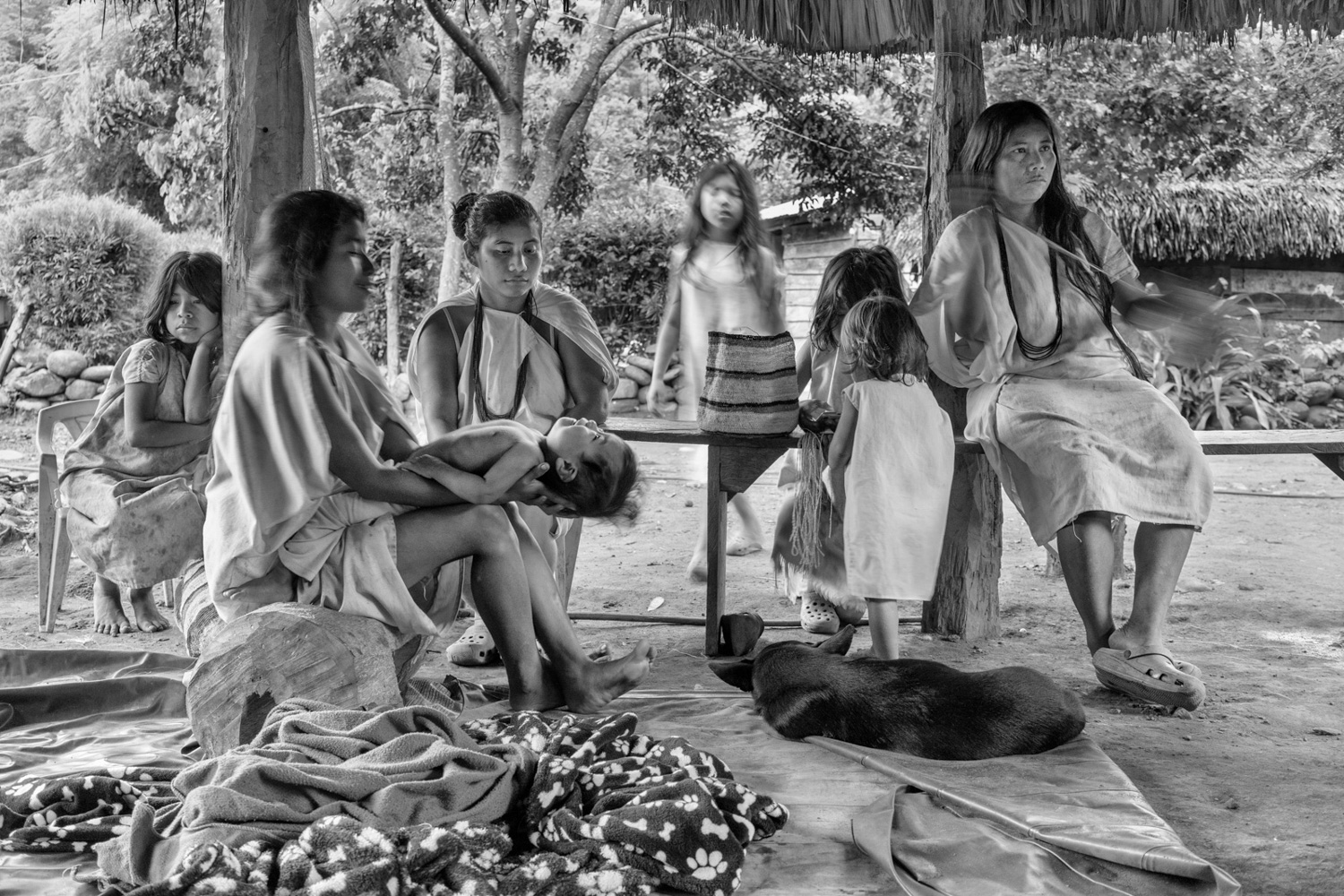
Mineral and energy resources — gold, coal, oil, gas, salt — are understood as her vital organs; extracting them is thought to degrade the natural architecture sustaining life. Yet they continue to be extracted: data analyzed by the Interamerican Association for Environmental Defense (AIDA) show that at least 120 active mining titles and more than 90 pending applications overlap the Línea Negra.
For Luis Enrique Salcedo Zalabata, governor of the Arhuaco Cabildo of Magdalena and La Guajira, upholding ancestral responsibilities has grown increasingly difficult. When private developments, mining and armed conflict restrict access to sacred sites, and agro-industrial and climate pressures transform surrounding ecosystems, territorial knowledge risks disappearing with the elders who preserve it.
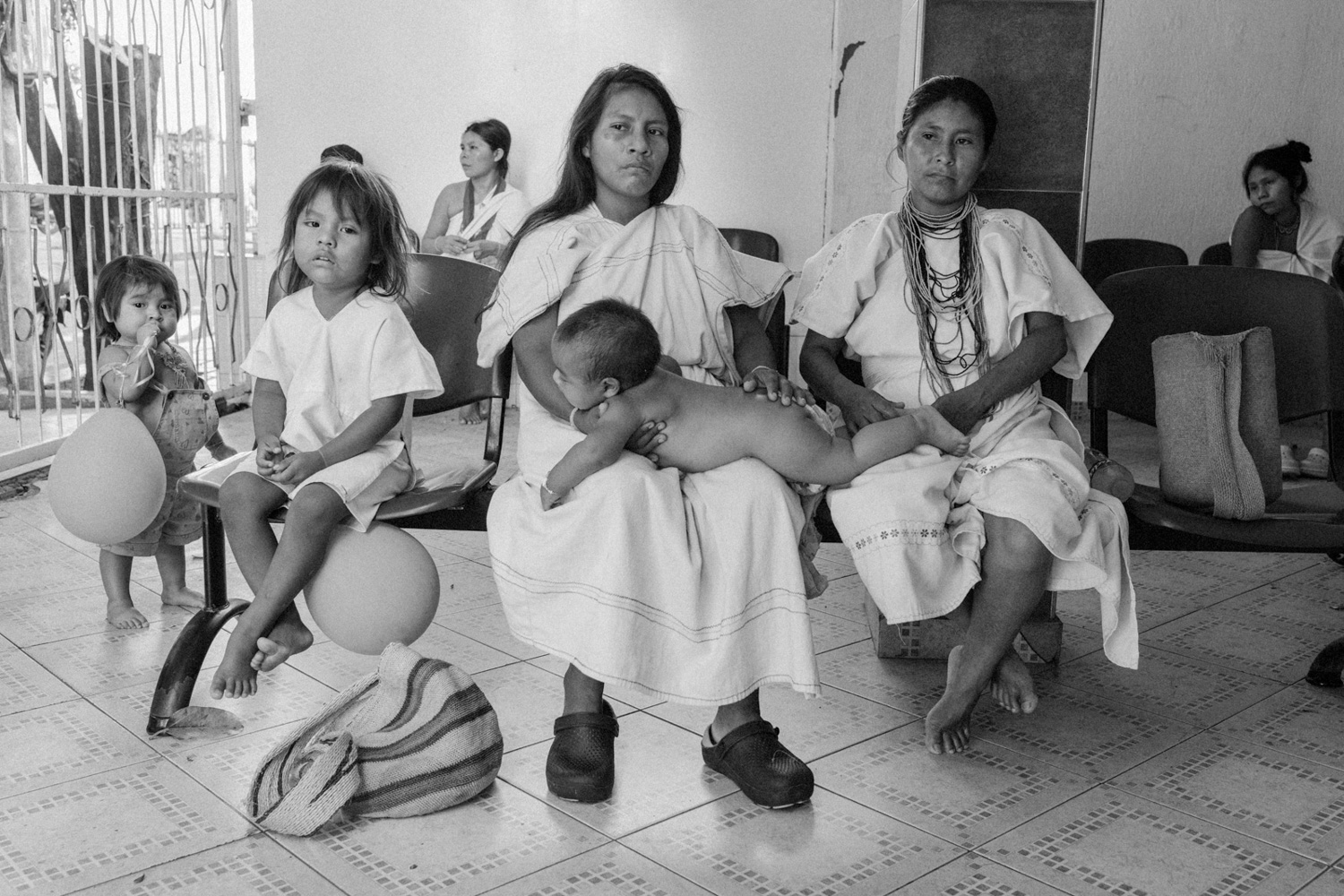
The human consequences became visible in Serankwa in March 2026, when armed clashes erupted over drug-trafficking routes. An explosive dropped from a drone seriously wounded a young Arhuaco man and injured several relatives, according to the victim’s family.
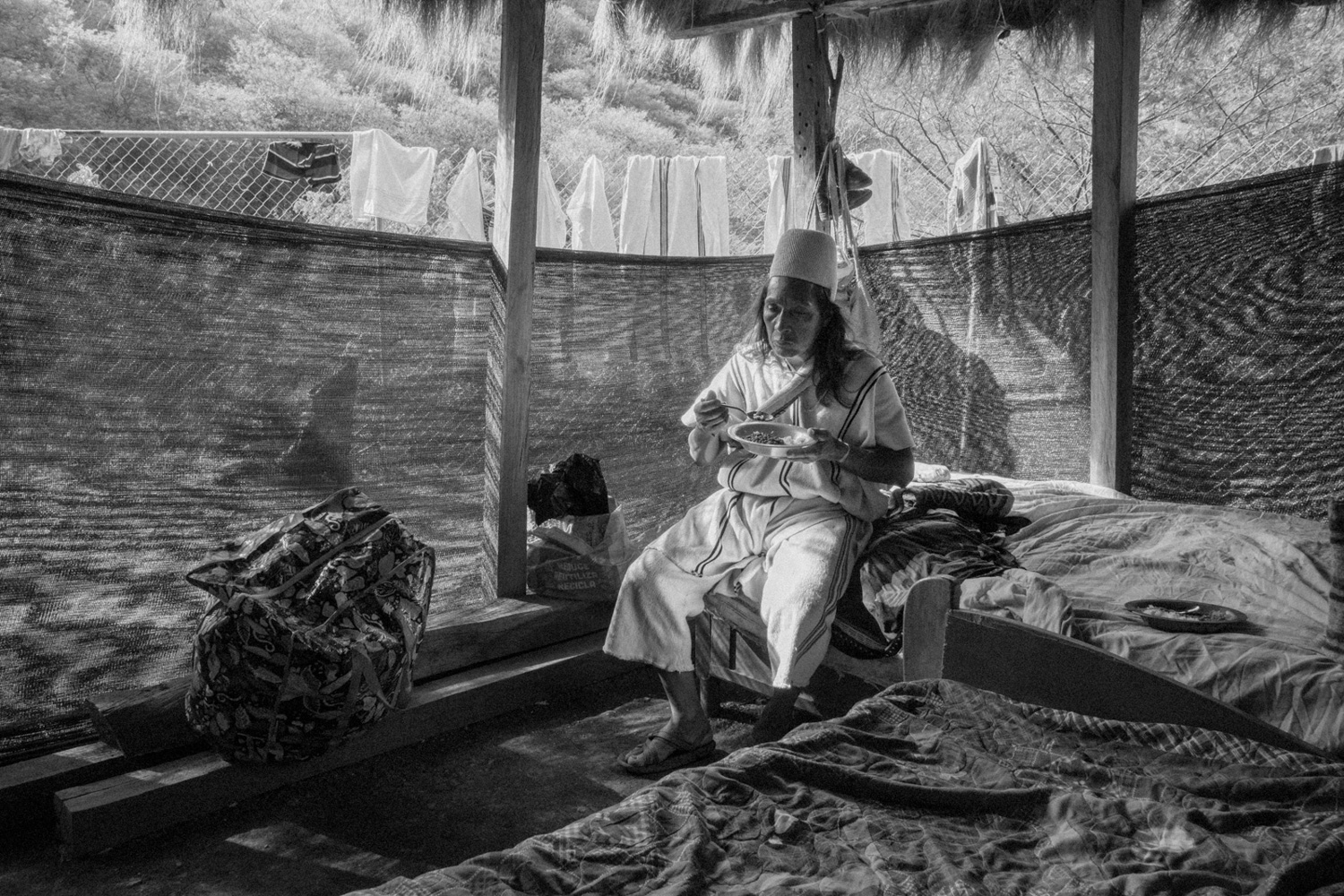
After the military secured the area, the family was evacuated to Santa Marta and dispersed to different medical centers, an Indigenous health care provider, and temporary shelters. That displacement separated them from their crops, sacred places, community authorities, and a territory understood not as property, but as a living body.
“To be a woman is to represent the territory,” said the family matriarch. “It is to represent Mother Earth. When a woman is harmed, it also means that the territory is being harmed.”
Displacements, such as those experienced by the people of Gomke and Serankwa, requires communities to rebuild daily relationships with new landscapes while maintaining their connections to high-mountain sacred sites where pagamentos rituals — offerings intended to preserve ecological and spiritual balance — are performed.
A spiritual resistance
The Sierra Nevada de Santa Marta rises from the Caribbean shores to snow-capped alpine summits. Its complex ecosystems of peaks, rivers, forests, sacred sites, animals, and human communities form an interconnected living system. Damage to one part affects the whole, Indigenous authorities say.
Wiwa knowledge keeper Roberto Carlos Coronado Calvo is combining training under traditional elders with studies in traditional education and interculturality. He sees education as central to cultural continuity amid the changes affecting Indigenous lands and societies in the Sierra.
“It allows us to heal the memory,” Coronado said. “It allows us to heal the territory. It allows us to heal the places. And it allows us to heal the languages.”
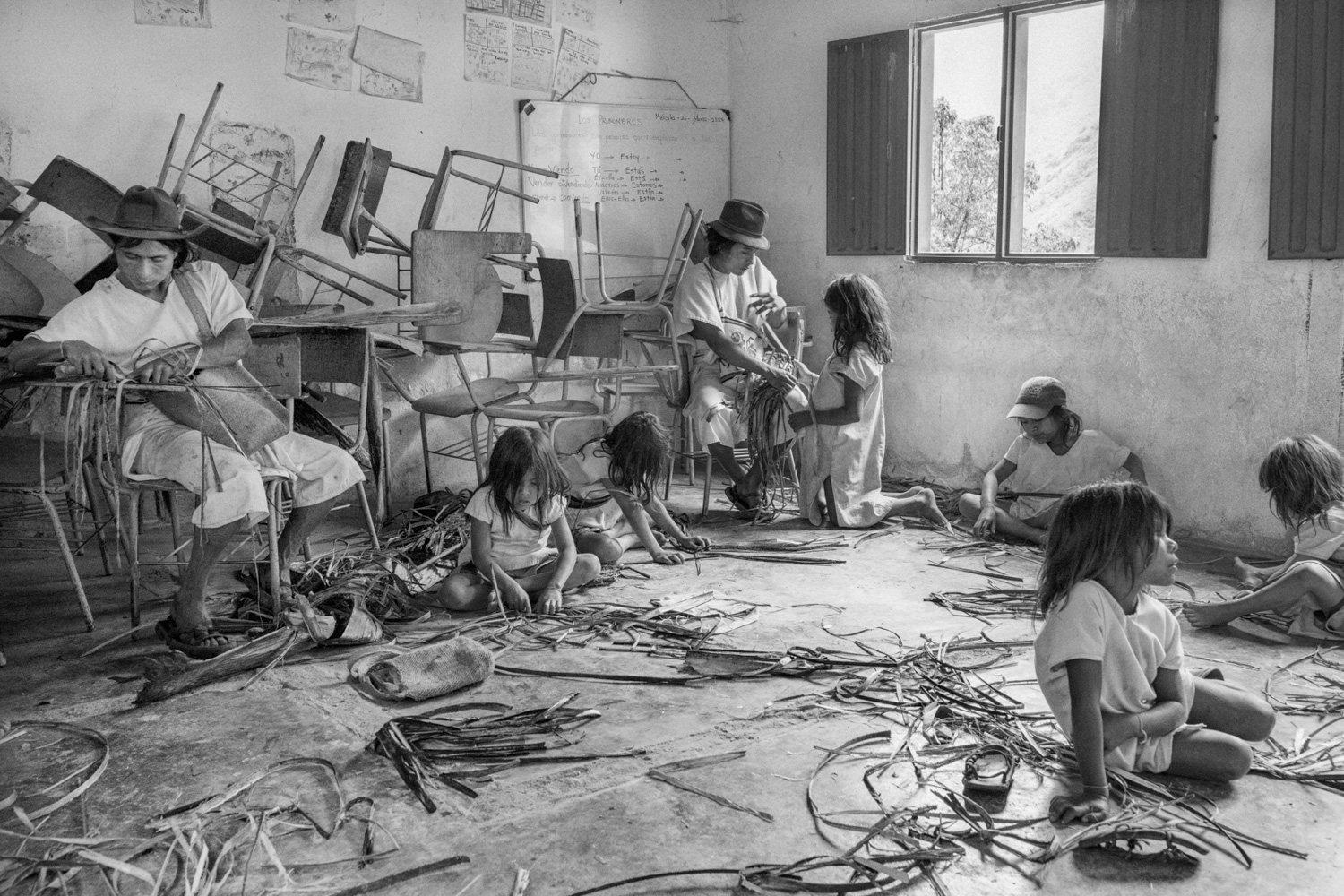
The Línea Negra’s sacred sites, rivers, forests and winds form what Coronado calls “living curricula.” These places hold knowledge inseparable from the territory and carry practical responsibilities community leaders seek to maintain amid the rapid changes taking place around them.
“At my present level of learning, I hear when the trees or birds speak,” he said. “Birds speak like people. I listen when they tell me what is happening or what is going to happen. That is called listening.”
For Coronado, such listening is not only a spiritual practice but an action guide: it informs land-use decisions such as leaving acquired forest parcels intact to protect rivers and springs.
“Reciprocity. Care for the trees. Care for the waters. Care for Mother Earth,” Coronado said. “We must protect, conserve and nurture that whole system every day.”
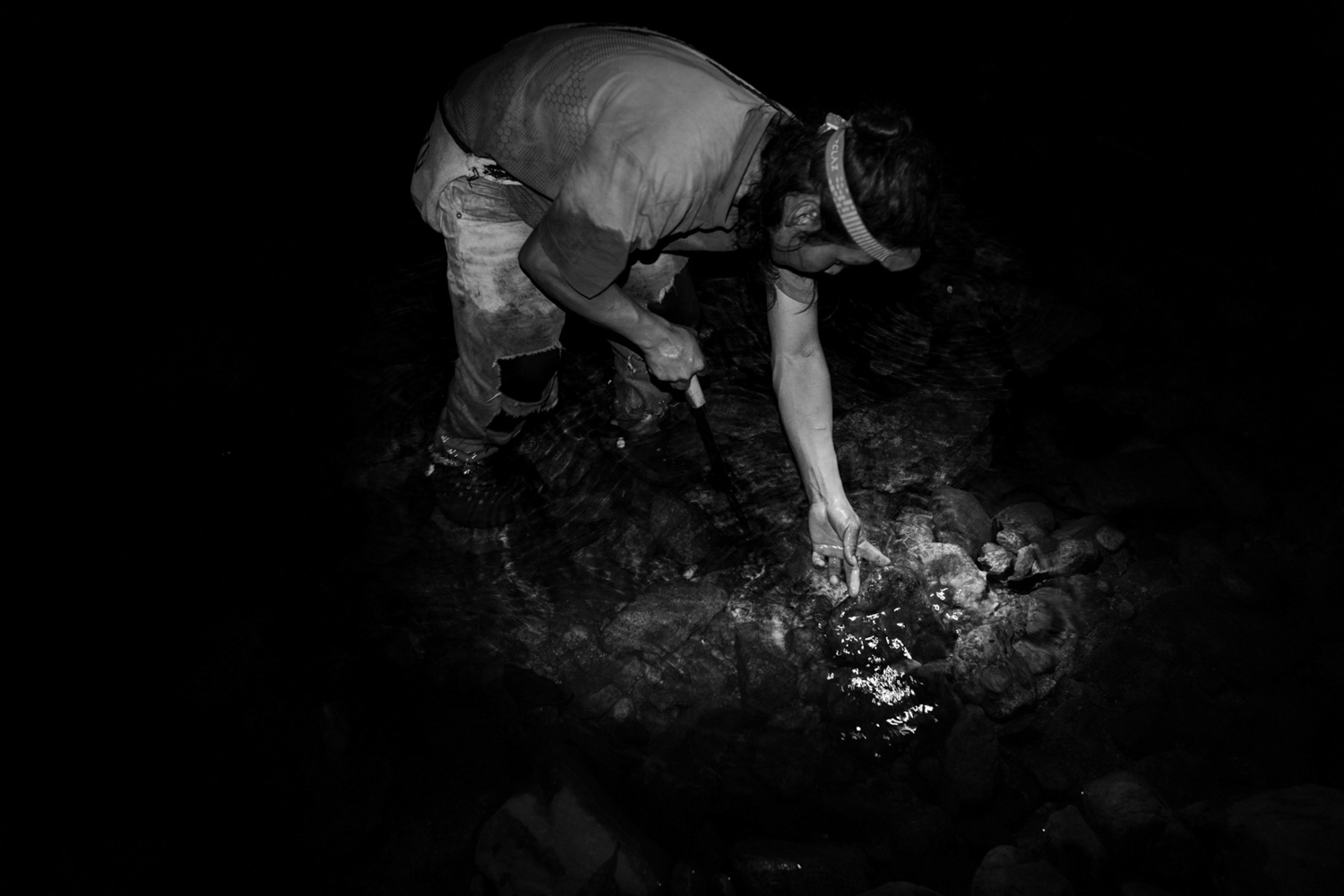
Centuries of Indigenous stewardship have produced measurable territorial protections. In 2023, Colombia expanded Sierra Nevada de Santa Marta National Natural Park by 172,458 hectares (426,153 acres), to a total of 573,313 hectares (1.42 million acres).
Developed with the Consejo Territorial de Cabildos Indígenas de la Sierra Nevada de Santa Marta, a collective of Indigenous assemblies, the measure recognizes ancestral governance as an effective conservation mechanism.
The park is home to a recorded 3,057 species of wildlife, including 49 threatened species and 126 plant species found nowhere else on Earth. Notable species include the critically endangered blue-billed curassow (Crax alberti), the Andean condor (Vultur gryphus) and the jaguar (Panthera onca). It also protects the headwaters of about 18 major rivers, supplying water to the departments of Magdalena, Cesar and La Guajira.

In 2026, Colombia designated 1.5 million hectares (3.7 million acres) of the Sierra Nevada as the Corazón del Mundo Renewable Natural Resources Reserve. Located within the broader ancestral territory structured by the Línea Negra, the reserve prohibits new applications for mining and fossil fuel extraction.
Colombia’s new president, Abelardo de la Espriella, has pledged to expand fossil fuel production and mining and pursue a harder, more militarized strategy against armed groups. While the former plan goes against the worldview of the Sierra’s Indigenous communities, the latter has found some favor with groups struggling from heightened insecurity.
For Coronado, Indigenous ecological knowledge represents generations of systematic observation that must inform wider society. For that reason, he said, protecting the Sierra Nevada can’t be left to its Indigenous guardians alone.
“When we care for the Sierra Nevada, we care for life,” Coronado said. “It belongs to all humanity. Everyone. And we all have a commitment.”
Banner image: An Ahrhuaco man eating in his temporary shalder, after receving medical care from an Indigenous Health care clinic, Santa Marta, Colombia, 2026. He was wounded by shrapnel after drone-delivered bombs detonated during an intense armed confrontation between rival paramilitary groups near his community. From this moment, he is temporarily displaced in Santa Marta. Image by Roberto Maccariello.
Indigenous guides warn of repercussions if we don’t fix our relationship with nature
Latest Mongabay podcast episode: A health crisis for Peru’s recently contacted people brings planetary health to the fore. Listen here:
FEEDBACK: Use this form to send a message to the author of this post. If you want to post a public comment, you can do that at the bottom of the page.
Cite this article
Roberto Maccariello (2026). Colombia’s Indigenous guardians adapt as pressures mount on the ‘Heart of the World’. Mongabay Conservation news. DOI: https://doi.org/10.66709/news-329184

