


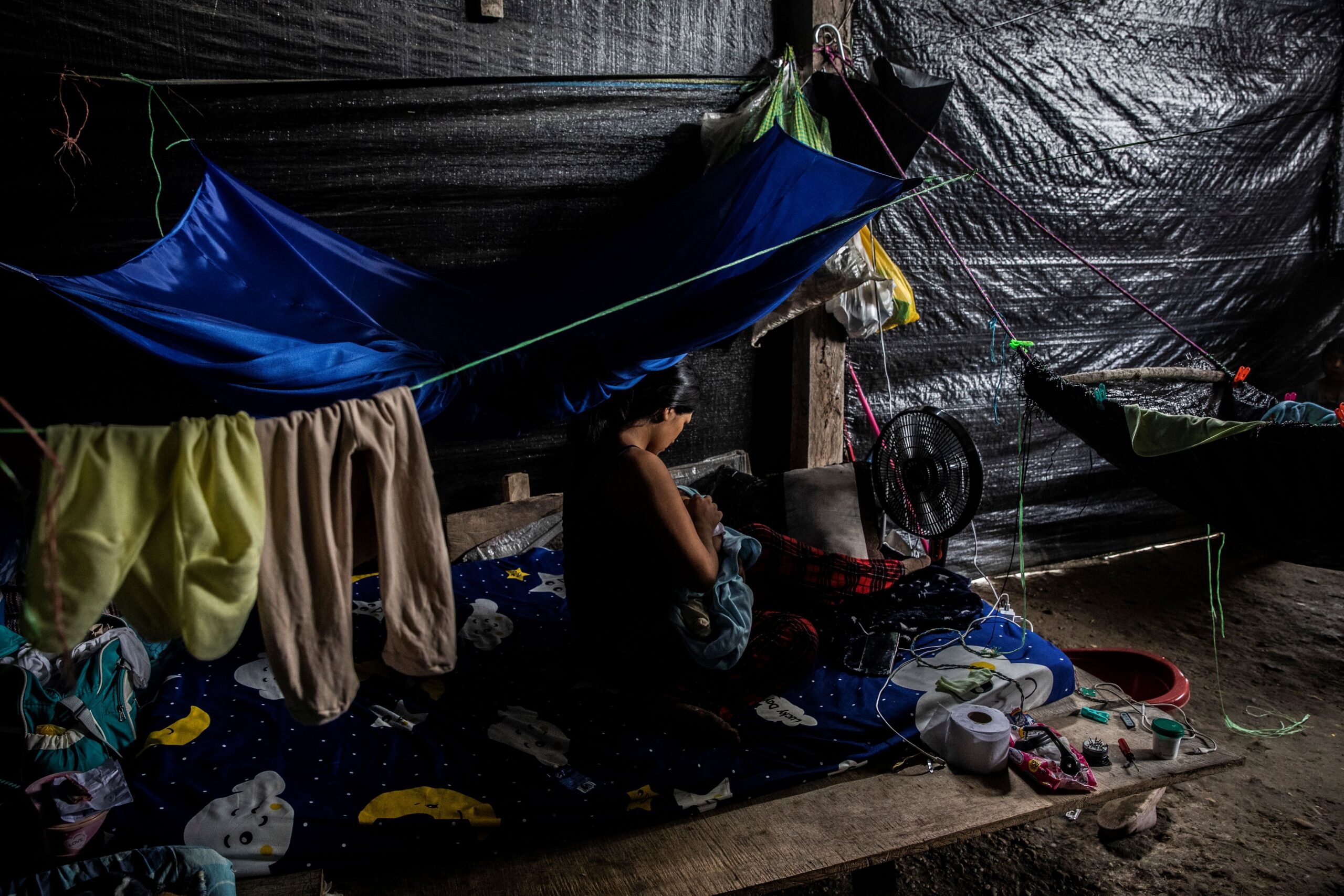
- Mongabay reviewed nearly three decades of scientific research on the impact of heavy metals and traveled to several Amazonian communities to track the course of mercury contamination.
- Previous studies reviewed found that one-third of the children evaluated in the Amarakaeri Indigenous communities in the Peruvian Amazon grew up with mercury levels in their hair that exceed the limit established by the World Health Organization (WHO).
- The pollution does not remain within mining enclaves: Mercury travels through the river and reaches Indigenous peoples who are unrelated to the mining practice, while pregnant women and newborns show exposure to mercury and lead, with impacts on infant development and birth weight.
- Meanwhile, the state budget for caring for those affected is minimal, and Peru lacks laboratories to measure methylmercury levels — the most toxic form of this metal, associated with fish consumption.
MADRE DE DIOS, Peru — “Bayolet, my little daughter, had some tests when she was five years old,” says Gladys Ordoñez, a mother from the Shintuya Indigenous community, located on the banks of the Madre de Dios River, in the Peruvian Amazon. “She had already fainted twice at school, and we didn’t know why … That’s where they found mercury.”
Ordoñez still remembers the group of “outsiders” who arrived a decade ago to take blood and hair samples. Weeks later, they returned to warn that the fish the community was consuming — its main source of food — could be contaminated.
“We said no, that it couldn’t be,” says María Santos, another mother from the community. “We don’t mine for gold here. There is no mining here”. But its source was not in the village: Upstream, illegal gold mining was pouring mercury into the rivers that flow through the Madre de Dios region. Fish came into contact with the heavy metal and traveled downstream before reaching the plates of dozens of local families.
Eleven years later, the problem persists. Little Bayolet is now 16 years old. In her fourth year of secondary school, she says she still finds it difficult to concentrate when taking lessons. According to Bayolet, her greatest wish is to finish school so she can take nursing classes. She remembers feeling constant fatigue in the classroom, along with tiredness and weakness. After her diagnosis of mercury exposure, she says she only received treatment for anemia.
At home, Bayolet’s family tries to eat more chicken and less fish, but they don’t always have enough money to afford it. Local families live in poverty, with high rates of malnutrition and limited medical care. Their connection to neighboring towns, aside from the river itself, is via 4×4 off-road trucks that provide private transport services with no fixed schedules. When these vehicles appear, about 20 children and adults rush and squeeze into the truck bed. Bodies are piled on top of each other for a long and dangerous three-hour journey.
“I believe the state should inform us and conduct new studies,” says Gladys Ordoñez. Not just for the children, but also for the parents, because mining in the surrounding areas has advanced a lot and we don’t know what to do in these cases.”
Shintuya is one of 10 Indigenous territories from the Harakbut, Yine and Matsigenka ethnic groups settled around the Amarakaeri Communal Reserve. This protected area, shared between the Peruvian regions of Madre de Dios and Cusco, is not only located in one of the country’s most biodiverse zones but also in one of the most critical hotspots for mercury contamination driven by the expansion of gold mining. Between 2021 and 2023 alone, mining destroyed 1,800 hectares (almost 4,450 acres) in three communities surrounding the reserve, according to a February 2024 report by the Monitoring of the Andean Amazon Project (MAAP).
In recent years, several of these Amazonian communities and population centers along the mining transit route have been visited by scientists from national and foreign universities seeking to measure the impact of heavy metals on local populations. The “outsiders”, as they are called in Shintuya, left a message that still resonates: “Mercury is being served at their tables.”

To measure the problem, Mongabay built a database that collected 7,725 mercury samples from humans and more than 5,900 from fish, collected along the banks of Amazonian rivers in Madre de Dios, Peru; the Beni River, Bolivia; and the Madeira River, Brazil.
Additional analysis of 42 scientific studies published between 1997 and 2024 revealed that inhabitants of at least 249 Indigenous and riverside communities have been exposed to contamination for more than 27 years. Furthermore, 702 more communities are at risk simply through being located between illegal mining hotspots and sites where people tested positive for the presence of mercury.

In Peru, researchers working with Mongabay collected 3,380 samples from people in 102 communities, and 78.4% of them — representing 80 localities — showed mercury levels above the limit set by the World Health Organization (WHO). In at least 16 communities of the Madre de Dios river basin, 846 fish samples were taken and studies revealed that two species frequently consumed by Indigenous and riverside residents have mercury in their tissues. Additionally, 291 more communities do not know how much heavy metal is in their bodies or the danger of that constant exposure.
After analyzing this data, Mongabay visited Peruvian communities adjacent to the Amarakaeri Communal Reserve in southeastern Peru, such as Queros, Shintuya and Puerto Luz, as well as population centers located in the mining-influenced area, to find out what happened to the children and pregnant mothers who tested positive for mercury more than 10 years ago.

Children with mercury
During Mongabay’s visits, some mothers in Shintuya ask when they can return for more blood tests. Others want to know what medicine they can take to “clean” themselves of the metal or even how to recognize the symptoms of mercury poisoning.
The women blame the pandemic without hesitation. They say it was the moment when the economic and food crises worsened, forcing them to turn to seasonal mining to survive. Although this activity is not practiced in their territory, some Harakbut residents are forced to migrate for short periods to work in illegal gold enclaves, exposing them to greater risk.
They have no other choice.
“I help my partner in the mine,” says Iris Yante, a mother of three children who are exposed to the contamination. “A few months a year, we go to the Quincemil and Delta areas. We enter the river, extract, wash, but we also burn mercury. I don’t know how that affects us … I’ve been told it’s bad. I don’t know if my husband is sick or if I am. Who can explain that to us?”
In one study extracted from Mongabay’s database, researchers examined the relationship between mercury levels and the cognitive, motor and visual development among those living near artisanal and small-scale mining. To do this, they collected hair samples from 164 children aged 5 to 12 from 14 urban and non-urban towns surrounding the Amarakaeri Communal Reserve in Peru. Six of these towns correspond to the Indigenous communities of Diamante, Shipetiari, Puerto Luz, Boca Isiriwe, Puerto Azul and Shintuya.

The research was conducted between 2015 and 2016 as part of the Amarakaeri Cohort Study (AmCS), led by researchers from U.S.-based Duke University through the Duke Global Health Institute in alliance with scientists from foreign and Peruvian institutions. The results, published in 2020, reveal that one-third of the children evaluated (32.9%) had hair mercury levels exceeding the limit established by the WHO. The affected children showed cognitive deficits, reduced overall physical health, and problems with visual-motor responses.
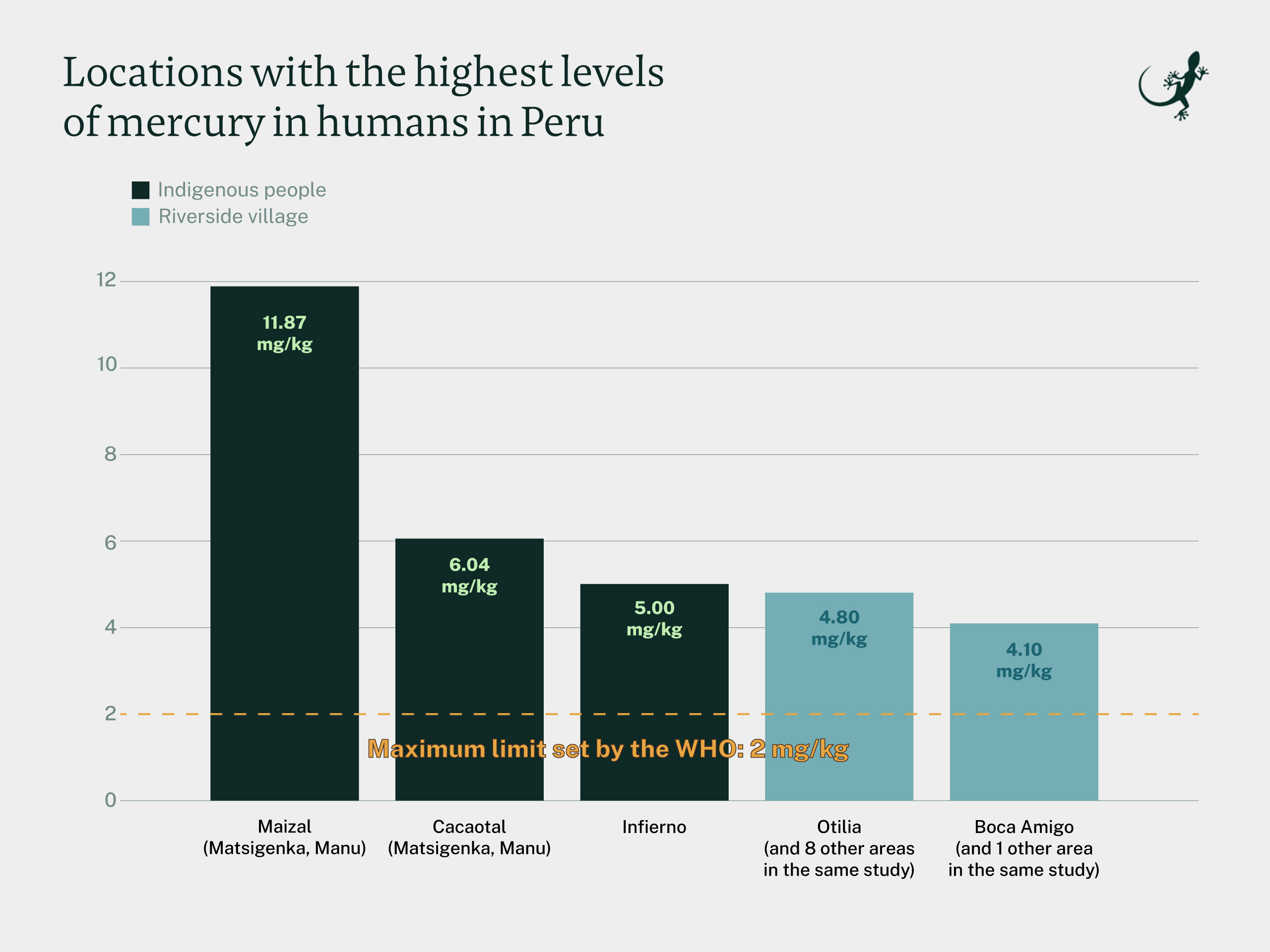
The data also shows that minors living in Indigenous communities have higher rates of toxicity than their neighbors in population centers or urban areas: The average level of mercury found in their hair was 4.1 milligrams per kilogram (mg/kg), compared to the 1.6 mg/kg detected in non-native children. Overall, 85% of the samples taken from indigenous minors exceeded the safety level of 2.0 mg/kg set by the WHO.

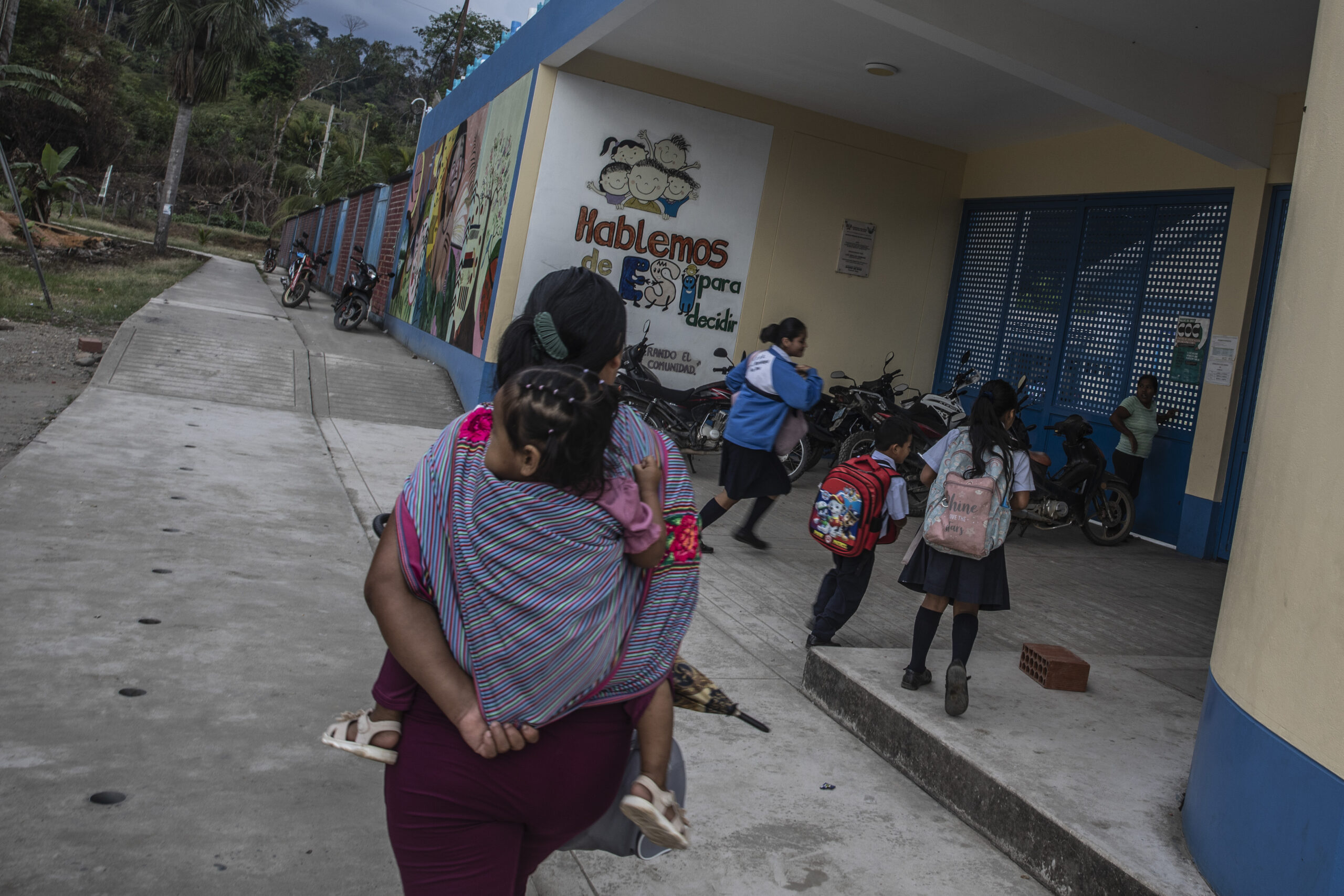
In Shintuya, wooden houses are starting to give way to brick and cement buildings. In the middle of its forests, the most modern construction is the school: A meeting point where the internet reaches and children gather to play. Washington Anyosa Bernales, one of its oldest teachers, says that students continue to exhibit attention problems, though he attributes them to cell phone use rather than exposure to metals.
But from his account to Mongabay, another clue appears: “Most are children who, during vacations, go with their parents to the mining areas. They work with gold, and the family moves with them … They migrate constantly. They change schools, which is why we see a lot of absenteeism.”
Bernales says he remembers a group of scientists arriving at the school a decade ago, back when its infrastructure was precarious. They gathered teachers and students to explain how to try to reduce poisoning, for example, by consuming antioxidant-rich fruits and nuts for their selenium content and reducing the consumption of predatory fish that accumulate higher levels of mercury.
The scientists’ recommendation has scientific backing. Claudia Vega, from the Center for Amazonian Scientific Innovation (CINCIA, in Spanish), explains that the main route of mercury exposure in mining areas is the consumption of carnivorous fish, which, by preying on smaller fish, accumulate higher mercury concentrations in their tissues. She recommends consuming smaller species, such as boquichico (Prochilodus nigricans) or carachama (Hypostomus sp.), rather than dorado (Brachyplatystoma flavicans) or doncella (Pseudoplatystoma punctifer).

In this food chain, fish accumulate methylmercury, a substance that forms in water from mercury and constitutes the most toxic form of this metal. José Alfonso Apesteguia, a chemist specializing in toxicology and a professor at the Lima-based National University of San Marcos, explains that this organic compound is rapidly absorbed by humans and can remain in the body for months; in cases of prolonged exposure, it can damage the nervous system and kidneys.
Don Víctor, a man living near Shintuya, is unaware of it. Every Friday at 9 a.m., he prepares his nets and fishing gear and casts them into the river behind his house. “It’s for my consumption, and the rest I sell around,” he says. “Here I can get more boquichico, just small fish. It’s supposed to be better, right?”
Mercury in the schools
The communal leader of Shintuya, Fernando Shimbo Vera, asserts that no state entity has conducted exams or provided preventive talks on heavy metals in his community. That absence, he says, paved the way for misinformation: Some residents spread the word that blood samples were dangerous or were being sold on the black market. Today, many refuse to undergo testing.
However, the studies exist — and their findings were shared with the Peruvian state at the time. From the U.S., William Pan, one of the professors who led the Amarakaeri Cohort Study, said its findings were translated and shared with the Regional Health Directorate (Diresa) of Madre de Dios and with the families in the community. Mongabay sought statements from the Peruvian Ministry of Health (Minsa) and Diresa regarding the actions taken, but received no response by the time of publication.

Between 2011 and 2024, Pan and his colleagues published 16 academic articles addressing the impact of heavy metals in this Amazonian region. The studies focus on exposure to mercury and lead, their effects on child neurodevelopment, birth weight and gestational period, as well as their association with anemia and the risks associated with consuming fish and game animals. Five of these articles were analyzed in the database developed for this present investigation.
The 2020 scientific study on child neurodevelopment in Amarakaeri warns that children living near mining sites need more information to reduce their exposure to the metal as well as a state-run system monitoring their biological and cognitive performance.
“I think the most important finding is that some communities have such high exposure to mercury that children and adults experience significant cognitive deficits, which can generate long-term and intergenerational disadvantages compared to other communities,” says Pan. “Many of these highly exposed populations do not participate in mining and do not benefit from its activities. This is the worst form of environmental injustice.”

The cognitive deficit is perceptible in Queros, one of the communities surrounding Amarakaeri included in the study. In this fruit-rich village, the school fits into a single room. Each morning, nine children, aged 6 to 12, start their classes with a traditional song in the Harakbut Amazonian language. Then they open their notebooks and try to review the previous day’s exercises. The older ones help the younger ones, but the class moves in fits and starts because some get distracted while reading or find numbers complex. The children grow exhausted in their chairs and ask their teacher to let them go out and play by the river.
There is no mining in this village, but its territory is in the sights of gold seekers. “Pressures increased during the [coronavirus] pandemic,” says Sonia Dariquebe, the Queros community leader. “They came to convince us to give them passage to extract gold, but we don’t want mining here.”
Something similar happens in the community of Diamante, also adjacent to the Amarakaeri Reserve. Teacher Miriam Lupac, who worked for more than a decade with preschool and primary children, remembers that her students suffered from memory problems, poor retention and constant fatigue. “We all believe the contamination arrived through the Río Colorado, affecting the fish the children consumed,” she says. “Without new evaluations, we cannot understand the progress of the contamination.”

In the community of Puerto Luz, where mining has attracted some community members, its school director, Emilio Sarique Janiri, sees a pattern: Students participate in class, but the next day their progress fades. “We try to do a bit of reinforcement. But it’s as if they don’t remember,” he tells Mongabay.
The education authority believes the distraction is not only due to cell phone use but also to heavy metal exposure. At the same time, community president Johnny Nayori says that 10 years ago a state brigade confirmed the presence of mercury in some neighbors, but no follow-up was conducted.
Over time, the fear faded.
The pattern of learning problems is repeated in the population centers of Madre de Dios that are in the mining influence zone, along the edge of the Interoceanic Highway: Santa Rosa, Laberinto, Alto Libertad, Santa Rita and Primavera Baja. In the latter, teacher Ricardo Olave sees how his students solve basic operations but get stuck on logic problems: “We would like to give them reinforcement, but these children are the ones who drop out of school the most. Their parents work seasonally in La Pampa, and the children end up migrating along.”

The sons and daughters of mining
The school in the Santa Rosa population center was transformed last August into an improvised medical clinic. In one of its rooms, dozens of primary school children in their white-and-gray uniforms lined up to be evaluated by the Madre de Dios Diresa brigade. Doctors from different specialties measured their height and weight, examined their hair and teeth, and asked questions about their home routines and learning difficulties. The schoolchildren played and laughed around the room until they reached the most feared line: the finger-prick blood tests.
The exams were part of a Diresa-conducted campaign between June and August 2025 to identify heavy metal exposure among Indigenous communities surrounding the Amarakaeri Reserve and in population centers affected by mining. Specialists are looking for far-from-subtle signs: memory failures, difficulty learning and inability to acquire new skills. Sometimes they present with headaches, short stature, skin depigmentation or brittle hair. These signs are not proof, but alerts.
Based on those indications, the itinerant medical brigades identified children and pregnant women who could be candidates for a urine test, one way to detect mercury exposure. Not everyone is chosen because this test is processed in Lima and is very expensive, explains Dr. Esteban Vásquez, a member of the brigade interviewed on his way through Santa Rosa. On average, he says, out of 25 children evaluated, only two will be considered suspicious.
In the 2025 campaign conducted around Amarakaeri, 27% of those sampled exceeded the safe mercury limit in urine.

“In these population centers, exposure to heavy metals occurs through fish consumption and the untreated groundwater they drink, but also through what they breathe and touch,” says Vásquez. “Many children accompany their parents to mining areas on weekends, play and bathe in rivers or pools that contain lead, mercury, and arsenic, or breathe the vapors when gold is burned at home.”
The population’s disbelief in the severity of heavy metal contamination is another significant obstacle to preventing it. In communities like Laberinto, for instance, residents remain skeptical about mercury contamination. “People here don’t believe it,” says Rosa Fuentes Castro, an obstetrician at the Laberinto community health post. “They tell me: if mercury is heavy, how could it get into the fish?”This disbelief, she explains, is not new: It has been rooted in this mining zone for decades. “There are even those who remember that it used to be said that drinking water with mercury helped forget one’s sorrows,” she adds.
Mongabay requested a formal interview with Peru’s Ministry of Health and its Functional Unit for the Care of Persons Exposed to Heavy Metals and Other Chemical Substances to learn the results of those evaluations, as well as the prevention and mitigation efforts. However, following weeks of insistence, the office did not assign a spokesperson for this report.

Mercury and lead in pregnant women
K. is 17 years old and has just become a mother. Her baby sleeps in an improvised hammock made from raffia fiber scraps inside a room with a dirt floor and plastic walls that serves as a bedroom, kitchen and living room. She lives in Santa Rita, one of the population centers included in the study conducted by Duke University and its associates to investigate the effects of prenatal exposure to toxic metals.
The sample included 198 pairs of mothers and newborns from Santa Rosa, Laberinto, Alto Libertad, Primavera Baja and Santa Rita, as part of the Madre de Dios Birth Cohort (CoNaMad) project.
K. remains with her mother throughout the whole interview. She speaks to Mongabay about the precariousness of their lives and about her partner, who works as a transporter in various mining areas. When asked about the mercury contamination she might also be exposed to, K. falls silent. But, at one point, she finds the courage to say that she has not heard about its effects or the link between the problem and the fish that end up on her table.

The results of CoNaMad, published in 2023, show that around 29% of the mothers evaluated in these population centers had blood mercury levels exceeding those established by the U.S. Centers for Disease Control and Prevention (CDC). The study reported average concentrations of 6.0 μg/L (micrograms per liter) in umbilical cord blood and 3.6 μg/L in maternal blood.
Another striking finding was linked to lead. Even at low levels, prenatal exposure to this metal was associated with shorter pregnancies and lower birth weights. For every 5 μg/dL (micrograms per deciliter) increase in blood lead levels, gestation was reduced by nearly four days, and the newborn’s weight dropped by more than 76 grams, demonstrating the silent risk that persists in mining territories.
In enclaves such as La Pampa, where the roasting of gold ore saturates the air with smoke, pregnant women are constantly exposed to mercury and lead. Obstetricians and health personnel in the neighborhoods analyzed by Mongabay warn that this exposure can translate into intrauterine growth retardation, developmental alterations, and a higher risk of miscarriage or premature birth. According to toxicology specialist Apesteguia, methylmercury can cross the placenta and directly affect the fetus, leading to potential neurological development damage.

Beth Feingold, an associate professor at the University at Albany in New York and a researcher on the project, explained that she maintained a close relationship with Diresa, Madre de Dios’ regional health directorate, from the start of the study. The team even provided the directorate with a written summary of the findings and a plan for a five-year follow-up. “We prepared a brochure and returned the results to the participants (…) This is the only study of its kind in Madre de Dios,” she says.
In the health centers of the mining corridor, local obstetricians frequently treat cases of anemia and complications arising from inadequate prenatal care. These check-ups would allow for the timely detection of signs of lead or mercury exposure, they say. Even so, it is almost impossible to follow up on everyone, as families migrate along with the mining camps. “The norm is between six and ten visits, but we usually manage only one or two before the mothers move or disappear,” says one of the obstetricians.

In Peru, Ministerial Resolution 1026-2020-MINSA establishes protocols for the care of people exposed to heavy metals, although it does not mention the existence of exclusive medical centers. Those affected must be referred to hospitals of greater complexity, known as Level II and III hospitals, which represent barely 3% of all health establishments.
The problem is also budget-related. The Multisectoral Special Plan for integral intervention in favor of the population exposed to heavy metals, decreed by Peru in 2021, does not have its own budget, as confirmed to this investigation by Minsa and the Ministry of Environment; therefore, it is financed “against the available institutional budget”. According to the Economic Transparency portal of Peru’s Ministry of Economy, for 2026 the State allocated 477,455 soles (about US$142,523) to the Ministry of Health and 1,121,445 soles (roughly US$334,000) to the National Institute of Health for the screening and treatment of patients affected by heavy metals — even though the State itself estimates that more than 10 million people are victims of this type of contamination.
Furthermore, the Minsa protocol for mercury treatment includes only those who were exposed by inhalation during working hours, not through fish consumption. In Lima, Peru’s capital, the National Center for Occupational Health and Environmental Protection for Health (CENSOPAS) is the country’s only laboratory specializing in this subject. According to information provided to Mongabay in response to an information request, it processes only mercury samples from urine, which is associated with occupational exposure, and does not analyze the impact of ingesting contaminated food, such as fish.
“The Peruvian state is lagging in its diagnostic methods,” says Apesteguia. “Priority is given to measuring total mercury in urine, which reflects only occupational exposure or inhalation of vapors, not the methylmercury associated with fish consumption. This is the main route of methylmercury contamination.”
CINCIA’s Claudia Vega adds that there are no accredited laboratories in the country for methylmercury analysis, “The same emphasis is not even placed on total mercury tests in hair, which serve as an indirect indicator of methylmercury.” In practice, she says, the state has sidelined populations exposed through fish consumption.
The situation contrasts with the commitments Peru made upon ratifying the Minamata Convention on Mercury in 2015. The treaty states that countries must promote strategies for the health protection and surveillance of affected populations and identifies the high vulnerability of Indigenous peoples to the consumption of contaminated fish.
However, the National Action Plan for Artisanal and Small-Scale Mining (ASGM) — an instrument Peru should have to comply with to meet the requirements of the Minamata Convention — has yet to be approved as a supreme decree. As of June 2026, there is only a pre-publication from 2024.
Despite two decades of scientific research that has consistently documented the impact of heavy metals in the region, the people bordering the Madre de Dios River continue to depend on water contaminated by an invisible metal that lodges in their bodies with every plate of fish they bring to the table.
Banner image: In the Peruvian Amazon, pollution reaches pregnant women and children through contaminated water and food. Image by Max Cabello.
This story is part of a special report by Mongabay and was also published in Spanish.
New analysis maps mercury threat to 951 Amazon communities in three countries
Copy editor: Laura Oliver
Citations:
Reuben, A., Frischtak, H., Berky, A., Ortiz, E. J., Morales, A. M., Hsu‐Kim, H., … Pan, W. K. (2020). Elevated hair mercury levels are associated with neurodevelopmental deficits in children living near artisanal and small‐scale gold mining in Peru. GeoHealth, 4(5). doi:10.1029/2019gh000222
Weinhouse, C., Ortiz, E. J., Berky, A. J., Bullins, P., Hare-Grogg, J., Rogers, L., … Pan, W. K. (2017). Hair mercury level is associated with anemia and micronutrient status in children living near artisanal and small-scale gold mining in the Peruvian Amazon. The American Journal of Tropical Medicine and Hygiene, 97(6), 1886-1897. doi:10.4269/ajtmh.17-0269
Feingold, B. J., Berky, A., Hsu-Kim, H., Rojas Jurado, E., & Pan, W. K. (2020). Population-based dietary exposure to mercury through fish consumption in the Southern Peruvian Amazon. Environmental Research, 183, 108720. doi:10.1016/j.envres.2019.108720
Berky, A. J., Robie, E., Chipa, S. N., Ortiz, E. J., Palmer, E. J., Rivera, N. A., … Pan, W. K. (2022). Risk of lead exposure from wild game consumption from cross-sectional studies in Madre de Dios, Peru. The Lancet Regional Health – Americas, 12, 100266. doi:10.1016/j.lana.2022.100266
Berky, A. J., Weinhouse, C., Vissoci, J., Rivera, N., Ortiz, E. J., Navio, S., … Pan, W. K. (2023). In Utero Exposure to Metals and Birth Outcomes in an Artisanal and Small-Scale Gold Mining Birth Cohort in Madre de Dios, Peru. Environmental Health Perspectives, 131(9), 97008. doi:10.1289/EHP10557
Cite this article
Elizabeth Salazar Vega (2026). In Peru, mercury leaves a toxic footprint on those who depend on a river. Mongabay Conservation news. DOI: https://doi.org/10.66709/news-327449


