


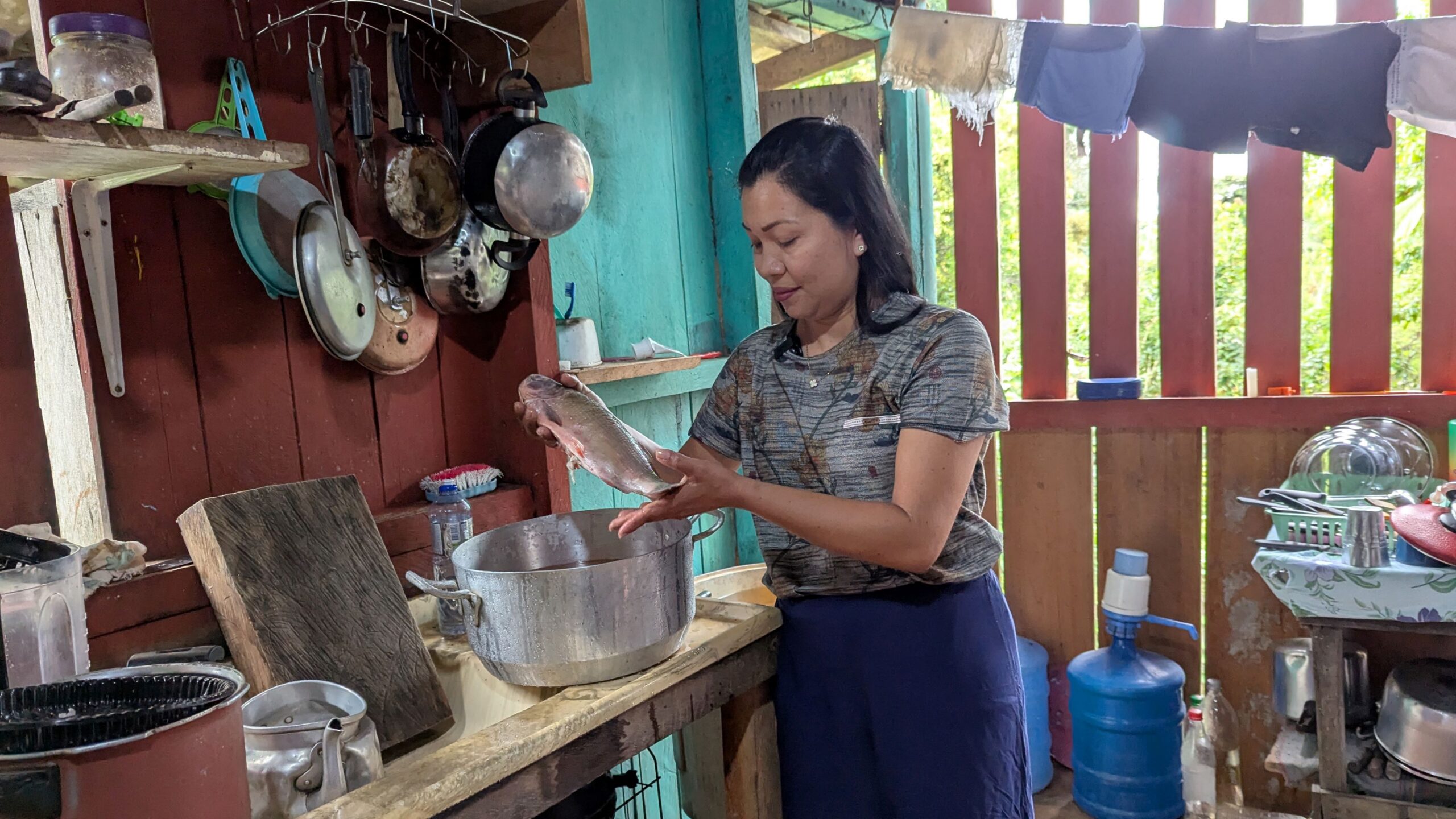
- A database built by Mongabay Latam, based on the analysis of scientific studies that gathered more than 7,000 samples from humans and 5,900 from fish, identified the areas most affected by mercury contamination in the Madeira River, one of the main tributaries of the Amazon.
- Mongabay Latam investigated the impact of mercury contamination on the health of the most affected communities: Lake Puruzinho in the state of Amazonas, and the riverside community of Calama and the Karipuna Indigenous Territory, in Rondônia state.
- Studies show that mercury concentrations among residents of Lake Puruzinho are among the highest recorded in the Madeira River Basin and well above what the World Health Organization considers safe, prompting residents to change their eating habits.
- High levels of mercury in Amazonian communities are related to fish consumption, their main source of protein; the accumulation of mercury in humans can cause serious health damage, such as motor and neurological problems, researchers say.
LAGO DO PURUZINHO/KARIPUNA INDIGENOUS TERRITORY/CALAMA, Brazil — The Lake Puruzinho community sits on a clear, fish-rich lake in the Brazilian Amazon, an area that, at first glance, resembles paradise. Just 20 kilometers (12 miles) from the city of Humaitá in Amazonas state, the community is soundtracked by two contrasting noises: the song of birds like the crested oropendola as it flies in search of fruit, and the thunderous engines of vessels plying the Madeira River.
For decades, the approximately 170 residents of the riverside community ate fish from the lake, but that changed when they learned about mercury — and discovered that large quantities of the heavy metal were being dumped into the Madeira by illegal gold mining. The river, which feeds Lake Puruzinho and is a tributary of the Amazon, receives an estimated 10-50 metric tons of mercury from dredges used in gold mining.
“There was a lot of mercury in our hair [because] of the fish, the tucunaré, which we eat a lot,” says Maria Rogelina Soares da Silva dos Santos, a fisher and homemaker, at the door of her house, located on the shore of Lake Puruzinho. “It was a huge scare.”
She’s referring to studies by researchers at the Federal University of Rondônia (UNIR), in which she has participated for 26 years. The research examines how mercury contamination affects fish and, ultimately, human health, focusing on pregnant women, breastfeeding women, and children in communities along the Madeira River. The studies revealed, in recent years, the presence of high levels of mercury in riverside communities, far above those in urban populations, says Ronaldo de Almeida, a co-author of several of the UNIR publications.
A 2024 study, for example, found that mercury accumulation among Lake Puruzinho’s residents was “among the highest reported in the Madeira River Basin, indicating a significant level of mercury exposure in this area.” Mercury concentrations in residents’ hair ranged from 15.61 to 25.81 micrograms per gram, well above the safe limit established by the World Health Organization (WHO) of 2 μg/g. “These levels are significantly higher compared to other regions in the Amazon,” the publication noted.
After learning the results, Maria Rogelina dos Santos says that “almost everything completely changed” for her and her family, as they drastically reduced the consumption of fish like tucunaré (from the genus Cichla), which had been a staple of their diet for years.
The Dos Santos family’s experience is one of the many documented by Mongabay Latam in an investigation that included building a database of more than 7,000 mercury samples from people and more than 5,900 from fish collected along the Amazonian rivers of Madre de Dios in Peru, Beni in Bolivia, and Madeira in Brazil. (The three rivers are part of the same system; the Madre de Dios and the Beni join up to form the Madeira.)
An analysis of 42 scientific studies published between 1997 and 2024 found evidence of mercury exposure among residents of at least 249 Indigenous and riverside communities over that 27-year period. Another 702 communities are at risk because they’re located near illegal mining hotspots, in addition to communities where residents have already tested positive for mercury. In Brazil, at least 286 Indigenous and riverside communities don’t know how much mercury is in their bodies, or the danger posed by continued exposure.

To understand the impact of mercury contamination, our reporting team went to three communities: the Lake Puruzinho riverside community in the state of Amazonas, and the Calama riverside community and the Karipuna Indigenous Territory, both in the state of Rondônia. All three were identified as critical cases in the studies included in the investigation’s database.
The team interviewed residents in the three communities, as well as doctors and scientists about the effects of mercury on people, fish, and the environment. We also contacted local authorities to assess the scale of the public health problem, and reached out to the federal government to ask what it’s doing to curb mercury use in gold mining and address its harmful effects.


Contaminated without knowing
It takes two hours by regular boat, or 40 minutes by speedboat, to reach the Lake Puruzinho community from Humaitá. The river journey offers a quintessential Amazonian scene: the noise of the engine, the sound of the water, and the green of the forest reflected on the surface of a river teeming with life.
There’s no gold mining at Lake Puruzinho, and at first glance it appears to be a natural refuge. However, currents from the Madeira River carry fish into the lake that have been contaminated by mercury from mining sites in the region. The mercury accumulates in fish tissue and eventually ends up in people’s bodies, resulting in high concentrations in residents’ hair, blood, and feces, studies show.
“Fish is, unfortunately, the main route of entry for the ingestion of mercury,” De Almeida, the UNIR researcher, tells Mongabay Latam during a visit to his office at the campus in Porto Velho, the Rondônia state capital. Among the studies to which he contributed was a paper published in 2021 examining the relationship between high fish consumption and mercury levels in the blood of residents of communities in the Brazilian Amazon.

According to De Almeida, contamination by organic mercury in food, in the form of methylmercury, is much more serious than direct exposure to metallic mercury. “When someone uses metallic mercury — which is elemental mercury and is liquid — if you leave it here on the bench, it will evaporate. If you inhale this mercury, will it cause some damage to your health? Yes, it will, but your organism will eliminate it at a much higher rate than organic mercury,” he says. “Now organic mercury, methylmercury, when we ingest it through some type of food, it enters the organism and its elimination rate is very low. So it stays retained in the organism, it will accumulate over time, and it will cause serious damage to health: neurological problems, cardiological problems, orientation problems.”
Raimundo Nonato dos Santos has lived on the banks of Lake Puruzinho for 55 years and has also taken part in the UNIR studies. Along with his wife, Maria Rogelina dos Santos, he ate fish like pintado and tucunaré — a favorite, he says — for years until he learned about mercury contamination. That’s when he realized the heavy metal was already in his body.
“It’s as if we were in innocence, without knowing anything that was happening,” Raimundo dos Santos, also the president of the Lake Puruzinho Community Development Association, tells Mongabay Latam, sitting in the shade of a leafy tree by the shore of the lake.
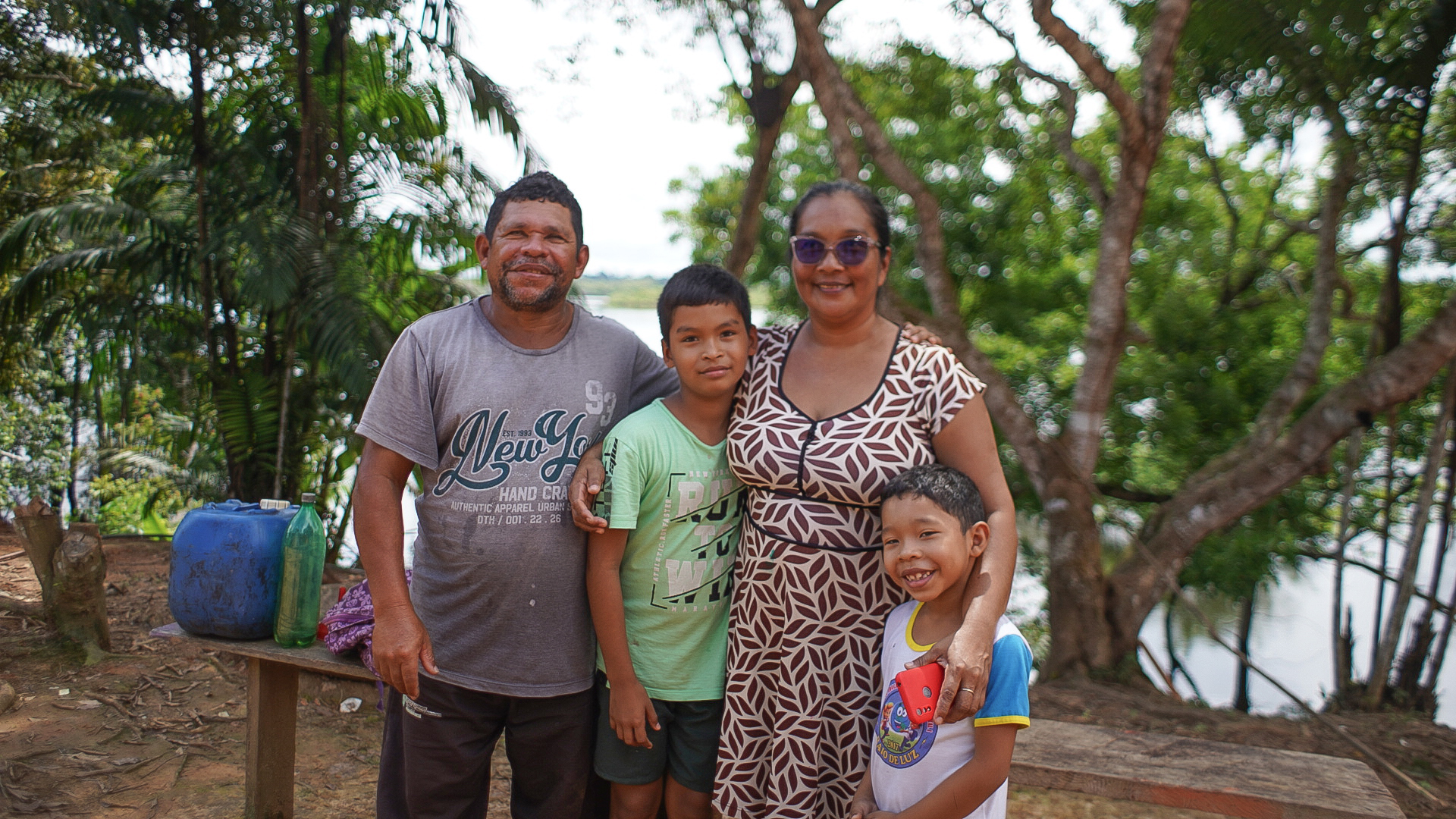
Scientific studies cited in Mongabay Latam’s database include 76 samples taken from people and more than 2,000 from fish linked to Lake Puruzinho. The results show mercury levels three to seven times higher than the WHO’s safe limit. Fish like tucunaré and curimatã account for the most affected species, and are also a key part of residents’ diet. Other UNIR studies provided further evidence of the human health impact from mercury released into the Madeira River.
This problem also extends to other communities in Amazonas state. Teacher Renata Vieira Guacebe, 41, is a research fellow on several UNIR studies, in Puruzinho and in other communities in the region. She’s among the local residents who continues to eat fish three or four times a week and is concerned about the contamination found in Puruzinho’s fish and water.
“I like to eat fish. If it’s contaminated, what are we going to do to continue eating fish?” Guacebe says. “How are we going to be able to drink water? We’re going to have to go to the city almost every day to get water.”
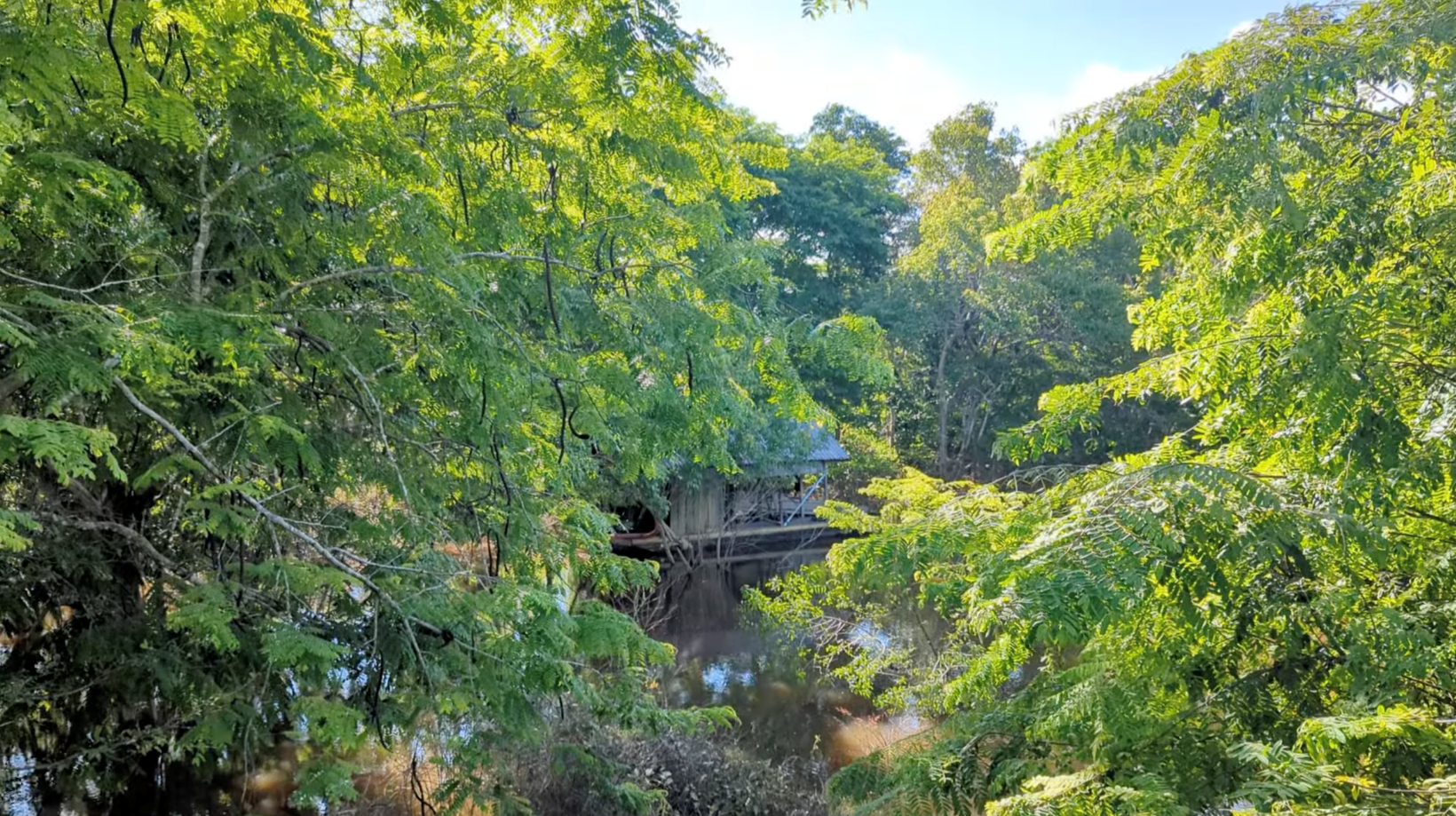
The situation is further complicated by the fact that some of the community members work in gold mining to support their families. This emerged from scientific studies and interviews conducted in the region, as well as from the Mongabay Latam team’s own observations of illegal mining barges anchored near some homes.
Researchers said they were unable to fully investigate mercury’s impact on men because, in some communities, many men were working in gold mining when the researchers arrived to collect samples.
Calama: between dolphins and dredges
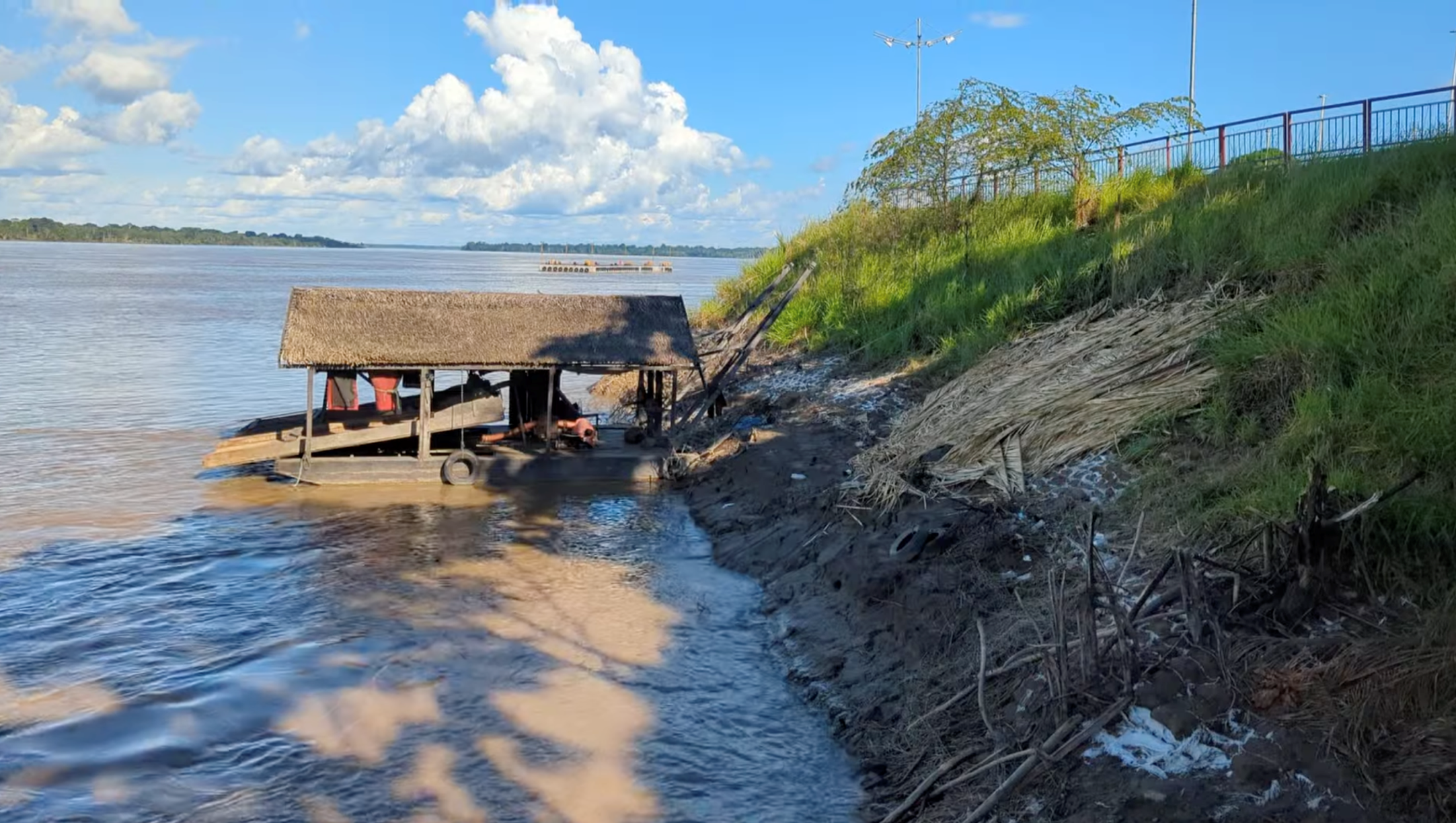
As we stop to refuel our boat on the way to the community of Calama, three hours by regular boat or one by speedboat from Humaitá, a group of river dolphins leaps from the waters of the Madeira. This spectacle takes place in front of four illegal gold-mining dredges parked just meters from the fuel pump.

In May 2025, a federal operation destroyed dozens of mining rafts and dredges in the Madeira River, including around Humaitá and Calama. However, a week later, illegal mining had resumed in the area, as Mongabay Latam witnessed. The region has been a recurring target of federal operations against illegal gold mining, including one in September 2025.
Despite this, residents of Calama must navigate the tension between relying on illegal gold mining for their livelihoods and living with the effects of mercury contamination. Mongabay Latam interviewed three employees of an elementary school in Calama who had also participated in the UNIR studies. All said their test results were normal, that they continued to eat fish, and that they weren’t concerned about mercury contamination. Some even dismissed the harmful effects of the heavy metal and questioned whether the fish were contaminated.
“Science may say [otherwise], but I believe that mercury — I might be wrong — doesn’t influence anything in fish,” says Rosa Lúcia Barreto, who’s in charge of school meals. “Because mercury is a thing that, if it falls here, you don’t catch it, it goes away into the earth. I don’t even know if there’s time for the fish to eat it or not.”
She says the only types of fish that could be tainted with mercury are the scaleless ones, and even then she’s skeptical: “I also don’t believe that.”
One of the studies included in our database, co-authored by De Almeida, found the average mercury concentration in hair samples taken from 34 Calama residents was 9 μg/g, more than four times the WHO’s safe limit.

Poisoned pirarucu
A green island amid a sea of deforestation, the Karipuna Indigenous Territory is surrounded by cattle ranches, soy farms, and logging concessions — a contrast the Mongabay Latam team saw during the four-hour drive from Porto Velho.
Covering an area of 153,000 hectares (378,000 acres) and home to just 63 people, the Karipuna territory is one of the most sparsely populated Indigenous territories in Brazil. Before the European colonization of the continent, thousands of Indigenous people were thought to live in this part of the rainforest. Today, its residents face contamination and declining fish stocks, while illegal invaders frequently enter the territory — ostensibly a protected area — to cut down trees and hunt, says Indigenous leader Adriano Karipuna.

“Ten years ago, within half an hour you caught, without exaggeration, up to 500 kilos [1,100 pounds] of fish, either with the traditional arrow or the gill net — which is our traditional fishing practice — or when you cast the line, which is what we do today. Today, we wait six hours, and if we catch four fish, it’s a lot,” Adriano says. “And it’s already coming contaminated.”
For centuries, one of the prized fish for the Karipuna has been the pirarucu (Arapaima gigas). One of the largest freshwater fishes in the world, it can grow to a length of 3 meters (10 feet), weigh more than 220 kg (nearly 500 lb), and is popular across the Amazon not just for traditional peoples but also in tourist centers. The Karipuna used to catch up to two of these giant fish during the Amazon’s dry season, Adriano says, but now “you spend weeks to be able to capture a pirarucu.”
A 2022 study found total mercury concentration of 150 μg/g in tissue samples from pirarucu collected in the territory. The study also found that about 94% of the mercury was linked to muscle proteins, “which is extremely worrisome considering the bioaccumulation of mercury by, and the extensive consumption of, Arapaima gigas meat by riverine and urban populations in the Amazon region.”

Bioaccumulation occurs when predators eat animals that have absorbed chemicals such as mercury, causing the contaminants to build up in their tissues over time.
For food safety, the study’s measured mercury concentration was below the WHO’s recommended limit of 500 μg/g. However, the researchers described the level as “extremely worrisome considering the bioaccumulation of mercury by, and the extensive consumption of, Arapaima gigas meat by riverine and urban populations in the Amazon region.”
“Mercury has a quite strong solution capacity in tissue and, hardly, is filtered by the kidney, by the liver, physiological filtration mechanisms of the organism. And then, it becomes a constituent part of fish’s tissues,” Eduardo Bessa, a biology professor at the University of Brasília, tells Mongabay Latam during a visit to the campus at the national capital. “And we consume the fish’s musculature. So, if the musculature is one of the most contaminated tissues … and we don’t eat one fish over a lifetime, we’re going to eat a series of times.”

In his postdoctoral study, Bessa detected that migratory and predatory fish like pirarucu inhabit areas that receive water from surrounding tributaries, where gold mining generally occurs, as well as deeper parts of the riverbed, where heavy metals accumulate.
“If it develops an egg based on a diet rich in mercury, that egg will contain mercury too. Then, when it arrives up there, when it goes to reproduce, it will lay eggs and generate embryos that are already contaminated,” says Bessa, who has a master’s degree in zoology and a Ph.D. in animal biology. “Even if the embryo has never swum in the mercury-contaminated river, it inherited it from the mother.”
In humans, the harmful effects of mercury exposure from eating contaminated fish usually appear only after years, studies show. However, for vulnerable groups, such as young children, the elderly, and immunosuppressed people, the risks can be more immediate. Research shows that, even at concentrations below the WHO’s safe limit, mercury poisoning can still have severe health impacts as it bioaccumulates.
The risks are even greater for pregnant women, breastfeeding women, infants, and young children who consume contaminated fish, as mercury exposure can affect neurological development over a much shorter period, according to the studies.
Adriano Karipuna says health problems among his people have increased in recent years, including cases of children born with motor problems. “They are being born with problems, with heart suffering, with a huge head. There are young people and adolescents who already have shortness of breath, something we didn’t have — culturally speaking, within our ancestry — these things didn’t happen 20, 30, 50 years ago,” he says, adding there are also occurrences of cancer.

According to Brazil’s Ministry of Health, there have been no cases in the last five years of mobility problems, tumors, or neoplasms among Indigenous newborns in the Karipuna territory, and 12 cases of respiratory diseases recorded between 2021 and 2025.
“It’s necessary to do a study with all the Karipuna — elderly, children, and adolescents — to see if we are contaminated,” Adriano says. “And [also] take the fish, not only the pirarucu, but all the fish, to trace this, to see the type of contamination.”
Protection that doesn’t arrive
Brazil has been a party to the Minamata Convention since 2013; the agreement establishes regulations on the use, trade, and production of mercury. In 2018, the federal government formally incorporated the convention into Brazilian law.
However, Mongabay Latam found that Brazil has yet to implement restrictions on mercury use in the states of Amazonas and Rondônia, where it’s still used in illegal gold mining. The government also hasn’t set a date for implementing the restrictions, according to statements from the ministries involved in the Minamata Convention, obtained through access-to-information requests and from their press offices.
“Brazil does not have a [current] sectoral implementation plan for the Minamata Convention on mercury,” said the Ministry of the Environment and Climate Change.
In 2023, Brazil presented its Minamata Initial Assessment (MIA), a study of the country’s use, emissions, and releases of mercury. According to the environment ministry, the assessment identified regulatory gaps and sources of mercury releases, and helped establish priorities for meeting the convention’s obligations. The ministry did not provide a timeline for implementing those measures.

According to the environment ministry, Brazil’s national action plan for artisanal and small-scale gold mining, developed by the Ministry of Mines and Energy, will incorporate measures to meet the country’s obligations under the Minamata Convention. The mining ministry said the plan includes mapping and assessing current practices in artisanal and small-scale gold mining, including mercury use and its environmental and social impacts, as well as developing and promoting safer and more sustainable alternatives to mercury.
The mining ministry also said it would provide training and technical assistance to artisanal and small-scale miners, strengthen oversight of mercury trade and use, and work with other government agencies to promote responsible practices. It did not provide details for these measures. The draft plan is open for public consultation until Sept. 9, after which suggestions will be reviewed and incorporated into the final version, the mining ministry said.
The Federal Public Ministry (MPF) criticized the plan for excluding Indigenous peoples, riverside communities, civil society organizations, and environmental agencies from its development. “Of the 1,145 [people] interviewed by the consultancy hired to map the gold situation in the country, 1,051 were miners and 51 were managers,” the MPF said in a press release. “In other words, no Indigenous person, riverside resident, or representative of socioenvironmental entities was heard during the initial phase of data collection, excluding from the debate precisely the populations that suffer the direct impacts of environmental degradation.”
The MPF calls this a “distortion,” noting official estimates that Brazil has about 200,000 active gold miners, while more than 6.3 million people are directly affected by socioenvironmental impacts of mining in their vicinity.
The environment and mining ministries said traditional communities and civil society can participate in the public consultation for the artisanal and small-scale mining action plan.
The environment ministry added that it’s collaborating with the federal environmental enforcement agency IBAMA, the Ministry of Health, the Ministry of Indigenous Peoples, and the federal Indigenous affairs agency Funai on an environmental monitoring program in Indigenous Yanomami territories in the state of Roraima. However, no specific action has been carried out on the Madeira River farther west. The ministry said it has no studies, reports, or analyses on mercury contamination in the Madeira, and that there are currently no measures nor dedicated funding to address it.

The health ministry has been tracking mercury poisoning cases since 2007, with both public and private health care facilities required to report any suspected or confirmed cases through the ministry’s SINAN platform. According to the ministry, there have been 30 cases of mercury poisoning reported in Amazonas and 12 in Rondônia since 2006. The ministry said these figures cover hospitalizations recorded at the state level, but that there are no federal data specifically for the Madeira River region.
In this region, the health ministry’s Special Indigenous Sanitary Districts (DSEI) for the cities of Manaus and Porto Velho map pollution sources such as gold mining and centralize that contamination data through the Committee on Mercury, Pesticides, and Other Environmental Contaminants (CMAC), the ministry said.
The ministry said it launched a strategic plan for health care, surveillance, and prevention among populations exposed and potentially exposed to mercury during last year’s COP30 climate summit in the Amazonian city of Belém. This Mercury Plan includes establishing a health reference center in the Amazon, expanding the federal public health system’s laboratory capacity for mercury testing, improving information systems, promoting scientific research, and integrating health surveillance and care with sectors including the environment and education.
The Rondônia Climate and Health Center (CCSRO) is still being structured and is assessing existing actions and needs in the state, the ministry said. However, “activities related to mercury contamination are not contemplated at this moment.”
The health ministry said it has participated in developing Brazil’s implementation plan for the Minamata Convention since 2020. It said its 2025 budget allocation for the effort was 20.6 million reais ($4 million), although that amount is shared with other ministry programs.
Finally, the ministry said its health-technology assessment commission, Conitec, recommended in 2025 that the drug DMSA (also known as succimer) be incorporated into the public health system to treat mercury poisoning. The government has until December this year to do so.
Mercury: An invisible enemy
Luciano Bortolotti, a surgeon who works in Humaitá’s public and private health systems, says it’s difficult to isolate mercury contamination as a cause of health problems because its symptoms can resemble those of other diseases.
“The complication of mercury would be more for neurological problems and there are diverse degenerative neurological diseases that will simulate [the same symptoms],” Bortolotti tells Mongabay Latam at his private office. “You think it’s Parkinson’s, you think it’s micrographia — which is one of the things that happens: the person writes with a small letter.”
He says it’s essential to conduct a methodologically rigorous study using samples from the most exposed populations, along with a control group of people who are not at risk, to determine the difference. “With certainty there is an impact; what is the degree of that impact?”
Bortolotti says chronic poisoning through contaminated food, including fish, is the most common form.

Humaitá doesn’t have specific data on health problems resulting from mercury contamination, says Sara dos Santos Riça, the municipal health secretary. She notes, however, that cases of cancer and, particularly, autism, have “accelerated” in recent years.
Riça says the municipality’s basic health units provide care to riverside communities by boat, but reaching the most remote areas is extremely costly and exceeds the budget allocated by the health ministry. “Health [care] is very expensive here. And the Ministry of Health, until today, cannot have this [differentiated] look for the Amazon region. It is the difficulty that we have,” she tells Mongabay at her office.
In Calama, there have been reports of an increase in cases of autism among students at the municipal school where the interviews were conducted.
In May 2025, the Ministry of Health, the Ministry of Indigenous Peoples, and the Oswaldo Cruz Foundation (Fiocruz), the federal institute for public health research, published a technical manual specifically addressing Indigenous populations exposed to mercury. The manual aims to guide appropriate treatment amid a lack of health services for people exposed to mercury and limited knowledge about mercury poisoning among health professionals and patients.
The health ministry also said it had developed guidelines for the “diagnosis and treatment of mercury poisoning,” currently under review before being approved and published. The ministry said the guidelines would eventually be available through the Unified Health System’s Health Care Network for both Indigenous communities and the general population.
“Nowadays we already have some methodologies for populations that are exposed to organic poisoning, from the use of insecticides and herbicides in general, there are [also] for malaria control, but for the mercury issue we don’t have [any],” says De Almeida, the UNIR researcher studying mercury contamination in the Madeira River region.
Scientists say a dedicated system for detecting mercury-related disease is important because damage to the central nervous system causing motor, sensory, or cognitive problems can’t be cured. Early detection and appropriate intervention are therefore important to help maintain quality of life, the experts added.
Given the scale of the contamination, De Almeida says the priority should be to stop mercury emissions. “The [main] thing is to stop emitting, it is the first thing. We need to do that.”
In Lake Puruzinho, Raimundo dos Santos says his dream is to be able to enjoy the beauty of the lake and live from its riches — without mercury. “We love this nature that God left for us,” he says, looking at the water’s mirrored surface. “It is my dream to raise fish within the region itself.”
This story is part of a special report by Mongabay and was also published in Spanish.
New analysis maps mercury threat to 951 Amazon communities in three countries
Karla Mendes is a staff investigative and feature reporter for Mongabay in Brazil and the first Brazilian to win the John B. Oakes Award for Distinguished Environmental Journalism. A member of the Pulitzer Center’s Rainforest Investigations Network, she is also the first Brazilian and Latin American ever elected to the board of the Society of Environmental Journalists (SEJ); she was also nominated Diversity, Equity and Inclusion (DEI) chair. Read her stories published on Mongabay here. Find her on LinkedIn, Instagram, Threads, Bluesky and 𝕏.
Copy editor: Hayat Indriyatno.
FEEDBACK: Use this form to send a message to the author of this post. If you want to post a public comment, you can do that at the bottom of the page.
Cite this article
Karla Mendes (2026). Riverside families in the Amazon change meals as mercury poisons staple fish. Mongabay Conservation news. DOI: https://doi.org/10.66709/news-327497

