


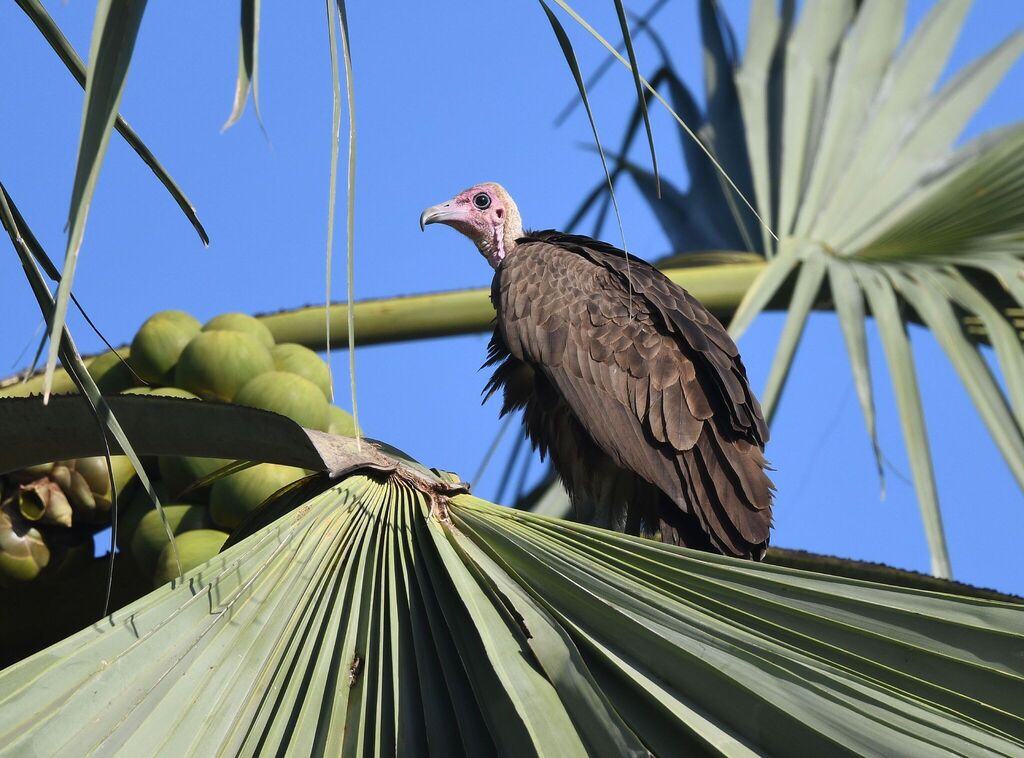
- Launched two years ago, the West African Vulture Conservation Action Plan (WAVCAP) aimed to protect the region’s dwindling vulture populations. But progress to implement it is lacking, say experts.
- Vultures are under severe threat in the region due to poisoning for belief-based use, persecution, and habitat destruction. Other raptors and bird species are under severe pressure due to this trade as well.
- Experts point to a lack of coordination, limited funding, and low priority for vulture conservation as ongoing challenges, amid an ever-growing trade in their parts that’s also impacting Central African countries.
- Urgent action is needed to avoid complete extirpation of vultures in countries like Benin and Nigeria, say experts, adding they hope that a coordination meeting in November will address these issues.
Togo’s vulture population is in crisis. Amid intense persecution for belief-based use and ongoing loss of habitat, surveys between 2021 and 2025 tracked a sharp decline in the numbers of critically endangered hooded vultures (Necrosyrtes monachus) around abattoirs — counting only a few hundred in total across the country. Palm-nut vultures (Gypohierax angolensis) are known from only one protected area, and white-backed vultures (Gyps africanus) are now presumed to be locally extinct, with the last bird in the country seen in 2019.
“We’re now in a situation where it’s much harder to find vultures,” Nico Arcilla, president of the International Bird Conservation Partnership (IBCP), said in an interview. “But if you go to the markets you’ll see them, and you know people are finding them.”
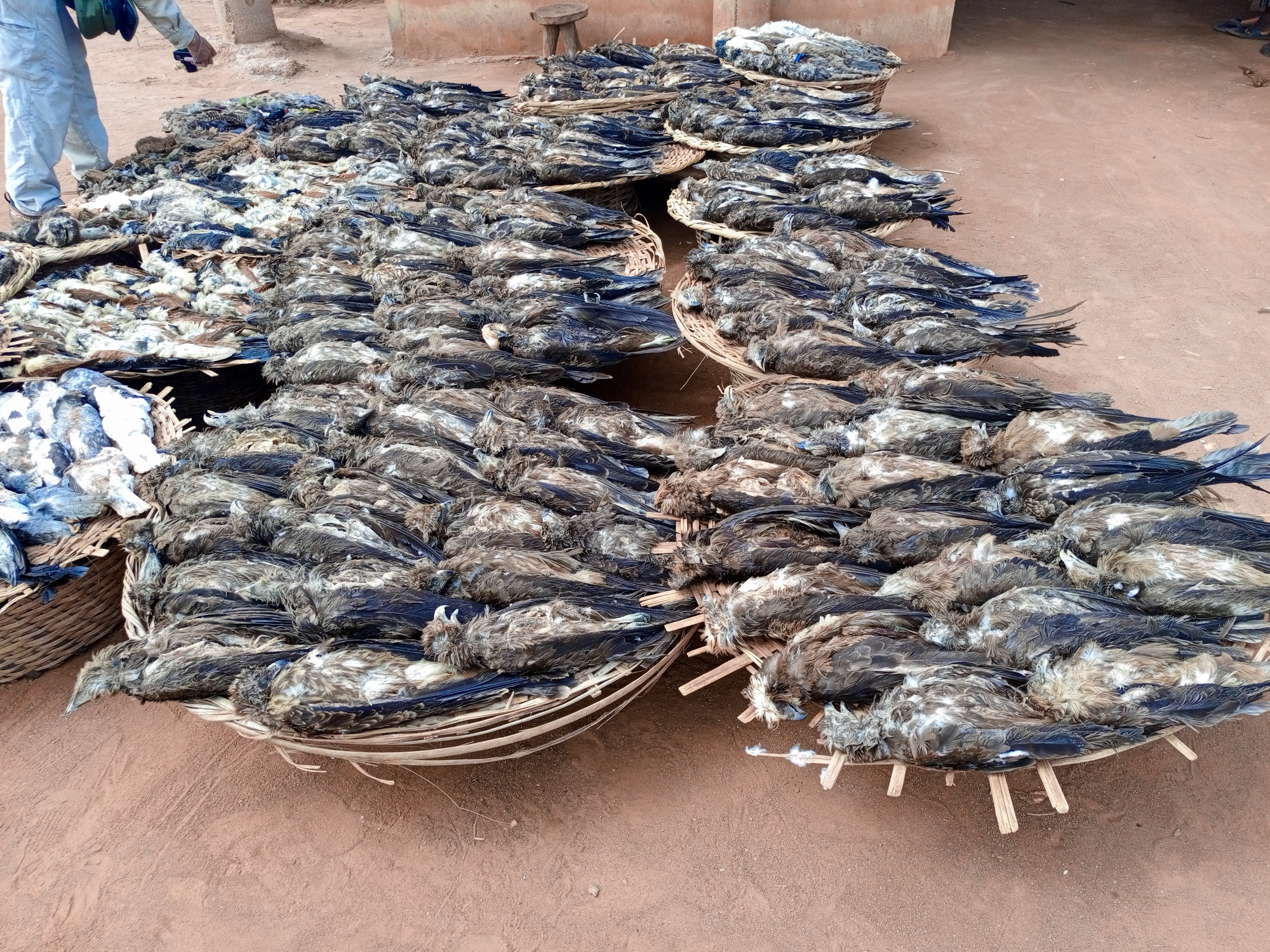
In neighboring Benin, a major hub for the trade and use of vulture parts, unpublished market data collected by Abiola Chaffra, a research associate with the IBCP, counted 883 vultures for sale in nine markets surveyed in 2023. Surveys conducted between 2025 and 2026 found 535 for sale in 24 markets.
“The fact that vultures continue to be sold, including in southern Benin where their numbers have declined sharply or they have even disappeared from the wild, shows that there is still significant pressure on these species,” Chaffra said.
Following the surveys in Togo, the IBCP conducted awareness campaigns around slaughterhouses and worked with local authorities and site managers to protect vultures in 2024 and 2025.
“During our awareness-raising activities, many people were unaware of the importance of protecting the hooded vulture,” said Yendoubouam Kourdjouak, the IBCP’s West Africa project manager. “Although these conservation efforts are promising, they require sustained commitment and increased resources if we are to hope to halt the decline of these iconic species.”
These efforts, Kourdjouak and his colleagues say, appear to have helped at least stabilize population numbers, offering a glimmer of hope that hooded vultures can recover if protection continues.
Growing threats facing vultures
Their work is part of efforts to implement the West African Vulture Conservation Action Plan. Launched two years ago, WAVCAP aims to substantially reduce poisoning of vultures across the region by 2029, foster positive public perception of the scavengers, and help vulture populations recover to “sustainable levels” by 2040.
One clear positive in the two years since the action plan was launched is a better understanding of the trade in vultures, thanks to research and market surveys like IBCP’s. Belief-based use is increasing, rather than declining, while the perilous situation facing vultures in West Africa is beginning to affect other regions and raptors and birds.
Researchers recently raised alarm that yellow-billed kites (Milvus aegyptius) are being captured and killed en masse in Benin to feed fetish markets. In some cases, they’re shaved and sold in place of hooded vultures as prices are higher.
Ralph Buij, a senior scientist with the Peregrine Fund, said many other raptors — from ospreys to harrier hawks — and other bird species such as ibises and storks are poached as well.
“It appears to be growing in the scale and volume of birds that are being offered for sale,” he told Mongabay. “The scale of the issue is not proportional to what countries are implementing in terms of reducing the levels of poaching.”
Meanwhile, faced with dwindling vulture populations in West Africa, poachers are looking farther afield. A paper published earlier this year, for example, highlights recent declines in vulture populations in Chad, where no belief-based use is known.
“According to those interviewed and our observations in the field, the poisoning of vultures [in Chad] is intended to supply markets in Nigeria, Benin and other West African countries,” Djekillamber Djekadjim, a co-author of the paper and research associate with the IBCP. “Nowadays, there are increasing reports of cases of vulture poisoning or attempted poisoning in almost every province in the country.”
“We are still kind of scratching the surface,” said Umberto Gallo Orsi, head of raptors at the CMS Raptors MOU, an international initiative to protect birds of prey in Africa and Eurasia. “We are looking at a very deep hole, to be honest.”
Numerous challenges, limited progress
Taking the plan from paper to the ground is ridden with challenges. In Togo that includes a lack of information about the illegal trade in vulture parts, tackling deeply ingrained cultural practices, the poor enforcement of wildlife laws when it comes to vultures, and finding the funding to do all of the necessary work, Kourdjouak said.
These same challenges are faced across the region. Experts say despite conservation activities in many West African countries, little overall progress has been made to address the numerous threats facing these raptors.
Across Gambia, Guinea-Bissau, and Senegal, BirdLife Africa and its partners have engaged 300 traditional healers to try to persuade them to replace vulture parts with herbal remedies in their practice.
“We’ve been making small steps in terms of implementing the plan,” Fadzai Matsvimbo, coordinator of BirdLife International’s Preventing Extinction Programme, said in an interview. “The problem of belief-based use is not going away, and we are still seeing reports of birds being killed.”
In Benin, the IBCP and other organizations, such as SOS Savane, have worked to raise awareness among vendors, schoolchildren, and hunters, as well as carried out research into poaching networks.
“From Benin’s perspective and based on the actions I have observed on the ground, I do not yet see any real translation of the plan’s objectives into structured national activities,” Chaffra said.
Joseph Onoja, director of the Nigerian Conservation Foundation, reported some success in encouraging traditional healers to use herbal alternatives to vulture parts in parts of that country. But, he said, more funding is needed to expand this outreach.
“We need a consolidated fund to be able to really implement the WAVCAP,” he said.

An implementation gap
All experts Mongabay spoke to highlighted the lack of funding as a major issue.
Available small grants or one-off grants tend to run between $10,000 and $20,000, Buij told Mongabay. “Those sorts of projects don’t get us where we need to be. This really requires much more substantial funding.”
Plugging the funding gap is crucial, but the action plan won’t succeed without substantial government support, which is still lacking in many ways, Onoja said.
To address these myriad concerns, NGOs and conservation organizations from across West Africa plan to meet in Nigeria in November to align their implementation efforts. Government representatives from across the region will be in attendance, Onoja said.
He added he hopes the Economic Community of West African States, or ECOWAS, will come on board to play a role in coordinating and implementing the vulture action plan. “We will hardly be able to push the needle the right way if the government is not in the driving seat,” Onoja said.
Matsvimbo agreed. “We probably need to do some more advocacy to show the stress which vultures are undergoing. More so, we should also be looking for governments to support the vulture conservation work,” she said.
There are some signs that governments are beginning to take the situation facing vultures more seriously, Gallo Orsi said. In 2025, several West African nations backed stronger protections for two species — white-backed and Rüppell’s vultures (Gyps rueppelli) — by listing them on Appendix I of CITES, the global wildlife trade convention.
Onoja also pointed to momentum building behind tackling wildlife crime more generally in the region, citing the recent arrest and conviction of pangolin and elephant traffickers in Nigeria. “We are hoping that with that sort of momentum, when we put vultures on the agenda, we’ll be able to see convictions going forward.”
Building a case for vultures
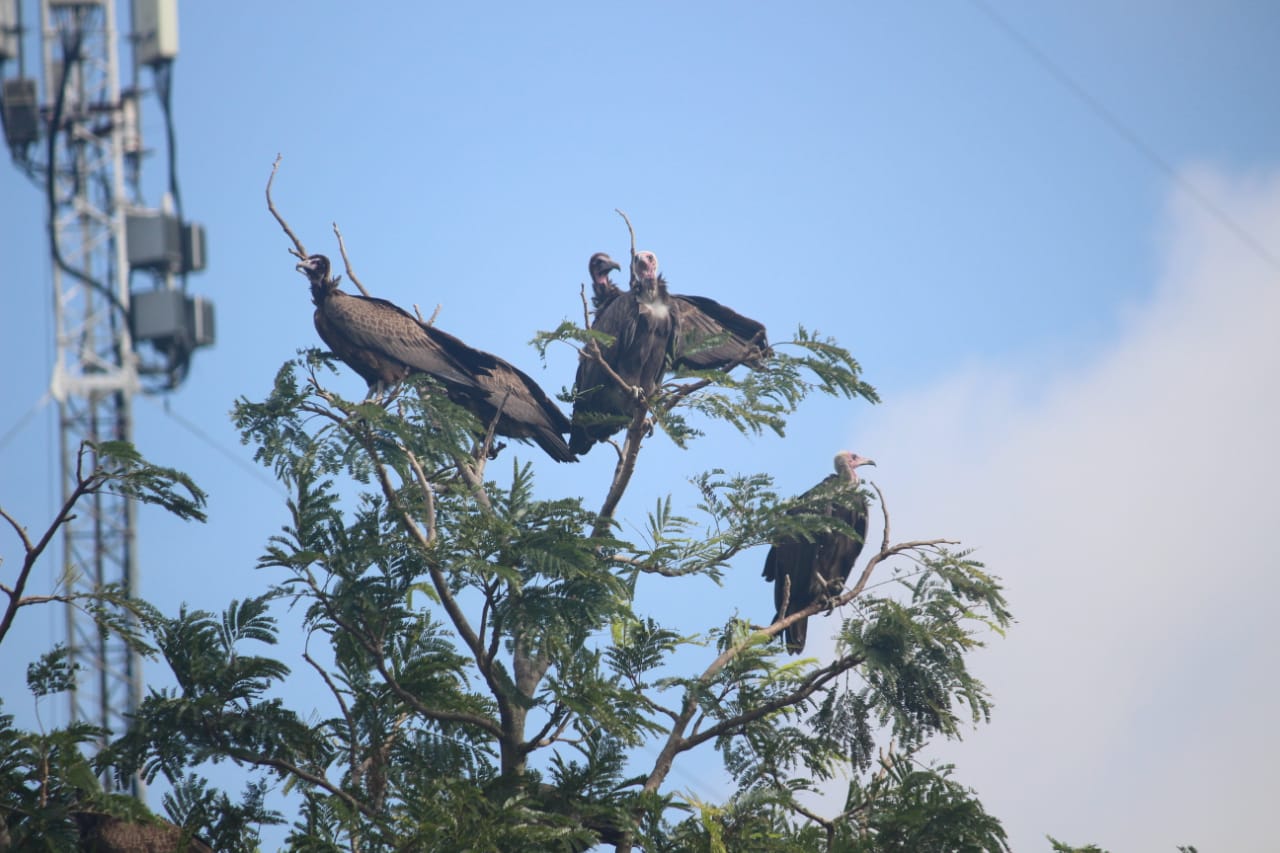
The ongoing demise of vulture populations is incredibly problematic, Gallo Orsi said. At risk is not only losing these birds from West African landscapes and ecosystems, but the potential unfolding of a public health crisis across the region. As scavengers, vultures play a crucial role in cleansing the landscape of carcasses and disease.
“There is a measurable impact on human health of this collapse that will be paid by local communities,” Gallo Orsi said. He pointed to a 2024 paper that attributed 500,000 human deaths in India to the extirpation of vultures there.
Poisons used to kill vultures also inevitably harm other wildlife and people as well. Buij said that in some instances vultures are eaten, risking harming people if they’re contaminated.
“The conservation community itself is very well aware of the problem,” Gallo Orsi said. “The problem is generally to trickle these messages to who can make this happen: government and donors.”
To get WAVCAP moving, proponents say, will take coordination of efforts and greater government support and funding as attention shifts to the meeting in November and its outcome.
“In my view, we still have an opportunity to take action, but we need to start investing properly in vulture conservation and supporting those working on the ground,” Chaffra said. “The WAVCAP provides an excellent opportunity to coordinate efforts at regional level, but this must now be translated into concrete actions in each country.”
Correction: This story was amended on Sept. 3, 2026 to better reflect Ralph Buij’s views on the scale of raptor poaching.
Banner image: Hooded vulture (Necrosyrtes monachus). Image by Josh van der Meulen via INaturalist (CC BY-NC-ND 4.0)
Action plan to save West African vultures targets threat from belief-based use
Endangered vulture species nesting in Ghana is rare good news about raptors
Citations:
Djekadjim, D., Di Lecce, I., Chaffra, A. S., Ellis, E., Goodman, D. D., Soultan, A., & Arcilla, N. (2026). Abundance, distribution, and conservation status of critically endangered vultures in N’Djamena and environs, Chad, Central Africa. Frontiers in Bird Science, 5. doi:10.3389/fbirs.2026.1726840
Frank, E., & Sudarshan, A. (2024). The social costs of keystone species collapse: Evidence from the decline of vultures in India. American Economic Review, 114(10), 3007-3040. doi:10.1257/aer.20230016
Feedback: Use this form to send a message to the author of this post. If you want to post a public comment, you can do that at the bottom of the page.
