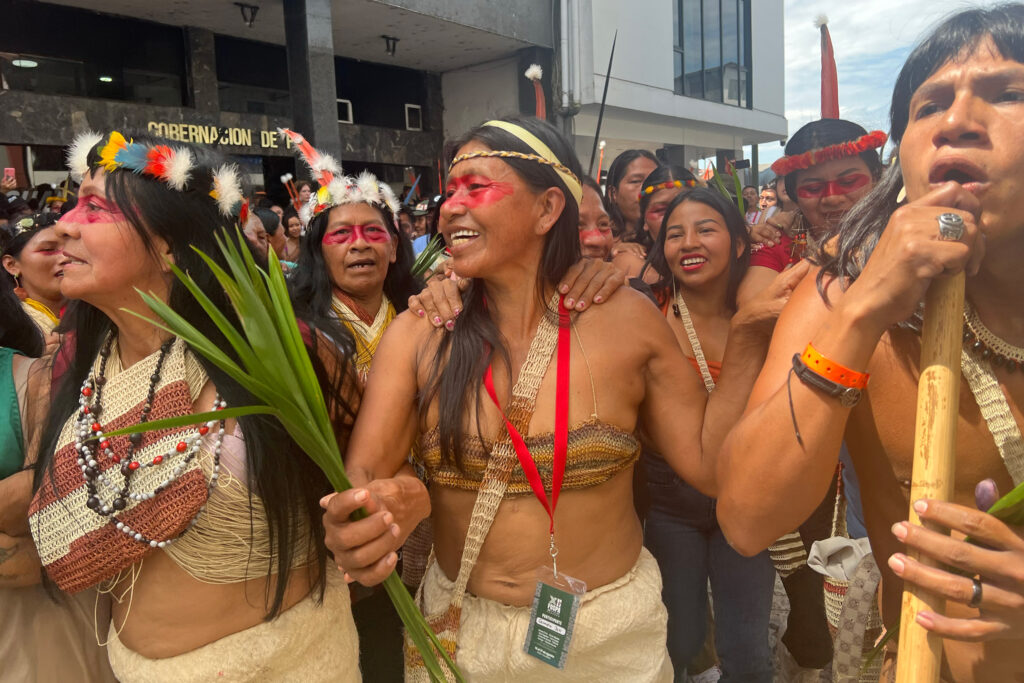
PUYO, Ecuador—People fighting oil wells, mines and other threats to their homelands did not come to this Amazonian city to lobby politicians at an environmental conference hosted by governments. They built the conference themselves.
The 12th Pan-Amazonian Social Forum, known as FOSPA, brought together Indigenous leaders, Afro-descendent communities, women, youth and other environmental defenders and social-movement members from across the Amazon and Andes for six days of debate in August about how to protect the region from the forces reshaping it.
A central message of the gathering was that the Amazon basin is an interconnected living system that national borders have unnaturally divided—and that attacks on the forest cannot be separated from attacks on the people who defend it.
The ecological stakes could not be higher.
As the world’s largest tropical rainforest, the Amazon holds a stunning amount of biodiversity, including one-third of the planet’s plant species and 10 percent of all identified species, many found nowhere else on Earth. It also acts as a buffer against global warming and drives South America’s water cycles, generating rainfall far beyond its boundaries, including in Argentina’s fertile Pampas region, according to Carlos Larrea, a professor at Universidad Andina Simón Bolívar in Quito who spoke at the conference.
About one-fifth of the Amazon has already been deforested. Scientists at FOSPA warned that combined with global warming, the forest is nearing an irreversible tipping point where tree loss dries out the region, triggering a self-reinforcing collapse that could turn the rainforest into a savannah and further accelerate climate change.
Despite these warnings, governments across the region continue to expand oil drilling, mining and industrial agriculture. This extractivist push has had major impacts in local communities and on environmental defenders. In Ecuador, for instance, some of the country’s most prominent anti-mining activists have recently faced terrorism charges and frozen bank accounts—part of a broader crackdown making land and water defense increasingly dangerous.
Speaking at the conference, Pedro Arrojo-Agudo, the United Nations’ special rapporteur on the right to safe drinking water and sanitation, told attendees that the extractivist model in the Amazon is inflicting human rights abuses as toxic pollution from mining, agrochemicals and oil spills devastates Indigenous and riverside communities. Arrojo-Agudo called this harm a crime against humanity.
At the conference’s closing on Aug. 22, FOSPA’s 2,500 participants declared the Amazon in a state of emergency near a point of no return and released a series of proposals. Among them:
- Creating more extractive-free zones where mining and oil production are banned.
- Expanding the recognition and enforcement of the rights of nature, legal rights that protect ecosystems’ and individual species’ ability to maintain the natural processes that sustain them.
- Increasing women’s political participation.
- Launching a pan-Amazonian observatory to map organized crime and aid affected communities.
- Supporting economies based on agroecology, agroforestry and other community practices.
This story is funded by readers like you.
Our nonprofit newsroom provides award-winning climate coverage free of charge and advertising. We rely on donations from readers like you to keep going. Please donate now to support our work.
Participants also recommended creating networks to protect environmental defenders from violence and strengthening communities’ power to decide what happens on their lands—including land rights for Indigenous communities. The proposed plan of action will be implemented not by governments, but at the grassroots level by communities and organizations.

At the opening of the 12th Pan-Amazonian Social Forum on Aug. 18, participants are offered chicha, a traditional Amazonian drink made from fermented corn, chonta or yucca. The first FOSPA forum was held in 2002 in Belém, Brazil, following the World Social Forum movement pressing back against globalization. The FOSPA conferences are held every two years, rotating in locations across Amazonian countries.
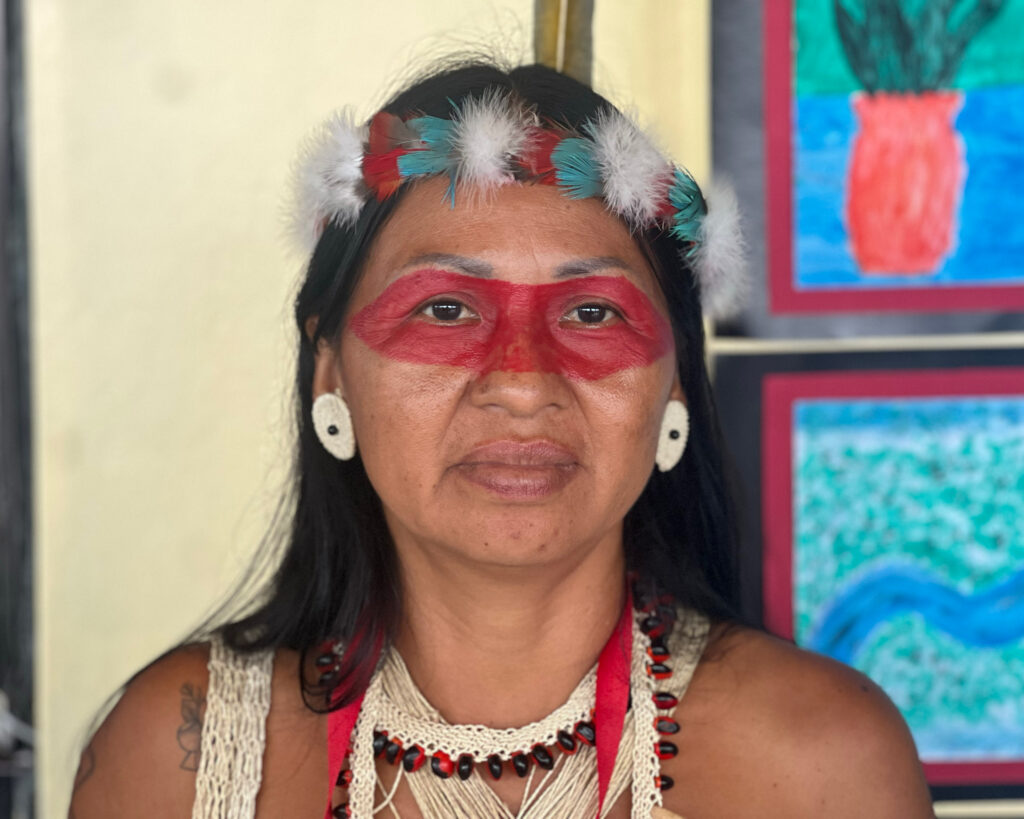
Isabel Ahuani Gaba Nenquimo, 43, from the Waorani Awañite community in Yasuní National Park, Ecuador, came to FOSPA to call attention to the continued expansion of oil operations into her community’s territory. Speaking in Spanish, she described her community as “basically living inside the oil companies” because it is so completely surrounded by oil operations. Before that, she said, her people lived freely and without the health problems they now associate with extraction, including cancer.
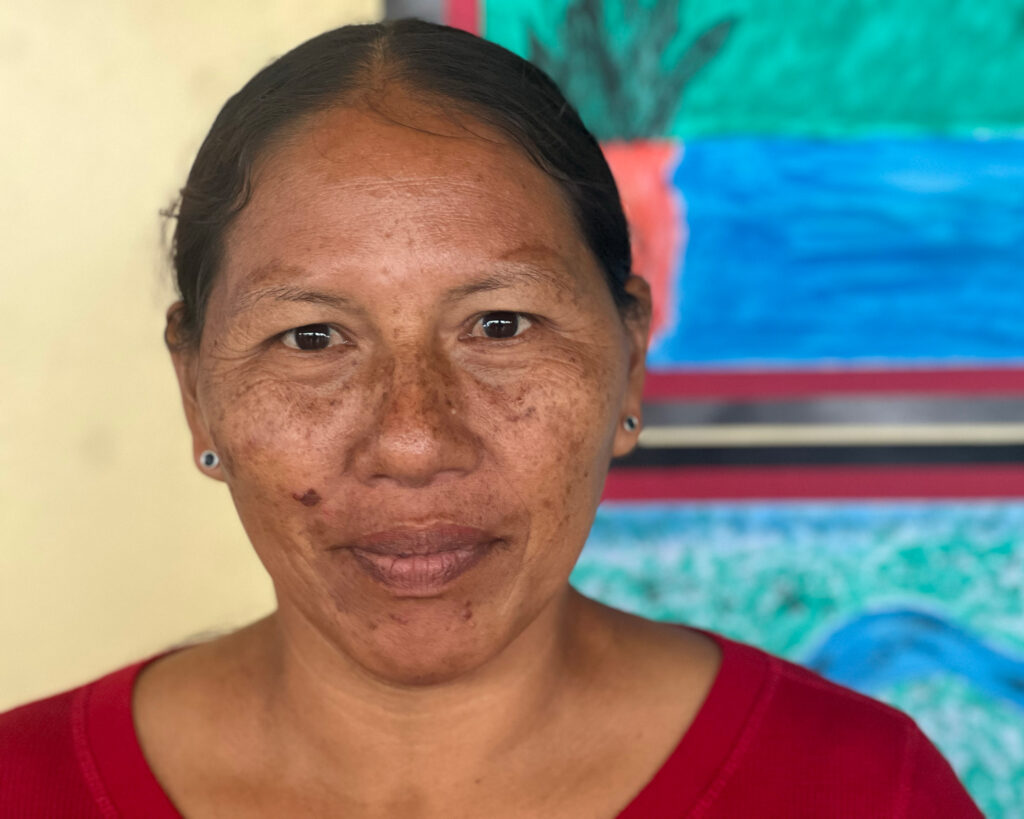
Minimo Quemperi Caiga, 42, from the Waorani Bataboro community in Puyo, came to FOSPA focused on health and education, particularly what she described as a growing cancer burden among women in the region. Caiga said government authorities at both the national and local levels have ignored their concerns. She called for the government to respect Indigenous peoples’ right to free, prior and informed consent before oil and other projects move forward.
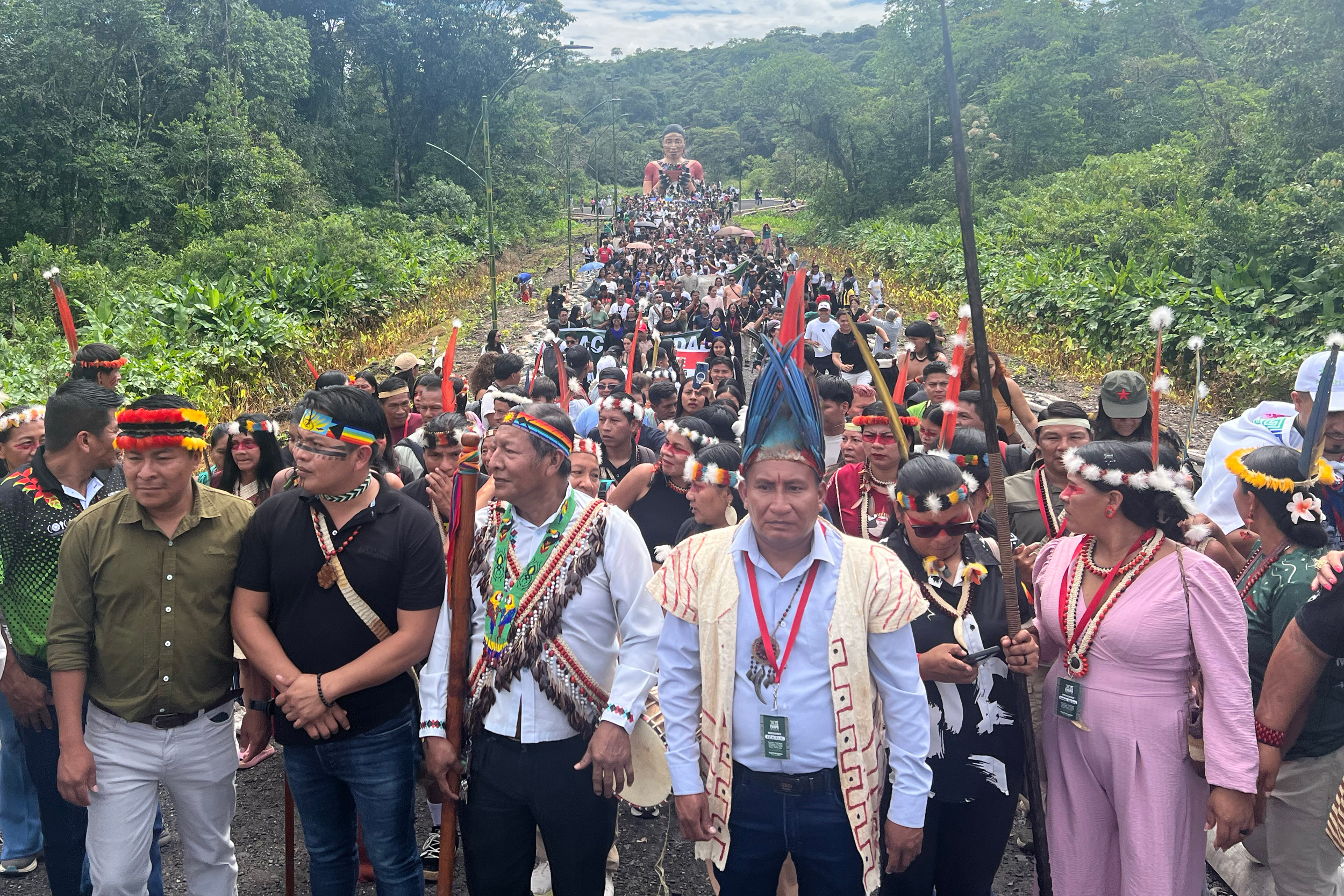
Indigenous leaders from the Ecuadorian Amazon lead a march through Puyo on Aug. 21 for the closing of the conference. FOPSA participants called on the Ecuadorian government to comply with a 2022 national referendum where voters chose to end oil operations inside part of Yasuní National Park, one of the most biodiverse places on earth and the territory of uncontacted and recently contacted Indigenous peoples. Operations there are ongoing more than a year after a court-mandated deadline to halt them.
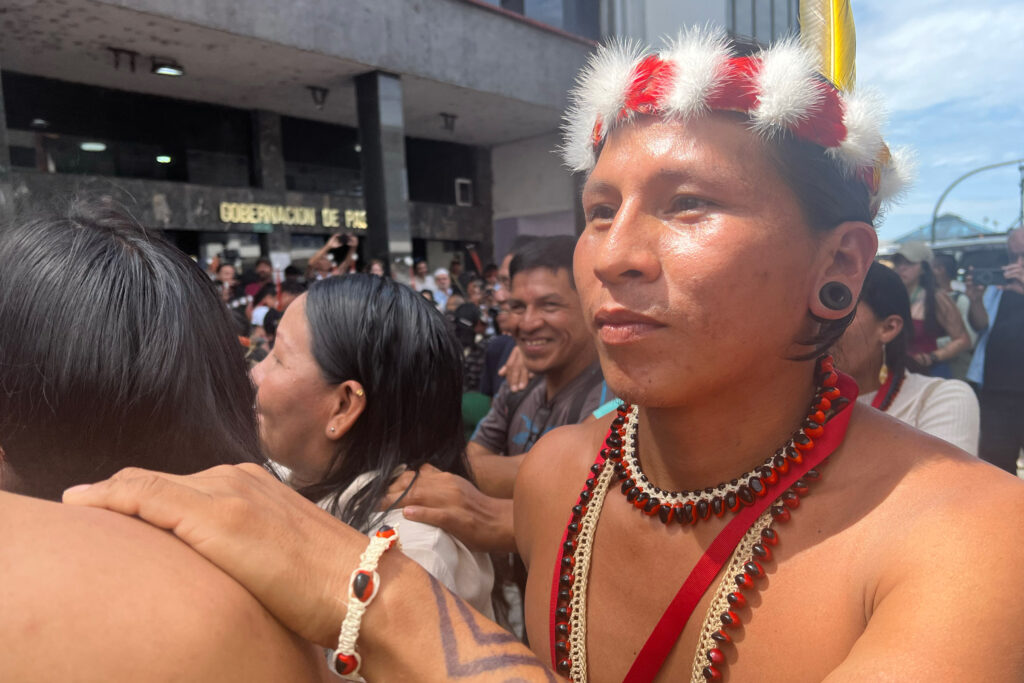
Pegonca Rolando Irumenga Yeti, 32, a Waorani musician and tourism guide from the Nenkepare community in Yasuní National Park, Ecuador, marches through Puyo on Aug. 21. Protesters at the march called for an immediate end to new oil and mining operations, and they highlighted the criminalization, threats and violence that environmental defenders face.
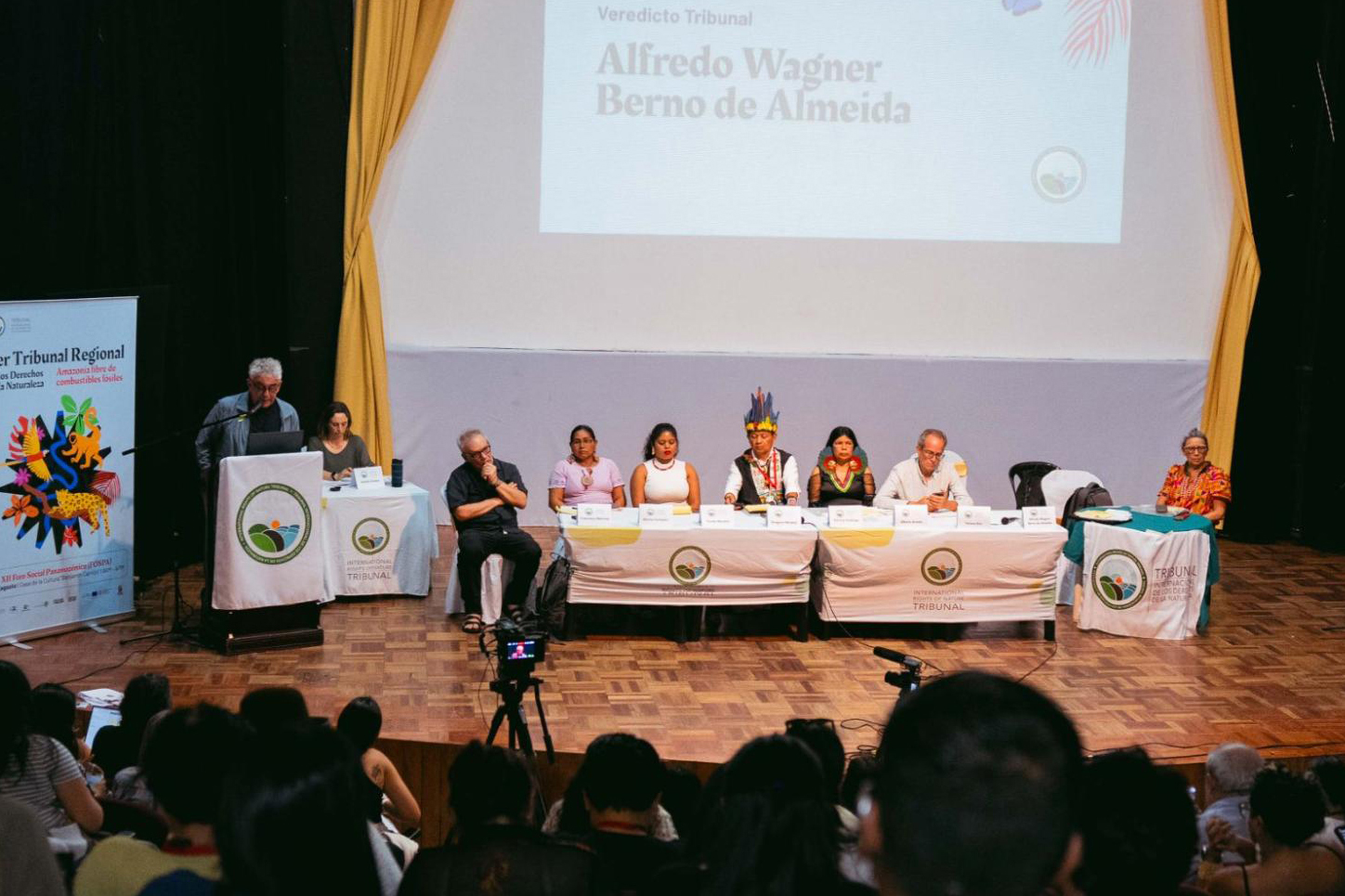
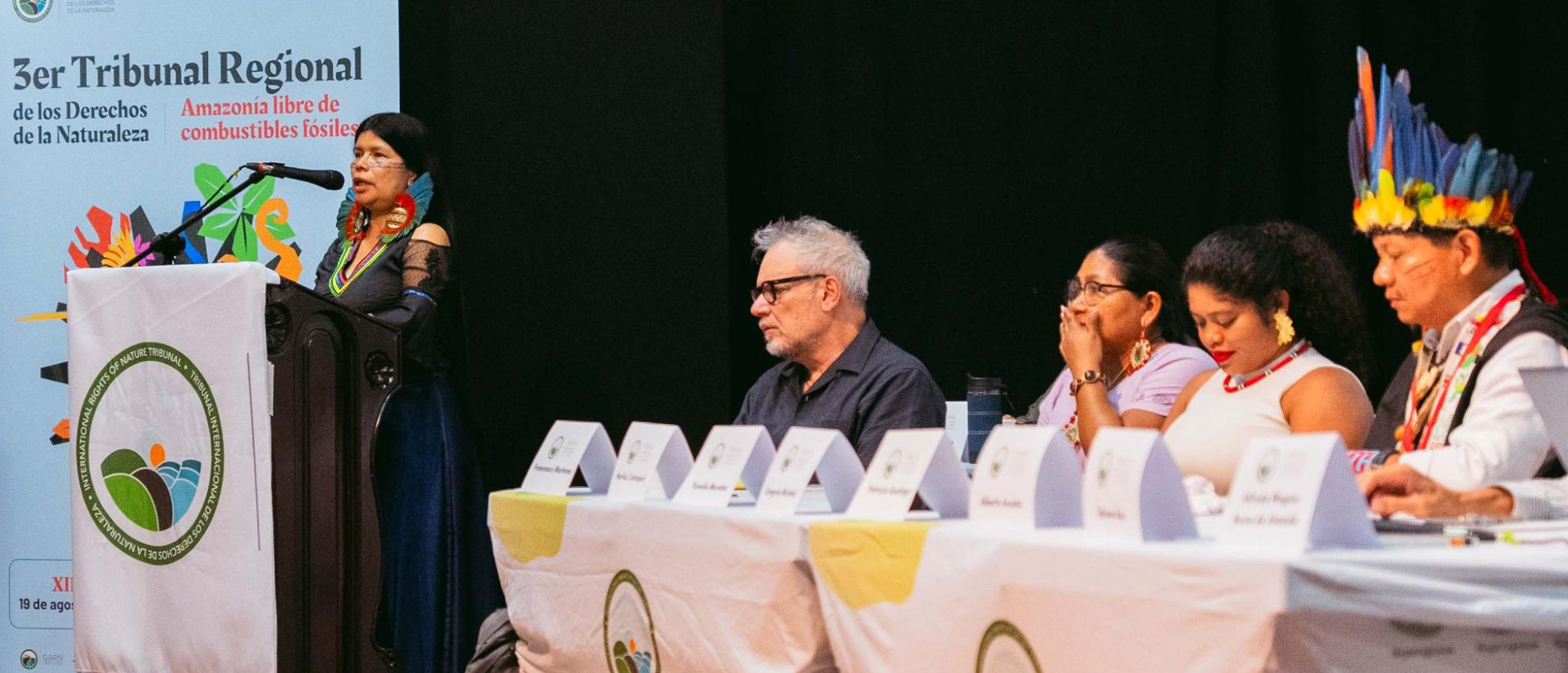
The International Rights of Nature Tribunal featured six cases related to fossil fuel expansion in the Amazon. The judges—chaired by Patricia Gualinga, a Kichwa leader from Sarayaku, Ecuador, and Gregorio Mirabal, a Kurripako leader from Venezuela—heard testimony by environmental defenders from Brazil, Peru, Colombia, Ecuador, Bolivia and Venezuela. The witnesses told the tribunal about chemical spills, oil operations forced on communities that did not want them and environmental defenders charged with crimes or killed.
“Thinking our nature has a price—if someone thinks like this, they must have a price for their own lives because Mother Earth … doesn’t have a price, just as our lives don’t have a price,” said Olivia Bisa Tirko, the first female president of the Chapra Nation in Peru. “We have to change our way of thinking.”
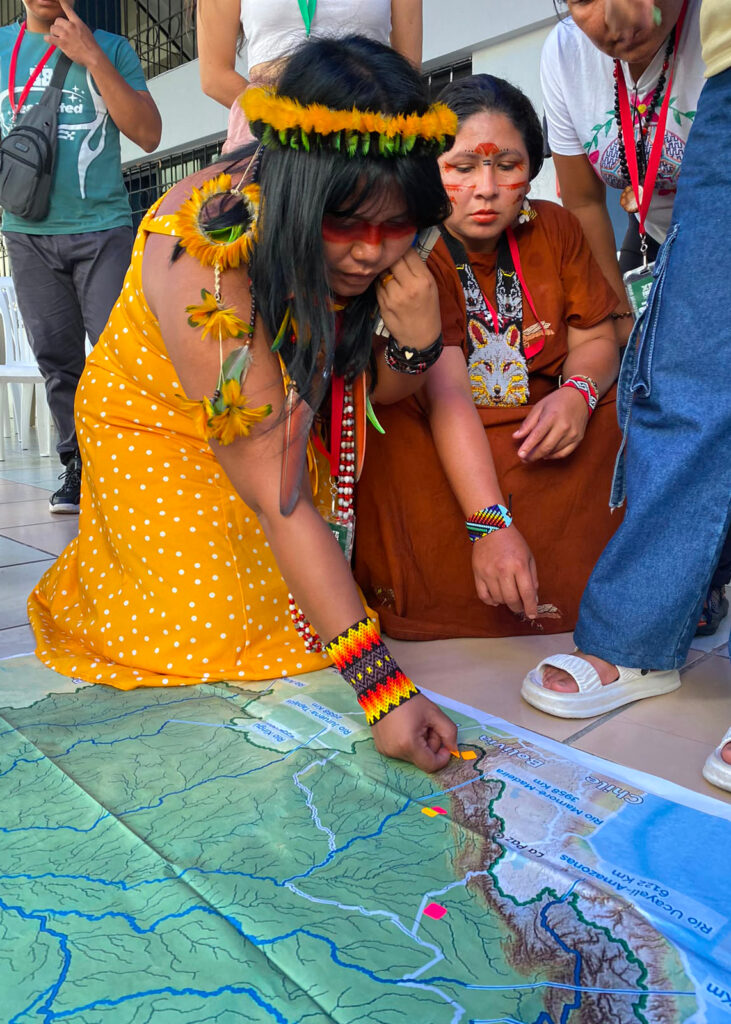
Karina Garcia Rios, left, and Micaela Huaman Fernandez, to her right, have been fighting for the rights of medicinal plants and stingless bees in Peru. Last year, two municipalities in Peru recognized the rights of stingless bees, which Fernandez said provide medicinal honey and sustainable livelihoods. The communities behind the laws worked with Indigenous Peruvian scientist Rosa Vásquez Espinoza—illustrating a broader development within the rights of nature movement. Scientists are collaborating with Indigenous communities to write laws aimed at providing higher levels of protection to living beings and ecosystems, compared with conventional laws.
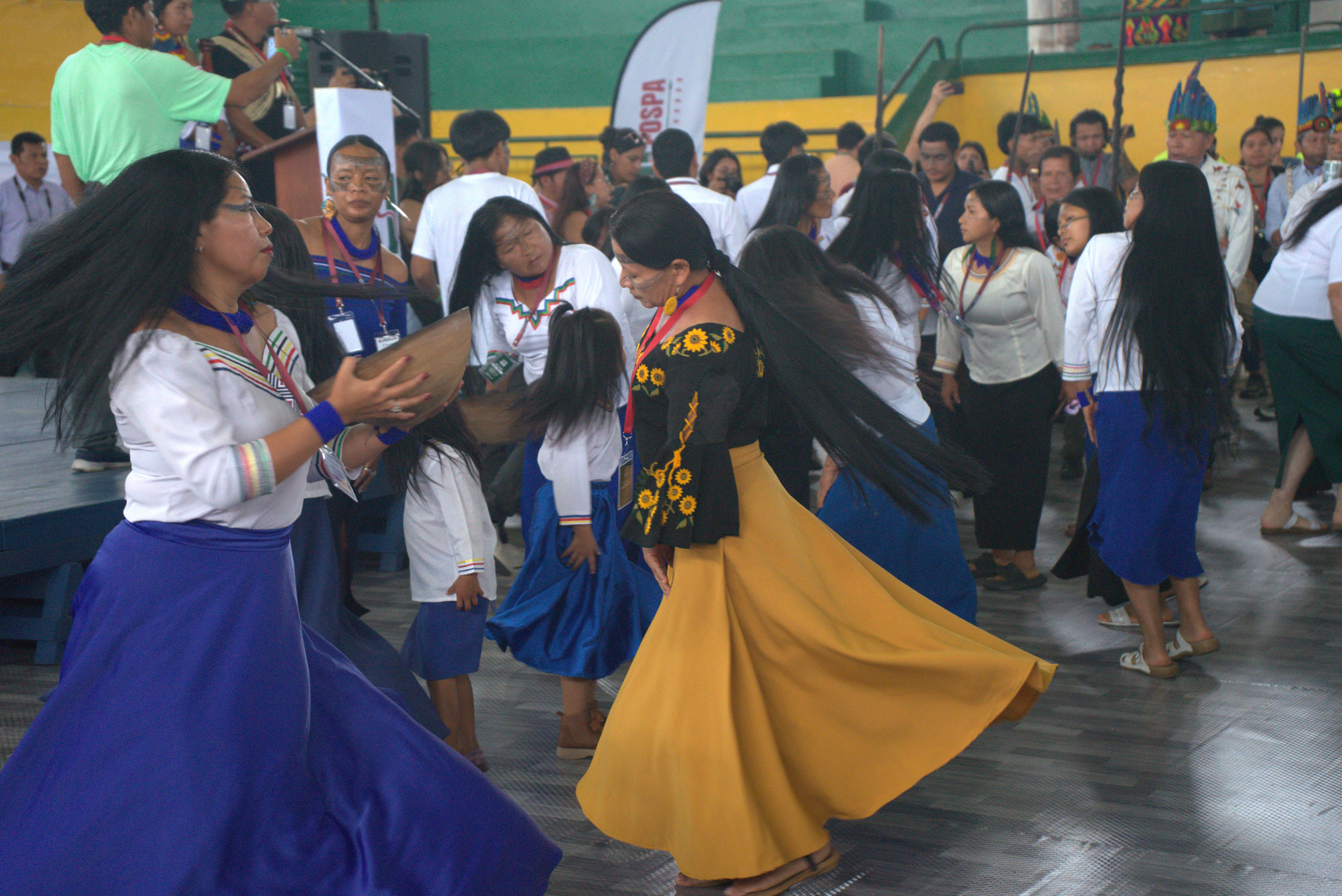
Women and girls from the Kichwa Sarayaku community dance during the opening ceremony of the conference. Sarayaku’s “Living Forest” declaration codified ancestral wisdom and knowledge about how the territory is a living, interconnected being. The declaration inspired philosophical shifts among Western intellectuals, lawyers and activists, and has led to laws around the world that recognize nature as a living entity with rights.
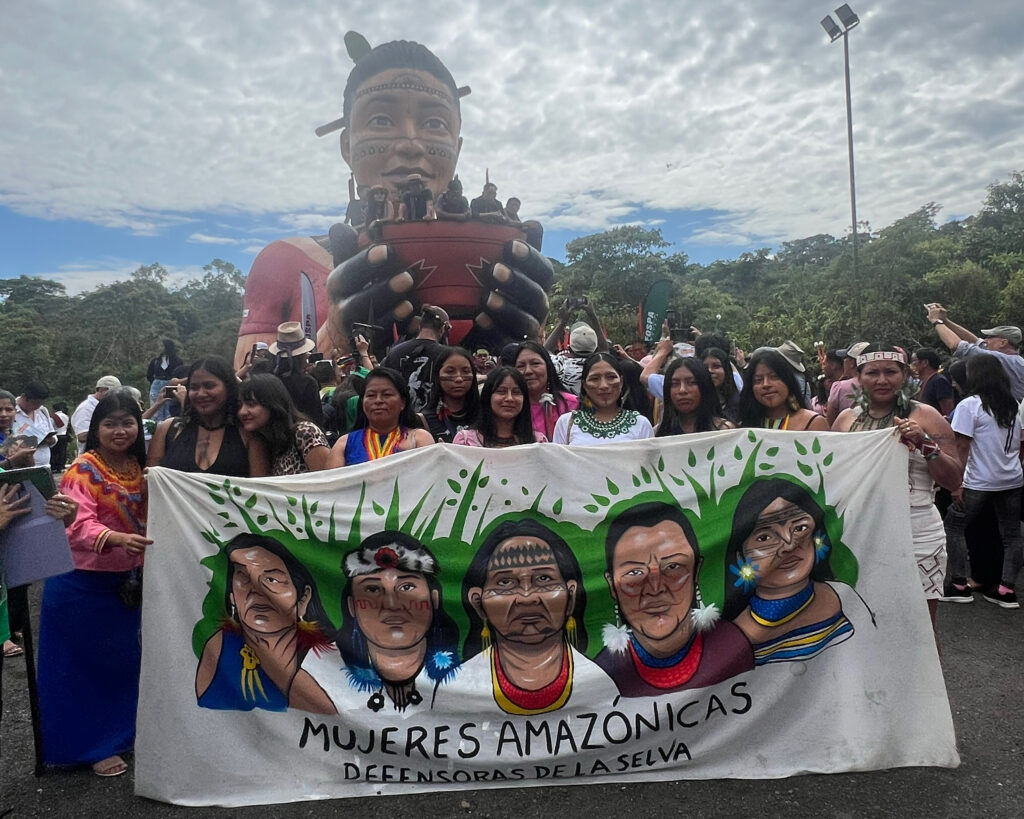
Women in the Amazon region are some of the forest’s fiercest protectors. That often unpaid work exposes them to extreme risks, including gender-based violence, threats and killings. Women are also stewards of traditional knowledge, manage sustainable agriculture and lead social movements confronting powerful businesses, criminal organizations and governments behind the destruction of their homelands.
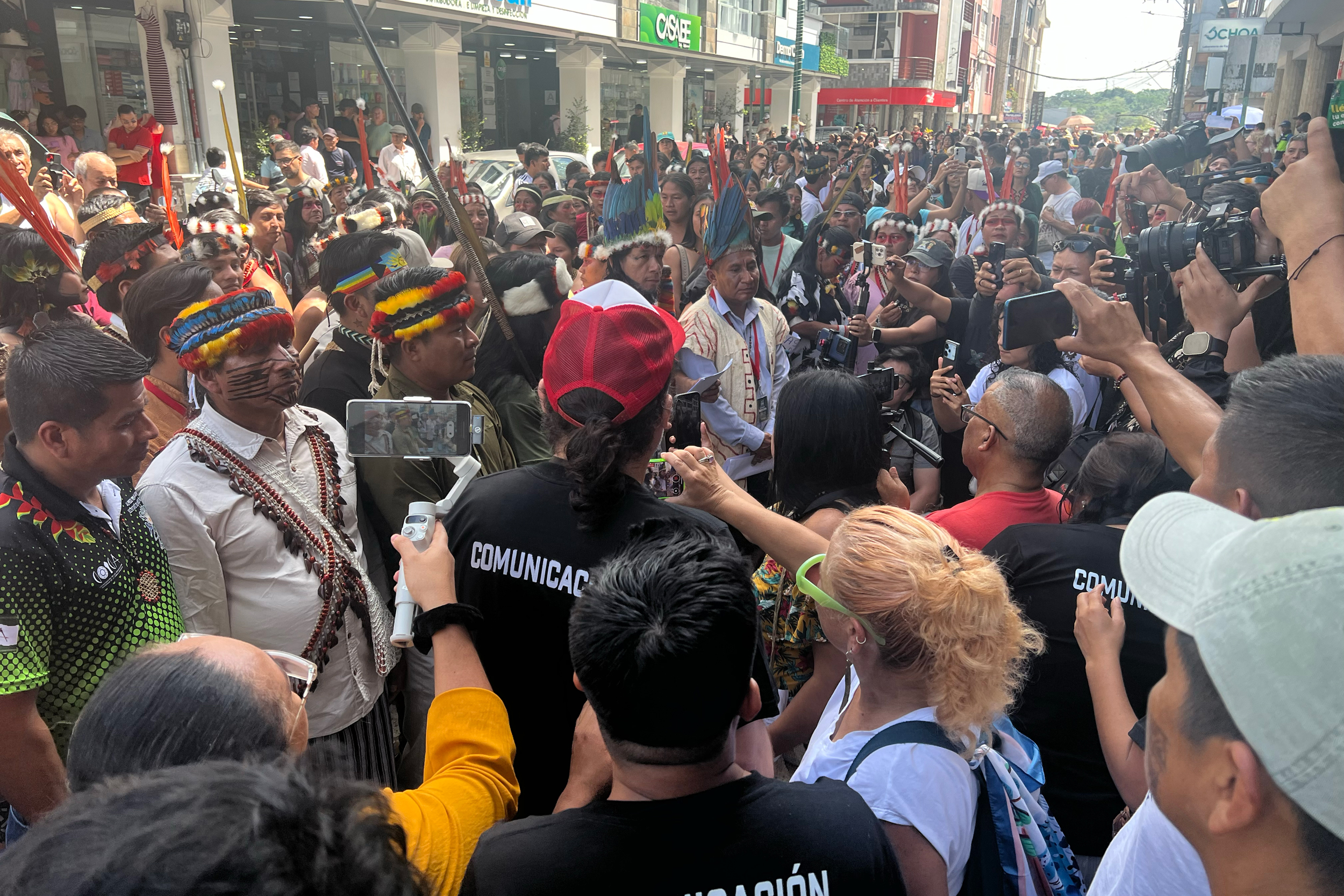
Indigenous leaders from the Ecuadorian Amazon speak outside government offices in Puyo on Aug. 21 as part of FOSPA. Conference participants declared a regional state of emergency, and they demanded that governments halt extraction, strengthen Indigenous self-determination and provide protections for environmental defenders. In 2024, at least 120 environmental defenders were killed in Latin America.
About This Story
Perhaps you noticed: This story, like all the news we publish, is free to read. That’s because Inside Climate News is a 501c3 nonprofit organization. We do not charge a subscription fee, lock our news behind a paywall, or clutter our website with ads. We make our news on climate and the environment freely available to you and anyone who wants it.
That’s not all. We also share our news for free with scores of other media organizations around the country. Many of them can’t afford to do environmental journalism of their own. We’ve built bureaus from coast to coast to report local stories, collaborate with local newsrooms and co-publish articles so that this vital work is shared as widely as possible.
Two of us launched ICN in 2007. Six years later we earned a Pulitzer Prize for National Reporting, and now we run the oldest and largest dedicated climate newsroom in the nation. We tell the story in all its complexity. We hold polluters accountable. We expose environmental injustice. We debunk misinformation. We scrutinize solutions and inspire action.
Donations from readers like you fund every aspect of what we do. If you don’t already, will you support our ongoing work, our reporting on the biggest crisis facing our planet, and help us reach even more readers in more places?
Please take a moment to make a tax-deductible donation. Every one of them makes a difference.
Thank you,