


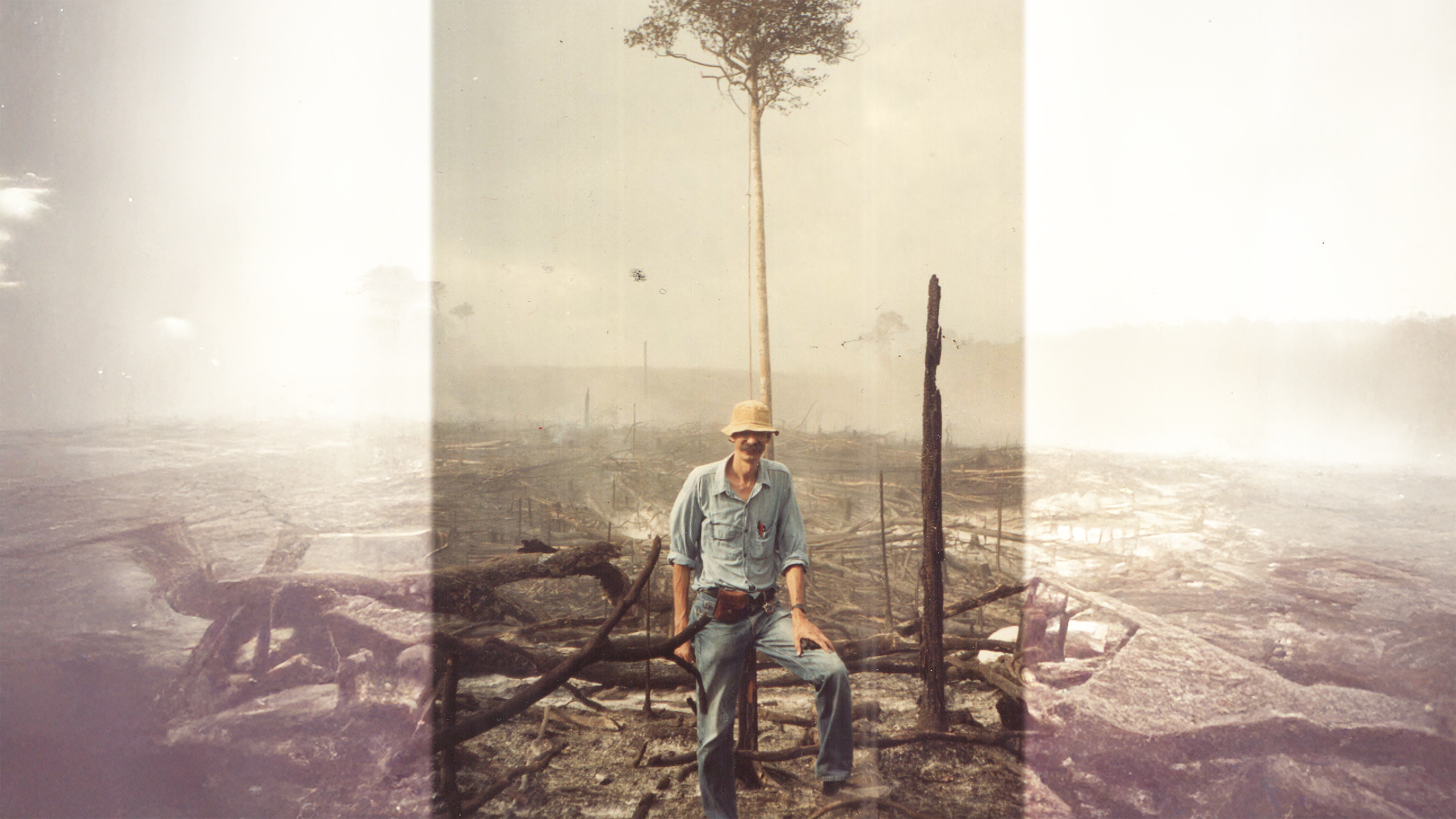
- Philip Fearnside has spent 50 years studying the practical limits of Amazon development, beginning with the agricultural settlements built along Brazil’s Trans-Amazonian Highway. His work repeatedly asked who benefits from projects and who bears their longer-term costs.
- He produced influential research on deforestation, forest carbon, tropical dams, and the wider effects of roads, often challenging official assumptions about emissions and economic viability. He later contributed to the IPCC’s work on climate change.
- Fearnside has paired research with public engagement, publishing in Portuguese, writing for Amazônia Real and Mongabay, speaking to journalists, and testifying on projects including the BR-319 highway. That role has also made him a target of hostility, including at a 2021 public hearing where his microphone was cut.
- Former students and colleagues credit him with generous, exacting mentorship and an unusual command of the scientific literature. At a recent tribute at Brazil’s National Institute for Amazonian Research, he rejected any suggestion of a farewell: he intends to keep working.
At a September 2021 public hearing in Manaus, Philip Fearnside read from a prepared statement laying out his case against repaving BR-319, the highway between Manaus and Porto Velho, two cities in the Amazon. He called the project economically unviable, argued Brazil’s licensing process was broken, and warned that road would trigger “catastrophic” deforestation.
People in the crowd started booing. Fearnside tried to keep speaking over the noise in his American-accented Portuguese, but someone killed his microphone.
He was followed by Sérgio Kruke from the Movimento Conservador Amazonas, a vocal ally of then-president Jair Bolsonaro. Kruke pointed at Fearnside and asked why an American had any business telling Brazilians what to do with their land, adding that they had the right to cut down every tree in the forest if they chose. The audience cheered him on. “This house is ours!” Kruke shouted.
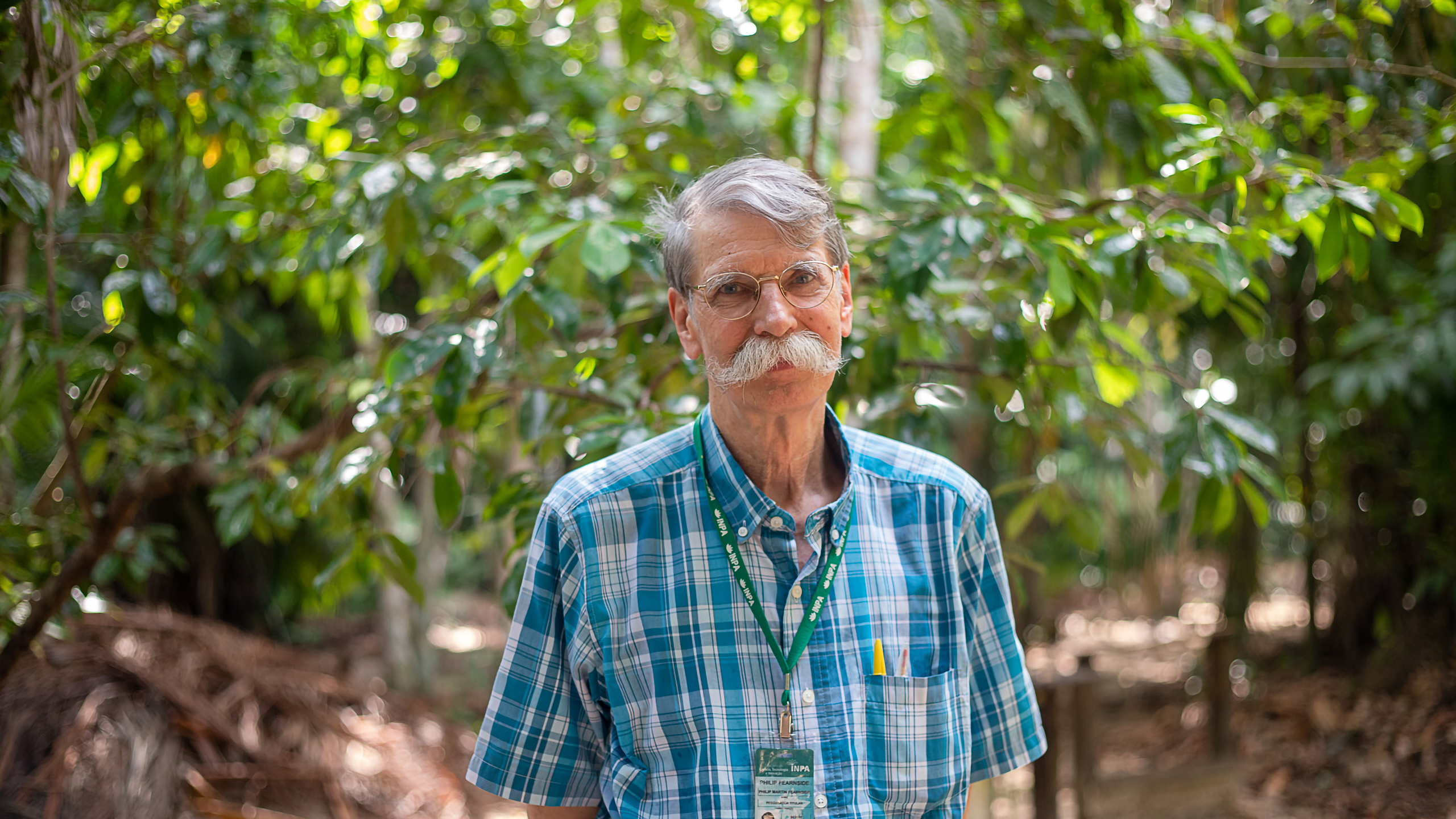
The atmosphere was completely different earlier this month at the National Institute for Amazonian Research, or INPA. For two hours, researchers and former students held an event recognizing Fearnside’s 50 years of field research in the Amazon, work that made him one of the most recognized authorities on Earth’s largest rainforest.
Carlos Nobre spoke about meeting him at INPA in the 1970s, before his own climate career took off, and how they collaborated on pioneering measurements of forest-atmosphere gas exchange. Susanna Hecht recalled running into Fearnside at a Belém bar while hunting for a dissertation topic. He suggested Acre, which is where she ended up doing her work.
Ane Albernaz talked about the state of his office. When students arrived with questions, Fearnside would listen patiently, pivot to the “millions of files” stacked around him, open the right drawer, find the right folder and unearth a paper containing something useful, a gesture that was particularly valuable at a time when scientific literature was difficult to obtain in the Amazon. Albernaz is now a researcher at the Museu Paraense Emílio Goeldi, the oldest scientific research institution in the region.
Cadu Young, an economist, remembered leaving Fearnside’s office in 1995 with boxes of paper as a graduate student. Roberto Smeraldi, who spent a decade alongside him on the advisory body for the Pilot Program to Conserve the Brazilian Rain Forest, recalled Fernside regularly arriving with stacks of newly minted papers. Later he would distribute those papers via CDs and thumbdrives at conferences and other venues. Alongside figures like Tom Lovejoy, Bertha Becker, Paulo Nogueira-Neto, and Carlos Nobre, Fearnside’s peers took to placing bets over drinks on how many new papers he would bring to each meeting.
Fearnside’s journey
After earning a biology degree from Colorado College in 1969, Fearnside joined the Peace Corps and went to Rajasthan to work on food production and fisheries in local reservoirs. He then entered the University of Michigan to prepare doctoral work on human carrying capacity under traditional agriculture.
He intended to do his fieldwork in India, but the 1971 Bangladesh war intervened. After the U.S. backed Pakistan, India barred American researchers, forcing Fearnside to find a new field site.
He chose the Amazon.

In Pará, the military regime was running colonization projects along the new Trans-Amazonian Highway under a mandate to occupy and “develop” the interior. Fearnside spent two years living in the agrovilas around Altamira, planned settlements established by Brazil’s land-reform agency, INCRA. He studied the agricultural systems of the colonists and the limits of the land supporting them. By the time India reopened, he had decided to stay in Brazil.
The colonization work addressed the same question he had framed for India: how many people can an area support over time before the resource base breaks down? The Brazilian government assumed the land would keep producing. Fearnside’s fieldwork suggested the schemes were failing to account for the long-term costs of land degradation.
In the settlements, Fearnside documented how fast Amazon soils lost nutrients under continuous cropping and regional approaches to cattle ranching. As vast tracts of tropical forest were cut down, he calculated biomass losses to estimate net greenhouse emissions, consistently arriving at numbers well above official government baselines. He also published on soil loss, river hydrology, and what happened to abandoned pasture.
Ane Alencar, now at the Amazon Environmental Research Institute (IPAM), recounted seeing that foresight firsthand as a young scientist in the early 1990s. At the tribute, she highlighted his early models tracking the spread of secondary regrowth across the Amazon—work published well before satellite imaging could verify it. Decades on, MapBiomas maps confirmed the clearing-and-abandonment cycles he described.
Another former student, Gabriel Carreiro, said he recently checked one of Fearnside’s 1990s biomass calculations against current high-resolution datasets. The old estimate matched current numbers to within tenths of a percent.

The hidden costs of dams and deforestation
When Brazil began pushing major hydroelectric dams in the Amazon, officials sold them as clean power. Fearnside showed that shallow tropical reservoirs flooded large areas of forest, producing significant methane emissions from rotting vegetation during the first decades after flooding. He published extensively on Balbina in the 1980s, then turned to Tucuruí, Samuel, and subsequent mega-projects.
Smeraldi noted that questioning hydropower was unpopular at the time even within Brazilian environmental groups, where dams were broadly accepted as green energy. Fearnside doggedly stuck to the science, documenting gas flux and reservoir design flaws across dozens of papers. He questioned the economic forecasts and policy assumptions underlying the era’s boom in dam construction.
Juarez Pezzuti came across those papers while investigating hydroelectric impacts on Indigenous communities. When Pezzuti helped launch an independent monitoring effort alongside Indigenous researchers affected by Belo Monte—the controversial Xingu River dam criticized for inflated power forecasts and substantial ecological damage—Fearnside volunteered to help.
Cattle pasture followed a similar economic logic. Pasture accounts for the vast majority of deforested land in the Amazon, even though it is relatively unproductive as typically managed. Beginning in the late 1970s and 1980s, he argued that ranching was never just about beef production. Clearing was a tool to secure land tenure and speculate on rising land prices, which often outpaced inflation.
A landholder could profit from clearing even when cattle yields were poor. The resulting costs—carbon emissions, changes in rainfall, and biodiversity loss—were borne by the public. By the late 1980s, Fearnside argued that development policy needed to pay for standing environmental services rather than subsidizing land clearing. In 2003, the Brazilian science magazine Pesquisa FAPESP noted that he had already spent nearly twenty years advocating for environmental services as the foundation of Amazonian economics.
His biomass and deforestation calculations were used in international climate frameworks. By 2006, Thomson-ISI ranked Fearnside as the world’s second-most-cited author on global warming. He quantified carbon stocks, challenged underreported state emissions, and pushed for avoided-deforestation compensation mechanisms. He later contributed to the IPCC panel that shared the 2007 Nobel Peace Prize.
Roads created the same dynamic across entire landscapes. The paved strip itself covered relatively little area, but it opened access to public land, allowing illegal side roads, logging camps, and speculative clearing to spread outward in the classic fishbone pattern.

What follows the road
BR-319 runs roughly 880 kilometers between Manaus and Porto Velho. The middle 400-kilometer stretch was left unpaved for decades, turning into mud during the rainy season and effectively blocking vehicle traffic through the central basin. Paving that middle section would connect Manaus directly to the southern agricultural frontier. Fearnside and fellow researchers argued that formal impact assessments only looked at the right-of-way, ignoring the secondary road networks that follow paving. Those roads inevitably trigger waves of land invasions and deforestation.
“The decision to build a road is the government’s,” Fearnside remarked in a 2024 interview. But once it opens, squatters and speculators move in betting that illegal deforestation would eventually be forgiven through amnesty programs.
Where Fearnside once thought granting title on undesignated public lands might curb speculative clearing, he now views “land regularization” as an engine of forest loss, because titling programs historically legitimize land grabs and encourage new invasions, he told Mongabay.
Several of Fearnside’s students ended up working on the road with him.
Cláudia Vitel recalled bumping along BR-319 from Manaus to Lábrea with Fearnside and fellow researchers when travel funds were too tight for airfare. Fearnside spent the drive drafting a manuscript in the back seat.
Mariane Andrade joined him at dozens of tense public hearings about the highway. During one stop in Manicoré, Fearnside vanished before breakfast, turning up late after scouring the town for a copy shop so he could distribute translated research papers to local residents. Andrade snapped a photo of an Indigenous resident reading one of the printouts that morning.

Beyond the journals
That effort to get research in the hands of people outside universities has been a consistent part of Fearnside’s work. He translates his technical papers into Portuguese and writes regularly for the independent news outlet Amazônia Real. He has penned dozens of commentaries for Mongabay dissecting infrastructure licenses and dam projects. Journalists were another way to get the findings out of academic silos.
Henrique Pereira, now INPA’s director, remembered how Fearnside’s graduate lectures were routinely disrupted by media calls: someone would poke their head in to say the BBC or Folha de S.Paulo was on the line, Fearnside would step out to take it, and then pick right back up where he left off.
Lucas Ferrante, one of Fearnside’s doctoral students and frequent co-authors, worked with him on BR-319 studies and critiques of Bolsonaro-era environmental policies, mapping pressures on Indigenous lands. The work drew fierce pushback: Ferrante faced harassment, anonymous threats, and a physical assault. At the 2021 hearing where Fearnside’s mic was cut, Ferrante was sitting in the front row.
The 2021 hearing was not the first time Fearnside’s work had drawn a xenophobic response. As early as 2003, Pesquisa FAPESP observed that Fearnside’s early critiques of mega-projects like Balbina drew pointed attacks. Anthropologist Janet Chernela, who worked with him at INPA starting in the late 1970s, noted that challenging major industrial projects and state-backed dams under the military dictatorship carried genuine personal risk.
Fearnside’s 1990 Pew fellowship integrated public advocacy directly into his fieldwork. He testified frequently before Congress in Brasília—so often that ecologist Carlos Peres joked he had lost count.
Fearnside draws a distinction between how research is conducted and what a scientist does with the results. “Once you have done the research, you need to draw conclusions,” he said in 2024. Those conclusions only become meaningful if they actually inform decisionmaking.
What had changed most over his career, he told Mongabay, was the timescale. Ideas about building an Amazon economy around standing forest were still very important, but as climate and forest tipping points approached, deforestation and fossil-fuel use had become increasingly urgent.
For many of the scientists he trained and mentored, that unyielding focus on evidence left a lasting mark on their own work. Leonardo Guimarães Ziccardi noted that Fearnside rarely handed out quick solutions, teaching students how to interrogate the data themselves. Gabriel Carreiro recalled walking into his office with a sprawling list of questions, only for Fearnside to whittle them down to the single thread that mattered. Flora Magdaline arrived from Bolivia with virtually no publications; under his guidance, she mastered technical writing and returned home to build a prolific research career of her own.
Britaldo Soares-Filho, whose land-use simulations became a benchmark for infrastructure planning, first met Fearnside at a Large-Scale Biosphere-Atmosphere Experiment in Amazonia (LBA) conference. Fearnside invited him to Manaus to teach modeling—and enrolled in the course as a student. One afternoon, Fearnside excused himself from class early: he had to fly to Brasília to accept an award.

Work left to do
At the end of the INPA tribute, after nearly two hours of people describing work stretching back to the 1970s, Fearnside took the microphone.
The reflections, he said, felt “almost as if this were a farewell.”
He touched on an ongoing legal dispute that might force his formal retirement from INPA, though institute leadership assured him his lab space would remain open. Besides, he added, his doctor told him he would make it to 100.
There is plenty left to do. With Brazil still weighing new road projects and oil exploration near the mouth of the Amazon, the problems that have occupied Fearnside for half a century have not gone away.
“I plan to continue for many years,” he said.
Banner image: Fearnside at the Fazenda Dimona burn study in 1990. Image courtesy of Fearnside. Background graphic added by Mongabay to fit the header dimensions.

