


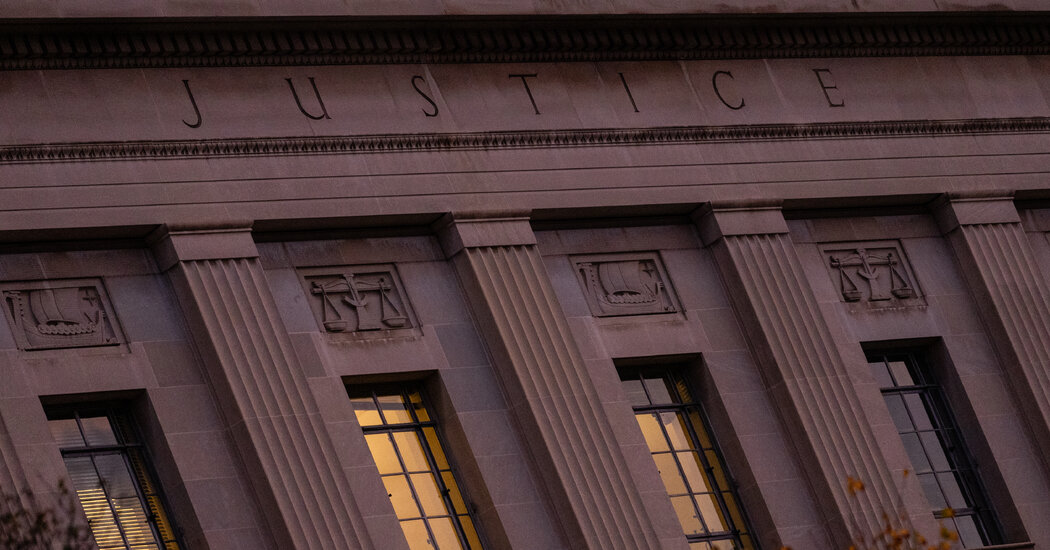
The Justice Department filed charges on Tuesday against the owner of Surro Connections, a surrogacy firm in Washington State, claiming that the business stole more than $1 million from customers hoping to become parents.
That owner, Megan Hall-Greenberg, was the subject of a 2025 New York Times investigation into Surro Connections’ sudden collapse. The firm closed abruptly in December. Parents-to-be lost tens of thousands of dollars that Surro had said it would use to pay surrogates to carry pregnancies.
The seven families The Times interviewed said they lost $20,000 to $81,000 each. Many had to scramble to secure extra funds by taking out loans, relying on family or liquidating long-term savings.
Ms. Hall-Greenberg and her husband, Jeffrey Greenberg, spent over $1 million in clients’ funds to pay off gambling debts; travel on cruises and to a resort in Mexico; and to purchase luxury goods, including Louis Vuitton purses and Rolex watches, according to the charges.
The indictment says that Ms. Hall-Greenberg also “misappropriated” over $300,000 in Surro funds to a cheerleading gym she owns.
The Justice Department also brought charges against Mr. Greenberg and Heather Morgan, who served as Surro’s business manager. They are charged with multiple felonies, including wire fraud.
Ms. Hall-Greenberg, Mr. Greenberg and Ms. Morgan could not immediately be reached for comment.
Surro Connections was, until last year, a well-regarded surrogacy agency with hundreds of clients from around the world. When it closed, the Justice Department estimates it was working with at least 70 surrogates who were pregnant. It is unclear whether those women ultimately received payment.
Customers said they were drawn to Surro because it had a good reputation but was smaller than some of the major agencies, and appeared to offer more hands-on support. They described Ms. Hall-Greenberg as friendly and compassionate, and liked that she had worked as a surrogate three times.
But she also ran her business in an unusual way. Typically, surrogacy agencies deposit client funds into a third-party escrow account that is independently run. The entity overseeing the escrow ensures that the surrogate is being properly reimbursed and that the funds are not used for anything outside the contract.
Ms. Hall-Greenberg strongly encouraged clients to give their funds directly to Surro. Clients believed that their money was stored in secure, individual accounts. But they were often wiring funds to the same account at a Wells Fargo branch near Ms. Hall-Greenberg’s home.
The Justice Department indictment says that Surro sent clients false statements for their supposed escrow accounts. In one instance from July last year, it describes a client being told their “available balance” was about $32,000 when there was only 33 cents in the account they had wired money into.
The indictment also describes Ms. Hall-Greenberg moving tens of thousands of dollars from Surro accounts into her personal checking account, and then sending the funds to an account associated with her husband’s auto repair shop.
Signs of financial distress began to emerge last fall, when Ms. Hall-Greenberg and Mr. Greenberg faced multiple debt collection lawsuits. The Justice Department claims they took out $4.7 million in loans and cash advances to keep the business afloat.
But by Dec. 5, they had run out of money. Ms. Hall-Greenberg sent parents-to-be and surrogates an email saying that the company was closing because of “financial and operational difficulties” and that it had “no ability” to return clients’ funds.
