


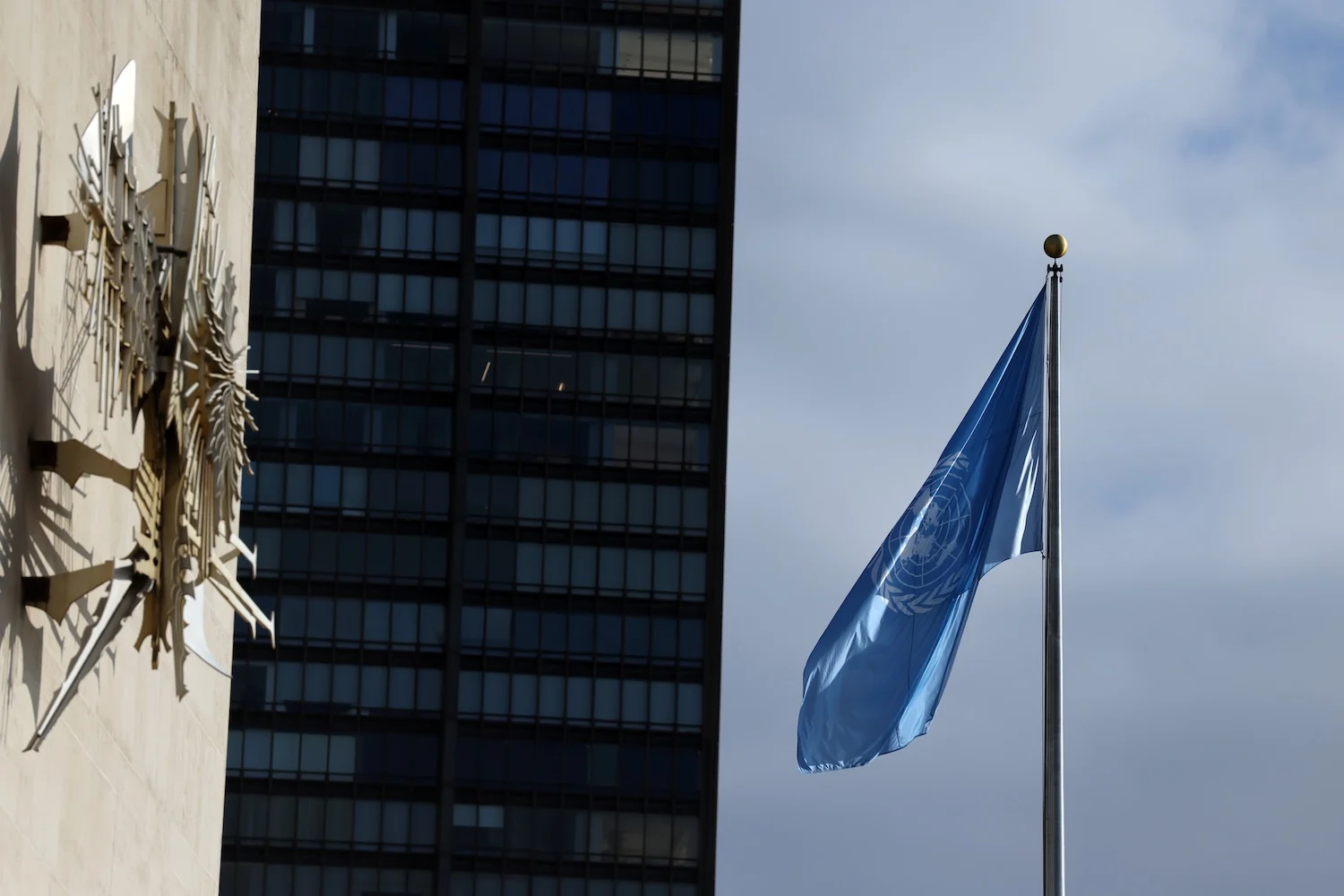
International peacemakers and peace activists have little to cheer about these days. Multiple indicators confirm that we are in an era defined by hard power and deadly violence. The number of conflicts between states rose to a post-1945 record of 65 last year. Global military spending grew by 41 percent over the last decade. The United Nations Security Council, supposedly the guarantor of international peace, has failed to deal effectively with crises in Ukraine, Myanmar, Gaza, Sudan, and the like. Militaries and armed groups are resorting to tactics such as starvation and mass atrocities with impunity.
Despair, however, is not a strategy. It is necessary to look for factors and actors on the international scene that can contribute to preventing and containing today’s conflicts. To understand potential drivers of peacemaking today, it is necessary to reconsider—and, in some cases, discard—some of the institutions and ideas that have been central to conflict resolution for the last few decades.
International peacemakers and peace activists have little to cheer about these days. Multiple indicators confirm that we are in an era defined by hard power and deadly violence. The number of conflicts between states rose to a post-1945 record of 65 last year. Global military spending grew by 41 percent over the last decade. The United Nations Security Council, supposedly the guarantor of international peace, has failed to deal effectively with crises in Ukraine, Myanmar, Gaza, Sudan, and the like. Militaries and armed groups are resorting to tactics such as starvation and mass atrocities with impunity.
Despair, however, is not a strategy. It is necessary to look for factors and actors on the international scene that can contribute to preventing and containing today’s conflicts. To understand potential drivers of peacemaking today, it is necessary to reconsider—and, in some cases, discard—some of the institutions and ideas that have been central to conflict resolution for the last few decades.
The post-Cold War moment saw a surge in peacemaking, as the U.N. and regional organizations invested unprecedented political capital and resources in peace efforts. They racked up some awful fiascoes, such as failing to halt the Rwandan genocide, but succeeded in ending numerous civil wars and getting countries from Liberia to Timor-Leste on their feet. A “peace industry” emerged to shape new frameworks for peacebuilding efforts, emphasizing the need to shift from short-term conflict management to more sustainable peace.
That era of peacemaking has been fading for some time. The last major comprehensive peace deal was signed in Colombia a decade ago. It can be painful to accept that the post-Cold War peacemaking boom may have been an anomalous byproduct of waning great-power tensions. We are now reentering a world in which geopolitical shifts render the cooperative, institutionalized peace efforts of the 1990s and early 2000s impossible.
At this bleak moment, it is valuable to remember that, historically, periods of great-power competition were also periods of on-off peacemaking efforts by both great powers and regional players. Even during the Cold War, when the superpowers faced off and fueled proxy wars around the world, they were sometimes able to find off-ramps out of conflicts and put together arms control agreements. Their peace efforts were not, however, dictated by institutions with an ideological commitment to peace. Organizations like the U.N. sometimes played significant supporting roles, but great-power peacemaking was driven by the self-interest of the powers themselves.
Today, as in the past, there are sound reasons for rival powers—whether in regional conflicts or at the global level—to avoid war or show restraint on the battlefield. The challenge for policymakers and peace advocates is to identify and leverage these opportunities.
The current moment of uncertainty has led governments worldwide to seek new ways to maximize their security. For many, the answer is peace through strength and deterrence. States in all regions are ramping up military spending and looking for new partnerships—such as the recent Mecca Joint Defense Agreement between Saudi Arabia, Pakistan, and Turkey—to manage the threats that they face.
A significant number of states are also treating peacemaking as part of their strategies for navigating this period. As institutions like the U.N. take on a reduced role, a growing number of regional powers have stepped into the void. In some cases, this is a matter of necessity. When Thailand and Cambodia came to blows in a border dispute last year, Malaysia rallied Southeast Asian countries to restore calm. Following the U.S.-Israeli attack on Iran earlier this year, Pakistan stepped up to lead cease-fire talks, both to address the risks of regional instability and to preserve its diplomatic ties with Washington, Tehran, and the Gulf countries.
Some other powers have purposefully made peacemaking part of their broader brand. Qatar, one of the most active, has worked on conflicts like Colombia, the Democratic Republic of Congo, and Gaza. Turkey has been active in the Middle East and Horn of Africa.
The rise of these peacemakers has been complicated—but sometimes accelerated—by the Trump administration’s erratic approach to peacemaking and war-making. In some cases, as with the 2025 Gaza cease-fire, regional powers have lined up with Washington. In others, as over Iran, they have been hustling to mitigate the damage of U.S. policy. While few want to clash with Washington in public, most are learning that they will have to calibrate their stances to the United States as need be.
In many cases, this generation of peacemakers has found that it is only possible to secure limited and short-term deals. In a period of competition and uncertainty, it is hard to structure comprehensive peace agreements that stick. Today’s mediators, whatever their national or institutional backgrounds, tend to pursue limited goals such as cease-fires and prisoner exchanges.
When they do aim for longer-term stability, they sometimes have to turn to organizations like the U.N. for help, which retain expertise on issues like cease-fire management and postwar relief provisions. While Qatar worked with the United States and African Union to engineer a deal between Rwanda and Congo to end violence in eastern Congo in 2025, for example, it has leaned on U.N. peacekeepers to try and quell militia violence in the region, albeit unsuccessfully so far.
Even well-resourced and networked peacemakers face especially hard challenges when it comes to conflicts involving major powers like the United States and Russia. Saudi Arabia, the United Arab Emirates, and Turkey have all been involved in diplomacy between Russia and Ukraine but have achieved limited results. Pakistan and its partners in Gulf diplomacy have experienced whiplash as Tehran and Washington have oscillated between talking—or talking past one another—and ramping up military frictions. In the short term, much of these actors’ efforts go toward creating buffers to further escalation.
Taking a longer-term perspective, it is necessary to ask not only who can make peace but also what other factors may nudge governments and armed groups to avoid violence in the future. The mere fact that peacemakers exist is not, after all, enough to persuade rivals to turn away from war.
Difficult as it may be to see in the moment, there may be underlying forces favoring a reduction in violence. The simplest is that even major powers are learning that hard power has drawbacks. Russia’s war on Ukraine has turned into a horrific catastrophe—although Russian President Vladimir Putin resists recognizing this reality—while the U.S. intervention in Iran has drained both Washington’s weapons stocks and political credibility. The Gulf crisis has highlighted the economic risks associated with war-making, straining—if not breaking—global energy and food supplies. Governments that are boosting military spending should recognize that while investing in deterrence, they should also be pursing diplomacy with the rivals that they aim to deter, if only to avoid unintentional conflicts.
Even if the basic lesson about the limits of hard power does seep through some government circles, a return to the era of more systematic peacemaking is unlikely. Regional and local frictions will continue to fester and, in some cases, break out into violence. International competition will remain the order of the day. International institutions will, at best, help mitigate this competition. A growing variety of rising peacemakers will address individual conflicts, and they may find new ways to work together. But it is probable that they will remain focused on keeping conflicts contained instead of solving them.
Although less appealing than a highly structured peacemaking system, this complicated set of buffers and guardrails against the proliferation of force is worth pursuing. Even in a time of hard power, there will always be the need for peace.
