


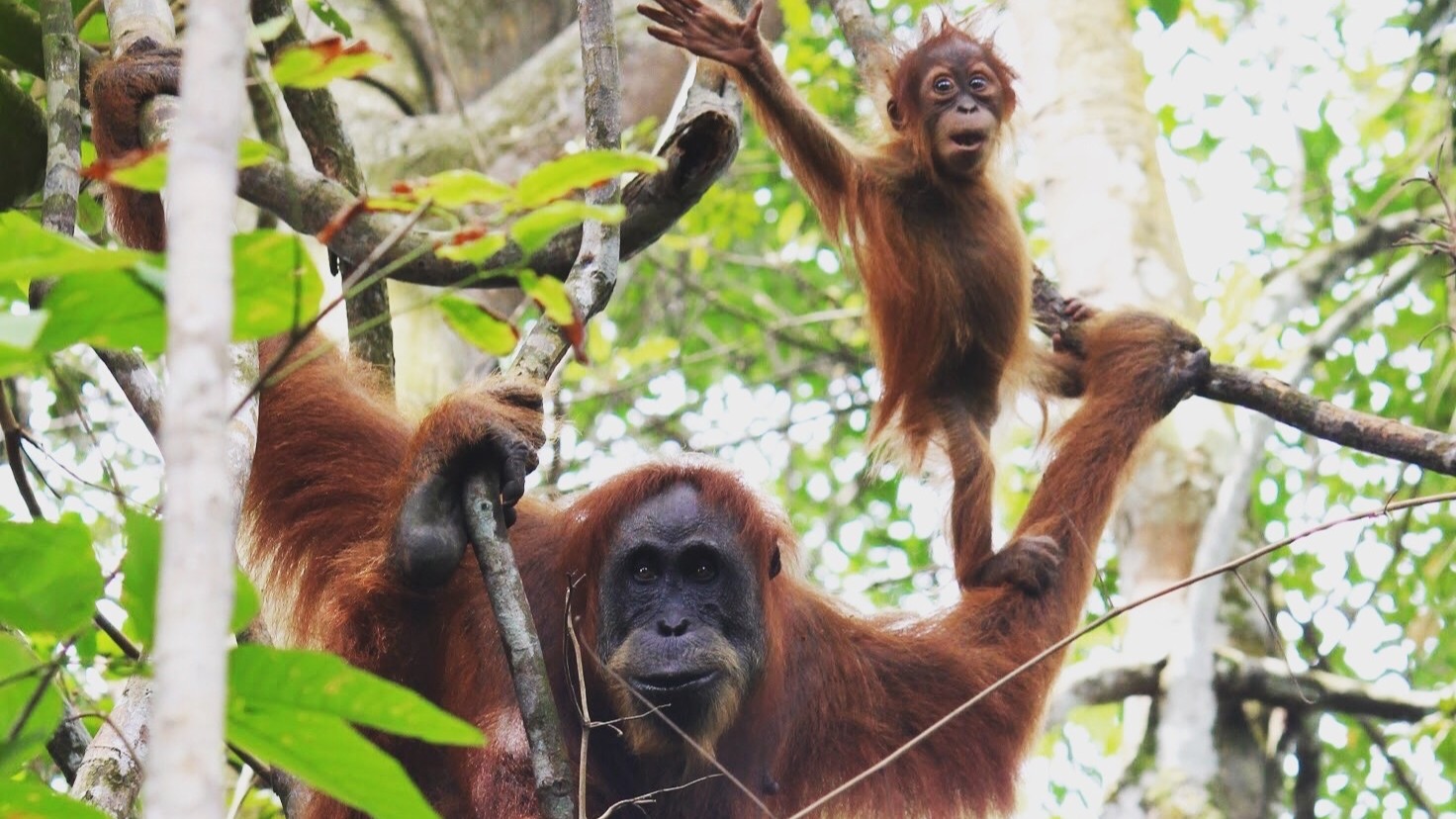
Aug. 19 is World Orangutan Day, a day to honor the three species of Southeast Asian great apes, all of which are classified as critically endangered by the IUCN, the global conservation authority.
Orangutans were classified into two species: The Sumatran orangutan (Pongo abelii) found in northern Sumatra, Indonesia, and the Bornean orangutan (Pongo pygmaeus), endemic to its namesake island. But in 2017, scientists described the Tapanuli orangutan (Pongo tapanuliensis) as a third, distinct species, also found in northern Sumatra.
Here are the major orangutan developments over the past year:
Whirlwind year for Tapanuli orangutans
In September 2025, researchers confirmed a previously unknown Tapanuli population in a peat swamp forest in the Lumut Maju village forest in North Sumatra.
Scientists previously believed the species, estimated at 716 wild individuals, lived only in Batang Toru, about 32 kilometers (20 miles) east of the new population.
Two months later, Cyclone Senyar triggered tens of thousands of landslides in Batang Toru and killed an estimated 58 Tapanuli orangutans.
Habitat destruction for small-scale agriculture and logging accounts for around 70% of direct forest loss. Large-scale industrial projects, including the Batang Toru hydropower plant and the Martabe gold mine, are also encroaching into the orangutans’ range.
Newborn Sumatran orangutan’s mother saved from trafficking
In July 2026, a formerly trafficked Sumatran orangutan named Bulan gave birth in the wild seven years after being reintroduced. Her infant was the 10th confirmed birth from reintroduced orangutans at the Jantho reservation in Aceh, Indonesia’s westernmost province.

“This birth demonstrates how orangutans, once victims of the wildlife trade, can be given a second chance to live and reproduce in the wild,” Ujang Wisnu Barata, head of the Aceh provincial conservation agency, told Mongabay contributor Ayat S. Karokaro. “Successes like this can only continue if their habitat remains protected.”
Female orangutans breed only once every seven or eight years, the longest interval between births of any mammal.
Despite conservation successes, a 2026 orangutan population assessment estimated the Sumatran population fell 19.5% between 2011 and 2023.
Bornean orangutans face pressure from palm oil and fire
Bornean orangutan habitats faced significant losses from palm oil expansion and fires over the last year.
A palm oil company cleared more than 3,000 hectares (7,400 acres) of forest in a UNESCO biosphere reserve, Mongabay reported in March.

In May, fires consumed more than half of a 300-hectare (740-acre) orangutan habitat restoration effort in Indonesia’s West Kalimantan province.
Another fire hit the edge of an orangutan rehabilitation center in August, which raises concerns about further fires in the coming months as El Niño is expected to exacerbate drought in the region.
Banner image: Sumatran orangutan. Image © naturalistnatasha via iNaturalist (CC BY-NC 4.0).

