


- Indonesia holds the world’s largest nickel reserves and has rapidly expanded production, which a new study says has grown roughly tenfold over the past decade.
- Nickel mining can fragment wildlife habitat as mines, roads and associated infrastructure expand, threatening biodiversity in areas of global conservation importance.
- Researchers say protecting the most important biodiversity and carbon areas could substantially reduce environmental risks, but doing so could also constrain nickel supply.
- Even with greater adoption of low- or no-nickel battery chemistries, total nickel demand could continue to grow because the metal is also used extensively in stainless steel, renewable-energy infrastructure and other applications, the study notes.
JAKARTA — Indonesia’s nickel boom is colliding with its efforts to protect biodiversity and reduce emissions from forests and other land uses. A new study warns that meeting growing global nickel demand could increasingly put some of the world’s most important ecosystems at risk.
A study published in Nature Ecology & Evolution focuses on the trade-offs between meeting future nickel demand and protecting areas important for biodiversity and carbon storage. The researchers found that 44% to 49% of projected nickel demand between 2025 and 2050 could be met by mines located in the world’s top 10% of terrestrial areas for biodiversity and carbon conservation.
“Nickel is in everything from steel in infrastructure to the pots and pans in our kitchens, and demand is surging for clean energy especially to make batteries for electric vehicles,” said lead author Jayden Hyman of the University of Queensland’s School of the Environment in a press release. “But the decisions being made now about where to source nickel could lock in impacts for decades in some of Earth’s most biodiverse and carbon-rich ecosystems.”
The findings pose a particular challenge for Indonesia, the world’s largest nickel producer and the source of more than half of global supply. The researchers project that Indonesia could account for as much as 74% of global nickel production by 2040 as demand continues to grow.
The country is also committed to expanding biodiversity conservation. Indonesia’s Biodiversity Strategy and Action Plan (IBSAP) 2025-2045 is aligned with the Kunming-Montreal Global Biodiversity Framework, including its “30×30” Target to effectively conserve at least 30% of terrestrial, inland water, coastal and marine areas by 2030. The Indonesian government has identified expansion of conservation areas to 30% of its territory as a key biodiversity target.
At the same time, Indonesia’s forests and other land-use sectors are central to its climate strategy. Under Indonesia’s FOLU Net Sink 2030 program, the government aims for the forestry and land-use sector to become a net sink of greenhouse gas emissions by 2030, with reducing deforestation, restoring forests and conserving biodiversity among the program’s objectives.
The expansion of nickel mining, therefore, raises a question that goes beyond the environmental impacts of individual mines: How can Indonesia increase mineral production for the energy transition while meeting commitments to protect ecosystems and reduce land-use emissions?
Indonesia
Indonesia holds the world’s largest nickel reserves and has rapidly expanded production, which has grown roughly tenfold over the past decade, according to the new study.
Much of the country’s nickel occurs in laterite deposits, which form through intense weathering of ultramafic rocks in tropical regions. The study projects that laterites could supply 78% to 83% of global nickel demand through 2050 under its models.
Laterite deposits are often found in tropical environments, where mining can involve extensive land clearing. The researchers say this creates particular risks in Indonesia, where the nickel industry has expanded rapidly across Sulawesi and the Maluku region.
A spatial analysis done in 2023 by environmental group Mighty Earth of 329 Indonesian nickel concessions found that at least 76,031 hectares (187,876 acres) of forest had been lost within those concessions since they were granted for nickel mining. The organization said the figure was a minimum estimate and that total forest loss within the boundaries of those concessions since 2000 was about 153,364 hectares (378,970 acres), because some forests had been cleared before the concessions began operating as nickel mines.
Mighty Earth also found more than half a million hectares (1.2 million acres) of forest remaining within the 329 concessions, which it said could be threatened by further expansion.
The analysis does not conclude that all forest loss within concession boundaries was necessarily caused by mining. However, Mighty Earth said it used government licensing records, deforestation alerts and satellite imagery to identify clearance that it could link to nickel mining.
Much of Indonesia’s nickel industry is concentrated in areas that are also important for biodiversity.
According to Indonesian environmental NGO Action for Ecology and People’s Emancipation (AEER), 28 of 206 Key Biodiversity Areas across Sulawesi and Maluku overlap with 109 nickel concessions. AEER estimates the overlap covers about 152,000 hectares (375,600 acres).
AEER’s biodiversity researcher Imelda Sanatha said the overlap shows why nickel development needs to be considered alongside Indonesia’s biodiversity commitments rather than planned separately from them.

Sulawesi
One concern is the fragmentation of wildlife habitat as mines, roads and associated infrastructure expand.
Sanatha pointed to observations of anoa, small wild cattle endemic to Sulawesi and Buton, as a possible indication of such fragmentation.
Between 2022 and 2026, anoa have increasingly been observed near nickel mining workers’ camps in North Sulawesi, she said. Residents have also recorded anoa on camera and reported animals being struck by vehicles.
“These are indications of habitat fragmentation,” Sanatha said in a recent online discussion.

The observations do not, by themselves, establish that nickel mining is causing the changes in anoa distribution, but Sanatha said they were consistent with concerns about the loss and fragmentation of habitat.
Both recognized anoa species, lowland and mountain, are classified as endangered on the IUCN Red List.

North Maluku
The same conflict is visible in Halmahera, where nickel mining has expanded around areas inhabited by species such as the white cockatoo (Cacatua alba), also known as the umbrella cockatoo.
During recent fieldwork in East Halmahera, Sanatha spoke with local residents, including a birdwatcher who said it had become increasingly difficult to observe birds around Buli Bay as nickel development expanded.
“The white cockatoo has become especially difficult to observe, with sightings now requiring visits to much denser forest,” Sanatha said.
This observation is anecdotal rather than a population survey, but it illustrates the concern that expanding industrial activity and forest conversion could make habitat increasingly fragmented and less suitable for wildlife.
Mining can also affect rivers and coastal ecosystems by exposing soil and waste rock to erosion.
A 2023 investigation by Indonesian newspaper Kompas reported heavy-metal and sediment pollution in Buli Bay associated with local nickel mining operations. Kompas also observed brownish seawater and mangrove trees covered in sediment.
Marine ecologist Meutia Samira Ismet of the Bogor Institute of Agriculture said increased sedimentation and turbidity can reduce the amount of sunlight reaching marine organisms, disrupt photosynthesis and place stress on coral reef ecosystems.
Sedimentation covering the surface of the coral will reduce the light intensity needed by symbiotic algae to photosynthesize, she said in a press release in June 2026.
In the longer term, Meutia said, sedimentation can damage coral reefs and other coastal ecosystems such as seagrass beds and mangroves.
The local concerns mirror another finding from the new study. The researchers estimate that 53% to 60% of projected nickel supply between 2025 and 2050 could come from mines within 50 kilometers (31 miles) of coastal waters that rank among the world’s highest-priority areas for marine biodiversity.
“Mining them risks polluting nearby waters including what’s known as the Coral Triangle to Australia’s north, which is celebrated as one of the world’s most biodiverse marine regions,” Hyman said.

Protecting biodiversity
The researchers say protecting the most important biodiversity and carbon areas could substantially reduce environmental risks, but doing so would also constrain nickel supply.
Their modeling indicates that excluding the world’s top 10% of terrestrial conservation-priority areas from mining could create a substantial nickel supply gap. Under the Announced Pledges Scenario, the researchers estimate a shortfall equivalent up to 18% of projected demand by 2050.
That creates a difficult policy choice: Allowing mining in high-value ecosystems could increase environmental damage, while excluding them could increase pressure to find alternative sources or reduce demand.
The researchers say their modeling can help governments and other stakeholders identify where future nickel mines could be developed and assess the consequences of different conservation and supply scenarios.
“This is a call to action to work together to develop strategies for environmentally responsible mineral supply so we can build the clean energy future we need,” Hyman said in the release. “With thoughtful planning and a focus on protecting areas most important for biodiversity and exploring alternatives, nickel supply can be secured with fewer ecological impacts.”
One approach is to establish areas where mining should not take place.
Greenpeace International, Rainforest Foundation Norway, Fern and Mighty Earth have separately developed a Global Restricted Areas map that identifies areas that should be off-limits to transition-mineral mining because of their ecological, environmental, cultural or social importance, as well as areas where Indigenous peoples or local communities have not given or have withdrawn free, prior and informed consent.
The map incorporates areas including protected areas, Key Biodiversity Areas, intact forests, mangroves, important ecosystems and water bodies.

Reducing demand
The other side of the equation is reducing the amount of newly mined minerals needed for the energy transition.
A recent Greenpeace analysis conducted by researchers from the University of Technology Sydney argues that a lower-mineral energy transition is possible through measures including greater use of public transportation, recycling and changes in battery technology.
Battery chemistry is particularly relevant because some technologies use little or no nickel. Greenpeace’s modeling of greater adoption of sodium-ion batteries, for example, assumes that the batteries use nickel and manganese, which would increase demand for those metals compared with its main scenario. But the report also notes that sodium-ion chemistries under development can avoid nickel and manganese altogether.
The new study published in Nature Ecology & Evolution, likewise, identifies technological change, recycling and demand-side measures as ways to reduce pressure on biodiversity-rich nickel deposits.
However, changing battery chemistry alone would not eliminate the need for nickel.
Nickel is used extensively outside the battery sector, particularly in stainless steel. A 2026 analysis by the Centre for Research on Energy and Clean Air, using publicly available industry data, estimated that about 83% of Indonesia’s nickel production in 2025 “was absorbed by the stainless-steel sector,” compared with 17% for the EV battery supply chain.
The finding complicates the common portrayal of Indonesia’s nickel boom as primarily an EV story.
Even with greater adoption of low- or no-nickel battery chemistries, the new study notes that total nickel demand could continue to grow because the metal is also used in stainless steel, renewable-energy infrastructure and other applications.
Recycling could reduce the need for new mining, but it is unlikely to eliminate that need in the near term. The researchers estimate that recycled nickel would account for only a small share of demand during the next decade, because much nickel is locked into long-lived products such as stainless steel and industrial machinery.

What about deep-sea mining?
The study also examines another potential source of nickel: Deposits on the deep seafloor.
The researchers do not advocate for deep-sea mining. Instead, they model what could happen if potential deep-sea nickel production is delayed.
Their simulations suggest that delaying deep-sea mining could increase pressure to expand terrestrial laterite mining, particularly in tropical regions, as companies and governments seek to meet demand.
But the authors stress that deep-sea mining carries major ecological uncertainties and that any such activity would require strong environmental safeguards.
For Indonesia, the dilemma is not simply whether nickel is needed for the energy transition.
It is also about how much nickel is needed, what it is being used for, where it is mined and which ecosystems society is willing to sacrifice to obtain it.
As Indonesia seeks to expand its nickel industry while meeting its biodiversity and climate commitments, those questions are becoming increasingly difficult to separate.
The researchers in the new study believe that securing ecologically responsible nickel supply is still possible.
“[It] requires integrating terrestrial and marine conservation priorities to inform sourcing and mine development decisions, alongside efforts to mitigate unavoidable impacts, increase resource exploration and reduce long-term demand,” they wrote.
Citation:
Hyman, J., Sonter, L. J., McDonald-Madden, E., Watson, J. E., Mervine, E. M., Bull, J. W., … Northey, S. A. (2026). Growing nickel supply from the tropics threatens priority conservation areas. Nature Ecology & Evolution, 1-11. doi: 10.1038/s41559-026-03068-4
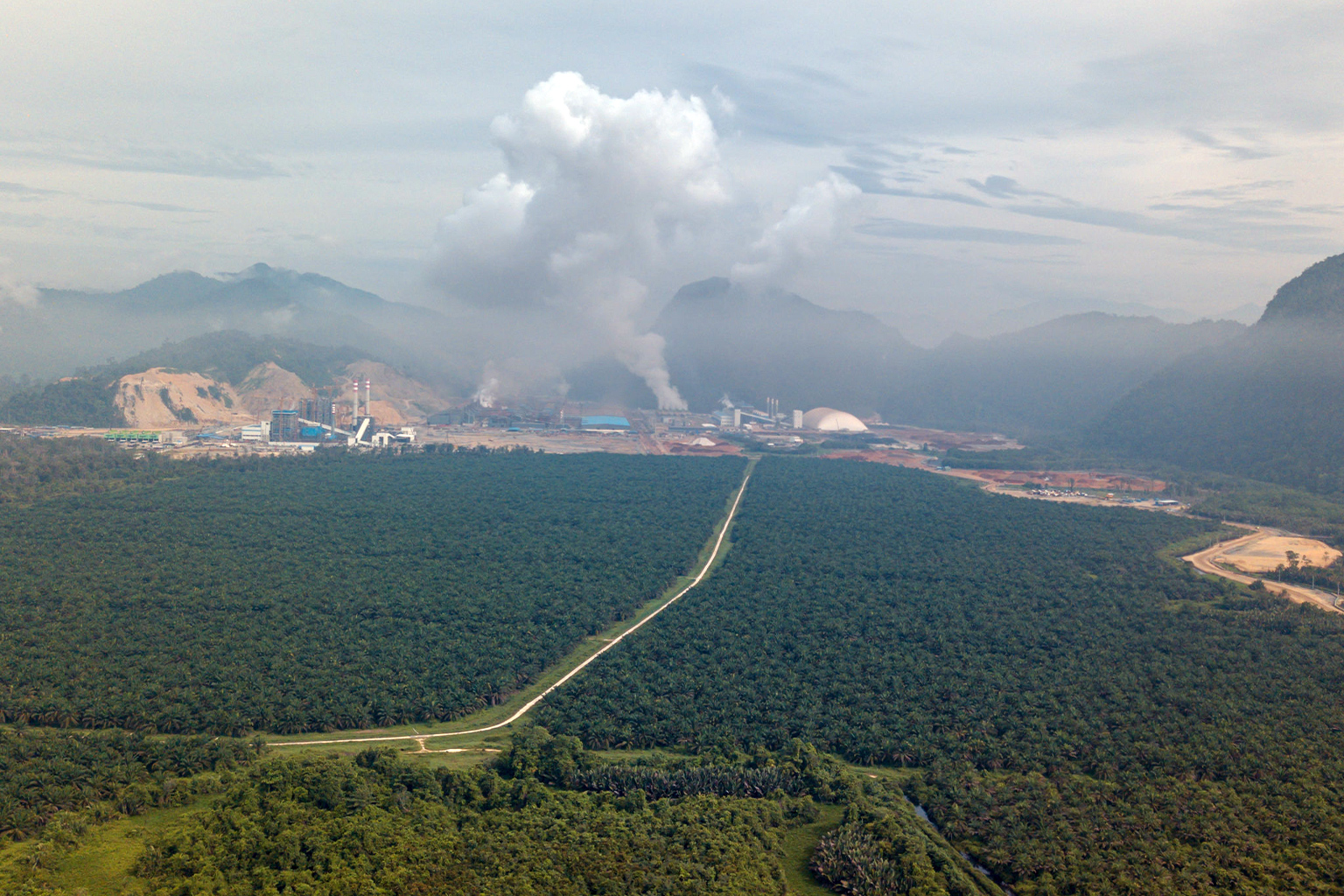
Banner image: Aerial photograph of the nickel processing facilities in Morowali. Image by Iqbal Lubis/The EITI via Flickr (CC BY-SA 2.0).
FEEDBACK: Use this form to send a message to the author of this post. If you want to post a public comment, you can do that at the bottom of the page.
Cite this article
Hans Nicholas Jong (2026). Nickel expansion puts Indonesia’s biodiversity goals under pressure, study finds. Mongabay Conservation news. DOI: https://doi.org/10.66709/news-326001

