


The former assistant state’s attorney charged with murder.
The judge caught driving drunk.
The clerk accused of skimming government funds.
When local prosecutors might have political or personal ties to a defendant, the state brings in an elite squad of government attorneys: the Illinois Special Prosecution Unit.
They are supposed to be lawyers beyond reproach.
Instead, the unit has been clouded by allegations of corruption, misconduct, and conflicts of interest.

@media (min-width: 769px) {
.hide-on-desktop {
display: none !important;
}
}
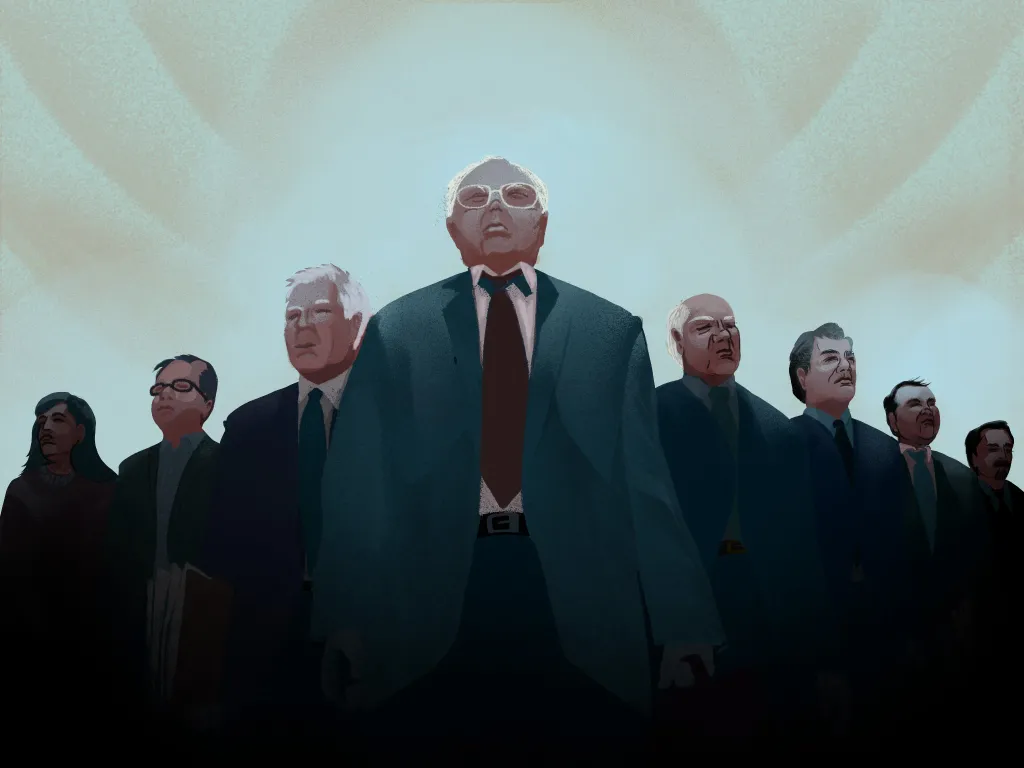
The two dozen lawyers of Illinois’ Special Prosecution Unit are mostly former county state’s attorneys, many with powerful political connections. All are white, most are men.
Since its creation in the 1980s, the unit has been the primary way criminal cases in Illinois are handled when local state’s attorneys are disqualified because of conflicts. Its prosecutors took on more than 1,000 cases in 2024, far more than were pursued through other methods of appointing special prosecutors, including referrals to the state attorney general, private attorneys, or prosecutors from neighboring counties.
But an Injustice Watch investigation shows the Special Prosecution Unit has been responsible for miscarriages of justice including withholding evidence and favorable treatment of political insiders, as well as conflicts of interest and ethical breaches.
To examine the Special Prosecution Unit, Injustice Watch reviewed thousands of pages of court documents and interviewed dozens of people, including defendants who were wrongly charged, victims who never saw justice, unit veterans, and legal experts.
We found:
Special prosecutors withheld exculpatory evidence that could have set murder defendant Curtis Lovelace free. The former Adams County prosecutor was acquitted in 2017 for the murder of his wife after spending 21 months in jail, but the misguided prosecution tore through his community and life.

In 2014, special prosecutors were called in after police arrested the son of Frank Mautino, who had represented LaSalle County for nearly a quarter-century as a state lawmaker. A political action committee tied to the Special Prosecution Unit had made donations to Mautino’s campaign fund and supported his appointment as state auditor general, one of the few state offices with a limited watchdog function over the unit.

After 31-year-old mother of three Megan Wells was killed in a 2016 Rock River boat crash by an allegedly drunk boater, special prosecutors dropped most of the charges as part of a plea deal, allowing the defendant, a well-connected pharmacist, to walk free. The lead prosecutor never publicly disclosed a professional connection to the local state’s attorney he replaced.

In other cases, the Special Prosecution Unit seemed to go after low-level political scapegoats, failing to secure convictions but leaving devastation in its wake.
In 2007, special prosecutors brought four felony charges against McLean County Clerk Peggy Ann Milton for allegedly misusing a roll of postage stamps to support a charity, and asking a county employee to drive her son home on county time. The jury quickly acquitted Milton, but her life was upended.
“My son was young at the time, and [the prosecutor] intimidated him,” she told Injustice Watch. “Once something like that is so public, especially in a small community, it’s difficult for you to get past it.”
The special prosecutors responsible for these and other questionable cases all remain on the job today. Others were hired by the Special Prosecution Unit despite alleged impropriety in their past roles.
William Elward joined the Special Prosecution Unit after a 2016 state inspector general’s report found he submitted false time sheets while working for the Illinois Attorney General’s Office, improperly billing the state for hundreds of hours when he was in fact moonlighting as a law teacher out of state.
Another special prosecutor, Brian Towne, was criminally charged after he joined the unit with misappropriating money confiscated by a rogue unit he created as LaSalle County state’s attorney to seize assets during traffic stops. The charges were dropped under speedy trial rules as Towne fought the case, which he claimed was retribution from a political rival.
Elward and Towne did not respond to requests for comment.
The Special Prosecution Unit is housed in an obscure, insular state agency, the Office of the Illinois State’s Attorneys Appellate Prosecutor, or ILSAAP, which operates with little oversight.
ILSAAP has had just two directors over the past 35 years, including one whose two sons and grandson have held key positions in the office. The agency is exempt from the state Freedom of Information Act, not scrutinized by any inspector general, and does not answer to the governor or the state attorney general.
Illinois is an outlier among states in having a unit of special prosecutors who try local government corruption cases without meaningful oversight from any elected official, Injustice Watch found.
The board that governs the agency is made up of state’s attorneys from across Illinois — the very same officials who call on the special prosecutors to step in when they or their offices have a conflict of interest. But even they provide only superficial oversight, holding only brief periodic meetings.
And although ILSAAP was created to assist downstate prosecutors, its authority has expanded into Cook County criminal courts.
ILSAAP reviews every police-involved fatal shooting in Cook County when the state’s attorney declines charges, making an independent determination of whether charges against the officer are appropriate.
As of last year, ILSAAP had conducted 73 such reviews since 2016, and never overruled the Cook County state’s attorney’s decision not to charge, records show.
ILSAAP Director Patrick Delfino declined to comment for this series. While the agency said it strives to be transparent, and Delfino provided basic data on cases the unit handled in 2024, he did not respond to detailed written questions about Injustice’s Watch’s findings.
Injustice Watch’s review found cases where special prosecutors obtained convictions and followed the law. Several attorneys in the unit have been praised for their work in underserved rural counties, including special prosecutors who have appeared in courts across the state to bring people charged with child sexual abuse to trial.
The unit as a whole handled a small fraction of the nearly 240,000 criminal cases filed statewide in 2024, and the wide range in the number and types of cases managed by Illinois’ more than 100 county prosecutors prevents any apples-to-apples comparison between the Special Prosecutions Unit and local state’s attorney’s offices.
Yet unlike local prosecutors, Illinois’ Special Prosecution Unit is not answerable to any one elected official, so there is little if any responsibility for patterns of civil rights violations and unjust outcomes.
“There’s been a number of cases against innocent people brought by the special prosecutors,” said private investigator Bill Clutter, who helped clear four defendants wrongly accused of murder by the group.
“They’ve just been on the wrong side of justice,” he said.
@media (min-width: 769px) {
.entry-header {
display: none !important;
}
}
@media (min-width: 769px) {
html, body {
margin: 0;
padding: 0;
border: none;
}
}
@media (min-width: 769px) {
.site-content {
margin: 0;
padding: 0;
}
}
The post ‘The wrong side of justice’ appeared first on Injustice Watch.
