


- Heirloom rice varieties have been cultivated in Sri Lanka for centuries and flourished before the country’s “Green Revolution” that modernized agriculture in the mid-20th century.
- Around 2,500 of these heirloom rice varieties are currently preserved at Sri Lanka’s Plant Genetic Resources Centre.
- Traditional rice varieties possess various nutritional and medicinal properties which are useful in the management of non-communicable diseases, researchers say.
- Scientific recommendations have been developed to help farmers minimize climate-related risks during the upcoming cultivation season.
WASGAMUWA, Sri Lanka – Prior to the 1940s and the Green Revolution, Sri Lankan paddy farmers cultivated traditional rice, locally known as purana haal. These rice cultivars were resilient and known to possess various nutritional and medicinal properties yet were soon replaced by new improved rice varieties to obtain better quality and bigger yields.
Karu Herath, an heirloom paddy farmer in the village of Dunuwila, bordering the Wasgamuwa National Park located within the Matale and Polonnaruwa districts, has cultivated heirloom paddy varieties for the past 27 years. He told Mongabay that fewer than 30 varieties remain out of the estimated 2,500 varieties of heirloom rice that once existed, a claim supported by rice researchers.
According to researchers, many of these rice varieties are long-aged, tall and low-yielding. Therefore, traditional farmers would only cultivate them during one harvesting cycle, known as the Maha season, which runs from September through March.
Herath follows this practice and cultivates only during the monsoon season. “During the Yala season [May to August], when it’s dry, we let the soil recover and grow heirloom cereals and vegetables such as kurakkan [finger millet] and mung [mung bean],” he said. “This draws different nutrients and requires less water than rice. This was the traditional land use system, which was changed by British colonialists who insisted that their colonies grow high-yielding rice to be exported to Britain.”
Genetic conservation
To preserve the genetic composition of these heirloom rice varieties, around 2,500 have already been conserved at the Plant Genetic Resources Centre (PGRC) located in Gannoruwa in central Sri Lanka, just outside of Kandy.
According to Jeewani Diddugoda, agricultural scientist and additional director at the center, heirloom rice varieties contribute to about 1% of the total paddy production.
Speaking to Mongabay, she said that until the 1950s, Sri Lankan farmers only grew heirloom rice varieties, but yields were lower. “This is why paddy had to be imported since 1940s and 1950s,” she said, adding that trade agreements such as the Rubber-Rice Pact of 1952 with China came into effect because the country could not provide sufficient rice for the entire population.

“Then came the green revolution which introduced different types of fertilizers, improved seed varieties and agrochemicals,” Diddugoda said. “During this period, the dominant features of heirloom rice varieties were used to develop new and improved rice varieties. These varieties were high yielding and there was improved fertilizer efficiency.”
As a result, new, improved varieties of rice were created, including drought-tolerant and salinity-tolerant varieties, and varieties that could withstand floods and other conditions that could impact harvests, Diddugoda added.
“Prior to advanced irrigation systems, Sri Lankan farmers harvested paddy during one season,” she said. “Another feature of heirloom rice varieties is the fact they can be harvested in about 4.5 to 5 months. This is why people could grow them only for one harvesting season. Therefore, we conducted research and developed varieties which were suitable for different soil varieties and could provide a yield within a couple of months. If floods damaged crops in a specific area, farmers cannot wait another 3-4 months to obtain the yield. So, if a farmer replants a low-yielding variety that could be harvested in about 2.5 months, he will not incur a major loss.”
Nutritional and medicinal value
A 2023 study on the nutritional and functional properties of 20 selected traditional rice varieties in Sri Lanka indicates that many have anti-diabetic and anti-inflammatory properties. The research highlights that these traditional rice varieties were useful in the management of non-communicable diseases and complications.
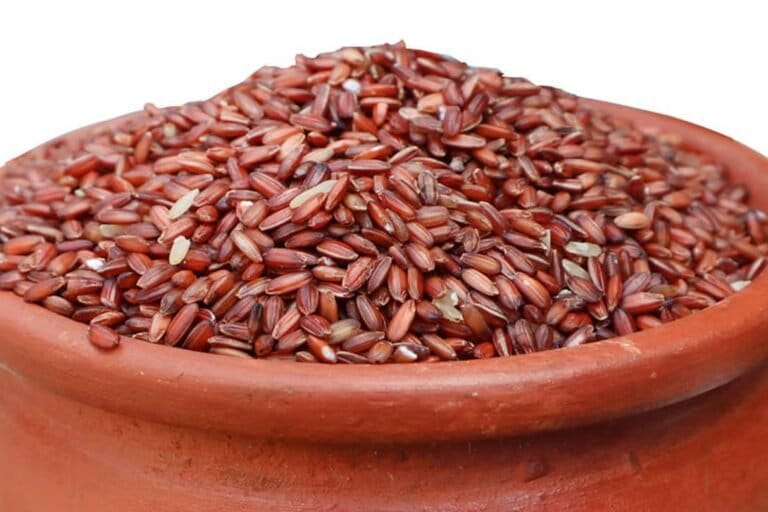
“Even though traditional rice varieties are called heirloom rice, they are also considered to be medicinal rice,” said Prashantha Malavi Arachchi, a professor in the chemistry department at the University of Sri Jayewardenepura. Today, these rice varieties are in low demand as they are marketed as low-yielding rice varieties, he added: “As such, a negative perception has been created to exclude heirloom rice varieties from the market. Yield is a consumer-oriented marketing concept. These heirloom rice varieties have been linked with age-old Ayurvedic traditions that were practiced back in the day.”
Malavi Arachchi said that, back in the day, farmers described heirloom rice varieties as Buddhabhoga (crops dedicated to the Buddha), highlighting the spiritual connection associated with agricultural practices. One of the age-old traditions in Sri Lanka is the aluth sahal mangalyaya or new rice festival dedicated to the offering of the first harvest of a paddy to the Sacred Tooth Relic.
Speaking about nutritional properties of heirloom rice varieties, agricultural scientist Diddugoda said some have a low glycemic index and are recommended for diabetes patients. “There’s a perception that heirloom rice varieties are better than other varieties but there are no genetically modified crops in Sri Lanka,” she said. “There’s only one hybrid variety but that too was developed through a gene crossing program … all these varieties have been conserved at the PGRC, and we provide limited quantities to farmers interested in growing and multiplying them,” Diddugoda added.
Minimizing climate-related risks
An impending El Niño is not a new phenomenon for traditional paddy farmers, but to help farmers minimize climate-related risks during the upcoming cultivation season institutions such as the Rice Research and Development Institute (RRDI) have developed scientific recommendations. These recommendations are based on decades of research, field observations and the expertise of agricultural officers working throughout the country.

“Adoption of these recommendations will enhance the resilience of paddy farming and contribute to safeguard national rice production,” Sudarshani Pathirana, director of rice research and development at RRDI, told Mongabay.
She said changing climatic conditions may increase the incidence of diseases such as bacterial leaf blight and pests, including the rice gall midge, rice leaf folder and rice stem borer. “The spread of weedy rice and other weed species may also become more severe,” she cautioned.
According to Pathirana, maintaining an adequate supply of high-quality seed paddy, the raw, unprocessed rice grain used to grow new crops, under changing climatic conditions is of national importance. “Farmers are encouraged to produce their own seed paddy from weedy rice-free fields during the 2026 Yala season. They have been advised to store this seed paddy properly to maintain sufficient stocks of short-duration varieties for use in future cultivation seasons.”
Rice without toxins
Despite existing challenges, traditional paddy farmers are determined to promote heirloom rice varieties among future generations.
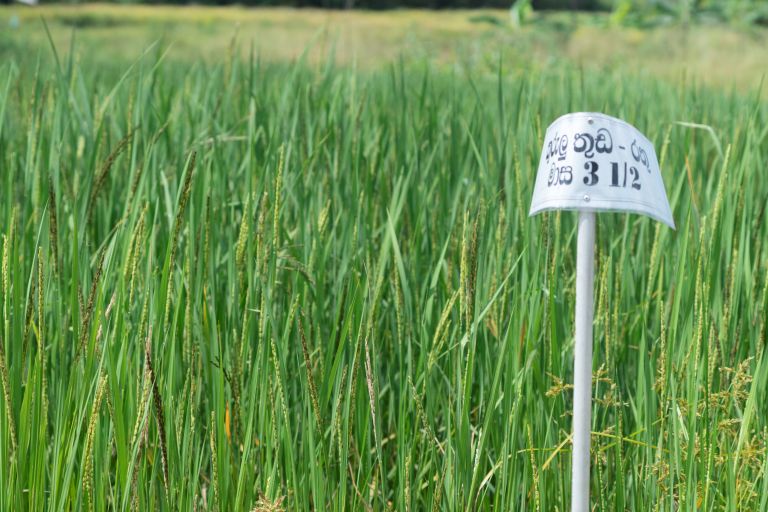
Speaking to Mongabay, Pahan Godakumbura, a professor and senior lecturer in the chemistry department at the University of Sri Jayewardenepura, said that heirloom rice varieties are also free of toxins. “This is because they are grown using naturally derived fertilizers,” Godakumbura said. “Traditional paddy farming was linked to the orbit of the sun and the moon. Farmers made decisions based on lunar conditions and various folk remedies. They didn’t depend on chemicals, but they woke up early in the morning to go to work in their paddy fields.”
Some farmers are resistant to the idea of cultivating heirloom rice varieties, claiming they are all low yield and energy consuming, she added.

After the 1970s, Sri Lankans lost much of their traditional agricultural knowledge and heritage, she said. “If these [current] practices don’t change, and if chemicals and fertilizers are used at this rate, the soil would get so affected and the arable quality will be significantly weakened,” she said. “Paddy farming was a collective effort. People in rural Sri Lanka got together to cultivate crops and to reap the harvest. Paddy was a crop that united communities. So, rather than going solely for commercial gains, we need to take pride in our heritage and preserve our Indigenous knowledge and rice paddies.”
As for farmer Herath, his priority is to keep his family fed while also feeding people with nutritious rice. As such, like several other heirloom paddy farmers, he too is determined to preserve these heirloom rice varieties for future generations.
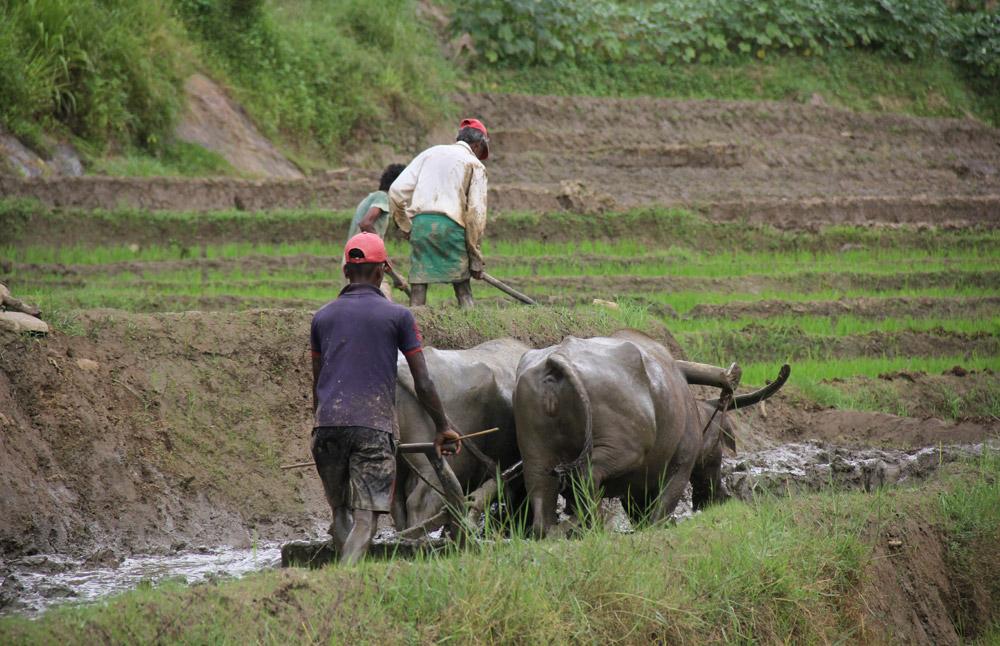
Banner Image: These farmers in Kehelpannala in the Kegalle district use traditional methods for paddy cultivation. Image courtesy of Pethum Bandara.
Citations:
Jayadewa, C. T., Chiranthika, N. N., & Gunathilake, K. D. (2023). Comparative studies on nutritional and functional properties of selected traditional rice varieties in Sri Lanka. Tropical Agricultural Research and Extension, 26(2), 88-103. doi:10.4038/tare.v26i2.5656
Cite this article
Kamanthi Wickramasinghe (2026). How Sri Lanka’s heirloom rice can preserve Indigenous farming and help manage disease. Mongabay Conservation news. DOI: https://doi.org/10.66709/news-325663

