


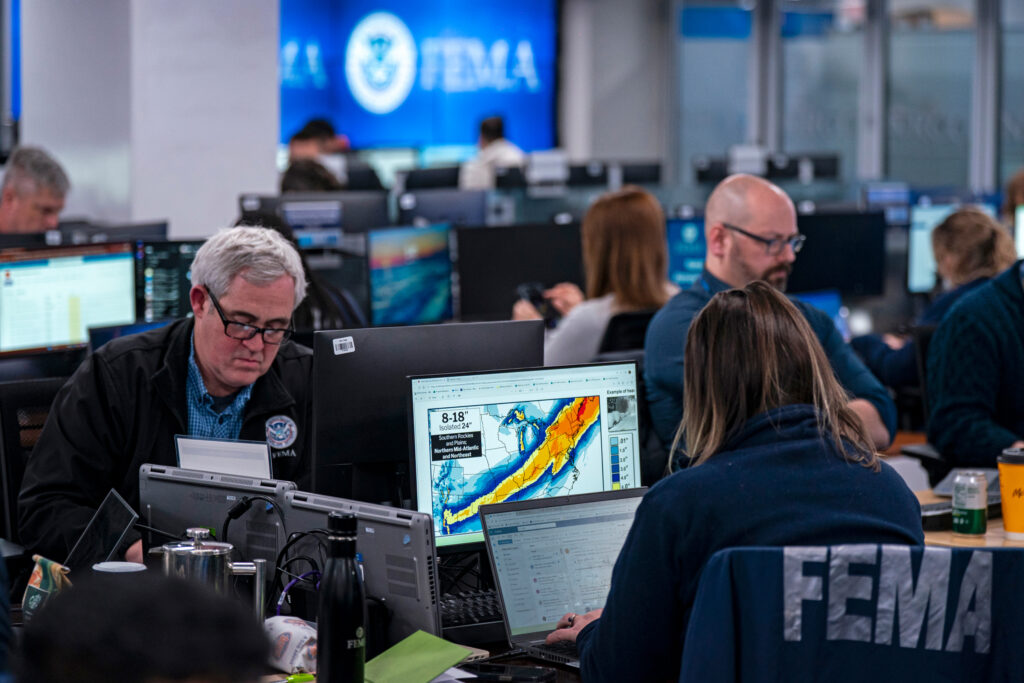
A widespread downsizing of the Federal Emergency Management Agency during the second Trump administration has exacerbated longstanding workforce challenges there and imperiled its response to disasters, a congressional watchdog warns.
More than 4,300 employees resigned or were let go from the agency last fiscal year, representing some 17 percent of its workforce, according to a report released Tuesday by the U.S. Government Accountability Office (GAO), an independent nonpartisan federal agency. A hiring freeze also began in January 2025 and was in effect until this past May.
The reductions have resulted in a loss of institutional knowledge and experienced personnel and were not conducted based on any analysis of the workforce or forecasted needs, the report said. Meanwhile FEMA also rescinded its strategic plan, leaving the federal agency with no direction when it comes to workforce planning.
FEMA and its parent agency, the Department of Homeland Security, did not immediately respond to requests for comment.
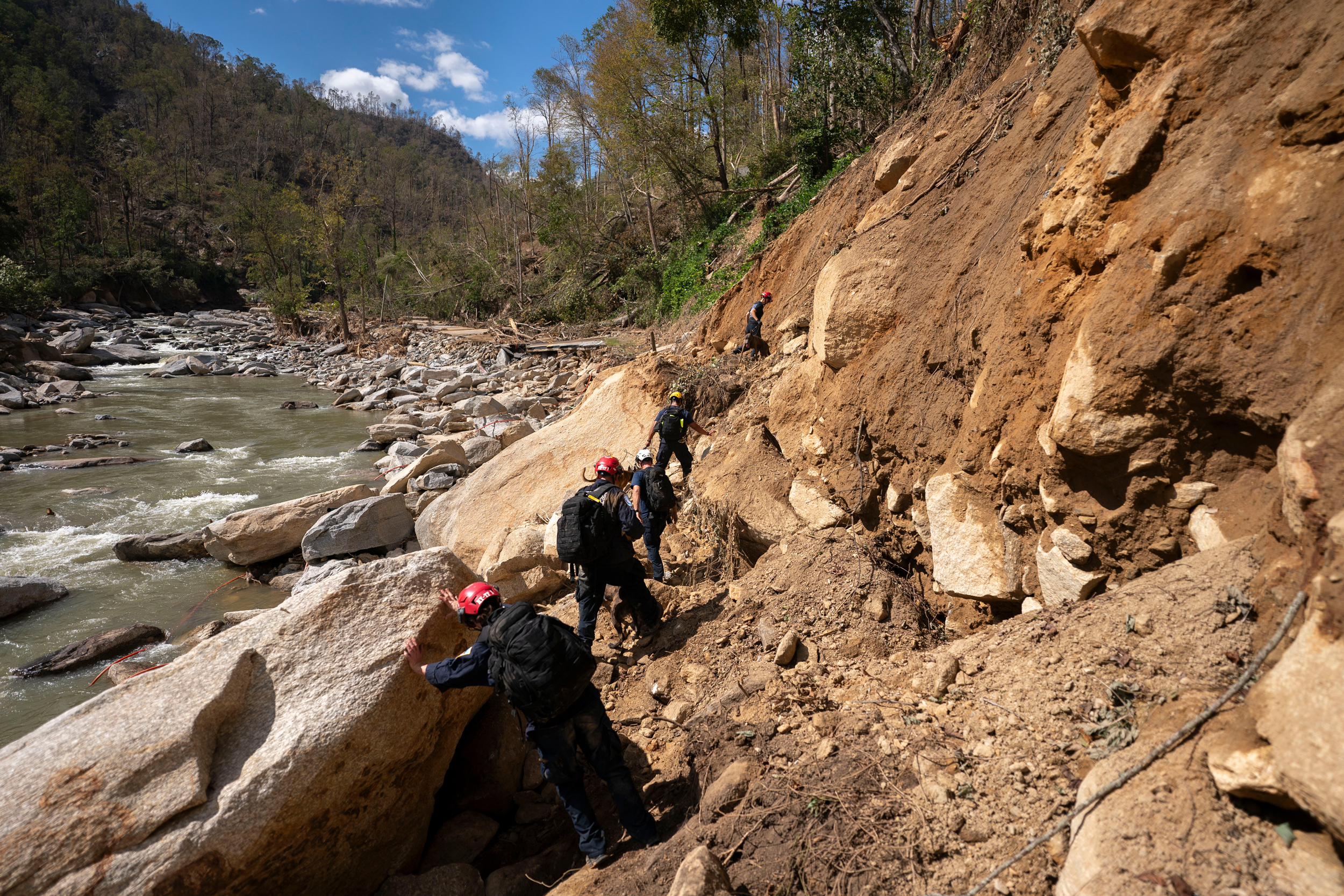
The GAO raised concerns about the changes at a time when disasters are intensifying and growing more frequent as the global climate warms. For instance, the double-blow of hurricanes Helene and Milton in 2024, which affected the Southeast within two weeks of one another, prompted the deployment of some 13,500 FEMA employees, the largest in the agency’s history. The effort included workers from outside the affected region and those who were not fully trained for the situation.
“FEMA took these actions without assessing whether it had the necessary staffing capacity to meet its mission, including statutory requirements,” the report said of the reductions. “Without workforce planning, FEMA is not positioned to determine whether it has the right number of people with the right skills in the right positions at the right time to meet its mission. Further, for more than a decade, GAO has identified challenges FEMA has encountered in maintaining a sufficient workforce to effectively meet its mission.”
FEMA has faced particular difficulties since President Donald Trump, early in his second term, called for drastic change at the federal agency and said states should be much more involved in disaster response. The GAO report points out that since the president took office in January 2025, FEMA has not had a Senate-confirmed administrator. Instead, a succession of four different senior officials have filled that role.
Trump nominated Cameron Hamilton in May, although he has not been confirmed. Hamilton led the agency on an interim basis beginning in January 2025 but was pushed out in May 2025 after telling Congress he thought FEMA should not be eliminated.
DHS told the GAO it intends to wait for a confirmed leader before acting on the watchdog agency’s recommendations to rebuild FEMA’s strategic plan and workforce-planning process.
Trump has also appointed a task force to evaluate FEMA and identify reforms. After missing deadlines three times, the FEMA Review Council released its long-awaited report in May. The report said the federal agency was at an inflection point and in need of major change because of “mission creep” under the Biden administration and also “endemic program failures.” The report recommended streamlining assistance programs, among other changes. The delayed publication of the report left the agency in further turmoil, according to the GAO report.
“Officials told us that they have been operating in uncertainty and confusion while still trying to meet the mission with the staff they have,” the GAO report states.
The timing of GAO’s assessment, after the FEMA Review Council report, intrigued Samantha Montano, associate professor of emergency management at Massachusetts Maritime Academy. She said an earlier leaked version of the review council report called for a 50 percent staff reduction.
Although that recommendation was removed, “if you think about all the other recommendations that are in that report, where they are eliminating so much of what FEMA does and handing that over to the states,” she said, “you probably get to a place of a 50 percent reduction.”
She added: “I don’t know for sure, but I think between Congress and the GAO, there may be some movement for this to kind of be a response to that threat from the FEMA Review Council.”
The GAO report recommended that FEMA be required to report to Congress on the results of its workforce planning process before the start of hurricane season each year.
This story is funded by readers like you.
Our nonprofit newsroom provides award-winning climate coverage free of charge and advertising. We rely on donations from readers like you to keep going. Please donate now to support our work.
The Trump administration’s push to hand more disaster response to the states may land more gently in Florida than almost anywhere else—and that, some experts warn, is a problem for the rest of the county.
“Florida is likely going to be able to handle this new change in policy,” said Shana Udvardy, a senior climate resilience policy analyst at the Union of Concerned Scientists. “They’ve got a well-funded emergency management program and are used to dealing with big disasters like hurricanes.”
But that self-reliance is a product of the federal role now being cut, said Michael Coen, who served as FEMA’s chief of staff under presidents Barack Obama and Joe Biden. “Florida has significant capability that has been built with federal funds,” he said. The state accumulated that capacity precisely because it has weathered so many federally declared disasters.
And even Florida’s abilities have a ceiling: “There are events that will require federal support that will be beyond the capability of the state,” Coen said, “and that’s why the governor makes requests of the federal government for major disaster declarations.”
States could take on more, he added, but only “given two or three years to build capability,” not on the timeline the current shift implies.
Udvardy argued the model assumes every state looks like Florida. They don’t: State emergency-management budgets range from about $440,000 to more than $445 million, and their staffs from 20 people to 1,800, according to figures from the National Emergency Management Association cited in her group’s letter to the FEMA council.
Shifting federal responsibilities onto that uneven base, the Union of Concerned Scientists argued, amounts to an unfunded mandate that would leave rural and lower-resourced states—and the disaster survivors in them—furthest behind.
The deeper alarm, for Udvardy, is that FEMA thinned its ranks without first analyzing what it needed. “There’s simply no excuse for having any staff changes to a federal agency that’s tasked with reducing the loss of life and property from all hazards when it’s not based on strong analytics,” she said.
The roughly 350 priority positions FEMA began filling this spring are “really a drop in the bucket,” she added, and can’t quickly restore what walked out the door.
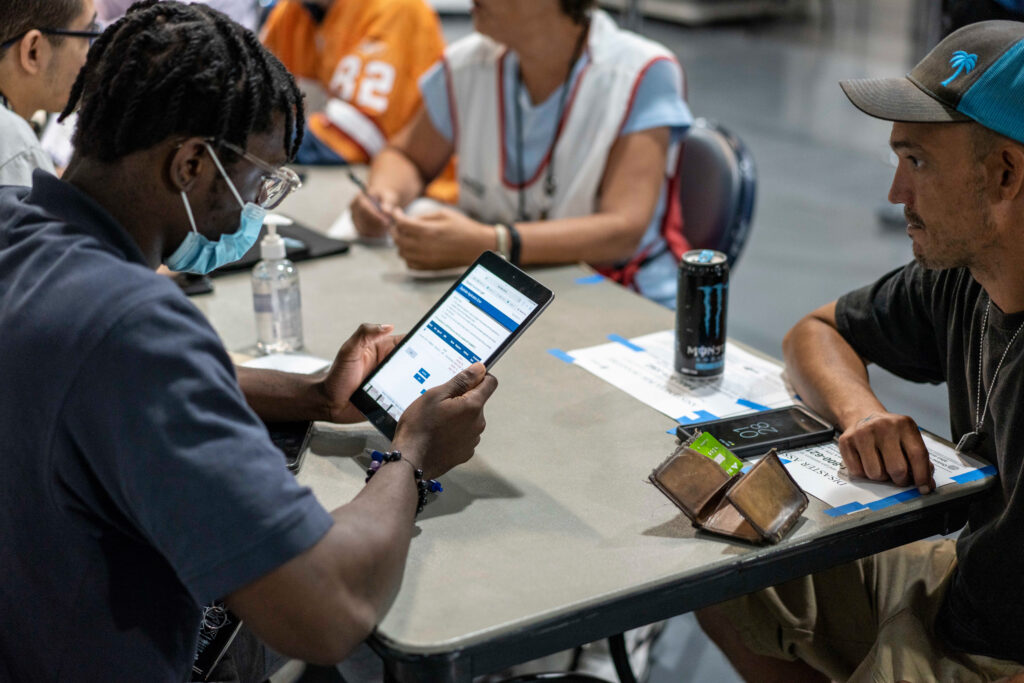
The consequences of a hollowed-out FEMA are not hypothetical, Udvardy said, pointing to the July 2025 flash floods in the Texas Hill Country, which killed at least 135 people. A month before the floods, then-Homeland Security Secretary Kristi Noem had imposed a rule requiring her personal sign-off on any FEMA expenditure over $100,000. Funding for FEMA’s survivor hotline then lapsed the day after the floodwaters rose, and it took Noem five days to approve more, according to contract records and internal call logs obtained by NPR.
“There’s simply no excuse for having any staff changes to a federal agency that’s tasked with reducing the loss of life and property from all hazards when it’s not based on strong analytics.”
— Shana Udvardy, Union of Concerned Scientists
On July 10—five days into the outage, as FEMA’s acting administrator was still asking Noem to release the money—only about 10 percent of the more than 15,000 people who called the hotline got through.
FEMA’s acting administrator at the time, David Richardson, did not arrive in Texas for a week—he was camping with his sons when the floods struck—and later told Congress there was “never a lapse in contract,” a claim the federal records contradict. For Florida, still working through recovery from hurricanes Helene, Milton and Ian, it is the scenario the state sits one major landfall away from testing.
A strengthening El Niño is expected to hold down this year’s hurricane activity: the federal outlook put the odds of a below-normal Atlantic season at 55 percent and forecast eight to 14 named storms, since El Niño tends to drive up the vertical wind shear that tears storms apart. Colorado State University’s July forecast was lower still—nine named storms, four hurricanes and only one hurricane reaching Category 3, 4, or 5 strength. But a quieter forecast buys FEMA no margin.
As National Weather Service director Ken Graham put it, “It only takes one storm to make for a very bad season.” Recovery from a single storm routinely takes years. “There’s no room for this change in leadership, the reduction in staff and all of this turmoil,” Udvardy said. “At the end of the day, it’s on the shoulders of survivors, and they’re not going to see the resources they need.”
About This Story
Perhaps you noticed: This story, like all the news we publish, is free to read. That’s because Inside Climate News is a 501c3 nonprofit organization. We do not charge a subscription fee, lock our news behind a paywall, or clutter our website with ads. We make our news on climate and the environment freely available to you and anyone who wants it.
That’s not all. We also share our news for free with scores of other media organizations around the country. Many of them can’t afford to do environmental journalism of their own. We’ve built bureaus from coast to coast to report local stories, collaborate with local newsrooms and co-publish articles so that this vital work is shared as widely as possible.
Two of us launched ICN in 2007. Six years later we earned a Pulitzer Prize for National Reporting, and now we run the oldest and largest dedicated climate newsroom in the nation. We tell the story in all its complexity. We hold polluters accountable. We expose environmental injustice. We debunk misinformation. We scrutinize solutions and inspire action.
Donations from readers like you fund every aspect of what we do. If you don’t already, will you support our ongoing work, our reporting on the biggest crisis facing our planet, and help us reach even more readers in more places?
Please take a moment to make a tax-deductible donation. Every one of them makes a difference.
Thank you,

Reporter, Florida
Amy Green covers the environment and climate change from Orlando, Florida. She is a mid-career journalist and author whose extensive reporting on the Everglades is featured in the book MOVING WATER, published by Johns Hopkins University Press, and podcast DRAINED, available wherever you get your podcasts. Amy’s work has been recognized with many awards, including a prestigious Edward R. Murrow Award and Public Media Journalists Association award.

Fellow
Kate Waxman is a Florida-based Outrider fellow at Inside Climate News, where she covers climate injustice across the state. She earned her M.S. in journalism from Columbia Journalism School and her B.A. in environmental science from Barnard, with reporting focused on coral reefs, climate science, and the communities closest to the water.
