


Recovery projects for 100 critically endangered and extinct-in-the-wild species across the world are set to receive new funding under a conservation initiative announced Aug. 4.
Re:wild and the Bezos Earth Fund, both U.S.-based environmental organizations, created the Phoenix Species Project and committed $100 million each, for a total of $200 million, to the project.
The project’s steering committee said each species will likely receive between $500,000 and $1 million for the duration of the five-year project.
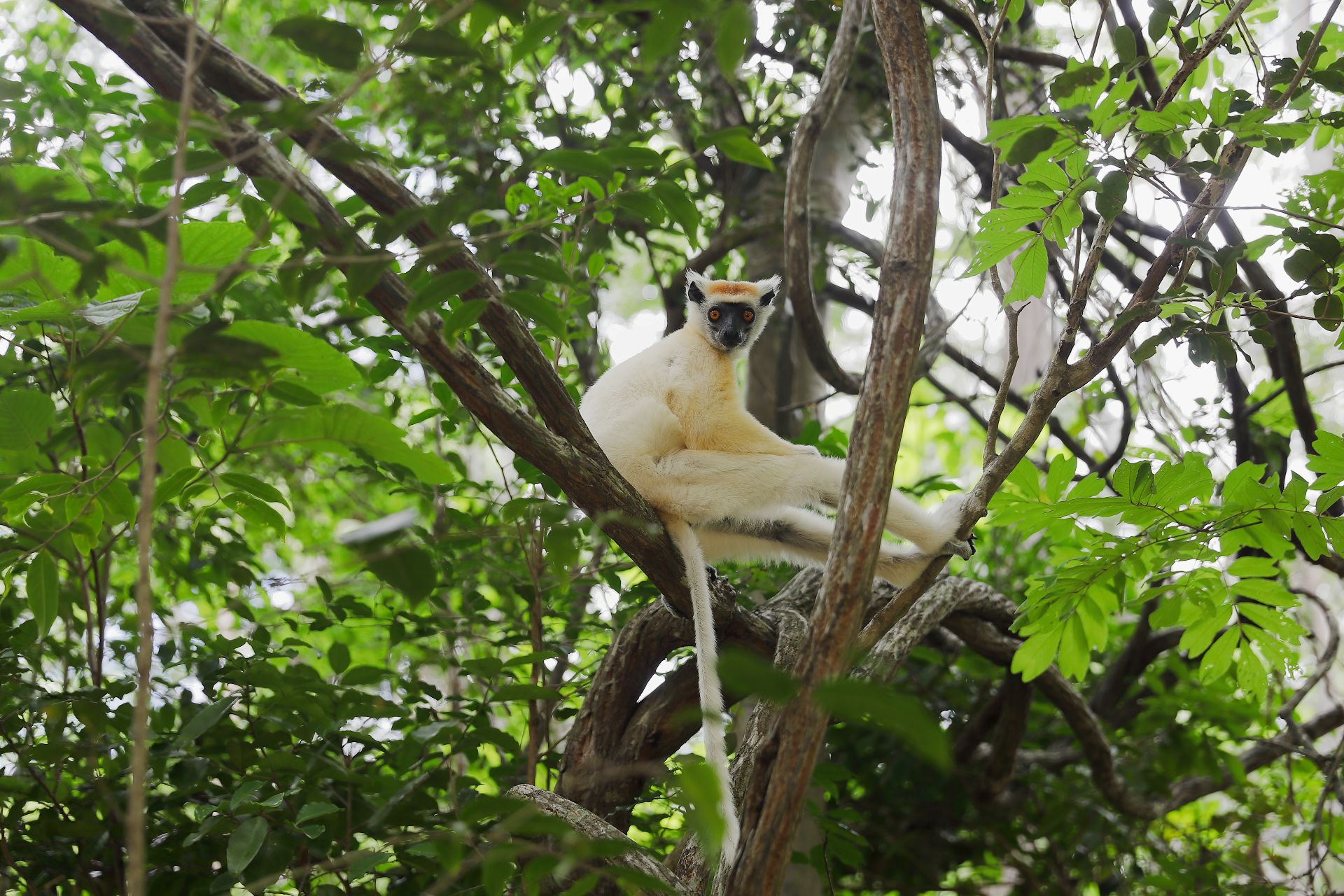
Among the 100 species are Mexico’s Charco Azul pupfish (Cyprinodon veronicae), which went extinct in the wild in 1997 after its habitat dried up completely due to a devastating drought. Another is Madagascar’s golden-crowned sifaka (Propithecus tattersalli), a critically endangered lemur whose population has declined by roughly 80% amid rampant deforestation. With new funding, local NGOs will work to reconnect the fragmented forests that the lemurs need to survive.
“We’ve protected the golden-crowned sifaka for years on a budget that would never match what this species deserves, but letting it go extinct was never an option,” Tiana Andriamanana, executive director of Association Fanamby, the Malagasy NGO leading conservation efforts for the lemur, said in a statement.
All 100 species, located across 30 countries, have already been chosen, but funding amounts for each have not yet been finalized. They will be determined on a rolling basis as proposals are submitted, the Phoenix Species Project’s steering committee told Mongabay by email.
The sifaka and the pupfish are two of seven species that have already received funds. The other five are the bowmouth guitarfish; a South African plant called the fuzzy belly button; the Galápagos petrel; the Australian night parrot; and the Hickory Nut Gorge green salamander.

Every species plays an important role in its wider ecological community, Leah Gerber, a conservation scientist at Arizona State University in the U.S., told Mongabay by email.
“Recovering a species can have benefits that extend well beyond that species,” Gerber wrote. “But those benefits are highly context dependent; recovering one species does not always lead to ecosystem restoration.”
The IUCN, the global wildlife conservation authority, has evaluated the extinction risk for fewer than 5% of all species known to science. Of the 176,000 species that have been assessed so far, more than 31,000 are considered extinct in the wild, critically endangered, or endangered.
“The Phoenix Species Project represents an extraordinary investment in preventing extinction, and I’m especially encouraged to see attention across a broad range of species rather than only the most charismatic ones,” Gerber said.
Banner image: A golden-crowned sifaka in Madagascar. Image courtesy of Association Fanamby.

