


Welcome to Foreign Policy’s Southeast Asia Brief.
The highlights this week: Southeast Asian youth are underemployed and angry, tempers flare between China and the Philippines in a diplomatic row, and Japanese autos retreat from the region as sales of Chinese EVs rise.
Have feedback? Hit reply to let me know your thoughts.
Southeast Asia’s Youth: Underemployed and Angry
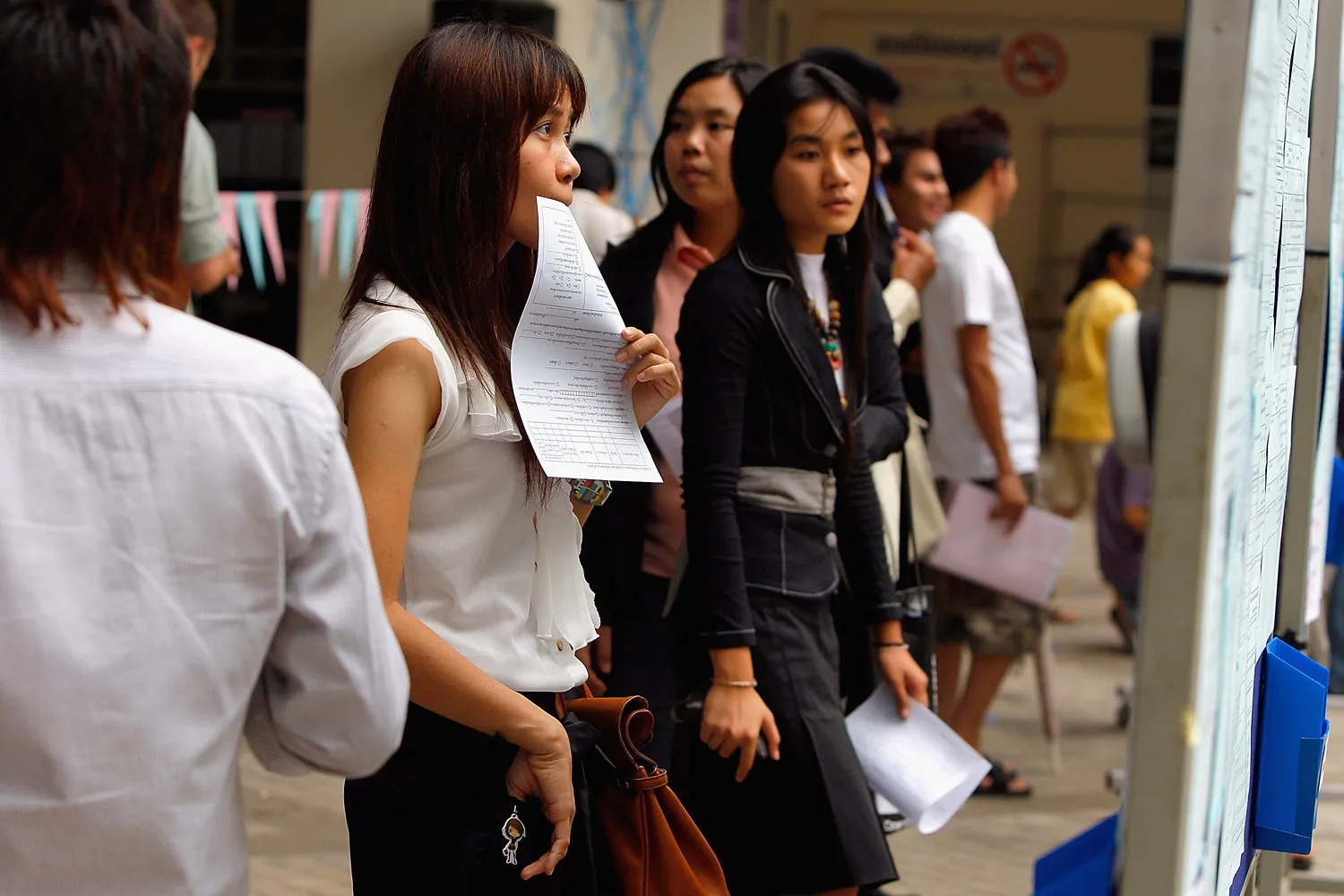
In the third quarter of this year, Vietnam grew at a breakneck pace of 9.95 percent. At the same time, many worry about a social phenomenon called three không, or three no’s: no job, no education, and no training.
According to third-quarter figures, the number of people aged 15-24 in this category stands at 1.6 million, which is an increase of 195,000. This is 11.2 percent of Vietnam’s youth.
Such a high level of youth unemployment in the region’s fastest-growing economy is striking. In many other economies in the region, the levels are even higher, according to 2025 figures from the International Labour Organization.
Indonesia sits at 21.5 percent, the highest of any major economy in the region. Thailand is at 12.9 percent, the Philippines is at 12.7%, and even strongly growing Malaysia is at 10.3 percent. In the region, only Singapore has a rate below 10 percent.
Zoom out and the picture looks a bit rosier. The figures are actually below pre-pandemic levels. Zoom further in, however, and the picture looks grimmer. Across the region, young people are more and more likely to have a university degree. But many of the jobs being created are not good ones.
In Indonesia, this phenomenon is particularly pronounced. Not only are most new jobs in lower-productivity sectors like agriculture and restaurants, but informal employment is absorbing a growing share of educated workers, according to research by the World Bank.
In Thailand, the creation of high-quality jobs has declined since 2021, with employment growth driven by employment in lower-productivity sectors. Workers have even started leave cities, returning to family farms.
Even Malaysia’s relatively strong growth in high-skill jobs has failed to keep pace with the number of people with tertiary education. Meanwhile, Vietnam is seeing graduates enter the gig economy as delivery drivers, even as construction jobs go unfilled.
This is not a problem unique to the region. Across Asia, young people are struggling to find jobs.
The problem looks set to get worse, according to World Bank Group President Ajay Banga. Over next 10 to 15 years, emerging economies are expected to generate approximately 420 million jobs. But some 1.2 billion young people will join the job market.
Artificial intelligence may be a double-edged sword here. On the one hand, booming electronics sectors and rapid AI adoption are driving growth across the region. But AI also may be contributing to the issue of graduate unemployment.
Another recurring issue across the region seems to be a skills mismatch. Sectors benefiting from the AI boom are struggling to fill positions that need qualifications in fields such as engineering, software, and advance manufacturing.
Historically large numbers of educated and frustrated young people can cause serious social challenges. Last year, the region saw major protests spearheaded by young people.
Social media is also a potent feeder of frustrations. People glimpse lives of luxury posted online by incautious members of the national elite. For a struggling young person, the effect can be enraging.
Witness the opprobrium sparked last week when a 27-year-old Filipina with a jet-set lifestyle and an expensive-looking sense of style was appointed to a presidential commission on urban poverty. Or take a look at Cabinet Couture, which prices the outfits of Indonesian politicians under the bitter slogan “From rakyat [the people’s] taxes to runway pieces.”
🇲🇲 Aung San Suu Kyi phone call. After six years of being held in detention by Myanmar’s military junta, 81-year-old Aung San Suu Kyi was allowed a phone call with her son Kim Aris on Thursday.
“She still sounds certainly all there mentally, and physically she sounds strong,” the United Kingdom-based Aris told media. “I don’t think she has anybody outside of the military or the police around her, so essentially she’s been held in solitary confinement from what I gather.”
However, in an interview with Radio Free Asia, he mentioned that her hand was “in some pain” due to tendonitis.
According to Aris, his mother seems isolated from news. “She remains completely shut off from the rest of the world. I think she’s unaware of what’s happening outside of where she is because she’s not allowed any newspapers or radio or television,” he said.
He remains unsure as to her location. “I think it’s a residence in Naypyidaw, which is fenced off and it has a scrubby bit of land around it.”
The phone call comes amid the Myanmar junta’s continued campaign to rehabilitate itself diplomatically. Earlier this month, the junta released photos showing that it had delivered two books and sealed diplomatic correspondence sent by Britain’s King Charles III to Aung San Suu Kyi.
🇮🇩 🇸🇬 Oke gas to no gas. Indonesian President Prabowo Subianto came to power to the thumping tune of Oke Gas (Let’s Go). Now the slogan should be “no gas,” as Indonesia cuts gas exports to Singapore over issues of “disrespect.”
Last Saturday, Indonesia reduced exports to Singapore by 31 million standard cubic feet of gas per day. This is to safeguard the reliability of domestic gas supplies for electricity, according to Djoko Siswanto, head of government’s natural gas agency. Since June, Indonesia has seen serious power outages.
However, the move also came after Bahlil Lahadalia, Indonesia’s energy minister, warned on Thursday that he could cut off gas exports to countries that “disrespect” Indonesia.
“Don’t come begging when you need something, but when there is another issue that can actually be discussed, behave like a relative who has no manners,” he said.
Singaporean Prime Minister Lawrence Wong has said that all parties should honor contracts, adding that Singapore had also prepared for such contingencies with liquefied natural gas terminals. He also raised the possibility of nuclear power as a secure source of energy.
Tensions between Indonesia and Singapore have grown over the issue of transboundary haze caused by the former’s huge forest fires. Singapore has moved to prosecute companies involved, some of which are linked to major Indonesian conglomerates.
Singapore’s Energy Market Authority has downplayed the seriousness, saying the reduction amounts to less than 2 percent of daily demand.
A full cut-off would be much more serious, though. In 2025, Indonesia accounted for 30.2 percent of Singapore’s gas imports, according to my calculations. And gas generates 91.12 percent of Singapore’s electricity.
🇵🇭 An undiplomatic row. In the Philippines, China’s undiplomatic diplomats have sparked a long-running row.
Tempers flared earlier this month when Jing Quan, the Chinese ambassador to the Philippines, suggested that countries should “feel fortunate enough that you have a neighbor like China in this region.” He then added: “If we want to use force, we may easily win. But no, we’ll not use force. We love peace.”
The Philippines’ reaction was predictably negative. Philippine President Ferdinand Marcos Jr. said the comments sounded “very much to me like a threat.” And the Philippines’ Foreign Ministry then summoned the ambassador to a meeting last week to express concerns about the “provocative and unacceptable” remarks. Jing, however, continued to defend them.
That same day—Monday—a Philippine senator filed a motion in the Senate to declare Jing a persona non grata and expel him from the country. The idea had attracted support from a handful of other senators. The Chinese Embassy responded by suggesting that these senators would then be banned from China.
And on Thursday, Philippine Defense Secretary Gilbert Teodoro, who has emerged as an outspoken critic of China’s conduct, accused unnamed Filipino politicians of emboldening Jing to continue his attacks. He also accused China of looking to interfere in the country’s 2028 elections.
Chinese embassies in the region have a growing track record of controversial interventions. On Friday, it was reported that the Chinese Embassy had asked the Thai government to block People’s Party leader Natthaphong Ruengpanyawut from meeting with Taiwan’s representative office.
Catholics bring their pets to receive a blessing at the Buah Batu Catholic Church in Bandung, West Java, Indonesia, on Oct. 24.Khairizal Maris/NurPhoto via Getty Images
FP’s Most Read This Week
Kindergarten campaigning, the secret of Malaysia’s Islamist party’s inroads into new areas, by Lu Wei Hoong in The Straits Times.
What happens when they get home? Danielle Keeton-Olsen and Michelle Nguyen look at the lives of Vietnamese citizens who escaped or were ransomed out of Myanmar scam centers Mekong Independent.
The Indonesian orangutans smuggled into India and the fight to bring them back home, by Aniruddha Ghosal and Victoria Milko for The Associated Press.
In Focus: Japanese autos retreat
Japanese automakers, which once dominated Southeast Asian auto markets, are rapidly losing ground to Chinese automakers’ cheap electric vehicles. This has prompted anxiety on the part of not just Japanese automakers but several governments in the region, who have built supply chains deeply intertwined with them.
In 2024, Chinese brand cars accounted for just 5 percent of sales in the Association of Southeast Asian Nations’ (ASEAN) six largest economies, according to research by PWC. By the first half of 2026, this had climbed to 16 percent. In the same period, the Japanese share dropped by a perfectly symmetric 11 percentage points, from 65 percent to 54 percent.
For now, Japanese companies still have a hefty lead. But with Chinese brands now overtaking Japanese ones in Europe, further inroads in Southeast Asia look inevitable.
Some are reacting with preemptive retreat. Mitsubishi is the region’s fourth-most popular brand. It outsells its nearest Chinese rival—BYD—by a hefty margin. But it recently announced a strategic shift, from focusing on Southeast Asia to focusing on the United States—the only major market in the world where Chinese EVs are effectively shut out.
For ASEAN governments, this shift poses major questions. On the one hand, consumer access to cheap high-quality vehicles that cut emissions is a big boon. The energy shock that has driven up oil prices adds to their appeal.
However, many countries in the region have built up car manufacturing ecosystems deeply intertwined with the Japanese giants. And the arrival of Chinese automakers is disruptive.
Thailand, dubbed the Detroit of Asia, feels this particularly sharply. Entry of Chinese competitors is disruptive to established industry. They are accused of operating closed China-centric supply chains with little opportunities for local auto parts makers who thrived by supplying Japanese businesses.
Meanwhile, Vietnam has taken a unique approach. It has managed to cultivate a domestic EV champion, VinFast. Dominance in the domestic market has turned it into the region’s third-largest brand by sales. But mounting losses and struggles with exports raise questions about its long-term viability.
