


Reading Time: 3 minutes
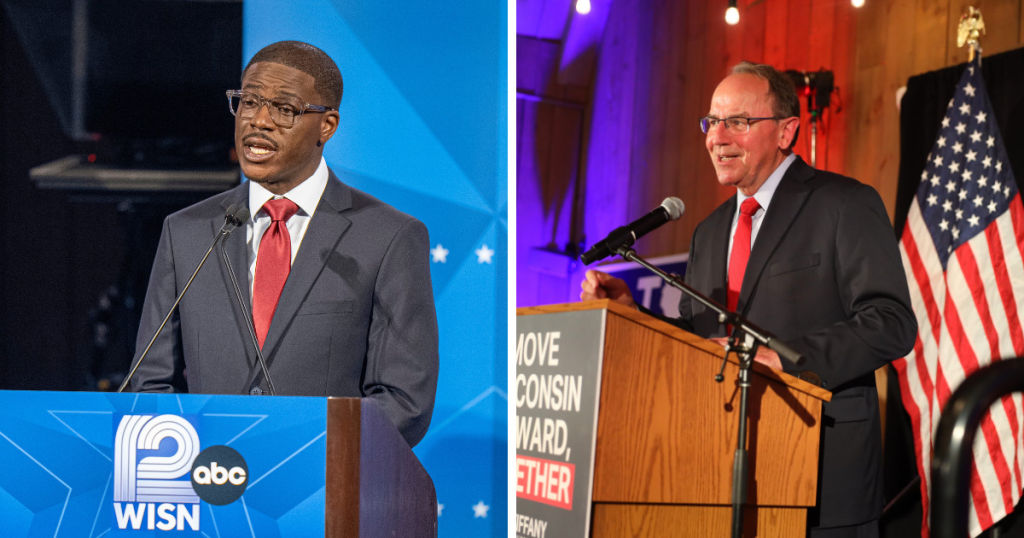
Whoever wins the Nov. 3 election to become Wisconsin’s next governor — whether it be Republican Tom Tiffany or Democrat David Crowley — will inherit a state whose long tradition of open government is replete with opportunities for improvement.
With that in mind, the Wisconsin Freedom of Information Council last month sent questionnaires about government transparency to both candidates. Crowley answered our questions while Tiffany did not.
Here’s a roundup of where the candidates stand when it comes to your right to know, drawn from Crowley’s responses and from what he and Tiffany have said on the campaign trail.
Let’s begin with common ground. Both Crowley and Tiffany say they support ending a legal loophole that exempts state legislators from record retention rules that are in place for all other state and local government officials. This loophole presently allows elected members of the state Assembly and Senate to delete emails and other files at will to prevent their release, absent a pending records request.

Crowley and Tiffany also say they oppose nondisclosure agreements between data center developers and local governments.
In his response to our questionnaire, Crowley said his administration would post commonly requested information online, monitor records processes across agencies and review records request procedures at least annually. He would also require that appointees receive training on the public records and open meetings laws and “make sure the agencies responsible for public records and open meetings compliance have the funding and staffing they need to do that work well.”
Asked about potential changes to the public records and open meetings laws, Crowley said he supports increasing the location fee threshold — a provision in the law allowing custodians to charge location fees only when they are $50 or more — which has not been updated since 1981.
Although Tiffany did not respond to the council’s questionnaire, he has made several campaign promises related to government transparency. Tiffany said he would improve a state data portal to “make it easier for taxpayers to search and understand state spending.” He promised to create agency dashboards that would show “taxpayers where their money is going, what services agencies are providing, and the results taxpayers are receiving.” Tiffany’s spokesperson also said that Tiffany, if elected, would “set clear response-time standards for open records requests.”
As a state senator, Tiffany in 2015 voted for a proposal that would have made it easier for lawmakers, the governor and other agencies to withhold records from the public. The measure was rescinded after intense public outcry. (Tiffany later apologized for his vote, saying “Quite honestly, I am embarrassed by the event.”)
Beyond the public records and open meetings laws, Crowley supports legislation targeting strategic lawsuits against public participation (SLAPPs), used to retaliate against individuals and news outlets for engaging in protected activities. The state Assembly in February passed an anti-SLAPP bill, but it died in the Senate. Wisconsin is one of just 10 states without such protection.
Crowley also supports spending taxpayer dollars on WisconsinEye, a public affairs network like C-SPAN, as it works to find a sustainable funding model. “Having served in the State Legislature and now as County Executive, I’ve seen firsthand how important it is for Wisconsinites to have direct access to their government — it strengthens both transparency and public participation,” Crowley said.
Tiffany did not answer our questions on these topics.
Like government transparency, the values of press freedom and free expression are pillars of the broader project of representative democracy. On Sept. 24, Tiffany’s staff blocked two Milwaukee Journal Sentinel reporters from a campaign event alleging bias in coverage. Afterward, he insisted, “I’ve always had an open policy in regards to the media.”
Read Crowley’s full response to WISFOIC’s questionnaire here.
Your Right to Know is a monthly column distributed by the Wisconsin Freedom of Information Council (wisfoic.org), a group dedicated to open government. Jonathan Anderson is the organization’s treasurer.
Your Right to Know: Contenders for governor weigh in on open government is a post from Wisconsin Watch, a non-profit investigative news site covering Wisconsin since 2009. Please consider making a contribution to support our journalism.
