


If you visit Scandinavia you are likely to find yourself at an exhibition about Vikings. There are many to choose from.
The National History Museum in Denmark’s capital, Copenhagen, houses a major permanent exhibition on Viking. The Swedish History Museum in Stockholm boasts the largest Viking Age exhibition in the world. And the new Norwegian Museum of the Viking Age in Oslo, set to open in 2027, promises to be the world’s leading Viking museum. In the meantime, a temporary exhibition displays highlights of Viking Age archaeological finds at the Museum of Cultural History.
Obviously, Scandinavian national museums expect that audiences, domestic and international, visit their museums to see objects from and hear stories about the Vikings. But there’s more to the national museums’ obsession with vikings than simply wanting to meet demand. National museums use history to help shape ideas about national identity and Vikings are often used to reflect current values and needs.
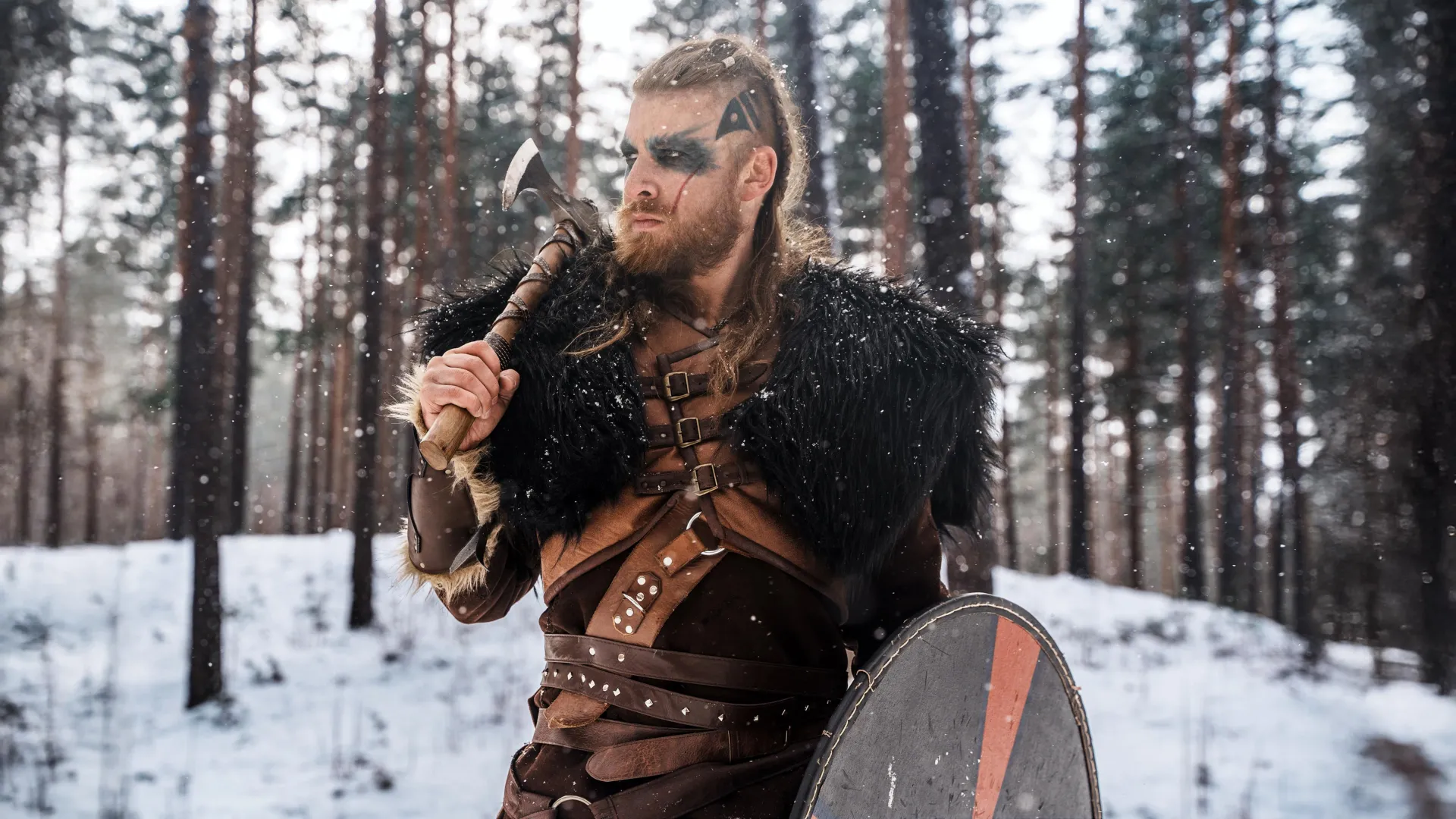
During the 1800s, when national projects were popular, the Viking Age became a key part of the construction of national identity in Scandinavia. Since then, the Vikings have become such well-known symbols that they are now recognized around the world. In the popular imagination, a Viking is tall, broad-shouldered man who wields a sword, and might have a modern haircut like a skin fade or lots of tattoos. However, this picture is mostly a made up one.
Experts at Scandinavian national museums know that Vikings were a diverse group, far from the all-male warrior myth. Yet the image of the male Viking warrior stubbornly lingers, drawing crowds while also haunting the galleries like a restless specter.
Across three of the exhibitions, the male Viking emerges as a warrior, a seafarer, and a merchant. He is also repeatedly depicted as a farmer, his days spent working the land. The agricultural portrayals add depth but the curation of exhibitions tends to foreground the more popular image than this more complex one
One glimpse of this can be seen in the Swedish exhibition, which notes that many free men and women owned weapons, but only a few truly saw themselves as warriors. Still, the exhibitions spotlight ships, swords and artifacts of trade and travel, placing them front and center.
In Copenhagen, visitors to The National Museum are told to see “our Viking exhibition, where we’ll explore a world more than 1,000 years old – shaped by a warrior culture and the gods Odin, Thor, and Freyja.” Here we see the real history butting up against the expected fantasy of Norse legends, warriors and gods.
There seems to be a tension that curators feel in giving audiences what they are looking for while also presenting real history.
Another place this tension can be seen is in their depiction of female vikings. While these intuitions are attempting to insert women into the male-dominated picture of the Viking age, descriptions of women’s lives and their social or cultural influence tend to be limited.
There is a tradition of only showing Viking Age women who were exceptional figures, such as noble mistresses or shieldmaidens (female warriors), making ordinary women less visible. Elsewhere representations of women cleave to gender stereotypes focusing on their roles in home and their clothing. Take this example from the Danish exhibition, where it is stated that “guests were received by the lady of the house, who managed everything to ensure the occasion was a success. Women played an active role in running the farm, and also traveled widely.” Another caption explains that: “Jewellery and equipment in the graves of many wealthy and aristocratic women reflect the complex roles these women had.”
The curation is also concerned with the national founding narratives of Scandinavia.
The story that the Viking age was a pivotal moment in the birth of nations and culture is seen in various forms across all three exhibitions. The story is that in this period Scandinavia became distinct unified Christian kingdoms from a series of disparate and decentralized pagan tribes. Today, Scandinavians differ in their enthusiasm for this narrative. But it still looms over the storytelling of the period’s history.
In Denmark, history blends seamlessly with national identity. This has been bolstered by the nation-building legend of Harald Bluetooth. Bluetooth was the father of Sweyn Forkbeard and grandfather to Canute the Great – who converted to Christianity after witnessing the miracle of the monk Poppo carrying a piece of burning coal without burning his hands.
Several researchers have observed that, since the 1980s, the Viking Age has been used to create convenient contemporary narratives. For instance, those narratives suggesting successful cultural encounters between Scandinavians and Muslims in the past by highlighting archaeological finds) that testify to these encounters. This stems from a contemporary desire in Sweden and Norway to create a counterweight to the nationalistic use of the Viking Age that is often directed against Muslims.
As these examples show, creating a museum exhibition is a delicate balance between handling traditional narratives rooted in popular imagination and presenting accurate representations of the past. Still, the Scandinavian national museums’ obsession with the Vikings may be explained by their eagerness to present representations of the past that have more to do with the present state of society than what is known about the Viking world.
