


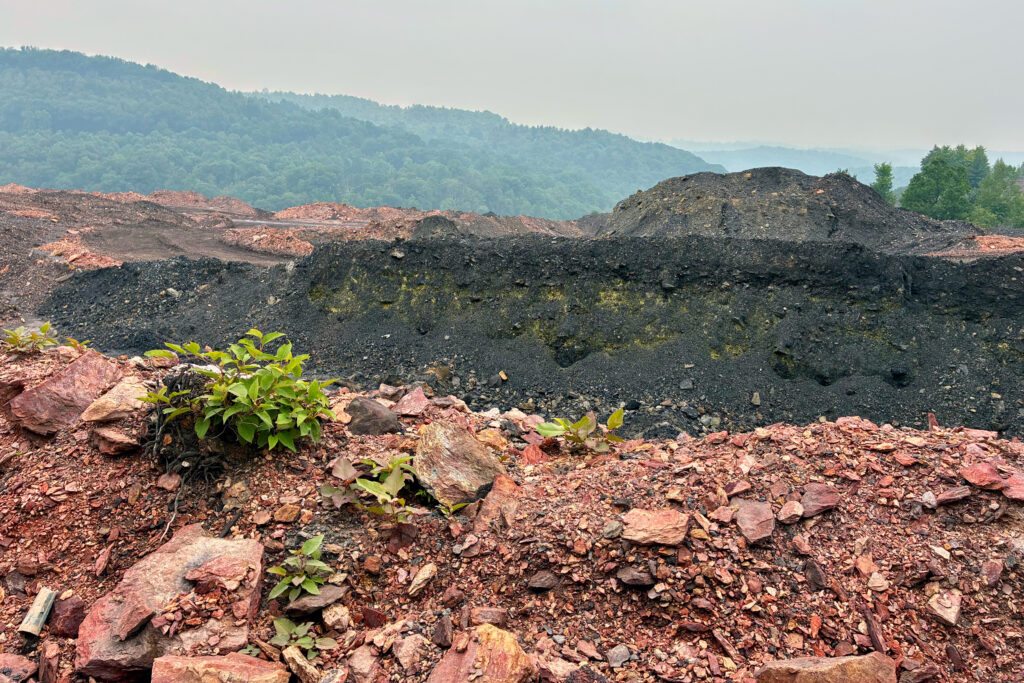
WINDBER, Pa.—Standing on the rocky banks of Paint Creek in western Pennsylvania, Jim Panaro pointed out the colors of contamination. The orange staining the boulders is from iron, he explained, and the milky-white pools stagnating at the surface are aluminum. Likely lurking beneath the surface are other metals—copper, cadmium, arsenic—toxic to both aquatic life and humans.
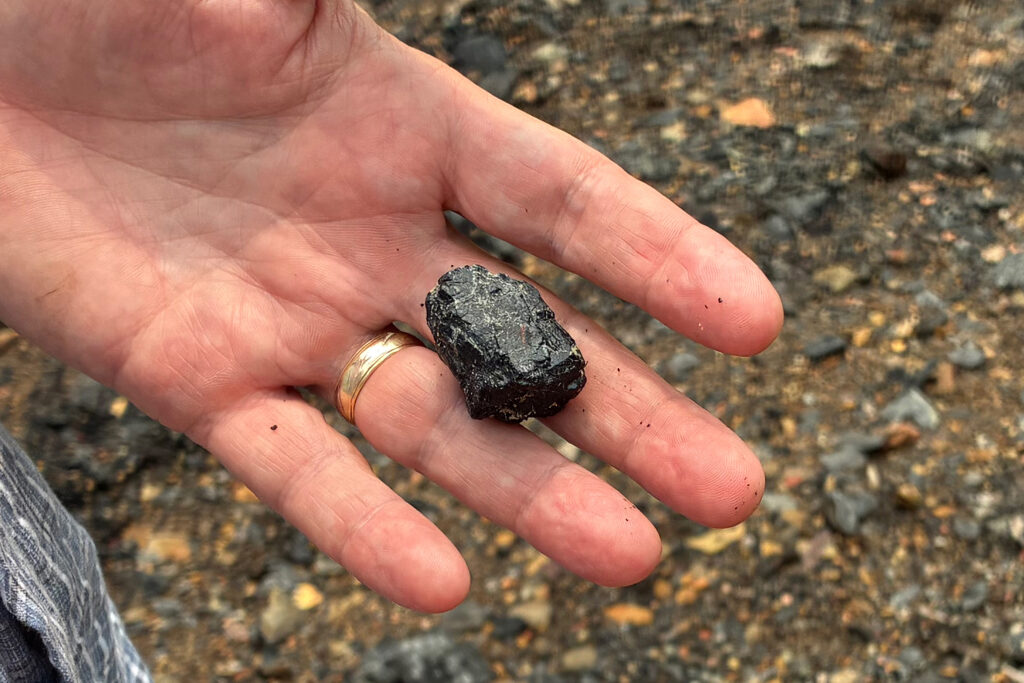
Towering behind Panaro is the source: a mountainside’s worth of coal waste at Windber Mine 37, near the city of Johnstown, one of hundreds of such piles across Pennsylvania discarded during the fuel’s heyday. Often referred to by environmental advocates as waste coal and by industry groups as refuse, “gob” or “boney,” this coal simply didn’t contain enough carbon to burn, and what was there was mixed in with too many other constituents to be efficient or economical as fuel.
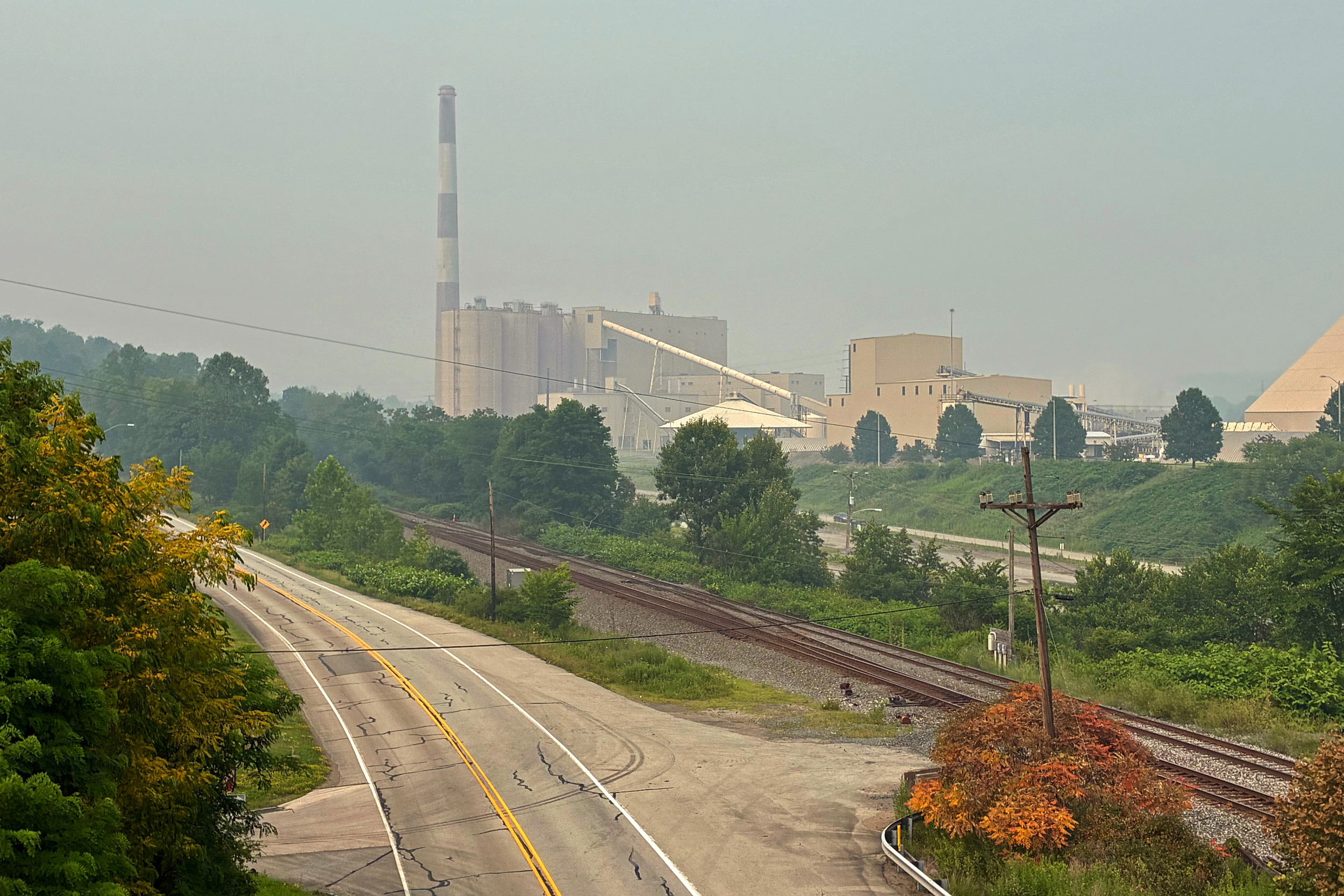
Panaro said industry is now helping to undo this legacy of pollution. An executive vice president at Robindale Energy, a company that burns waste coal in specialized plants across the state, Panaro oversees the trucking and combustion of millions of tons of the waste every year. A lifelong resident of the area and avid flyfisherman, Panaro said he’s seen the benefits firsthand.
“I never thought I’d see streams that were so polluted when I was growing up, that I can trout fish in now,” Panaro said.
But the cleanup comes at a heavy cost to taxpayers and the environment.
Pennsylvania’s waste coal industry is propped up by hundreds of millions of dollars in public subsidies, primarily through its inclusion in the Alternative Energy Portfolio Standards (AEPS), a regulation dating back to 2004 that requires utilities operating in the state to purchase a certain percentage of their power from specific sources. The industry also receives financial support from state tax breaks, first instituted in 2016, that now amount to about $50 million a year.
There is also a climate cost. Burning waste coal is more carbon-intensive than most other energy sources; a September 2025 study from University of Nevada Researchers found they produce 7 percent to 118 percent more greenhouse gas emissions per kilowatt hour of energy than traditional coal plants, which are responsible for the majority of historical global warming.
Climate-conscious advocates and lawmakers say the subsidies are one of the obstacles standing in the way of Pennsylvania’s progress on renewables. Pennsylvania is ranked 42nd in the country for renewable energy generation and now produces more energy from waste coal than it does from solar arrays. In total, the 7 million tons of waste coal burned annually provides about 3 percent of the state’s energy, compared to about 4 percent from renewables, according to the state’s Independent Fiscal Office.
Advocates are seeking change, and Pennsylvania’s Republican-controlled Senate, traditionally a bastion of support for pro-fossil fuel policies, presents a formidable obstacle. But they are also running up against another surprising political roadblock: a small group of Democratic state lawmakers whose support is enough to make the subsidies essentially untouchable.
“There is this feeling that we are compensating these waste coal people way too much,” Greg Vitali, a Southeast Pennsylvania Democrat and outgoing chair of the House Environmental & Natural Resource Protection committee, said. “And when we try and reform that… there are Democratic House members who are reluctant.”
This tension has existed since the creation of the AEPS, which made Pennsylvania an early clean-energy pioneer. The coal industry and sympathetic politicians negotiated the inclusion of waste coal in the mix of fuels, going so far as to swap the word “renewable” for “alternative” in the regulation’s title. They argued its inclusion would help clean up legacy pollution.
Environmental groups like the nonprofit PennFuture are skeptical of that argument, likening it to moving pollution “from the land to the air.” The plants that burn waste coal produce less air pollution than most traditional coal plants, but they produce far more than renewable energy sources like solar or wind. The refuse plants also concentrate toxic metals like mercury and manganese in coal ash, which still requires disposal.
Costs are swiftly rising, too, after lawmakers voted in 2020 to require coal waste to originate from inside the state’s borders. Robert Routh, Pennsylvania policy director for the Natural Resources Defense Council (NRDC), said the unit cost for the portfolio’s Tier II fuels—waste coal along with other sources like landfill gas and hydropower—increased about 13-fold between 2020 and 2025, with the subsidy for waste coal accounting for about $180 million in 2025, roughly half the total for that tier. Costs are borne by ratepayers on their monthly utility bills.
“The costs of compliance with the AEPS continue to go up, despite the fact that we’re not doing what the law was intended to do, which was to incentivize diverse alternative sources of energy,” Routh said. “And it’s primarily because of waste coal generation.”
There is a proposal—House Bill 501—to update the standards to elevate renewables and downgrade waste coal, but it has yet to make it out of the Democrat-controlled State House, much less find a foothold in the Republican-controlled Senate. David Hess, a former head of the state’s Department of Environmental Protection, is among those who points to a history of support for waste coal even within the Democratic party.
“Look in the areas where the [waste coal] plants are located; you’ll find lots of Democratic support,” he said.
The bill’s sponsor, Democratic State Rep. Danielle Friel Otten, disputes that intra-party opposition has killed momentum on her bill, and said energy policy focus has simply shifted toward PJM Interconnection, the powerful operator of the nation’s largest energy grid, which includes Pennsylvania. That’s put the conversation around AEPS and waste coal “kind of on the shelf,” she said, to be dealt with at a later date.
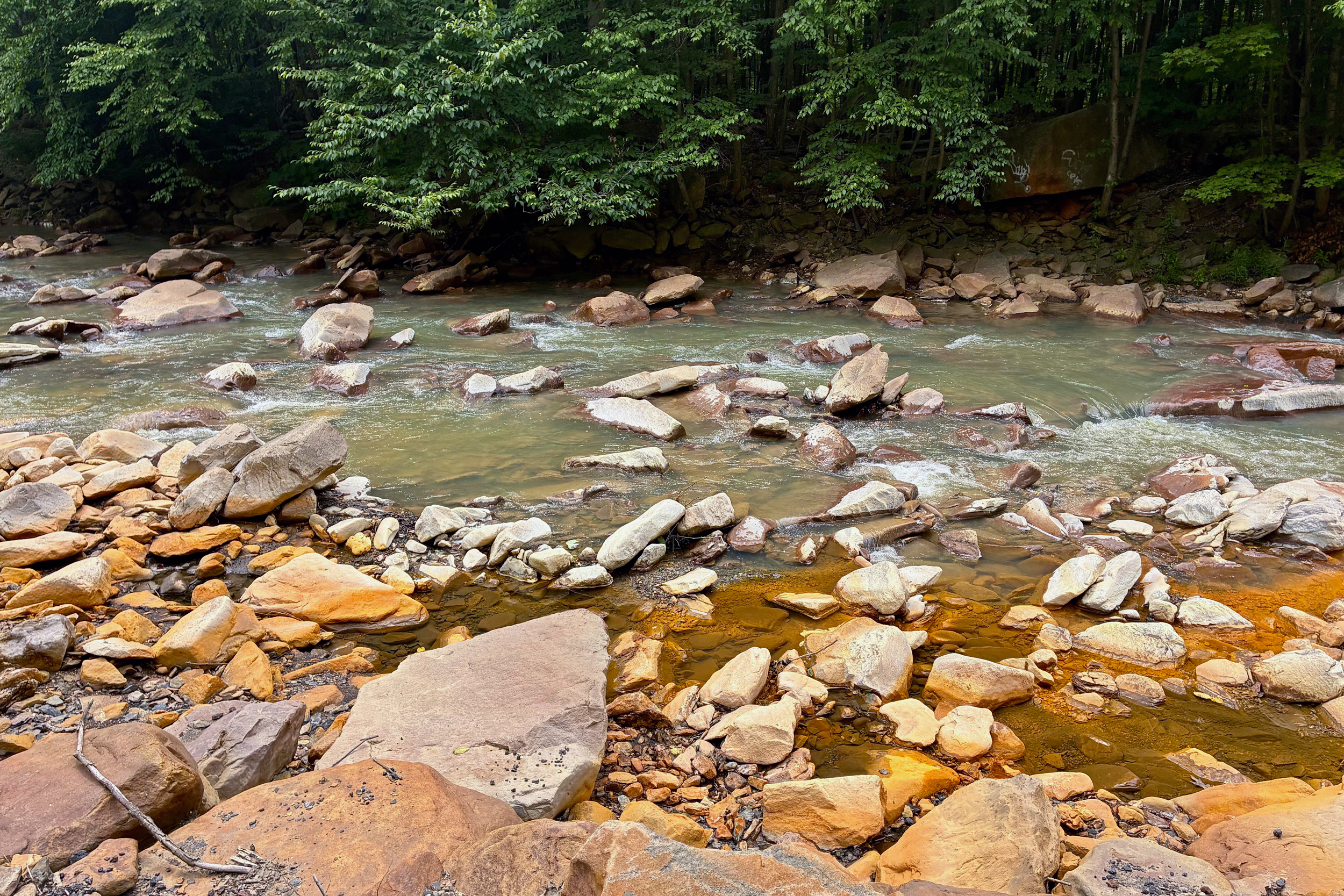
In coal country 100 miles west of the State Capitol in Harrisburg, there’s been no let-up in support for burning boney. Before the arrival of the coal industry, Paint Creek was a destination for 19th-century landscape artists who wanted to capture its beauty. Now, it’s a heavily polluted waterway that connects just downstream from Mine 37 with the Stonycreek River, where teenagers are known to cliff jump and swim in water that tastes like loose change. Panaro says his company is working to fix that.
“Robindale has cleaned up over 72 million tons of piles just like this,” he said.
The complicated politics of waste coal are reflected in the perspective of John Wenzel, a highly-regarded entomologist and executive director of the Conemaugh Valley Conservancy, a nonprofit promoting preservation and recreation in the surrounding watershed. Over lunch at a restaurant a few minutes away from Mine 37, with Canadian wildfire smoke pressing up against the windows, Wenzel said he was well attuned to the ecological disasters caused by climate change.
And yet, waste coal is already an environmental disaster polluting the local landscape, and Wenzel found it hard to write off the benefits of removing it. The only other alternatives to burning it are to cap it in place or truck it to landfills, and Wenzel views the latter as impractical, given industry estimates there may be more than 1 billion tons of waste coal in Pennsylvania.
“Most of the people who grew up here, they consider that the rivers are poison—bad water… And the idea that you’re living in a landscape with poisoned water is not really an attractive feature,” Wenzel said, adding that Robindale is the primary entity removing this legacy pollution.
“Who else is going to do that?” he asked.
Tough Politics
Johnstown’s state representative, the centrist Democrat Frank Burns, is one of the lawmakers at the center of this debate. Several sources told Inside Climate News that he’s one of half a dozen or so Democrats with coal refuse piles, generating plants or other interests within their districts who oppose a change in state subsidies.
Campaign finance records indicate Burns is the top Democratic recipient of funding from the Anthracite Region Independent Power Producers Association (ARIPPA), the primary trade association for the waste coal industry, having received $2,050 since 2017, according to Transparency USA. But his views on the matter remain somewhat enigmatic. Burns’ office declined to arrange an in-person interview for this story.
Hess, the former DEP secretary, said that Democrats from the state’s Northeast House delegation—where there are waste coal interests in the anthracite region—comprise another important leg of support. Campaign finance records show that ARIPPA has donated to at least 14 active House or Senate Democrats, including House Majority Caucus Chair Robert Matzie and House Appropriations Chair Jordan Harris, as well as dozens of Republican lawmakers.
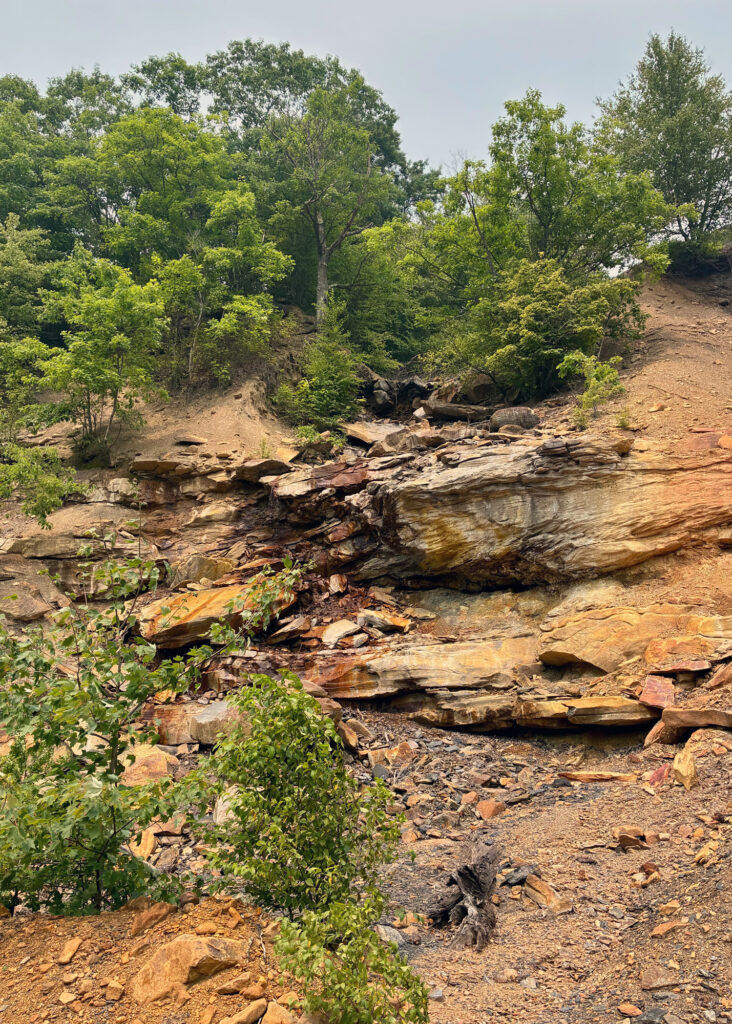
State Rep. Paul Takac, a Democrat from the middle of the state who has received $750 from ARIPPA, did agree to speak. A second-term representative whose district includes Penn State University at its southern end and acid mine drainage in its north, sits on the state Environmental & Natural Resource committee, where he chairs the mining subcommittee, and is a member of the House Climate Caucus. But he’s also toured waste coal generation plants in Southwest Pennsylvania and said he agrees with locals on the complexity of the issue.
“By some counts there are over 1,000 unreclaimed waste coal piles spread across Pennsylvania… It’s a very urgent and pressing issue,” Takac said. “I’ve seen estimates anywhere between $9 [billion] and $16 billion to try and remediate these coal piles. And that is something that is simply not sustainable—not possible for taxpayers to foot that bill.”
Takac supported H.B. 501 last year, which would adjust the state’s AEPS standards and relegate waste coal to a less-lucrative Tier III position. Advocates say that is much needed after the 2020 update that closed the state’s borders (a policy co-sponsored by Burns) and required electric utilities to purchase in-state waste coal.
Rob Altenburg, senior director of energy and climate for PennFuture, said that change quickly spiked costs for waste coal. As companies like Robindale have finished removing waste coal from easily accessible and relatively high-quality piles close to the specialized plants that burn them, he said, they are now moving onto dirtier and costlier ones.
“What’s happening now is they have to go farther and farther away to get lower and lower quality coal, Altenburg said. “They are in this spiral where they are constantly needing more money.”
Jaret Gibbons, executive director of ARIPPA, disputed that narrative. He said the border closure was necessary to give the waste coal industry, which employs about 2,200 people, the financial security it needs to operate and continue to remove the pollution from landscapes across the state. He said that after an unforeseen spike over the past few years due to larger trends within the power sector, as well as inflation and rising fuel costs, the price for Tier II credits has come back down to where the industry anticipated after the closure.
Proposed by Otten, a Southeast Pennsylvania Democrat, House Bill 501, the PRESS bill, would increase requirements for fuel sources like wind and solar from less than 8 percent to 35 percent by 2035, according to analysis from PennEnvironment, and reduce waste coal from a maximum of 10 percent to 5 percent in the same time period.
Takac squared his belief that waste coal should receive financial support with his vote for the PRESS bill, which passed the House environment committee 14-12 in June 2025, by framing it as a needed update to the portfolio’s mix.
“The legislature took its best guess [when the AEPS was established] at what the balance should be. I think one of the challenges is that it now appears the equation is becoming more and more imbalanced,” Takac said.
Deal or No Deal
Pennsylvania’s rising energy costs seemed to present an ideal opportunity for state lawmakers to make a change to the AEPS standards over the past year. Driven largely by AI data center buildouts and electrification, double-digit increases to residential energy bills are now a hot-button issue in the Commonwealth, with lawmakers of both parties scrambling to stake out politically advantageous positions.
But on AEPS, lawmakers didn’t get to a deal.
In Pennsylvania’s divided government, major policy changes typically move during annual budget negotiations, when Democrats, who control the House and governor’s office, trade top policy priorities with the Senate. For Democrats, getting a bill at least through the House is often a prerequisite for consideration as a priority.
This story is funded by readers like you.
Our nonprofit newsroom provides award-winning climate coverage free of charge and advertising. We rely on donations from readers like you to keep going. Please donate now to support our work.
But since its party-line committee passage more than a year ago, the PRESS bill has sat in the House, untouched by leadership. The holdup on PRESS, Routh said, is largely “because of disagreements about what the bill does for waste coal.”
Tom Schuster, director of the Sierra Club’s Pennsylvania Chapter, added that some Democrats with strong labor ties also oppose lowering the subsidies for waste coal for fear it could lead to the closure of unionized plants.
Routh added yet another wrinkle: He’s heard whispers of concern that even passing the bill through the House could negatively impact the real-time market value of waste coal.
Otten insisted such takes are inaccurate. She said party leadership informed her they had the numbers— at least among House Democrats— to reach a deal that would relegate waste coal to Tier III but provide more financial support than the bill originally offered. But around the same time, policy focus shifted to addressing governance issues at PJM, where copious amounts of renewable energy projects are stuck in administrative queues.
“It’s not a, ‘We don’t care about this,’” Otten said. “It’s just we’re getting progress on the PJM side… there’s going to be a big fallout, and then we’ll see if AEPS as it is written now is even relevant.”
Meanwhile, the expensive subsidization of burning waste coal is still happening, and opinions are diverging on the right policy solution.
“What if we throw the model out and come up with something new, something that is nonpartisan, not political?”
— Katie Blume, Conservation Voters of Pennsylvania
Some lawmakers want to remove waste coal from the AEPS entirely and instead fund and manage it through a separate state program. Takac said such an approach would still incentivize the use of waste coal for energy generation but would also encourage other potential uses, such as trying to pull out critical minerals, a budding technological application. Doing so could also free up AEPS legislation for movement, he said.
“Especially with big complex pieces of legislation, everybody can find something they love and everybody can find something they hate,” Takac said.
Some environmental advocates believe that such a policy could develop a different, direct public funding source with lots of strings attached, providing oversight of issues like site selection and using other solutions where appropriate, like capping waste coal piles or trucking them to landfills.
“What if we throw the model out and come up with something new, something that is nonpartisan, not political?” said Katie Blume, political and legislative director of the nonprofit advocacy group Conservation Voters of Pennsylvania. “It makes sure we clean up the environment and still have good jobs.”
Schuster thinks that escalating costs will eventually “override” political opposition.
“We have probably a while ago crossed the threshold where the money that they’re getting from this existing policy is beyond what they need to stay in business,” Schuster said. “And as soon as politicians figure that out, then we’ll probably see some changes.”
Back at the Mine 37 refuse pile near Johnstown, Panaro and Gibbons warned against diverging from the status quo. Prior to the closure of the border in 2020, the waste coal plants there largely ran as “peakers,” they said, only firing up during times of high energy demand. That’s a precarious place for a coal plant to exist, one major unforeseen repair away from ownership pulling the plug. Fiddle with AEPS, they warn, and that could well be the reality once again.
“Most plants that go into peaking don’t stay peaking for long before they close,” Panaro said.
“And if the plants aren’t running, we’re not doing the cleanup,” Gibbons added.
About This Story
Perhaps you noticed: This story, like all the news we publish, is free to read. That’s because Inside Climate News is a 501c3 nonprofit organization. We do not charge a subscription fee, lock our news behind a paywall, or clutter our website with ads. We make our news on climate and the environment freely available to you and anyone who wants it.
That’s not all. We also share our news for free with scores of other media organizations around the country. Many of them can’t afford to do environmental journalism of their own. We’ve built bureaus from coast to coast to report local stories, collaborate with local newsrooms and co-publish articles so that this vital work is shared as widely as possible.
Two of us launched ICN in 2007. Six years later we earned a Pulitzer Prize for National Reporting, and now we run the oldest and largest dedicated climate newsroom in the nation. We tell the story in all its complexity. We hold polluters accountable. We expose environmental injustice. We debunk misinformation. We scrutinize solutions and inspire action.
Donations from readers like you fund every aspect of what we do. If you don’t already, will you support our ongoing work, our reporting on the biggest crisis facing our planet, and help us reach even more readers in more places?
Please take a moment to make a tax-deductible donation. Every one of them makes a difference.
Thank you,
