

Close Menu
NCIJ Network NCIJ Network
    What's Hot

    BambooToken malware controls Windows and Linux systems via MQTT

    September 15, 2026

    USDT Payments Feature in Polish Energy Giant’s Failed $230M Oil Deal

    September 15, 2026

    NASA’s Webb Reveals Dynamic Panorama of Star Formation

    September 15, 2026
    Facebook X (Twitter) Instagram
    Trending
    • BambooToken malware controls Windows and Linux systems via MQTT
    • USDT Payments Feature in Polish Energy Giant’s Failed $230M Oil Deal
    • NASA’s Webb Reveals Dynamic Panorama of Star Formation
    • What weapon could the US have put into space?
    • Middle East live: Iran rejects talks with US after ‘mixed signals’ from Trump
    • Jaguar Land Rover in talks to sell Defender to Nato countries | Jaguar Land Rover
    • iOS 27 is finally here, with the new Siri AI beta – and 120 security patches
    • Pony.ai unveils autonomous electric truck for logistics fleets
    • About
      • Our Team
      • Editorial Policy
      • Editorial Independence
      • International Support
    • Trust & Standards
      • AI Usage Policy
      • Conflict of Interest Policy
      • Corrections Policy
      • Ethics Policy
      • Fact-Checking Policy
      • Source Protection
    • Get Involved
      • Guide for Sources
      • Support Independent Journalism
    • Legal
      • Cookie Policy
      • Privacy Policy
      • Terms of Use
    Facebook X (Twitter) Instagram
    NCIJ Network NCIJ Network
    Tuesday, September 15
    • Home
    • World
    • Ai
    • Business
    • Politics
    • Health
    • Crypto
    • Science
    • Technology
    • Cybersecurity
    • Defense & Security
    • Economy
    • Energy
    • Europe
    • More
      • Fact Check
      • Investigations
      • Opinion & Analysis
      • Environment
    NCIJ Network NCIJ Network
    Home»Environment

    What weapon could the US have put into space?

    NCIJ NETWNCIJ NETWORKBy NCIJ NETWNCIJ NETWORKSeptember 15, 2026 Environment No Comments4 Mins Read
    Share
    Facebook Twitter LinkedIn Pinterest Email

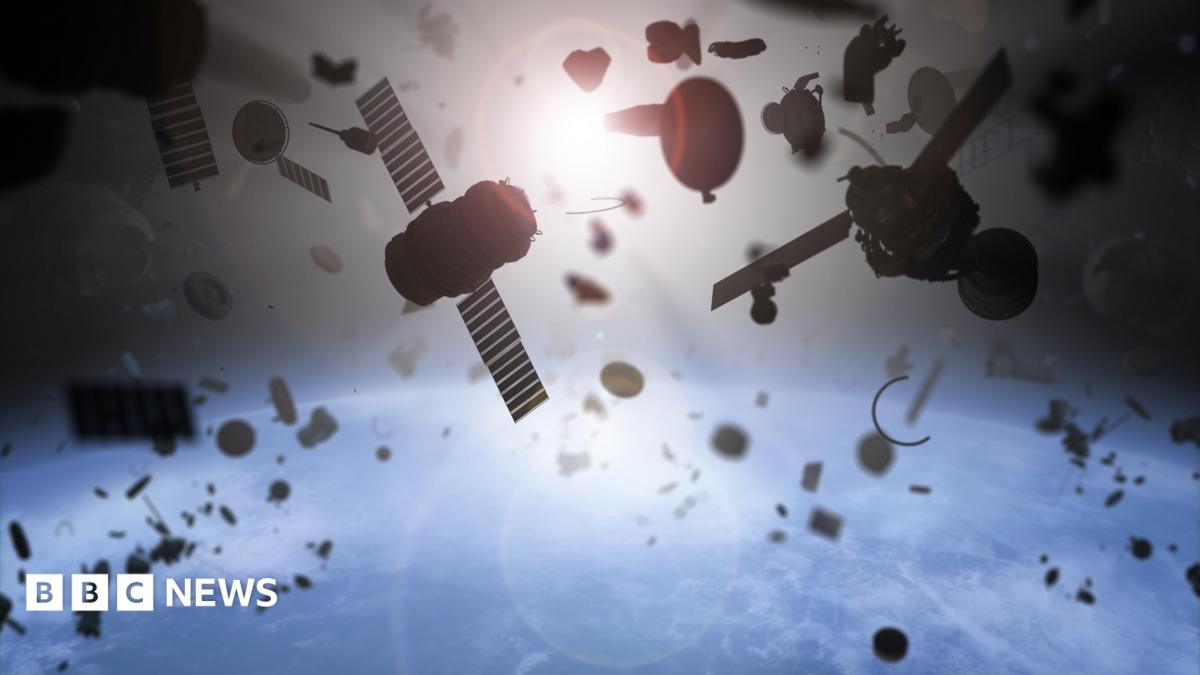
    The announcement by the United States that it has deployed a space weapon in Earth’s orbit has raised questions about what weaponry is actually in space, and what role it could play in efforts by great powers to dominate that arena.

    Washington has given away little in its announcement. Secretary of the Air Force Troy Meink said the “on orbit” weapon was necessary to safeguard US forces against hostile enemy action, but gave no details about the weapon’s capabilities or when it was put into orbit.

    So what could this weapon be, and what is wider picture like for military developments in space? Who else could have similar weaponry?

    Advanced militaries already deploy satellites in space for range of purposes, from supplying secure communications to reconnaissance, and providing precise location information for targeted strikes and detecting missile launches.

    As warfare become more technologically advanced, analysts expect the use of military hardware in space to increase.

    Dr Bleddyn Bowen, an associate fellow in military sciences at the Royal United Services Institute and associate professor in astropolitics at Durham University, said he was only able to hazard a guess about the weapon announced by the US.

    “I would expect there to be some kind of electronic warfare or radio-jamming platform, possibly, this would be a non-destructive kind of anti-satellite weapon,” he told BBC Radio 4’s Today programme.

    Such weaponry already exists on Earth and can disrupt satellite communications, he said. “If you take out the radio links then your satellite is very useless.”

    Bowen also would not rule out some sort of more disruptive and riskier weaponry, which could create a lot of debris and destruction.

    “Less likely would be a kinetic kill vehicle of some sort, so a vehicle that would release a projectile of some sort that could ram into a satellite and destroy it,” he said.

    “Possibly some sort of close inspection and grappling satellite would be another possibility as well.”

    But while the weapon placed in orbit appears to be a first, the US – and indeed its Russian and Chinese rivals – have had weapons that can be pointed and shot into space for some time.

    In fact in the last 10 years, Russia and China have been doing a lot more manoeuvres in space, known as rendezvous and proximity operations (RPOs) – “buzzing” Western satellites.

    “Theoretically, these RPO sats can become hunter-killer satellites by physically colliding with them or by nudging them out of orbit,” Dr Rod Thornton, reader in Russian Defence and Security Studies at King’s College, London, told the BBC.

    Bowen adds that the Chinese have demonstrated “space tug capability”, saying: “A vehicle can go up to a satellite, can grapple it and move it into a different orbit.”

    This, he says, can be a positive development – a way of removing space junk as well as knocking out working satellites.

    Thornton says that what Russia lacks in space weaponry and satellites, it makes up for in missile capability.

    “The Russians… have ground-based missiles which can be launched into space to strike sats in low Earth orbit. They also have ASAT missiles that can be launched from a great height by aircraft,” he says.

    “From the Russian point of view they see Nato as having much better and more sats than the Russian military can call up, therefore they have invested heavily in ASATs in order to ‘level the battlefield’ somewhat.”

    Thornton adds a sobering thought: “As a last resort, the Russians can also launch nuclear weapons into space and the EPM blast would ‘fry’ any unhardened sats over a wide expanse.”

    He says that, having so few satellites, Russia would be the “big winner” in any space war, which would involve “missiles fired up into space, manoeuvring sats designed to nudge/destroy them and ground-based lasers”.

    Put Space Weapon
    NCIJ NETWNCIJ NETWORK
    • Website

    Keep Reading

    Wildfires on doorstep of Indonesia’s new capital as environmental and health crisis flares

    How the End of USAID Eroded Global Environmental Goals

    10 promising ways to ‘green’ offshore wind

    ‘They should choose their own destinies’: Manish Chandi on India’s isolated tribes

    Electric fences that kill and the Maasai trying to save Kenya’s last giant pangolins

    What’s Next for Summit’s Carbon ‘Pipeline to Nowhere’?

    Add A Comment
    Leave A Reply Cancel Reply

    Editors Picks

    BambooToken malware controls Windows and Linux systems via MQTT

    September 15, 2026

    USDT Payments Feature in Polish Energy Giant’s Failed $230M Oil Deal

    September 15, 2026

    NASA’s Webb Reveals Dynamic Panorama of Star Formation

    September 15, 2026

    What weapon could the US have put into space?

    September 15, 2026
    Latest Posts

    Two new compounds could reveal hidden drivers of Alzheimer’s disease

    August 4, 2026

    Marmot Researchers Turn to OnlyFans for Funding—And There Are Meme Coins Too

    August 4, 2026

    New Pass-ta-key attacks let malware hijack Google-synced passkeys

    August 4, 2026

    Subscribe to News

    Get the latest sports news from NewsSite about world, sports and politics.

    NCIJ Network is an independent digital news platform delivering trusted investigative journalism, European and global news, in-depth analysis, and fact-based reporting with accuracy, transparency, and integrity.

    Facebook X (Twitter) Instagram Pinterest YouTube

    BambooToken malware controls Windows and Linux systems via MQTT

    September 15, 2026

    USDT Payments Feature in Polish Energy Giant’s Failed $230M Oil Deal

    September 15, 2026

    NASA’s Webb Reveals Dynamic Panorama of Star Formation

    September 15, 2026

    Subscribe to Updates

    Get the latest creative news from FooBar about art, design and business.

    Type above and press Enter to search. Press Esc to cancel.