


The US Department of Justice is overhauling its approach to white-collar crime enforcement, shifting manpower and resources to a new division targeting fraud against the government and theft of taxpayer dollars.
The pivot comes as the justice department has softened its approach to enforcing laws against foreign bribery and pulled back on prosecuting other types of white-collar crime since Donald Trump’s return to the presidency last year.
The department has created a unit for the initiative called the National Fraud Enforcement Division, with headcount set to balloon to 500 attorneys and staff by August 24. It will pull resources from other DoJ divisions at first, with the goal of nearly doubling in size over the next two years.
It will prioritise fraud spanning public trust and financial integrity, healthcare, internal revenue, global trade and commerce and corporate misconduct, according to a memo shared with the FT. Colin McDonald, who has held several leadership positions in the department over more than a decade, will head the division.
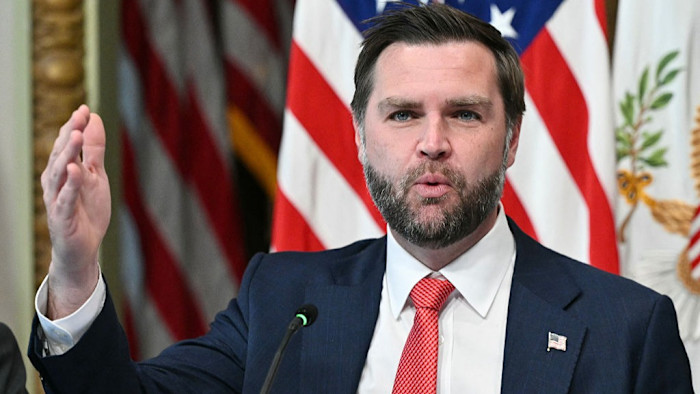
The Trump administration has made targeting fraud a top priority, with vice-president JD Vance championing the effort. The White House asserts that $230bn in fraud across federal benefit programmes has been uncovered since Trump’s second term began and that more than $56bn in would-be fraudulent spending was halted this year.
The White House says it is waging a “relentless war” on such schemes.
In an interview, McDonald said the division was the first of its kind and would “quarterback” the administration’s approach to fraud enforcement by seeing the “full field” of fraud and emerging threats.
“The fraudsters really like it when we’re siloed,” he told the FT. “If we’re not talking to each other and we’re just doing our own thing, they feast on that.”
The DoJ’s criminal division has a separate fraud section, recently rebranded as the “white-collar and corporate enforcement section”, focusing on private financial and healthcare fraud. The new division will focus exclusively on fraud against public entities.
Between $233bn and $521bn in federal funds may be lost annually to fraud, according to a 2024 estimate by the non-partisan US Government Accountability Office that analysed spending between 2018 and 2022.
The government has long taken a “pay and chase” approach to tackling fraud in its largest benefit programmes, a reactive model in which claims are cashed out first and alleged bad actors are tracked down later. The Covid-19 pandemic marked a breaking point, when $5tn in emergency aid became ripe for fraud.
Government agencies were shifting away from that approach, McDonald said, working on the front end to keep money from going out. DoJ’s role on the back end was to ensure there were enough prosecutors to take on fraudulent claims that sneak through nonetheless, he added.
“The prosecutorial apparatus was not large enough to be able to respond with the type of force necessary in light of the multiplying opportunities for fraudsters to exploit taxpayer dollars,” McDonald said.
The DoJ is also “leaning hard” into AI to identify trends and themes in crime and detection avoidance.
“That is going to streamline our investigations, our cases,” Stephen Weiss, associate deputy attorney-general, told the FT. “We’re going to bring more by the day, which is going to make us more nimble, agile and efficient in everything that we do.”
Critics say the Trump administration’s anti-fraud agenda has largely hit taxpayer-funded programmes in blue states such as California and Minnesota, where cash from Medicaid payments to childcare grants has been halted over fraud concerns.
Paul Pelletier, former principal deputy chief of the criminal division’s fraud section, said that what the administration had done was “completely eviscerate” the independence of the criminal division, which he called vital to bringing meaningful cases.
He warned that the wider the scope of the new division, “the harder it is to effectively run the thing”.
“What are they actually going to do to make fraud prosecutions more effective?” Pelletier said. “I don’t see it.”
Likewise, Trump has pardoned individuals convicted of fraud, including his allies such as nursing home executive and donor Paul Walczak and Robert Harshbarger Jr, a Republican congresswoman’s husband.
Other types of white-collar crime prosecution have slowed under Trump. The government reported 285 new white-collar crime prosecutions in May, down nearly 20 per cent from the year prior and more than 16 per cent down from levels reported in 2021, according to data analysed by the Transactional Records Access Clearinghouse.
“This is the best time to be a white-collar criminal,” said Neama Rahmani, a former federal prosecutor and president of West Coast Trial Lawyers. “I would say there’s a very important exception there: unless you’re ripping off the government.”
Vance, whom Trump has dubbed “fraud czar” as head of the White House’s anti-fraud task force, wrote in a Washington Post op-ed last week that federal benefit programmes should be protected from fraud as “countless Americans” will depend on them in their lifetime, noting his mother had been among them. The vice-president touted the DoJ’s convictions in more than 150 fraud cases across the country.
A DoJ spokesperson said the division engaged with the White House’s fraud task force daily and was working with it closely.
The division’s leadership would be “in the weeds with the people doing the work”, McDonald said, an effort to limit bureaucracy in the division by slimming down middle management. The goal was to bolster communication between the fraud division and the broader federal apparatus to “remove any paralysis at any stage of a potential criminal case”.
“If we can solve that, then we will be positioned very well to be able to not just put a dent into the fraud problem, but to eliminate it,” McDonald said.
