


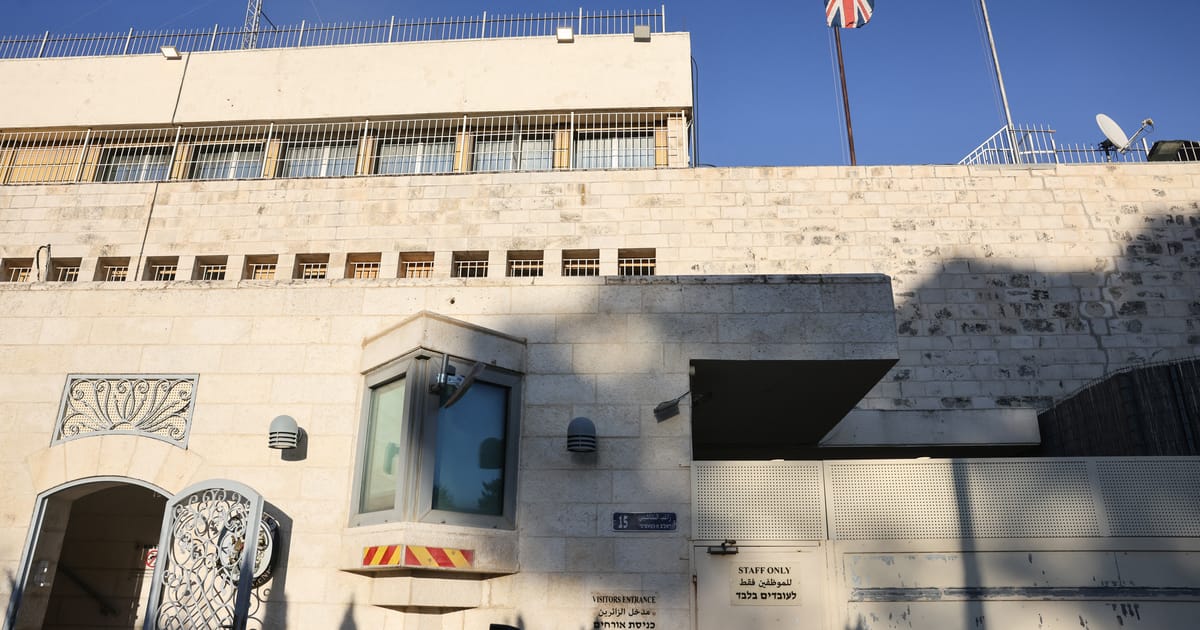
A person familiar with Israeli government thinking, granted anonymity to discuss a sensitive matter, told POLITICO the mission is “basically an empty shell” that cannot issue visas, renew passports or liaise with the Palestinian Authority. Britain does not tend to issue visas or passports in consulates.
“The seven diplomats there, their work is basically to maintain the building and hold the Union Jack in place,” they said.
A British official presented the deal as a “good outcome” nonetheless. After three weeks of hard-fought negotiations, a feared spiral of tit-for-tat expulsions has been avoided.
The U.K. has told Israel it is keeping the possibility of retaliation open, however, after Israel threatened to expel British diplomats from Israel. The Israeli government had been demanding that the U.K. rolls back its pending package of sanctions on West Bank settlements, but British ministers are holding firm.
Miliband maintained Thursday that Britain does not accept Israel has a “legal right” to shutter the site that has been there for nearly 200 years, because East Jerusalem is deemed “occupied territory.”
The hope in the U.K. Foreign Office is that maintaining a presence will make it easier to build back up after elections in Israel on Oct. 27.
U.K. National Security Adviser Jonathan Powell traveled to Jerusalem last week as part of efforts to persuade the Israeli government not to shut the consulate, but a breakthrough wasn’t reached until Wednesday night.
“The foreign secretary was very clear on our red lines. We’re not reopening the sanctions package and we have to keep our presence in East Jerusalem,” said the U.K. official cited above. “We were very clear about that with the Israelis. We had lots of back and forth with them through officials. It took time but we had been confident we could get to a decent place.”
