


The Trump administration is set to announce on Monday what it is describing as its most comprehensive assault to date on Iran’s economy, unveiling a package of measures that are intended to isolate Iran from the rest of the world.
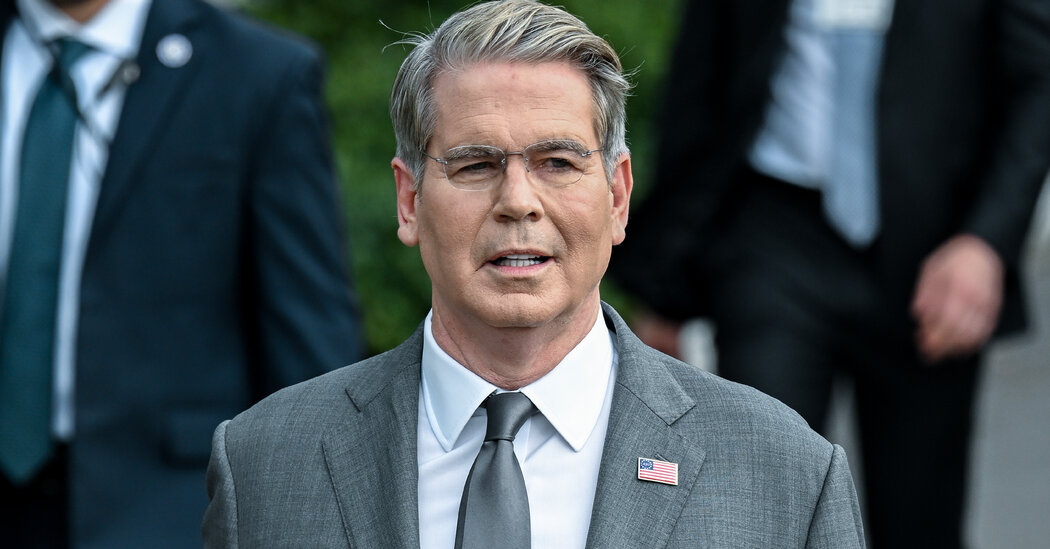
Treasury Secretary Scott Bessent is expected to announce the plan at a news conference on Monday afternoon. The escalation of sanctions pressure comes as negotiations to end the military conflict between the United States and Iran continue to sputter.
While the Trump administration has billed the effort as the coming of an economic apocalypse for Iran, it is not clear in practical terms what else the United States can actually do to further disrupt Iran’s economy. Mr. Trump has already carried out a “maximum pressure” campaign against Iran during his first term and earlier this year enacted a package of measures it called Operation Economic Fury.
And as it ratchets economic pressure higher, the United States must also weigh the potential for blowback in the form of higher energy prices or the risk of inflaming tensions with China, the world’s biggest buyer of Iranian oil.
Mr. Bessent, along with President Trump, has signaled that the new initiative will include greater coordination between the United States and its allies to cripple Iran’s economy. It could include so-called secondary sanctions on those who continue to do business with Iran.
“At dawn begins an economic D-Day — the single greatest financial offensive ever marshaled against an adversary,” Mr. Bessent wrote in a social media post on Sunday evening. “The President has created the conditions to leverage every agency, every authority and action many assumed we would never summon.”
He added, “Our objective is to sever every economic lifeline that sustains the tyrannical regime until Tehran stands alone.”
The Treasury secretary said last week that countries that maintain economic ties with Iran, including through money transfers and oil purchases, would face the “full might and force” of the U.S. government. Mr. Trump has also used the “economic D-Day” description, calling it a “crushing” operation.
The United States could look to impose secondary sanctions on countries that continue to do business with Iran, including purchasing its oil. However, it is not clear how the Trump administration plans to deal with China. The Treasury Department has imposed sanctions on independent Chinese refineries that buy Iranian oil, but it has refrained from imposing large-scale sanctions on Chinese financial institutions that facilitate such transactions.
Any new economic measures that implicate China could complicate Mr. Trump’s upcoming meeting with the country’s leader, Xi Jinping, in Washington next month.
Mr. Bessent suggested that China was aligned with the United States when it came to finding a resolution to the war in Iran and reopening the Strait of Hormuz.
“Many conversations are best to have in private,” Mr. Bessent told CNBC last week. “And we are confident that everyone wants the strait reopened and for energy prices to come back down.”
Iran’s economy has been in free-fall this year because of the war and sanctions pressure.
Iran’s Foreign Ministry said on Monday that Tehran would not bow to an escalating pressure campaign by the Trump administration, after one of the country’s top security chiefs threatened reprisals against countries that joined the United States’ “economic war.”
Esmaeil Baghaei, the Foreign Ministry spokesman, said on Monday that the Trump administration was merely “repeating methods that have proven unsuccessful” in the past.
“Iran will certainly use all multilateral capacities to counter economic sanctions,” he told reporters at a news conference. Ordinary Iranian civilians, he added, would bear the cost of U.S. sanctions.
