


With less than two months to go before high-stakes midterm elections, U.S. President Donald Trump is facing fierce—and rare—blowback from a key constituency and Republican lawmakers alike.
The U.S. agricultural sector has been in an uproar over Trump’s recently announced plan to boost imports of ground beef at a reduced tariff rate, part of a broader effort to drag down record beef prices. Ground beef prices surged yet again in August, powered by tight supplies and continuously strong demand for the staple meat. The plan, which was announced last month, would see 300,000 metric tons of lean beef trimmings enter the country for 90 days. It comes as the sector reels from surging energy and fertilizer prices, ongoing trade whiplash, and sweeping cuts to the U.S. Department of Agriculture.
With less than two months to go before high-stakes midterm elections, U.S. President Donald Trump is facing fierce—and rare—blowback from a key constituency and Republican lawmakers alike.
The U.S. agricultural sector has been in an uproar over Trump’s recently announced plan to boost imports of ground beef at a reduced tariff rate, part of a broader effort to drag down record beef prices. Ground beef prices surged yet again in August, powered by tight supplies and continuously strong demand for the staple meat. The plan, which was announced last month, would see 300,000 metric tons of lean beef trimmings enter the country for 90 days. It comes as the sector reels from surging energy and fertilizer prices, ongoing trade whiplash, and sweeping cuts to the U.S. Department of Agriculture.
The president of the American Farm Bureau Federation, the country’s largest agricultural lobby, blasted the move as a “gut punch to ranchers’ bottom line.”
Retiring Sen. Thom Tillis also heaped on the criticism. “If you think that providing subsidized beef for some period of time is going to make farmers happy and prices go down on a systemic basis, you’re wrong. Doesn’t happen,” he told reporters last month.
As midterms loom, that backlash could prove consequential.
“We’ve got 71 days” until the election, Tillis added at the time, “and right now we don’t have a positive message to tell farm country.”
“The farming community has proved it’s willing to tolerate a fair amount of indignity and injury, but there’s only so much they can take before they revolt,” Christopher Barrett, an agricultural economist at Cornell University, told Foreign Policy.
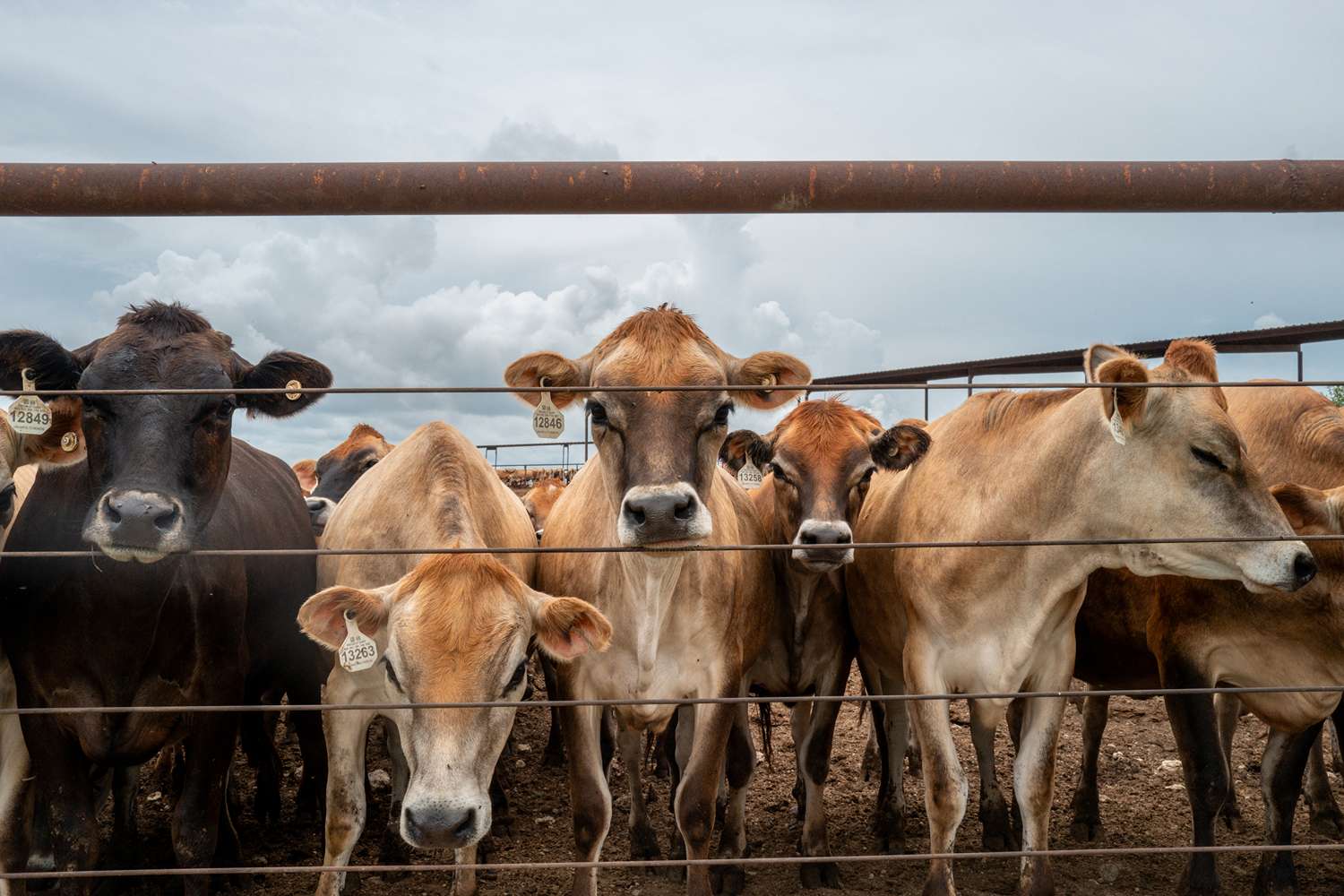
Beef prices have reached record heights in large part because there are so few cattle in the United States.
The size of the U.S. cattle herd has shrunk to a 75-year low as the sector has confronted compounding financial challenges. For ranchers, the combination of surging input costs, market headwinds, and climate challenges has meant that it has been more profitable to sell their animals rather than raising them for breeding.
“The fundamental reason why beef prices are high in the United States right now is that the cost of beef production has gotten very high and therefore ranchers have reduced the aggregate herd size,” Barrett said. And 300,000 metric tons of beef “of unknown origin and quality does absolutely nothing to address the underlying structural supply-side issue.”
Higher cattle prices typically incentivize producers to rebuild their herds. But that takes time. Animal production typically works in cycles, and the one for cattle lasts about 10 years, said Elliott Dennis, an agricultural economist at the University of Missouri. Cows birth one calf at a time, which means that when a producer does decide to retain animals and rebuild their herds, it takes years to do so.
Further complicating the matter has been the spread of the New World screwworm, the flesh-eating parasite that has infected cattle in both the United States and Mexico, whose imports typically account for around 3 percent of the U.S. cattle supply. The Trump administration closed the U.S.-Mexico border to cattle imports last year in an effort to contain the screwworm, although it reopened an Arizona border crossing in August to help ease beef prices.
In some regions, punishing drought and wildfires have also parched grazing land, with devastating implications for producers. Nearly three-quarters of the U.S. cattle herd was impacted by drought conditions this spring, the U.S. Drought Monitor reported in May.
Enter Trump’s big beef import plan, which the administration has said is about bringing down beef prices and easing financial pressures for consumers. Yet at the same time that the plan has infuriated a key voter base, it’s unclear whether the Trump administration’s effort will actually accomplish what it set out to do. Three hundred thousand metric tons represents about 2 percent to 3 percent of total consumption, Dennis said.
“It may help [with prices] in the near term, but whether or not it would really bring beef prices down in a sustained manner for a long time, I think probably won’t happen,” said Joe Glauber, a former chief economist at the U.S. Department of Agriculture. “The longer-term issue is the structural one, with the beef herd.”
If Washington does actually want the producers to rebuild their herds, the Trump administration’s goal of slashing prices only sends producers mixed messages, experts said.
“What signal is that sending to the industry?” Dennis said. “Is this temporary? Is this full-time? Should we rebuild? Should we not rebuild?”
The U.S. Cattlemen’s Association warned that the move “further erodes the economic confidence needed to invest in herd expansion.”
And then there’s the reputational risk. The United States is known for having a “gold standard” for high-quality beef products and ships a lot of high-quality steaks abroad, Dennis said. But Trump’s import plan has stoked concerns of mystery meat, especially as the country reels from a rash of food safety problems, most notably the recent cyclospora outbreak.
“The big nightmare of producers is that you wind up getting contaminated product that comes from outside the system, but it hurts the confidence of consumers in product generated within the system,” Barrett said.
With many U.S. voters concerned about the cost of living and high prices for grocery staples such as beef heading into the crucial midterm elections, Trump and his fellow Republicans are eager to show that they are addressing the so-called affordability crisis.
But trying to rapidly bring down food prices without alienating constituents in agriculture and cattle-heavy regions could prove a challenge.
Republican lawmakers, many of whom have largely refrained from criticizing the U.S. leader, have publicly criticized the U.S. leader’s beef import plan. Sen. Tim Sheehy said in a post on X that he had “advised President Trump against this course of action for a year,” and he warned that this move would “further harm [American ranchers]—most of whom are MAGA Republicans.”
The White House has scrambled to quell the outpouring of frustration. Just days after Trump’s announcement, U.S. Agriculture Secretary Brooke Rollins unveiled a “Ranchers First Initiative,” which includes a raft of measures aimed at offering ranchers greater financial certainty. The U.S. leader also signed executive orders that would mandate country-of-origin labeling for foreign beef—which would require congressional action to become permanent—and encourage more competition in the U.S. meat-processing market, which is dominated by four companies.
“We are investing real dollars to rebuild the Great American Beef Herd, giving producers the risk management tools they need, cutting the red tape that has squeezed small and independent operators, and demanding transparency in a marketplace that has been consolidated and foreign-owned for far too long,” Rollins said in a statement.
For irate industry groups, the moves may not go far enough.
“We’ll continue to urge the administration to reverse the decision to increase imports before cattle prices fall further,” American Farm Bureau Federation President Zippy Duvall said in a statement after the executive orders were announced.
“People are just getting fed up,” said Barrett, the Cornell economist. There’s been “a whole sequence of decisions that are consistently hurting the [agricultural] sector.”
