


Founder’s Briefs: An occasional series where Mongabay founder Rhett Ayers Butler shares analysis, perspectives and story summaries.
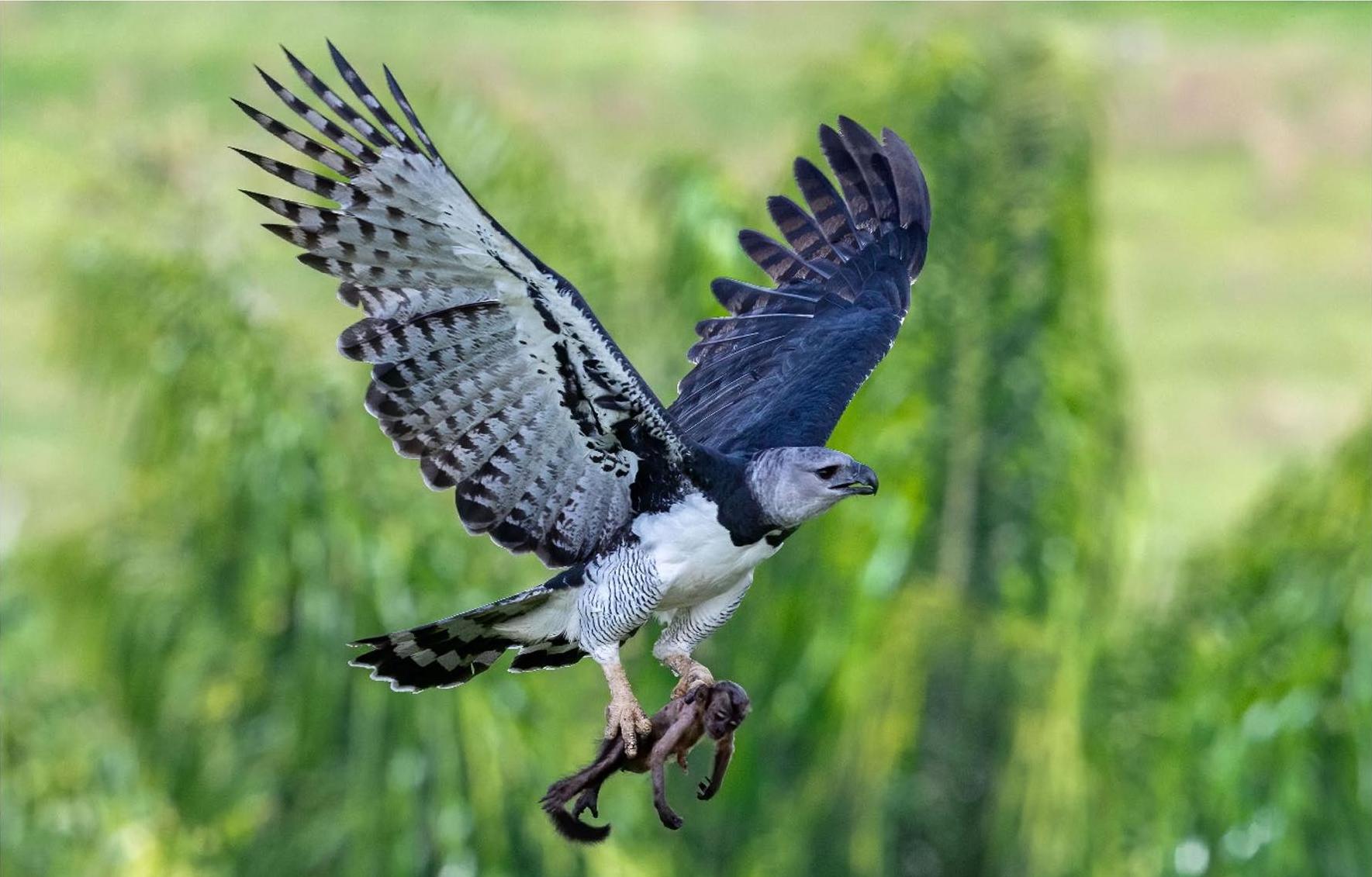
A harpy eagle needs large trees for nesting and enough surrounding forest for its young to learn to fly. The Amazon also depends on the eagle. By controlling populations of monkeys, sloths, and other animals, the predator helps limit damage to the forest canopy. Its decline can therefore indicate broader changes in the ecosystem.
Governments often assess biodiversity by counting species. These figures are useful, although they don’t show whether an ecosystem is still functioning. A recent paper in Frontiers in Science argues that conservation policy should also track ecological processes, including predation, migration, pollination, and the movement of water and nutrients, reports Mongabay’s John Cannon.
The authors propose using the Three Global Conditions Framework, developed in 2019, to decide what different landscapes require. It divides the planet according to the degree of human influence. Large, relatively intact areas need protection from new development. Landscapes where farming and settlements coexist with nature require management that maintains ecological functions. Heavily altered areas need restoration.
The approach could help countries meet the Kunming-Montreal Global Biodiversity Framework, which calls for the loss of nature to be halted and reversed by 2030. Progress varies widely among countries. The agreement is not legally binding, and national governments determine how its targets are applied.
The paper uses the term “nature positive” to describe an outcome in which ecosystems are healthier at the end of the decade than they were at its start. Measuring this will be difficult. An increase in tree cover, for example, may reveal little about whether a restored forest supports its former species or ecological relationships.
Implementation also raises political and economic questions. Conservation measures can restrict access to land, change farming practices, or impose costs on communities that contributed little to biodiversity loss. Decisions about what to protect and restore will depend partly on whose knowledge is recognized and who bears the expense.
The framework helps distinguish among landscapes and identify suitable forms of intervention. Governments will still need to turn broad targets into policies that reflect local conditions, maintain ecological functions, and allocate costs in ways that affected communities consider fair.
Read the full story by John Cannon here.
Banner image: Research shows keystone species, such as the harpy eagle (Harpia harpyja) pictured here with a tufted capuchin (Cebus apella), play essential roles in maintaining the health of the Amazon ecosystem. Image by Jiang Chunsheng via Wikimedia Commons (CC BY 4.0).
