

Close Menu
NCIJ Network NCIJ Network
    What's Hot

    My Brief Summer Fling With Siri AI

    September 6, 2026

    Attackers conceal phishing lures using invisible Unicode characters

    September 6, 2026

    600 BTC Mined in 2010 Moves After 16 Years of Dormancy

    September 6, 2026
    Facebook X (Twitter) Instagram
    Trending
    • My Brief Summer Fling With Siri AI
    • Attackers conceal phishing lures using invisible Unicode characters
    • 600 BTC Mined in 2010 Moves After 16 Years of Dormancy
    • US envoys meet Putin: What’s behind latest diplomacy on Russia-Ukraine war? | Russia-Ukraine war News
    • Trump Administration Again Asks Supreme Court to Allow Mail Voting Restrictions
    • Competitive Pokémon is on phones now, but you still need a Switch to become a champion
    • Solana ETF inflows fall 97% as CME net shorts shrink
    • Some joints may be primed for rheumatoid arthritis before birth
    • About
      • Our Team
      • Editorial Policy
      • Editorial Independence
      • International Support
    • Trust & Standards
      • AI Usage Policy
      • Conflict of Interest Policy
      • Corrections Policy
      • Ethics Policy
      • Fact-Checking Policy
      • Source Protection
    • Get Involved
      • Guide for Sources
      • Support Independent Journalism
    • Legal
      • Cookie Policy
      • Privacy Policy
      • Terms of Use
    Facebook X (Twitter) Instagram
    NCIJ Network NCIJ Network
    Sunday, September 6
    • Home
    • World
    • Ai
    • Business
    • Politics
    • Health
    • Crypto
    • Science
    • Technology
    • Cybersecurity
    • Defense & Security
    • Economy
    • Energy
    • Europe
    • More
      • Fact Check
      • Investigations
      • Opinion & Analysis
      • Environment
    NCIJ Network NCIJ Network
    Home»Science

    This “new” frog was hiding in plain sight for 100 years

    NCIJ NETWNCIJ NETWORKBy NCIJ NETWNCIJ NETWORKSeptember 6, 2026 Science No Comments3 Mins Read
    Share
    Facebook Twitter LinkedIn Pinterest Email

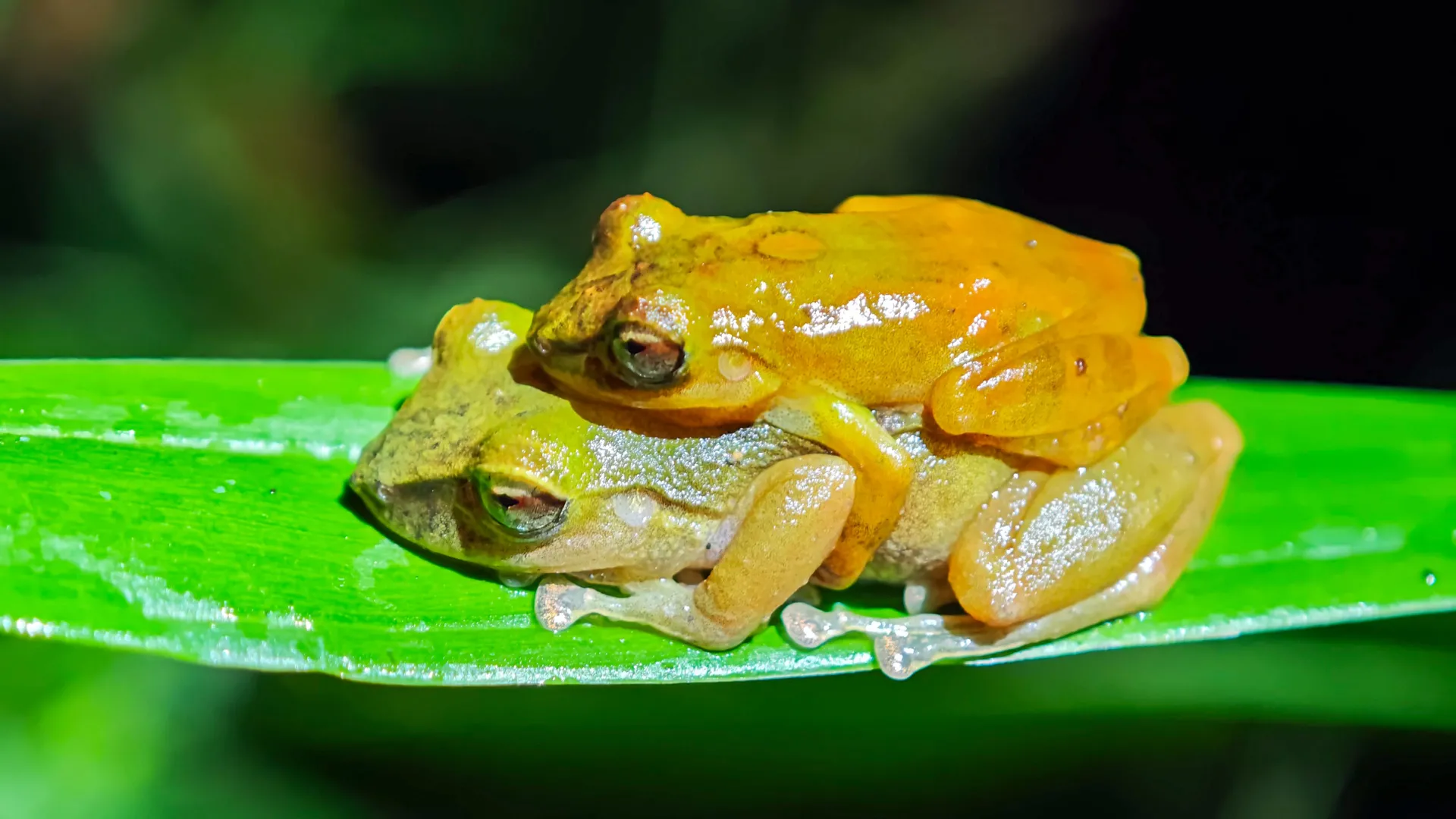
    Scientists at the Pontificia Universidad Católica del Ecuador have formally described Pristimantis milpe, a common and widespread frog that spent more than a century being mistaken for another species. The mystery was resolved by studying specimens collected in Ecuador during the 19th century and preserved at the Natural History Museum in London.

    The finding stands out because many newly described species are rare or confined to small areas. Pristimantis milpe, by contrast, is widespread, relatively easy to find, and readily detected by its nighttime call. Its known range covers more than 67,000 square kilometers across the Chocó forests of western Ecuador and southern Colombia, from sea level to elevations of 1,200 meters.

    The formal description appears in the international journal ZooKeys, which focuses on biodiversity and taxonomy.

    A Century-Old Case of Mistaken Identity

    Researchers were able to identify Pristimantis milpe by revisiting historical amphibian specimens housed at the Natural History Museum in London (NHM).

    Santiago Ron, a researcher at PUCE and lead author of the study, traveled to England to investigate a classification problem that had persisted for more than 100 years. He examined the original specimens – known as “types” – that had been collected in Ecuador during the 19th century and preserved in the museum ever since.

    By comparing those historical frogs with living populations from the Ecuadorian Chocó, the team found that the old specimens had been incorrectly linked to a different species. As a result, a frog that had been regularly seen and documented for decades never received a scientific name of its own.

    “That such a common species has gone unnoticed under the wrong name for decades highlights the importance of correctly connecting scientific names with living populations in nature,” notes Jhael Ortega, a PhD student at Virginia Tech and one of the study authors.

    The Clicking Frog of the Chocó Forest

    The Milpe Robber Frog (Cutín de Milpe) is active at night. Males typically call from leaves on shrubs and bromeliads several meters above the forest floor. Their calls are loud and distinctive, producing a sound similar to a “click.”

    Females and males also differ noticeably in appearance. Females have striking coloration around the groin and thighs, where orange or light blue tones can appear alongside black spots. Males generally have more uniform coloring.

    The frog lives in the forests of the Ecuadorian Chocó and southern Colombia, a region considered especially important for biodiversity conservation.

    Why Historic Museum Collections Still Matter

    The discovery highlights the continuing scientific importance of natural history collections. Specimens preserved for decades or even centuries can give researchers a way to revisit old classifications, compare physical traits, and resolve questions that earlier scientists could not answer.

    In this case, combining 19th-century museum specimens with observations of living frog populations allowed researchers to determine that Pristimantis milpe deserved recognition as a distinct species.

    The findings also underscore how much remains to be learned about biodiversity. Even common, widespread animals can conceal surprises, and solving those mysteries often depends on bringing historical collections together with modern research and observations.

    frog Hiding plain sight years
    NCIJ NETWNCIJ NETWORK
    • Website

    Keep Reading

    600 BTC Mined in 2010 Moves After 16 Years of Dormancy

    Some joints may be primed for rheumatoid arthritis before birth

    AI can now control fusion plasma faster than humans can react

    Indonesia’s most dangerous fires are burning underground

    Heart disease and kidney disease can fuel each other. New guidelines aim to break the cycle

    RSPB marks 50 years at wildlife-rich Strumpshaw Fen

    Add A Comment
    Leave A Reply Cancel Reply

    Editors Picks

    My Brief Summer Fling With Siri AI

    September 6, 2026

    Attackers conceal phishing lures using invisible Unicode characters

    September 6, 2026

    600 BTC Mined in 2010 Moves After 16 Years of Dormancy

    September 6, 2026

    US envoys meet Putin: What’s behind latest diplomacy on Russia-Ukraine war? | Russia-Ukraine war News

    September 6, 2026
    Latest Posts

    Quantum computing nears commercial breakthrough, IBM CEO says

    August 1, 2026

    Amgen says cloud data breach exposed patient health, proprietary info

    August 1, 2026

    Snapchat joins other platforms in the fight against ‘AI slop’

    August 1, 2026

    Subscribe to News

    Get the latest sports news from NewsSite about world, sports and politics.

    NCIJ Network is an independent digital news platform delivering trusted investigative journalism, European and global news, in-depth analysis, and fact-based reporting with accuracy, transparency, and integrity.

    Facebook X (Twitter) Instagram Pinterest YouTube

    My Brief Summer Fling With Siri AI

    September 6, 2026

    Attackers conceal phishing lures using invisible Unicode characters

    September 6, 2026

    600 BTC Mined in 2010 Moves After 16 Years of Dormancy

    September 6, 2026

    Subscribe to Updates

    Get the latest creative news from FooBar about art, design and business.

    Type above and press Enter to search. Press Esc to cancel.