


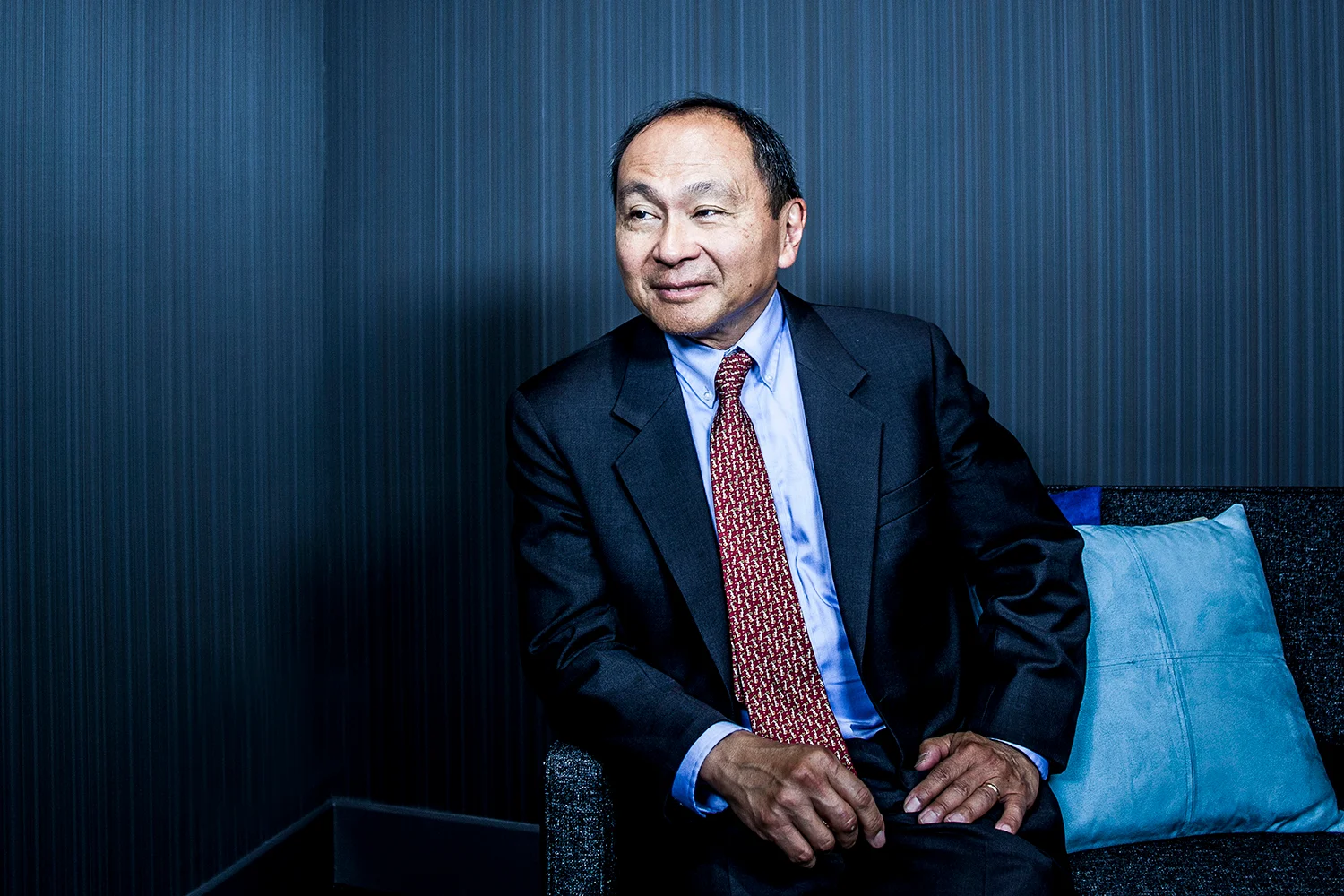
Have we reached the “end of history”? A little-known former RAND analyst, Francis Fukuyama, asked that provocative question in a lecture he delivered at the University of Chicago in February 1989. Invited by his mentor, Allan Bloom, Fukuyama presented his analysis in a series on the perennial topic of the “Decline of the West.” But he offered a more optimistic verdict. He pointed to the worldwide spread of liberal democracy, and the obvious failure of communist alternatives, especially in the Soviet Union, and suggested that the West had won. Drawing on the dialectical historical system of Hegel, the 19th century German philosopher, and his 20th century interpreter, Alexandre Kojève, Fukuyama argued that the pursuit of freedom led humans to a “modern liberal state, where the equal and mutual recognition of all citizens was guaranteed by a rule of law that granted them basic rights.”
A small foreign policy magazine, the National Interest, published Fukuyama’s lecture in the summer of 1989. After the fall of the Berlin Wall that November, it appeared prophetic. Fukuyama described the “triumph of the West” and the “total exhaustion of viable systematic alternatives to Western liberalism.” He placed the contemporary moment in a deeper context: “What we may be witnessing is not just the end of the Cold War, or the passing of a particular period of postwar history, but the end of history as such: that is, the end point of mankind’s ideological evolution and the universalization of Western liberal democracy as the final form of human government.” In a subsequent interview with the New York Times, Fukuyama explained, “I simply don’t see any competitors to modern democracy.”
These words exploded like firecrackers around the world. U.S., British, French, and Japanese media immediately summarized the article and sought out the author. He became an instant celebrity, featured in both Newsweek and Time magazines. Leading scholars in numerous disciplines made a point of rejecting his argument—the truest sign of influence. Perhaps most astonishing, a newsstand in Washington reported that copies of the nerdy National Interest magazine with the original article were “outselling everything, even the pornography.” The article made Fukuyama’s career as an enduring public intellectual.
Young Berliners remove a piece of the Berlin Wall on Nov. 16, 1989.Patrick Hertzog/AFP via Getty Images
In his newly published memoir, In the Realm of the Last Man, Fukuyama does not dwell on the popular obsession with his “end of history” essay, except to complain: “I have been asked several times a week over the past three decades whether I wished to recant my argument.” He contends that the questioners, who presume he was somehow naive and wrong-headed when he composed his argument, rarely “read more than the title of my essay or book.” They neglect most of the countless articles and books he has written since the “end of history” moment.
Fukuyama reminds readers of his memoir that, despite being widely interpreted as a triumphalist document, the original article closed on a pessimistic note. He predicted that conflict between states would continue, especially around ethnic and nationalist disputes. He also mentioned that “terrorism and wars of national liberation” would remain.
Most importantly, Fukuyama admitted that the triumph of liberal democracy would bring about a “very sad time. The struggle for recognition, the willingness to risk one’s life for a purely abstract goal, the worldwide ideological struggle that called forth daring, courage, imagination, and idealism, will be replaced by economic calculation, the endless solving of technical problems, environmental concerns, and the satisfaction of sophisticated consumer demands.” In the last words in Fukuyama’s career-making article, he expressed “nostalgia” for the recent decades of historical struggle and a fear of future “boredom.”
Fukuyama titled his 1992 bestselling book, The End of History and the Last Man, to elaborate on those sentiments. In his new memoir, Fukuyama summarizes how he drew on Friedrich Nietzsche’s dark brooding to analyze the possible lives of the listless beings to come. With the triumph of liberal democracy, in Fukuyama’s view, humans reached the condition of the “Last Man”: a “creature without pride or a striving to be something better, content with petty pleasures and material well-being.” Fat and spoiled, “liberal societies produced peace and prosperity at a scale never before achieved in human history, and thereby took away the need for personal risk.”
Abundance and decadence seem to drain life of meaning, as Nietzsche predicted, and Fukuyama observes that people seek to be stimulated: “Struggle for struggle’s sake is what happens when we are at the end of history, when the world is actually in pretty good shape, and there are no great causes worthy of risking one’s life. We see this today on both the extreme right and left.”
Fukuyama quotes from the rich oeuvre of the political philosopher Leo Strauss and his writing on German nihilism to elucidate the recurrence of what Fukuyama perceives as popular discontent with hollow materialism. Strauss observed that fascists wanted a moral cause that was greater than peace and openness and tolerance and everything else that came with liberal democracy: “Moral life,” Strauss wrote, “means serious life” for those unhappy with boring stability. “Only life in such a tense atmosphere, only a life which is based on constant awareness of the sacrifices to which it owes its existence, and of the necessity, the duty of sacrifice of life and all worldly goods, is truly human.” Fukuyama brings Strauss’s observation to a sharp point with his diagnosis that “a liberal society does not demand that we risk our lives on its behalf,” but “some people want to be able to risk ‘our lives, our Fortunes, and our sacred Honor’ for a higher cause.”
There is something to this human search for a higher call. I remember the students, neighbors, and family members of mine who were eager to sacrifice for their country in the days and weeks after the Sept. 11, 2001, attacks on New York and Washington. Many of us felt more American in the shadow of that tragedy and what it summoned from citizens.
Like others, Fukuyama was caught up in that wave of binding emotion. He describes his own fears of terrorism and his perception that “the United States had been asleep at the switch.” Fukuyama, often regarded as a liberal neoconservative, signed on to calls for the overthrow of Iraqi despot, Saddam Hussein: “I had few qualms about the desirability of removing a bloodthirsty dictator from power.”
Yet Fukuyama swiftly distanced himself from the center-right institutions that most vociferously advocated for the global war on terror. He dates his break with this position to a specific event: the American Enterprise Institute’s gala dinner in February 2004, less than a year after the U.S. invasion of Iraq. Fukuyama recounts how Vice President Dick Cheney and various intellectuals were exulting in the violence they had unleashed. They claimed victory, moral righteousness, and a new prerogative to do more of the same in other places. Fukuyama reports being repulsed by the illiberalism and dishonesty of that moment: “The evening at AEI was spent celebrating what was touted as the tremendous victory that the Bush administration had achieved, at a time when Iraq was rapidly descending into a vicious civil war and American soldiers were being blown up regularly by roadside bombs.”
Fukuyama realized that “these longtime friends of mine had taken leave of reality.” They were caught up in a war fever. His book-length criticism of neoconservative hawkishness, America at the Crossroads, led him to question other conservative policies he had defended, including financial deregulation and anti-statism.
In the decades since, Fukuyama has devoted himself to understanding the essential role of a strong modern state in enforcing order, nurturing prosperity, and ensuring security. He laments the attacks by Donald Trump and others on the “deep state,” and he warns against what he calls “repatrimonialization”—the process by which tribes, families, and other affinity groups hoard resources and in doing so destroy competent, inclusive state institutions. That return to clannish or patron-client politics is precisely what contemporary authoritarians are trying to accomplish.

Trump supporters at the U.S. Capitol on Jan. 6, 2021.Brent Stirton/Getty Images
This analysis brings out the contradiction at the core of Fukuyama’s writings since “The End of History.” The liberal democracies that won the Cold War depend on large bureaucratic institutions, populated by trained experts, to manage everything from trade and transportation to finance, education, healthcare, energy, and policing. Some are centralized in Washington, like the Federal Reserve and the Social Security Administration; others are decentralized, like the United States’ world-class research universities and its highly capitalized corporations. The competence and achievements of these institutions allowed liberal democracies to prosper while alternative systems failed. The Soviet Union couldn’t compete, nor could China before Deng Xiaoping’s reforms.
But bureaucracy is boring and impersonal; experts are often elitist and out of touch with ordinary citizens. They are heavily rewarded for their work, and they make far-reaching decisions that few can understand fully. Although the “last men” are better fed and safer, they resent impersonal institutions because they appear to deny choice and freedom. The Federal Reserve sets the cost of a family’s mortgage and thus determines if you can afford the house you want. University admissions offices decide who to accept and therefore whether your child enters the elite or not. Within the prospering liberal democratic state, Fukuyama writes, a “cleavage” develops separating those with power and access from those who feel disempowered and humiliated. These societies produce wealth and stability, but they “flatten human horizons.”
Fukuyama explains the rise of authoritarianism as a reaction against these conditions. “Democratic backsliding,” he writes, “is driven by activists who do not want to be ‘Last Men’ tinkering with the house that has been built for them at the end of history.” Fukuyama condemns the insurgents who attacked the U.S. Capitol on Jan. 6, 2021, as an example of this phenomenon: “middle-class people with decent jobs” who were motivated to “play-act at being armed revolutionaries” because they felt disrespected, ignored, and left behind. Those feelings allowed them to become “dupes enlisted to soothe the ego of a single narcissistic fraudster.” Trump’s demagoguery played to the grievances of those well-served but stuck within modern democracies.
Fukuyama’s memoir offers little advice about how to escape this turmoil. In his afterword, he calls for replacing “procedural fetishism” with programs and leadership that make people feel respected. He builds on his research about trust to describe some of the civic organizations, including schools and churches, that can facilitate liberal national identities. And he closes by articulating the widespread aspiration to improve imperfect liberal democracies: “People will want to continue to struggle for just causes, even if they cannot fully articulate what a fully just society would look like.” This amounts to little more than the handwringing and handwaving about “little platoons” and “intermediary institutions” that was once commonplace on the center right.

Fukuyama at the National Press Club in Washington in 1990.DIRCK HALSTEAD/GETTY IMAGES
If Fukuyama is correct, we are indeed looking into Nietzsche’s abyss and there are no clear steps to take toward building meaningful liberal democratic politics for millions of disgruntled people. They may be beneficiaries of the system, but they are not empowered actors. They do not have the passion they once had, when they confronted alternatives and their sacrifices were essential and emotionally rewarded. Nihilism accompanies boredom; play-acting triggered on social media has now replaced marching in a movement for justice.
This bleak analysis, begun with Fukuyama’s famous essay, falters in its historical assumptions. There was no end of history in 1989, and we are very far from the last man. What Fukuyama and so many other analysts have failed to recognize is that the collapse of communism in the late 20th century never guaranteed the permanent triumph of liberal democracy or capitalism. With the Soviet Union defeated, the regimes that remained—in newly independent Russia, in the successors of Mao’s China, and elsewhere—adapted their political systems to be more harmonious with Western ideals for reasons of self-preservation, not ideological capitulation. Aware they could no longer compete, they looked to join international markets, benefit from foreign ideas, and import capital. Their populations demanded more democracy, but that was not their primary aspiration. Long-suffering people still craved better lives, and they continued to believe political pluralism—more history, not less—would get them there.
And, it must be said, the crises of the early 21st century—global terrorism, failed wars in the Middle East, and the financial crash—were all facilitated by the opening of societies after 1989, when less regulated markets and freer travel facilitated the rapid movement of money, weapons, and radical ideologies. Authoritarian or would-be authoritarian leaders began to emerge in many societies, not because people were bored or disrespected, as Fukuyama argues, but because large numbers of citizens believed that liberal democracy did not work. When millions of voters lost their homes, their jobs, and their health because of decisions that followed the logic of open markets and, they felt, open borders, they wanted protection guaranteed by a strongman who would shut it down. Enter Viktor Orban, Nigel Farage, Marine Le Pen, Jair Bolsonaro, and, of course, Donald Trump.

A sign at a demonstration in Paris on March 22, 2025.Magali Cohen/AFP via Getty Images
These authoritarian figures offered a genuine, if crude, ideological alternative to liberal democracy. They embraced blood and soil definitions of citizenship, rejecting pluralism and assimilation. Le Pen, for example, called France’s Muslim population “an occupation” and she promised to return the country to traditional families. Authoritarians also rejected free trade, a cornerstone of liberalism. Trump has raised tariffs and provoked trade wars, even with Canada, advocating protectionism as the best way to grow the U.S. economy. And the Chinese government under Xi Jinping has saturated society with physical and digital surveillance, eliminating any protection for individual privacy. The authoritarian model of the last decade is not just anti-liberal, it is a coherent and effective alternative: national chauvinism, what the Germans called völkisch politics. So much for the end of history.
The disillusionment of citizens who had once seen exciting potential in liberal reforms is a 35-year narrative that runs from 1989 through to about 2024. Far from an end, it is a continuation of history’s main plot line: the struggle for political legitimacy. Liberal democracy never had a monopoly on legitimacy, and its standing has declined precipitously since Fukuyama rose to fame arguing otherwise. The legitimacy of some authoritarians has declined in recent years too, as they have started wars they cannot win and damaged their own economies. People everywhere are unhappy with the politics they have inherited, and they are searching for alternative ideas, parties, and leaders.
The historical search for something new, for a set of political beliefs that may actually bring about wider prosperity—and someone powerful enough to realize that goal—demonstrates that we could not be farther from Nietzsche’s “last man.” The people of the world are not bored; they are hungry to find figures who will help them secure meaningful jobs, live healthy lives, and build vibrant communities.
Fukuyama’s memoir is smart, but it is most compelling as a window into the historical era that began with his essay and recently ended. The age of Fukuyama was a time when overconfident believers in liberal democracy and global capitalism pursued hegemony. They condescended to dissenters, they ignored alternatives, and they overinvested in imitators, confident that the elites and everyday people of diverse countries lived and hoped as they did. Fukuyama gave that flawed worldview its most memorable framing, and he promoted it as a celebrity public intellectual. When the people he and others claimed to uplift rebelled, the believers doubled down on their core arguments, as Fukuyama does in his memoir.
Perhaps Hegel would counsel that instead of the end of history and the last man, we should prepare for a new beginning of history emerging from the 21st century clash of liberal democracy and authoritarianism. If free societies survive, they will not look like what they were (or seemed to be) in 1989.
