


By the narrow measure of barrels shipped, the Persian Gulf has weathered eight months of war better than most energy analysts expected. Oil shipments through the Strait of Hormuz and alternative routes averaged more than 24 million barrels a day in the week ending Oct. 18, above the prewar level of 23.3 million, according to the ship-tracking firm Kpler. JPMorgan analysts wrote last week that energy markets are “converging on a forever conflict” and that view has encouraged a belief in the Trump administration that the region can absorb another round of fighting.
That view confuses how much oil and gas are still flowing from the Gulf with the state of the plants and terminals that move it. Since the war began on Feb. 28, Iranian missiles and drones have damaged refineries, liquefied natural gas (LNG) trains, and export terminals across the Gulf, and the Houthis have opened a second front in the Red Sea. Much of what has been lost will take years to rebuild. The cost will fall mostly on importers in Asia, Europe, and the developing world that built their energy systems around reliable Gulf supply.
U.S. and Israeli planners have drawn up options for a short, intensive campaign against Iran’s nuclear facilities, missile and drone arsenals, and energy infrastructure after the U.S. midterm elections on Nov. 3, the New York Times reported last week. President Trump has not approved it. This week, the Wall Street Journal reported that Washington has told Gulf governments to prepare for such an offensive. Iranian officials have responded by naming Saudi oil facilities, Gulf data centers, and undersea cables as targets. The next round would likely concentrate on the assets and importers that Gulf states can least afford to lose.
The Gulf’s reputation as a dependable supplier rests on decades of investment as much as on geology. After the 1973 oil embargo, consumer nations created the International Energy Agency (IEA), and the 1980 Carter Doctrine committed the United States to keeping the Gulf open by force. After the 1991 Gulf War and the 2003 invasion of Iraq, Gulf states invested in redundancy. Saudi Arabia expanded the East-West pipeline to the Red Sea port of Yanbu, the United Arab Emirates built a pipeline to Fujairah to bypass Hormuz, and Riyadh kept spare production capacity in reserve. All of this assumed that U.S. power would protect the region’s infrastructure or at least deter attacks on it. This year’s fighting has overturned that assumption.
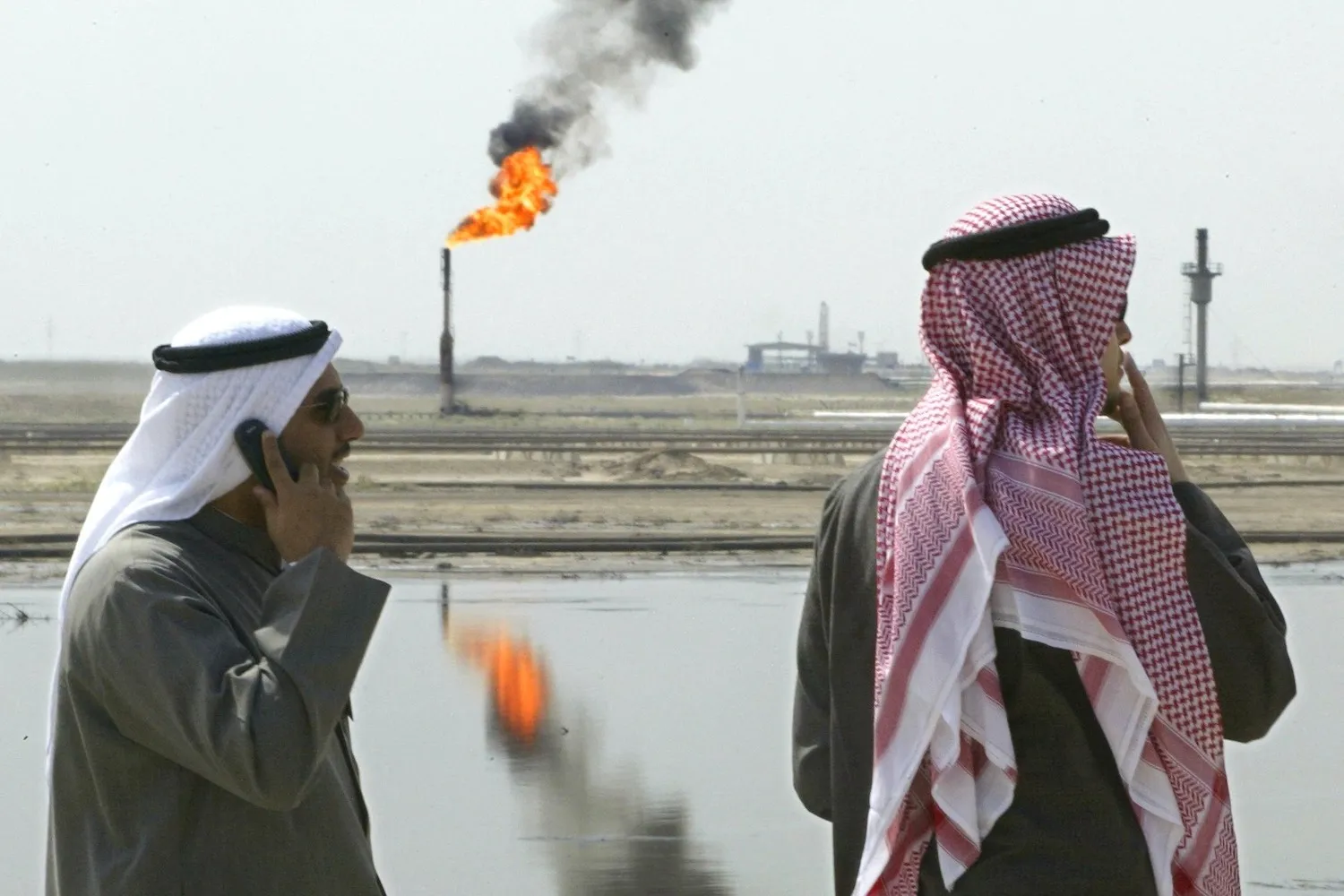
A recent Reuters investigation documented at least 135 Iranian drone and missile attacks on at least 84 infrastructure sites across seven Gulf states since the war’s start. Iranian-linked strikes damaged five of Saudi Arabia’s nine largest refineries and both export manifolds at Fujairah, the UAE’s main terminal outside Hormuz. At Qatar’s Ras Laffan, the world’s largest LNG complex, strikes on the cold boxes that house liquefaction equipment took out two LNG trains representing about 17 percent of Qatar’s export capacity. QatarEnergy expects repairs to take three to five years and to cost an estimated $20 billion in annual revenue. Since much of this equipment is custom-built, the losses will outlast any cease-fire or peace agreement with Iran.
Proponents of a renewed campaign point to U.S. and Gulf air defenses, which by most measures have performed well. The UAE reported intercepting 132 of the 137 ballistic missiles fired at it on the first day of the war. The Jewish Institute for National Security of America (JINSA) estimated in March that more than 90 percent of Iranian projectiles had been intercepted across the theater. Interception rates, however, are the wrong measure for energy infrastructure. A refinery or LNG complex does not need to be hit repeatedly to be taken offline; it needs to lose only one critical component. On March 18, Qatar’s Defense Ministry said its forces intercepted four of the five ballistic missiles Iran fired at Ras Laffan. That attack took out the two trains cited above. An 80 percent interception rate still produced a loss of LNG supply that will last for years. The Financial Times reported that the missiles were maneuverable enough to evade Patriot batteries.
A second round would also begin from a weaker defensive position. JINSA estimated that by late March, Bahrain had used up to 87 percent of its Patriot interceptors and the UAE and Kuwait roughly 75 percent. Even if defenses performed better next time, a handful of missiles reaching a gas train, a pumping station, or a terminal manifold could remove capacity the market cannot replace for years. For planners, the share of Iranian missiles stopped should matter less than what the few that get through will hit.
Meanwhile, since declaring a naval blockade of Saudi Arabia on July 20, the Houthis have struck Saudi Aramco’s 400,000-barrel-a-day Jizan refinery three times, forcing it offline for repairs in August. Drone strikes on East-West pipeline infrastructure in September led Riyadh to shut the line for 11 days, halting loadings at Yanbu. The group claimed new attacks on the pipeline’s pumping stations on Oct. 24 and Oct. 26, which Saudi Arabia has not confirmed. The pipeline built to cope with a Hormuz closure has become one of the most exposed parts of the Saudi export system.
Asia, which received nearly nine-tenths of the crude shipped through Hormuz before the war, has borne the brunt. In March, Bangladesh closed its universities early, rationed fuel at the pump, and diverted gas from four of its five state fertilizer plants to keep the grid running. Pakistan imposed a four-day workweek and closed schools. India limited households to one subsidized cooking-gas cylinder every 25 days as crowds besieged dealers. The Philippines declared a national energy emergency, and in May rotating blackouts left nearly 2 million people on Luzon without power. By September, Bangladeshi garment exporters reported canceled orders and idled production lines, hospitals in Sylhet were losing power almost hourly, and some families in Dhaka waited until midnight for enough gas pressure to cook dinner. Europe’s exposure runs mainly through refined products; European diesel premiums hit records in September.
Iranian strikes on Saudi oil facilities, combined with the Houthi campaign, would place both Saudi export routes under simultaneous attack while the region’s other bypasses are already degraded. Recovery timelines would lengthen toward a decade, and the Saudi spare capacity that has absorbed supply shocks since the 1990s would erode. Buyers and sellers are already adjusting in ways a second round would make permanent. On Oct. 22, QatarEnergy signed a deal to buy up to 4 million metric tons a year of U.S. LNG from Cheniere through 2054, supply that does not pass through Hormuz. If fighting resumes, Gulf producers may find that the market share they cede to the United States, to coal, and to other suppliers does not return.
The alternative to another round is a negotiated settlement in which both sides give ground, and the outlines of one are already visible. Qatari mediators delivered a draft agreement to Tehran on Oct. 25 that reportedly sets out a seven-day sequence of reciprocal confidence-building steps, backed by several guarantor states. A senior Iranian official dismissed it as “not an offer,” but Tehran is expected to respond this week. Washington has moved from demanding an end to Iranian enrichment to seeking a “meaningful” reduction, while Tehran’s priorities are relief from the U.S. naval blockade and oil sanctions. A deal that trades verifiable limits on enrichment and an unconditional reopening of Hormuz for phased relief on the blockade and sanctions would require each side to accept terms it has so far resisted.
Those concessions carry political costs, but they are cheaper than the alternative. The U.S. military’s costs had reached $47.1 billion by mid-October, according to U.S. Central Command, $29 billion of it for replacing expended munitions. A short campaign would not repair Ras Laffan or restore Saudi spare capacity, and it would invite exactly the retaliation that air defenses cannot fully stop.
Gulf producers spent five decades persuading the world that their supply could withstand regional wars. Eight months of fighting on two fronts have badly weakened that case. A negotiated end to the war would give the region time to rebuild it. Another round, on top of the Saudi-Houthi war, would leave damage to infrastructure and to importers’ confidence that markets are likely to carry for a generation.
